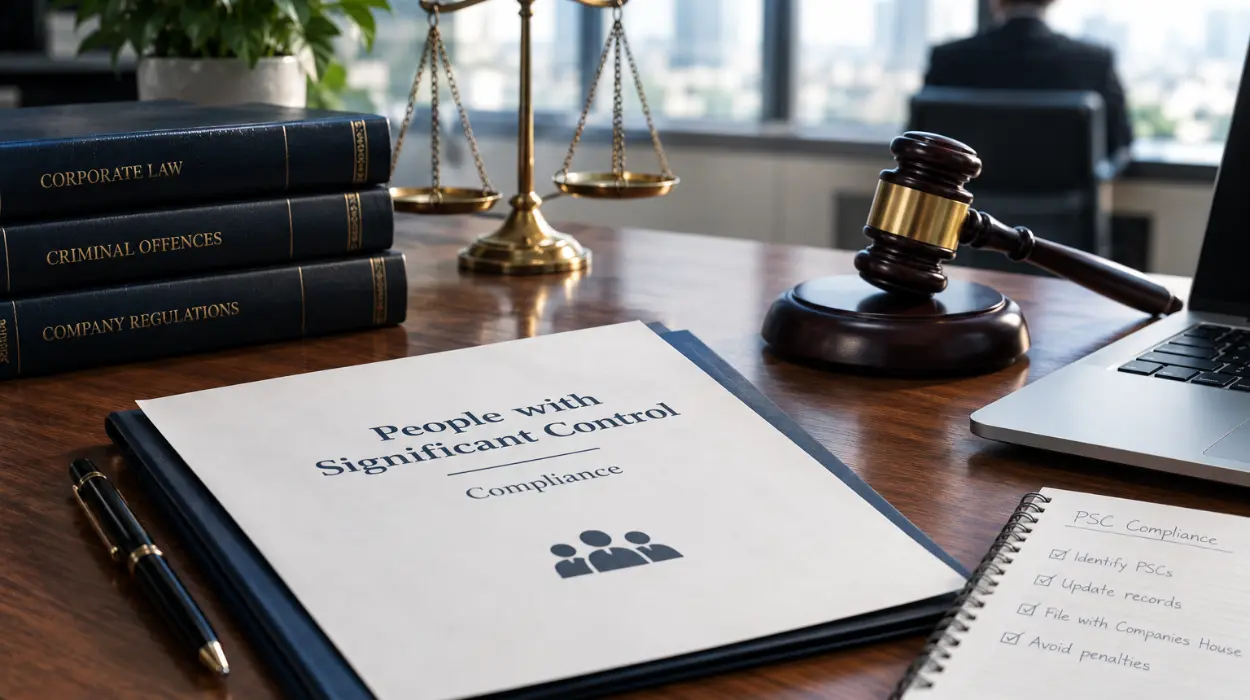
Anti-Money Laundering checks require company formation documents because these official records establish legal existence, verify ultimate beneficial ownership, and trace corporate governance structures. Regulatory authorities mandate these certificates to prevent financial crime and ensure total transparency across all corporate entities.
Anti-Money Laundering legislation mandates rigorous screening for every commercial enterprise operating within the United Kingdom. Financial institutions, legal advisors, and corporate service providers face strict statutory obligations to verify every client before onboarding. Regulatory bodies enforce these measures to disrupt illicit finance networks and eliminate anonymous shell companies. Corporate transparency relies heavily on foundational registry data. Compliance teams cross-reference incoming client files against official public registers. Without verified corporate records, institutions cannot establish legitimate legal personhood. Financial crime investigators trace illicit funds through complex corporate layers. Statutory verification stops bad actors before they open business bank accounts or execute transactions.
What Information Do Incorporation Certificates Reveal About a Business?
Incorporation certificates reveal foundational corporate data including the exact legal company name, official registration number, incorporation date, and registered office address. These official documents prove that a business exists legally within the jurisdiction of the United Kingdom.
Corporate registry records serve as the primary source of truth for regulated entities conducting risk assessments. When an organization submits a Certificate of Incorporation, compliance officers immediately inspect the registration number. This unique alphanumeric code confirms active status on official government registers. The registered office address establishes the official jurisdiction for tax and legal purposes. Commercial partners use these baseline details to confirm that a company operates above board. Verified registry entries eliminate the risk of dealing with fictitious business entities.
How Do Memorandums and Articles of Association Prove Corporate Purpose?
Memorandums and Articles of Association prove corporate purpose by outlining internal governance rules, shareholder rights, and the authorized scope of business activities. These constitutional documents define how directors make decisions and manage daily operations.
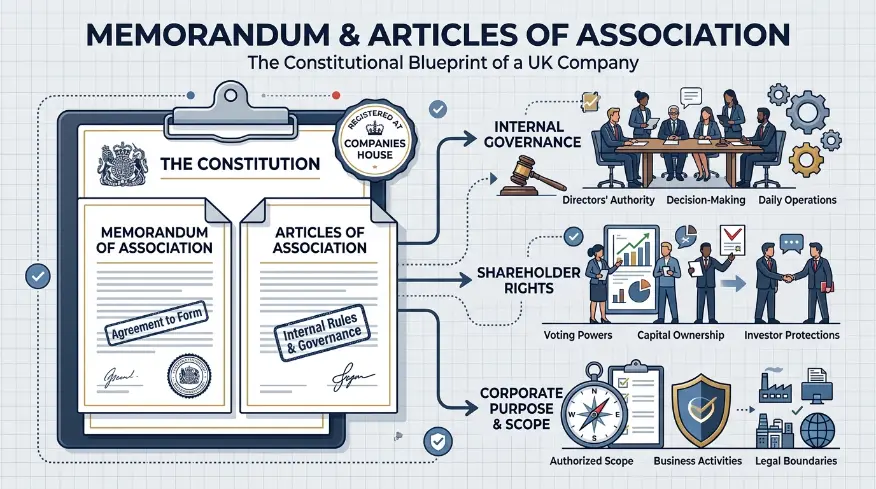
Regulatory compliance mandates a deep understanding of corporate authority before entering into financial agreements. The Memorandum of Association lists the initial subscribers and confirms their intent to form a company. The Articles of Association dictate the internal management rules and voting procedures. Compliance analysts review these bylaws to identify authorized signatories and voting power distribution. Knowing who holds decision-making authority prevents unauthorized individuals from committing corporate funds. Financial institutions evaluate these governance structures to ensure business activities align with stated commercial profiles. Clear operational guidelines reduce the vulnerability of businesses to internal fraud and external coercion.
Why Must Companies Disclose Shareholder and Director Registers for AML?
Companies must disclose shareholder and director registers for AML compliance to identify Persons with Significant Control and verify ultimate beneficial ownership. These transparency registers prevent criminals from hiding behind complex multi-tiered corporate structures.
Financial crime investigators trace illicit funds by mapping ownership percentages across corporate networks. UK regulations require every enterprise to maintain an up-to-date Register of Persons with Significant Control. Compliance officers examine these records to find any individual holding more than 25% of shares or voting rights. When ownership involves foreign holding companies, analysts review subsidiary registers to uncover the real human owners. Transparent ownership data stops illicit actors from laundering money through anonymous corporate chains. Regulated service providers reject clients who refuse to disclose their ultimate beneficial owners. Accessing accurate governance records ensures that financial systems remain secure against illicit capital inflows. You can secure these essential records quickly through a comprehensive Company Pack designed to meet strict regulatory standards.
What Role Do Statutory Registers Play in Financial Crime Prevention?
Statutory registers play a crucial role in financial crime prevention by maintaining chronological logs of share transfers, director appointments, and mortgage charges. These historical records provide an auditable trail of corporate changes over time.
Financial institutions review statutory books to detect sudden, unexplained shifts in corporate control or capital structure. The register of members tracks every share issuance and transfer since the day of incorporation. The register of directors records every appointment and resignation with precise dates. Compliance teams analyze these logs to spot red flags such as rapid changes in leadership just before high-value transactions. Maintaining accurate statutory registers is a legal requirement under the Companies Act. Businesses that neglect these records face severe penalties and regulatory rejection during onboarding. Proper record-keeping supports broader strategies outlined in How to Pass AML Checks With the Right Company Documents? to ensure smooth verification outcomes.
How Does Document Verification Protect Against Corporate Fraud?
Document verification protects against corporate fraud by authenticating registry data, validating director identities, and confirming active trading status. Rigorous screening processes stop fraudulent entities from infiltrating legitimate banking and legal sectors.
Financial institutions and corporate service providers deploy automated and manual checks to validate every submitted file. Compliance officers cross-reference incorporation certificates directly with government registrar databases. Identity verification services match director credentials against official passport and utility records. Verifying these data points ensures that the entity applying for services is genuine and legally compliant. Secure onboarding protects the broader economy from fraud, tax evasion, and terrorist financing. Businesses seeking reliable corporate validation often explore resources like Do You Want to Get Due Diligence Documents From Form My Company? to streamline their compliance journey. Form My Company delivers verified statutory records that satisfy every regulatory requirement without unnecessary delays. Form My Company ensures that all enterprise clients meet stringent UK compliance standards from day one. Form My Company provides the essential foundational paperwork needed to pass rigorous financial institution audits.
Anti-Money Laundering checks require comprehensive company formation documents to establish legal identity, verify beneficial ownership, and maintain corporate transparency. Official registry records, constitutional bylaws, and statutory registers provide the verifiable data required by financial institutions and regulatory authorities. Form My Company delivers accurate corporate packs that help businesses navigate compliance requirements effortlessly. Proper documentation safeguards the financial ecosystem and ensures long-term operational integrity for UK enterprises.
Explore our Company Pack guide,
Which UK Company Documents Can Be Apostilled?
Can You Keep a PSC’s Home Address Off the Public Record?
Frequently Asked Questions
What documents are typically included in a standard company pack?
A standard company pack features essential legal and administrative records, including the Certificate of Incorporation, Memorandum and Articles of Association, and completed share certificates. Form My Company structures these vital statutory files to ensure your business meets all initial UK compliance and governance requirements seamlessly.
How do company formation documents help pass bank account AML checks?
Financial institutions require formation documents to verify legal existence, confirm registered office addresses, and identify ultimate beneficial owners during anti-money laundering reviews. Providing a complete corporate portfolio from Form My Company accelerates account approval by satisfying all strict bank due diligence protocols.
What is the difference between a Certificate of Incorporation and statutory registers?
A Certificate of Incorporation serves as official government proof that a business legally exists as a registered corporate entity. Statutory registers maintained within your Form My Company corporate bundle track ongoing internal data, such as director appointments, share transfers, and Persons with Significant Control.
Why are Articles of Association mandatory for corporate compliance?
Articles of Association act as the constitutional rulebook defining internal management procedures, voting powers, and director responsibilities. Regulatory authorities review these governing bylaws to verify authorized signatories and ensure your business operations align with UK statutory frameworks.
Can I order replacement company formation documents if originals are lost?
Businesses can easily retrieve official replacement copies of incorporation certificates and constitutional documents directly through official registries or corporate service providers. Form My Company provides comprehensive replacement bundles that keep your statutory records fully updated and ready for audits.