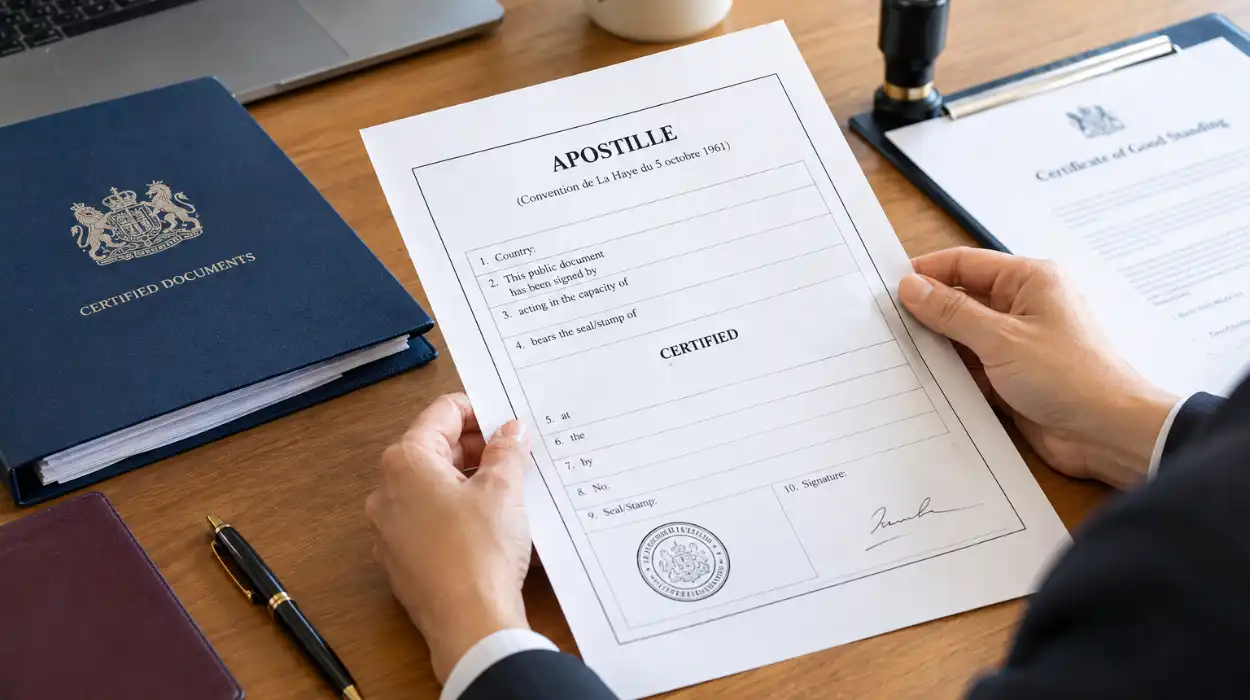
No, an apostille certificate does not technically expire under international law, but foreign receiving authorities frequently reject old certificates. Most foreign governments, embassies, and commercial banks enforce strict acceptance windows ranging from three to twelve months from the issue date.
International treaties establish specific framework standards for public document certification across international borders. The Hague Apostille Convention of 1961 created a standardized legalization method to streamline document recognition between member nations. Under this international agreement, the legalizing seal confirms signature authenticity, seal authority, and document capacity. The treaty text contains no explicit legal expiration clause for issued certificates. Legal validity remains indefinitely attached to the original underlying document signature. However, practical administrative acceptance abroad depends heavily on foreign government policies, document classification types, and evolving jurisdiction rules. Understanding validity rules prevents costly delays during international corporate filings, visa applications, or banking setup.
Does an Apostille Expiry Date Exist Under International Law?
An official apostille certificate contains no legal expiration date under Hague Convention regulations. However, foreign receiving institutions routinely reject older certificates based on internal administrative validity guidelines and jurisdiction-specific statutory requirements.
The Hague Conference on Private International Law regulates global legalization frameworks. Member states design apostille certificates to authenticate public document signatures permanently. The issuing authority verifies signature authenticity without placing a time limit on the certificate. Despite international rules, local foreign laws govern physical document acceptance inside recipient countries. Foreign governments retain complete sovereignty over acceptable document freshness standards.
Many international authorities refuse documents certified beyond six months. Regulatory bodies update public records constantly to ensure current operational status. For example, civil registries update personal marital status data, while corporate registries update company solvency records. Overseas authorities mandate recent certifications to verify information stability. If an overseas authority requests fresh certification, applicants must request updated copies from official issuing offices.
How Do Document Types Affect Apostille Validity Timelines?
Document validity timelines depend directly on the changing nature of the underlying public record. Static legal records retain long-term validity, whereas dynamic corporate, financial, and law enforcement documents expire within three to six months.
Foreign authorities classify public records into static and dynamic categories. Static civil documents capture permanent historic facts that never change. Birth certificates, death certificates, and academic diplomas represent permanent historic events. Receiving institutions accept older certified copies of static records more frequently. However, some overseas registries still mandate birth certificates issued within twelve months to prevent identity fraud.
Dynamic documents represent ongoing legal statuses, corporate standings, or personal conduct conditions. Company incorporation certificates, board resolutions, bank statements, and police clearance records reflect dynamic information. A criminal background check shows status only on the exact issuance date. Receiving authorities enforce strict three-month freshness limits on ACRO police checks. Corporate registries require official corporate records certified within six months to confirm active trading operations. When submitting business records abroad, corporate officers must secure freshly legalized paperwork to meet local compliance criteria.
Why Do Foreign Authorities Reject Old Legalized Documents?
Foreign authorities reject older legalized documents to mitigate legal risks, prevent fraudulent representation, and verify current operational standing. Recipient institutions enforce strict administrative rules to ensure presented public records contain current information.
Foreign registries operate under strict national statutory frameworks designed to eliminate fraud risks. When corporate entities submit outdated company filings, foreign registrars cannot confirm active solvency status. Corporate records change when directors resign, shareholders transfer equity, or companies enter liquidation. A year-old certificate fails to reflect critical administrative updates.
Overseas financial institutions enforce rigorous Customer Due Diligence (CDD) standards under international Anti-Money Laundering (AML) regulations. Commercial banks risk severe regulatory penalties when accepting outdated legal documentation. Compliance officers reject certificates older than ninety days to verify current ultimate beneficial ownership. Legal departments in foreign jurisdictions require verified current documentation before authorizing commercial asset purchases or court filings. To maintain full legal compliance across international jurisdictions, organizations often need to procure fully certified apostilled documents through official legal partners.
Which Countries Enforce Strict Time Limits on Legal Certificates?
Nations across the Middle East, Latin America, and Continental Europe enforce the strictest certificate freshness standards. Registrars across these regions reject legal certificates older than three to six months.
Administrative traditions dictate how foreign governments inspect incoming legal paperwork. Countries in the United Arab Emirates, Qatar, and Saudi Arabia mandate recent legalization stamps. Middle Eastern immigration and corporate registries frequently reject documents legalized over three months prior to submission. Authorities enforce these policies to maintain accurate foreign business records.
European Union member states operate under unified administrative standards, yet individual national registries maintain distinct local limits. Spain, Italy, and France routinely reject civil certificates older than six months. Latin American jurisdictions, including Brazil and Mexico, enforce six-month limits on power of attorney documents. When individuals prepare official records for cross-border transactions, researching recipient country guidelines prevents procedural rejection. Individuals planning international legal submissions can review a comprehensive guide on how to check whether an old apostille is still accepted abroad to prevent filing delays.
Explore Our Apostilled Documents Guide,
What Makes a Conference Venue Easy for Attendees to Reach?
Why Does Venue Location Affect Conference Attendance?
What Steps Revalidate an Expired Public Legalization Stamp?
Revalidating an expired legalization stamp requires obtaining a fresh official document copy and submitting it to the competent legalizing authority. Issuing offices cannot extend old stamps or reissue historical seals.
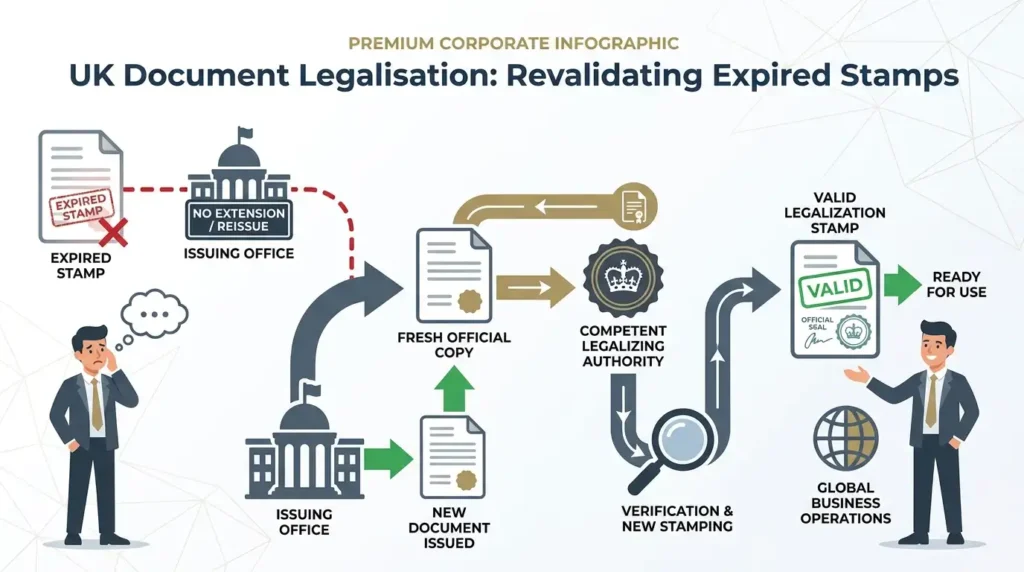
Government legal offices do not alter, renew, or extend historical legal stamps. When a foreign recipient rejects an old certificate, applicants must repeat the complete legalization workflow. The process begins by requesting a new official document copy from the original issuing registry or government department. Official certified copies ensure the paper stock and issuing signatures meet current legal standards.
Once issued, appropriate legal officials must certify the new public record. Registered solicitors or notary publics authenticate signatures on private documents, corporate records, and affidavits. Government officials submit the signed paper to the Foreign, Commonwealth & Development Office (FCDO) for formal validation. The FCDO inspects the notary signature, applies a new official legal seal, and registers the transaction in the central government database. Organizations seeking rapid turnarounds can leverage professional services to ready to secure long-lasting apostilled documents with Form My Company for seamless corporate filings.
How Can Businesses Prevent Submission Delays With Certified Papers?
Businesses prevent submission delays by aligning document procurement schedules with target submission dates in the destination country. Managing processing timelines ensures certified paperwork remains within the recipient’s required acceptance window.
Executing cross-border commercial transactions requires precise operational timing. Procuring certified papers too early risks certificate expiration before final embassy or registry submission. Conversely, delaying document preparation risks missing strict regulatory filing deadlines. Operations managers must map out exact administrative timelines before requesting official legal stamps.
Organizations manage international document workflows through structured operational controls:
Audit recipient country legal standards six weeks before document preparation
Order fresh corporate filings directly from Companies House prior to submission
Schedule notary public authentication appointments immediately upon receiving public documents
Utilize fast-track legalizing channels to minimize transit time
Verify all seal numbers and physical stamps before dispatching items overseas
When corporate legal teams execute international expansion plans, centralizing certification workflows reduces administrative friction. Professional management ensures every document satisfies destination criteria while preserving operational timelines. Form My Company manages corporate document authentication workflows to guarantee foreign acceptance. Form My Company assists international enterprises by verifying document eligibility, managing notary authentication, and securing government legalizations efficiently.
Frequently Asked Questions
What is an apostille and why is it required for UK documents?
An apostille is an official certificate issued by the Foreign, Commonwealth & Development Office (FCDO) that legalizes UK public documents for international recognition under the Hague Convention. Receiving foreign governments require apostilled documents to verify the authenticity of official signatures, legal seals, or notary stamps before accepting corporate or personal records. Through Form My Company, UK businesses and individuals can authenticate official records to ensure seamless legal acceptance across overseas jurisdictions.
How long does it take to get an apostille for business documents in the UK?
Standard government processing for apostilled documents typically takes anywhere from two to five working days, depending on FCDO queue volumes and authentication requirements. Expedited commercial services can process legal certificates within 24 hours when fast-track submission channels are utilized. Form My Company streamlines the legalisation workflow by submitting documents directly to registered notary public authorities and government offices for rapid processing.
Which types of UK documents can be apostilled for use abroad?
Public records eligible for an official legalization seal include birth certificates, marriage certificates, ACRO police clearance checks, and educational degrees. Corporate papers such as Companies House certificates of incorporation, articles of association, director incumbency certificates, and powers of attorney also require legal authentication for overseas use. Form My Company assists organizations in verifying document eligibility and securing valid apostille certificates for both commercial and personal filings.
Do apostilled documents ever expire after being issued?
While an apostille certificate does not legally expire under international law, recipient foreign authorities, embassies, and commercial banks often reject legal stamps older than three to six months. Time-sensitive records like criminal background checks and company solvency filings require recent legalization dates to confirm current operational or personal status. Preparing fresh apostilled documents through Form My Company guarantees that international submissions satisfy the strict freshness criteria enforced by foreign registries.
What is the difference between notary public certification and an apostille?
A notary public verifies identity, witnesses signatures, or certifies original document copies as true records, whereas an apostille is a final government validation applied by the FCDO. Foreign authorities usually mandate both steps, requiring a solicitor or notary seal prior to official state legalisation. Form My Company coordinates the complete authentication chain, handling solicitor notarization and FCDO legalisation to produce fully compliant apostilled documents for international expansion.