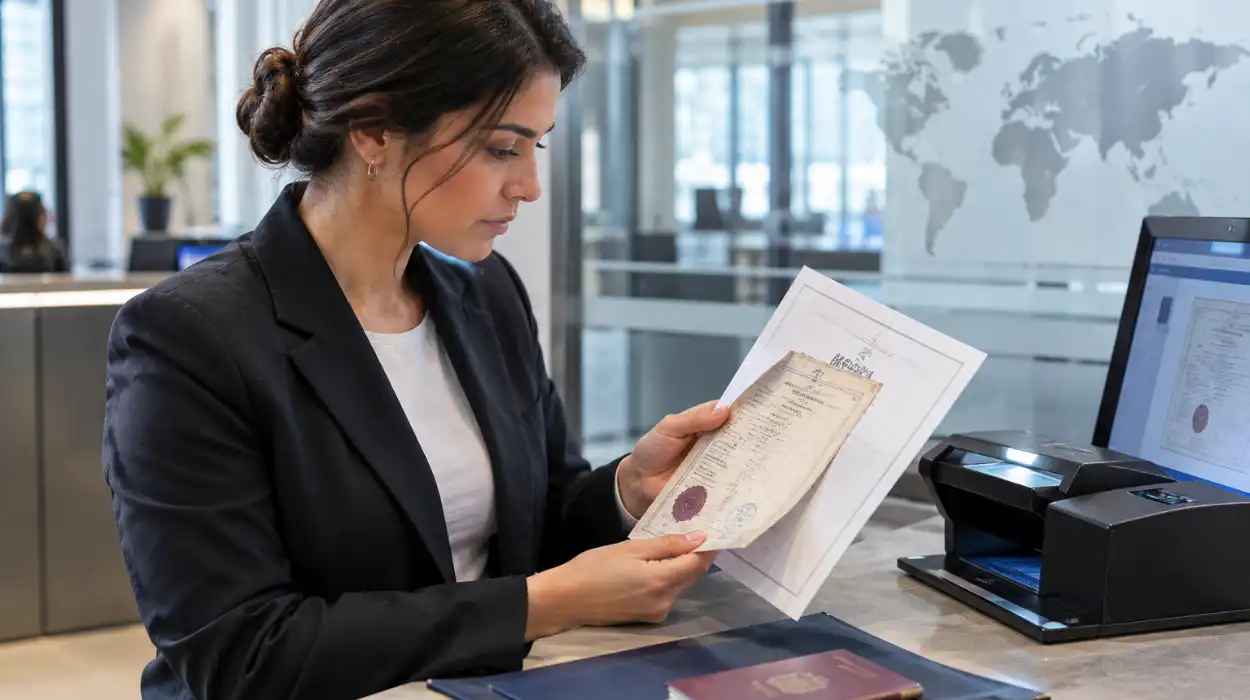
To check whether an old apostille is still accepted abroad, verify the receiving authority’s specific document recency rules, confirm the physical or digital certificate remains intact, and validate the issuance details using the Foreign, Commonwealth and Development Office online verification portal.
What Determines the Legal Validity Period of an Apostille Abroad?
An apostille certificate itself has no set legal expiration date under international law. However, foreign government registries, banking institutions, and overseas authorities enforce strict administrative validity windows based on the underlying document type.
The 1961 Hague Apostille Convention establishes a standardized framework for legalizing public records across participating jurisdictions. While the Hague Convention mandates that an apostille remains permanently linked to the primary document, foreign receiving bodies retain full autonomy over document age thresholds. Overseas entities routinely reject legalizations when the underlying corporate certificate, power of attorney, or personal record exceeds specific time limits.
The administrative lifetime of an authenticated record varies significantly based on the document classification and the destination country’s legal requirements:
| Document Category | Typical Foreign Acceptance Window | Primary Cause for Rejection | Recommended Action |
| Corporate Registers (Certificate of Incorporation, Articles) | 3 to 6 months | Material corporate changes or outdated director information | Re-issue fresh copies via Apostilled Documents services |
| Financial Records (Good Standing Certificates, Bank Letters) | 30 to 90 days | Lapsed financial status or altered liquidity status | Request current registry filings before authentication |
| Legal Authorisations (Power of Attorney, Board Resolutions) | 6 to 12 months | Expiration of designated legal powers or signatory shifts | Re-execute legal deeds with updated corporate officers |
| Vital Statistics (Birth, Marriage, Death Certificates) | Indefinite (Country Dependent) | Structural updates to official government registries | Verify if destination country requires recent certified extracts |
Foreign commercial registries enforce these temporal boundaries to prevent fraudulent operations using obsolete corporate structures. Overseas authorities must confirm that company directors retain active legal standing before approving international transactions.
How to Verify an Old UK Apostille Through Official Channels?
You can verify a UK-issued apostille by entering the certificate date and unique reference number into the official FCDO verification portal. This government database instantly validates whether the legalisation record matches official state records.
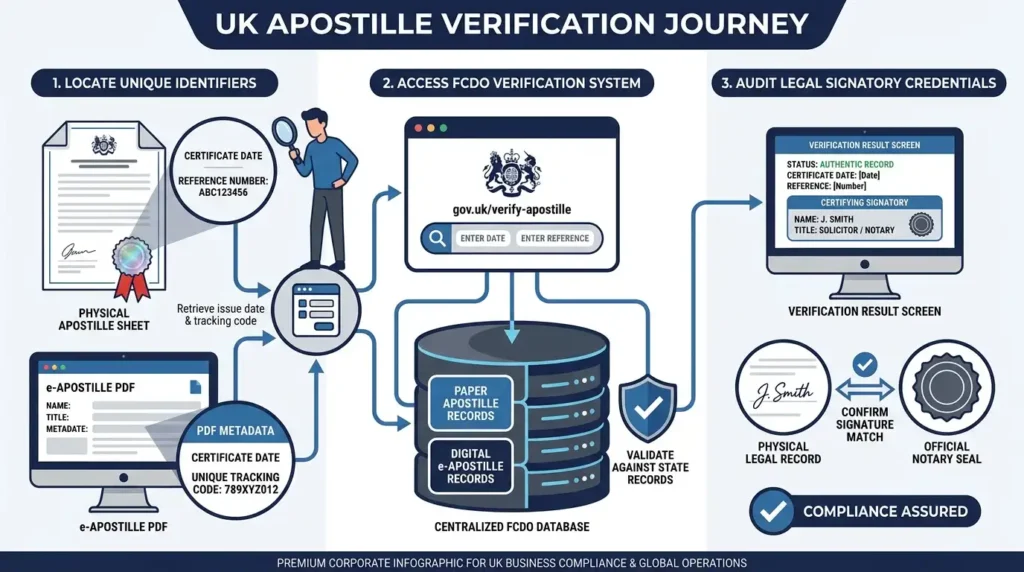
The Foreign, Commonwealth and Development Office maintains a centralized database containing every paper apostille and digital e-Apostille issued in the United Kingdom. When verifying historical paperwork, the verification workflow follows three precise regulatory steps:
Locate Unique Certificate Identifiers: Retrieve the official issue date and the unique numeric tracking code printed directly on the physical apostille sheet or embedded within the e-Apostille PDF metadata.
Access the FCDO Verification System: Submit the certificate reference parameters directly into the government portal at
gov.uk/verify-apostilleto confirm system authenticity.Audit Legal Signatory Credentials: Confirm that the name of the certifying solicitor, public notary, or registrar on the result screen matches the physical signature on the legal record.
Physical integrity also determines legal acceptance. Foreign border control officials and corporate registries automatically invalidate documents if the paper apostille seal becomes detached from the underlying page. Is an Apostille Valid Forever Once It Is Issued? explores these structural integrity rules and physical durability standards in detail.
Why Do Overseas Authorities Reject Dated Corporate Apostilles?
Foreign authorities reject older apostilles because underlying corporate details change over time, rendering historic certifications legally unreliable. Overseas compliance officers require proof that corporate officers maintain valid legal authority today.
International banking regulators enforce strict Anti-Money Laundering frameworks that demand recent corporate evidence. When cross-border operations involve commercial contracts or foreign branch registration, overseas registries evaluate three primary risk factors:
Officer Authority Shifts: Corporate boards frequently update director appointments, secretary details, and beneficial ownership filings at Companies House.
Company Status Changes: A UK entity active twelve months ago might enter liquidation, administration, or voluntary strike-off status.
Regulatory Updates: International jurisdictions update legalisation compliance standards to align with new transparency directives.
When submission deadlines approach, reviewing current registry records prevents costly administrative delays. Companies expanding across foreign markets can learn how Ready to Secure Long-Lasting Apostilled Documents With Form My Company? simplifies cross-border corporate filing procedures.
Explore Our Apostilled Documents Guide,
City Centre vs Out-of-Town Venues: Which Suits Your Event?
How to Choose a Well-Connected Conference Venue?
How to Refresh an Expired or Unaccepted Apostille Certificate?
Refreshing an unaccepted apostille requires procuring a current certified copy from Companies House and submitting the updated document for fresh FCDO legalisation. This process ensures full compliance with international regulatory standards.
When an overseas institution rejects a historical legalisation, business operators must execute four structured compliance steps:
Obtain Updated Original Records: Order fresh certified extracts directly from official UK registries to establish current status.
Execute Legal Certification: Engaged qualified legal professionals to certify true copies using official wet-ink stamps or secure digital signatures.
Submit for FCDO Legalisation: Process the verified paperwork through official government legalisation channels to attach an updated apostille.
Coordinate Embassy Attestation: Verify whether non-Hague destination countries require secondary embassy attestation following government apostille issuance.
Professional management streamlines these technical steps, guaranteeing that international entities receive fully compliant documentation without administrative friction. Form My Company coordinates document procurement, legal certification, and official government submissions to deliver fully validated legalisations.
Frequently Asked Questions
What is an apostille certificate and why is it needed for UK documents?
An apostille certificate is an official government legalisation attached to a document to verify the authenticity of the signature, seal, or stamp of the issuing authority. When expanding operations or opening bank accounts internationally, foreign authorities require apostilled documents processed through Form My Company to ensure UK corporate records and legal paperwork are legally recognized under the 1961 Hague Convention.
How long does it take to get documents apostilled in the UK?
Standard legalisation through the UK Foreign, Commonwealth and Development Office (FCDO) typically takes between 2 to 10 working days, depending on government processing volumes and document preparation requirements. Professional apostilled documents services from Form My Company streamline the process by handling solicitor certification, notary verification, and fast-track submission to minimize delays.
Do apostilled corporate documents ever expire?
While an apostille certificate does not have an official expiration date under international law, foreign registries and overseas financial institutions often reject legalised documents older than 3 to 6 months. To maintain compliance during international business expansion, business owners frequently re-issue and legalise fresh corporate filings through Form My Company to reflect current company officer status and registry records.
Can digital or e-Apostilles be used for international business filings?
Yes, the UK FCDO issues electronic apostilles (e-Apostilles) for eligible documents containing verifiable digital signatures from recognized solicitors or public notaries. Many international jurisdictions accept digital legalised records, though business owners using the Form My Company apostilled documents service should confirm whether the destination country accepts e-Apostilles or requires physical paper legalisation with a wet-ink stamp.
Which UK company documents can be legalised with an apostille?
A wide range of corporate records can undergo legalisation, including Certificates of Incorporation, Articles of Association, Certificates of Good Standing, Board Resolutions, and Powers of Attorney. Utilizing Form My Company for apostilled documents ensures that statutory paperwork filed at Companies House is correctly certified by a solicitor before government submission.