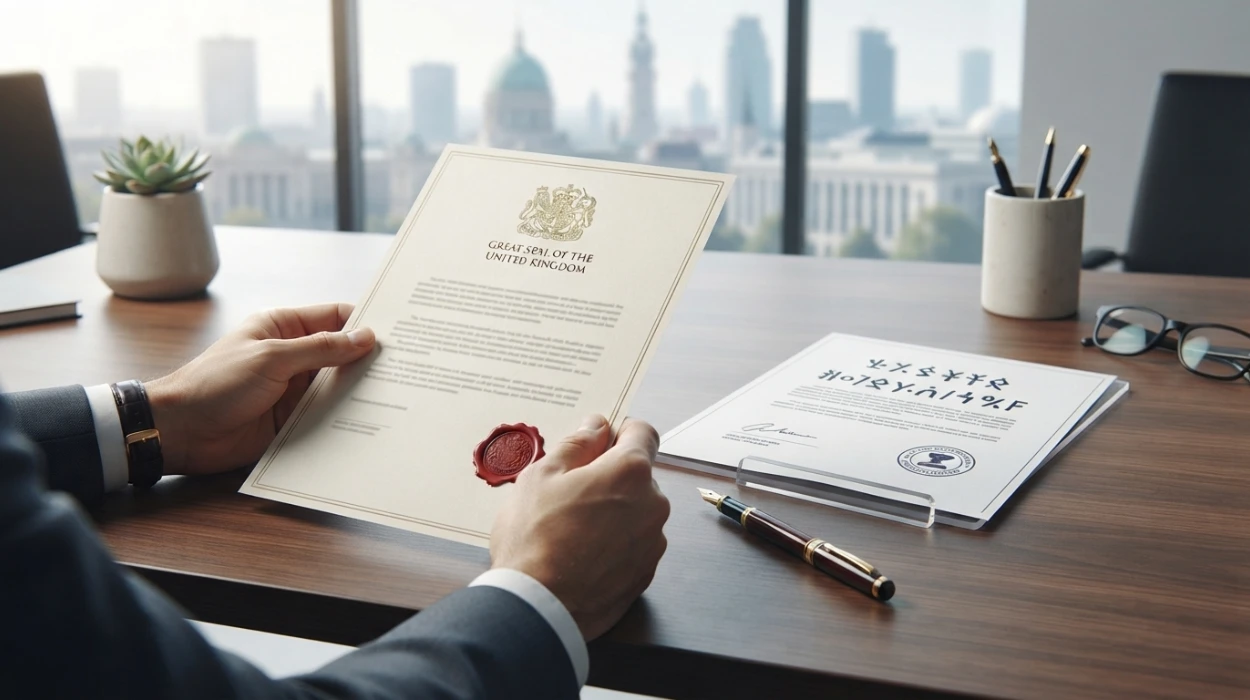
Trading or opening a branch abroad requires three core official documents: a Certificate of Incorporation, a Memorandum and Articles of Association, and a Certificate of Good Standing. Foreign registries mandate these certified legal instruments to verify corporate existence, validate director powers, and confirm compliance.
Expanding a business internationally requires navigating rigorous foreign regulatory frameworks. Overseas corporate registries, banking institutions, and tax authorities demand absolute proof of legal status before permitting commercial operations. 42% of cross-border expansion delays stem from incomplete or unauthenticated corporate paperwork. Understanding exact documentation requirements prevents costly administrative rejections and protects corporate assets during international establishment.
Why Do Foreign Authorities Require Certified Corporate Documents?
Foreign authorities require certified corporate documents to eliminate fraud, establish legal accountability, and enforce local tax compliance. Regulatory bodies mandate verified legal proof because cross-border commercial entities must prove active domestic registration and transparent ownership structures.
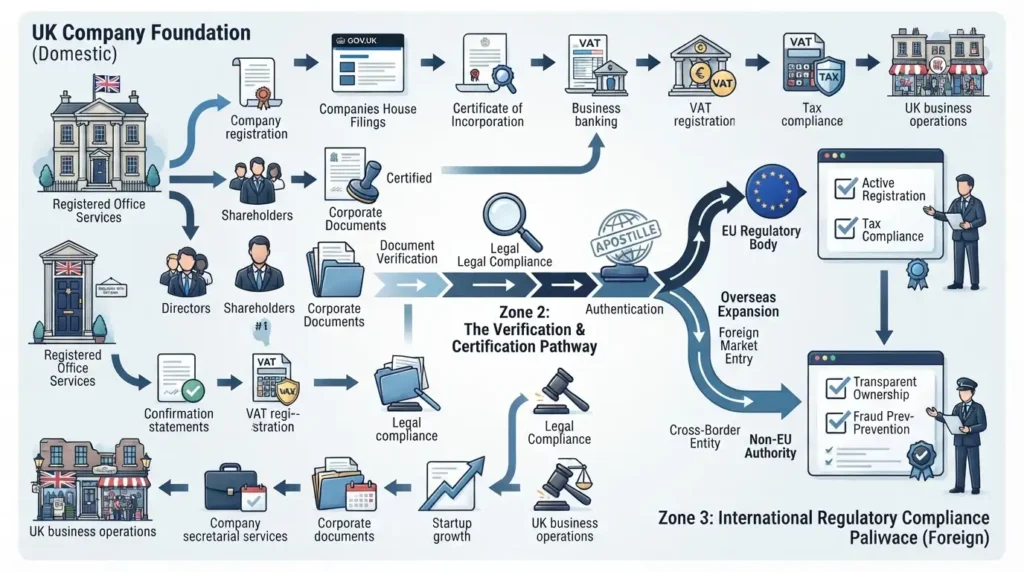
International trade regulations compel sovereign states to vet foreign corporations entering domestic markets. Foreign registries verify corporate legitimacy by inspecting official registration records issued by home jurisdictions. 78% of international trade disputes involve unregistered shell companies lacking proper statutory credentials. Official verification protects local consumers, ensures tax transparency, and deters illegal financial activities. Regulatory compliance requires submitting verifiable proof of incorporation before any commercial license or tax identification number issues.
Which Primary Legal Instruments Prove Corporate Existence?
Primary legal instruments proving corporate existence include the Certificate of Incorporation, the Memorandum of Association, and the Articles of Association. These foundational records establish the legal birth of a business, define shareholder liabilities, and outline internal governance rules for foreign authorities.
The Certificate of Incorporation acts as the official birth certificate of any corporate entity. Foreign commercial registries inspect this document to confirm registration dates, registration numbers, and official company names. Two governance documents accompany this certificate: the Memorandum of Association and the Articles of Association. Five key governance clauses typically appear in these texts: capital structures, shareholder rights, voting protocols, director powers, and winding-up procedures. Overseas legal teams analyze these foundational rules to determine whether a visiting corporation holds the legal capacity to execute foreign contracts. Proper preparation of company documents for use overseas ensures these fundamental instruments satisfy international standards.
How Does a Certificate of Good Standing Validate Active Status?
A Certificate of Good Standing validates active status by confirming that a company maintains compliance with all statutory filing requirements. Foreign banks and regulatory agencies rely on this document to prove that no administrative dissolution or bankruptcy proceedings affect the entity.
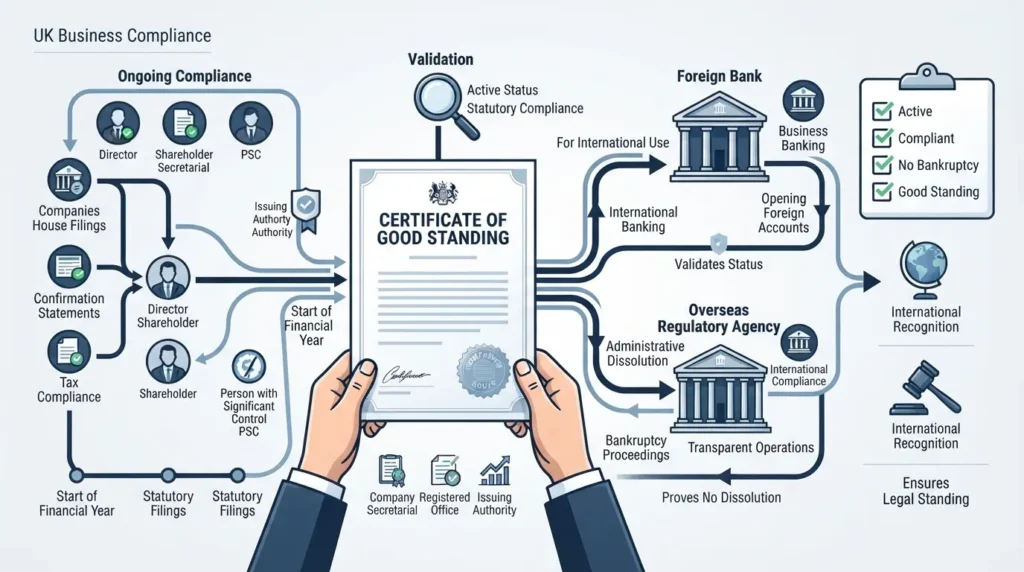
International expansion projects stall immediately when foreign partners doubt operational stability. A Certificate of Good Standing provides undeniable proof that a business remains active and compliant with domestic regulators. 91% of international banking institutions demand this current certificate before opening corporate bank accounts for foreign branches. Domestic registrars issue this document only after verifying that annual accounts and confirmation statements remain fully up to date. Foreign authorities accept this official verification as a guarantee against operational defaults. Businesses seeking rapid approval often acquire Apostille-Ready Company Documents From Form My Company to streamline validation.
What Role Do Certified Director and Shareholder Records Play?
Certified director and shareholder records prove beneficial ownership and executive authority during international expansion. Foreign regulatory bodies mandate these disclosure documents to enforce anti-money laundering laws and identify ultimate controllers of foreign branches.
Transparency regulations across 140 global jurisdictions require exact identification of corporate decision-makers. Foreign trade ministries inspect certified Registers of Directors and Registers of Shareholders to verify executive authority. Three validation methods establish executive legitimacy: passport authentication, residential address verification, and appointment resolution checks. Corporate officers must present certified copies of these registers to execute foreign leases, hire international employees, and register local tax accounts. Comprehensive Supplementary Company Documents provide the necessary proof of directorship and share ownership required by foreign commercial courts.
What Steps Complete the International Document Authentication Process?
Completing the international document authentication process requires notarisation, legalisation, and consular endorsement. Foreign affairs ministries and embassies validate domestic seals through these sequential verification stages to ensure legal recognition abroad.
Domestic documents lack automatic legal force outside their country of origin. International treaties govern how foreign states accept foreign public documents. 85% of global trade partners participate in the Hague Apostille Convention, which simplifies authentication into a single official stamp. Non-convention countries require full consular legalisation involving multiple government offices. Three sequential authentication steps govern non-convention processing: domestic solicitor certification, foreign ministry verification, and destination embassy stamping. Executing this rigorous protocol transforms standard domestic paperwork into internationally valid commercial instruments.
Navigating international expansion requires strict adherence to foreign documentary standards. Securing certified corporate records, governance charters, and active status certificates ensures seamless cross-border trade and branch establishment. Form My Company delivers reliable solutions for businesses seeking international growth through professional document preparation.
Explore More Supplementary Company Documents Guide,
What Is the Best Way to Organise Your Company Records?
When Does a Document Need Embassy Attestation as Well as an Apostille?
Frequently Asked Questions
What supplementary company documents do I need for international trade?
International trade authorities typically require certified copies of your Certificate of Incorporation, Memorandum and Articles of Association, and a recent Certificate of Good Standing. When you utilize supplementary company documents from Form My Company, you ensure that foreign registries receive legally verified proof of your corporate existence and director authority.
How do I get company documents certified for use overseas?
Company documents are certified for overseas use through a formal legalisation process involving domestic notarisation and government authentication. Form My Company assists businesses in preparing these essential records so they meet the exact statutory requirements of foreign commercial banks and regulatory bodies.
What is a Certificate of Good Standing in company documentation?
A Certificate of Good Standing is an official document issued by the domestic registrar confirming that a corporation is actively registered and compliant with all filing requirements. Foreign institutions frequently request this certificate to verify that no administrative dissolution proceedings affect the visiting enterprise.
Why do foreign banks require certified corporate records?
Foreign banking institutions mandate certified corporate records to comply with international anti-money laundering regulations and verify beneficial ownership structures. Providing verified supplementary company documents satisfies strict Know Your Customer protocols required for opening international corporate accounts.
How long does it take to prepare documents for opening a branch abroad?
Document preparation timelines vary depending on whether destination countries require standard apostille stamps or full consular legalisation through multiple foreign embassies. Utilizing professional preparation services accelerates the authentication workflow, minimizing cross-border expansion delays for growing enterprises.