
Submitting an out-of-date Certificate of Good Standing results in immediate application rejection by corporate registries, financial institutions, and international authorities. Regulatory bodies enforce strict validity windows, typically 3 months, invalidating any document exceeding this threshold and halting administrative processing.
Why Do Authorities Reject Out-of-Date Certificates?
Authorities reject outdated documents because corporate compliance status changes rapidly, requiring current verification to prevent fraud and maintain legal accuracy across commercial registries.
Regulatory agencies operate on strict temporal thresholds to ensure absolute corporate transparency. A certificate issued six months ago fails to reflect current solvency or compliance filings. Companies face dynamic legal changes, statutory updates, and potential strike-off proceedings daily. Third-party institutions demand real-time validation to eliminate systemic risk. Financial compliance frameworks require fresh authentication data to satisfy international anti-money laundering protocols.
How Does Document Expiry Impact International Business Transactions?
Document expiry disrupts international trade by invalidating foreign filings, delaying cross-border asset acquisitions, and halting foreign subsidiary registrations.
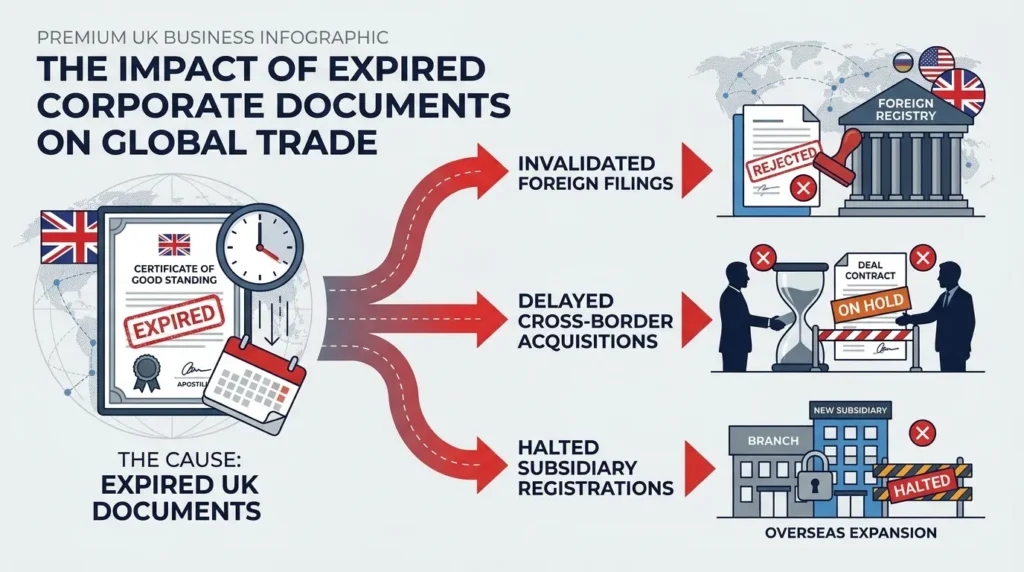
Global expansion relies on uninterrupted document authentication chains. Foreign corporate registries enforce a strict three-month validity limit on incoming documents. Overseas banks freeze corporate account openings when presented with expired validation paperwork. Overseas compliance officers reject outdated proof of corporate existence instantly. International partners terminate joint-venture negotiations upon discovering invalid statutory documentation.
What Financial Penalties Result From Registry Rejections?
Registry rejections generate administrative fines, incur expedited re-filing fees, and cause costly project delays for commercial enterprises.
Government filing offices retain processing fees regardless of application outcomes. Submitting invalid paperwork forces companies to pay secondary application fees. Administrative staff spend 14 hours re-processing rejected documentation. Project timelines slip by 21 business days during manual review cycles. Legal advisory teams bill extra hours rectifying avoidable compliance oversight errors.
How Can Businesses Prevent Certificate Expiry Issues?
Businesses prevent expiration issues by monitoring filing windows, utilizing automated renewal alerts, and securing fresh validation documents ahead of deadlines.
Corporate secretaries track exact calendar milestones for every regulatory submission. Compliance teams establish calendar reminders 45 days prior to document expiration. Operational units streamline renewals through dedicated Certificate of Good Standing services. Management reviews statutory filing calendars during quarterly compliance audits. Organizations maintain digital repositories containing active compliance assets.
What Steps Resolve an Immediate Rejection Notice?
Resolving a rejection notice requires ordering a fresh official document, updating the submission package, and re-submitting the compliance file.
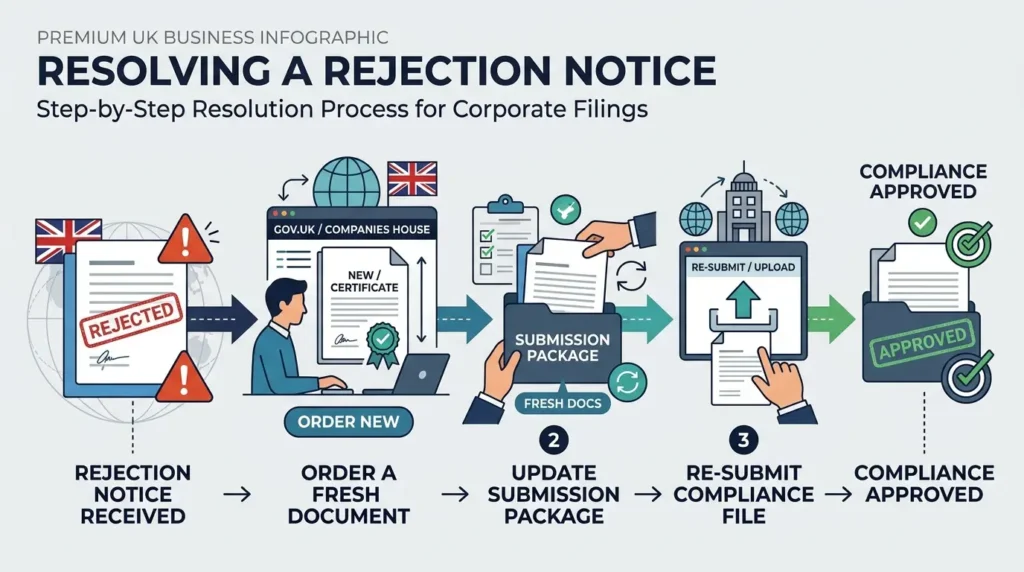
Administrative personnel review the specific rejection code issued by the registry. Finance departments allocate funds for expedited document re-issuance. Corporate officers request immediate authentication via the How to Avoid Rejection From Submitting an Expired Certificate of Good Standing guide. Compliance managers upload the newly authenticated file to the target portal. Legal teams track the secondary review queue until official approval registers.
How Do Banks Handle Expired Compliance Documentation?
Banks handle expired compliance documentation by freezing transaction capabilities, restricting credit lines, and demanding immediate identity re-verification.
Commercial banking institutions execute automated compliance audits every 12 months. Account managers issue 30-day cure notices upon detecting expired status certificates. Compliance officers suspend outgoing international wire transfers until valid proof arrives. Risk mitigation units flag accounts for mandatory manual review. Form My Company assists commercial clients in securing urgent updates through Request an Up-to-Date Certificate of Good Standing From Form My Company services to restore full banking functionality.
Registry submissions require absolute temporal accuracy to satisfy global corporate standards. Outdated paperwork triggers immediate administrative rejection, financial loss, and operational delay. Proactive document management safeguards corporate standing across international jurisdictions. Form My Company delivers reliable corporate solutions that maintain continuous legal compliance without administrative friction.
Explore More Certificate of Good Standing Guide,
How to Choose a Renewal Schedule for Your Certificate of Good Standing
Comparing Single-Use vs Regularly Renewed Certificates of Good Standing
Frequently Asked Questions
What is a Certificate of Good Standing in the UK?
A Certificate of Good Standing is an official document issued by Companies House that confirms a UK registered company has existed continuously since incorporation and remains active. Businesses often require this statutory proof when opening international bank accounts, expanding overseas operations, or pursuing cross-border commercial contracts. Form My Company provides streamlined assistance for businesses looking to secure this verification document efficiently.
How long is a Certificate of Good Standing valid?
Most international authorities, banks, and regulatory bodies enforce a strict three-month validity limit on a Certificate of Good Standing. Because corporate compliance status and solvency can change rapidly, third-party institutions require a recently issued document to eliminate risk. Form My Company helps organizations obtain up-to-date documentation to prevent application rejections caused by expired paperwork.
Why do international banks require a Certificate of Good Standing?
International banking institutions demand a Certificate of Good Standing to satisfy anti-money laundering protocols and verify active corporate legal status. This document proves that the company has filed its mandatory confirmation statements and accounts with Companies House. Form My Company assists foreign subsidiaries and domestic enterprises in procuring valid certificates required for seamless corporate account management.
Can an expired Certificate of Good Standing be updated?
Corporate registries do not renew or extend expired certificates; instead, companies must order an entirely new Certificate of Good Standing through Companies House. Submitting outdated paperwork results in immediate administrative rejection by government agencies and financial institutions. Form My Company streamlines the re-ordering process to ensure companies maintain compliance without operational delays.
How can a company quickly obtain a Certificate of Good Standing?
Companies can obtain a Certificate of Good Standing by submitting an application directly to Companies House, choosing between standard processing or expedited courier options. The registry verifies that the company has no pending strike-off actions or overdue filing obligations before issuing the official paper document. Form My Company facilitates this procurement process, ensuring accurate submissions for businesses requiring rapid validation.