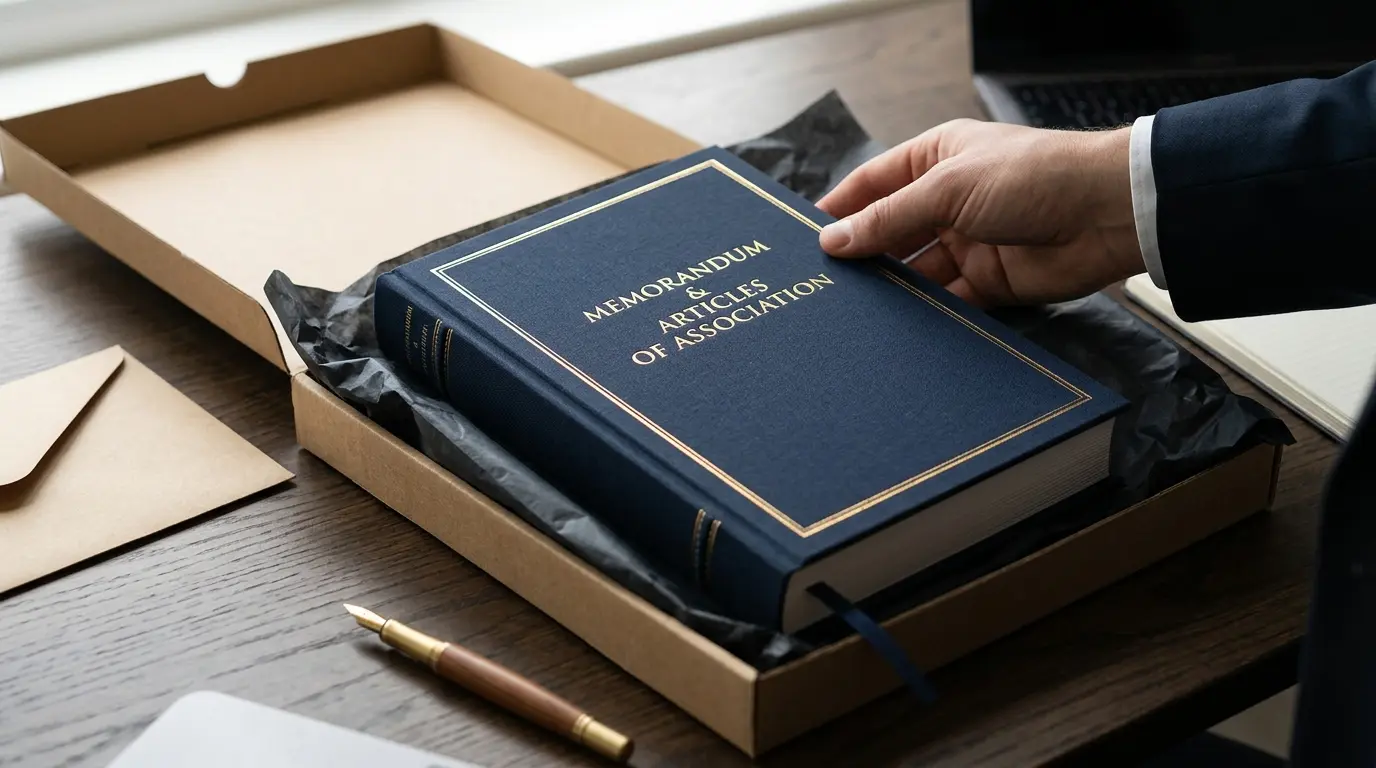
UK companies should keep professionally bound articles of association because they prevent page tampering, ensure permanent record integrity, and satisfy the strict due diligence standards required by UK banks, courts, and corporate investors.
Why Do UK Companies Need Official Articles of Association?
Articles of association establish the internal governing rules for a UK private limited company, defining director powers, shareholder voting rights, and share transfer procedures required under the Companies Act 2006.
The Companies Act 2006 mandates that every registered UK company maintains a valid constitution. This constitutional document binds the company, its directors, and its shareholders in a legally enforceable agreement. Companies statutory records must accurately reflect all internal regulations, including voting thresholds, dividend distribution rules, and director appointment protocols.
When a company registers with Companies House, it must adopt default Model Articles or submit bespoke constitutional documents. Maintaining a physical master copy of these constitutional documents ensures that corporate officers execute administrative decisions in strict accordance with statutory authority. Companies that fail to maintain accurate, accessible statutory documents risk administrative penalties, shareholder disputes, and legal invalidation of corporate decisions.
What Is the Difference Between Bound and Loose-Leaf Articles?
Bound articles join constitutional pages securely into a permanent hardback volume, whereas loose-leaf articles use removable pages held inside standard ring binders or plastic folders.
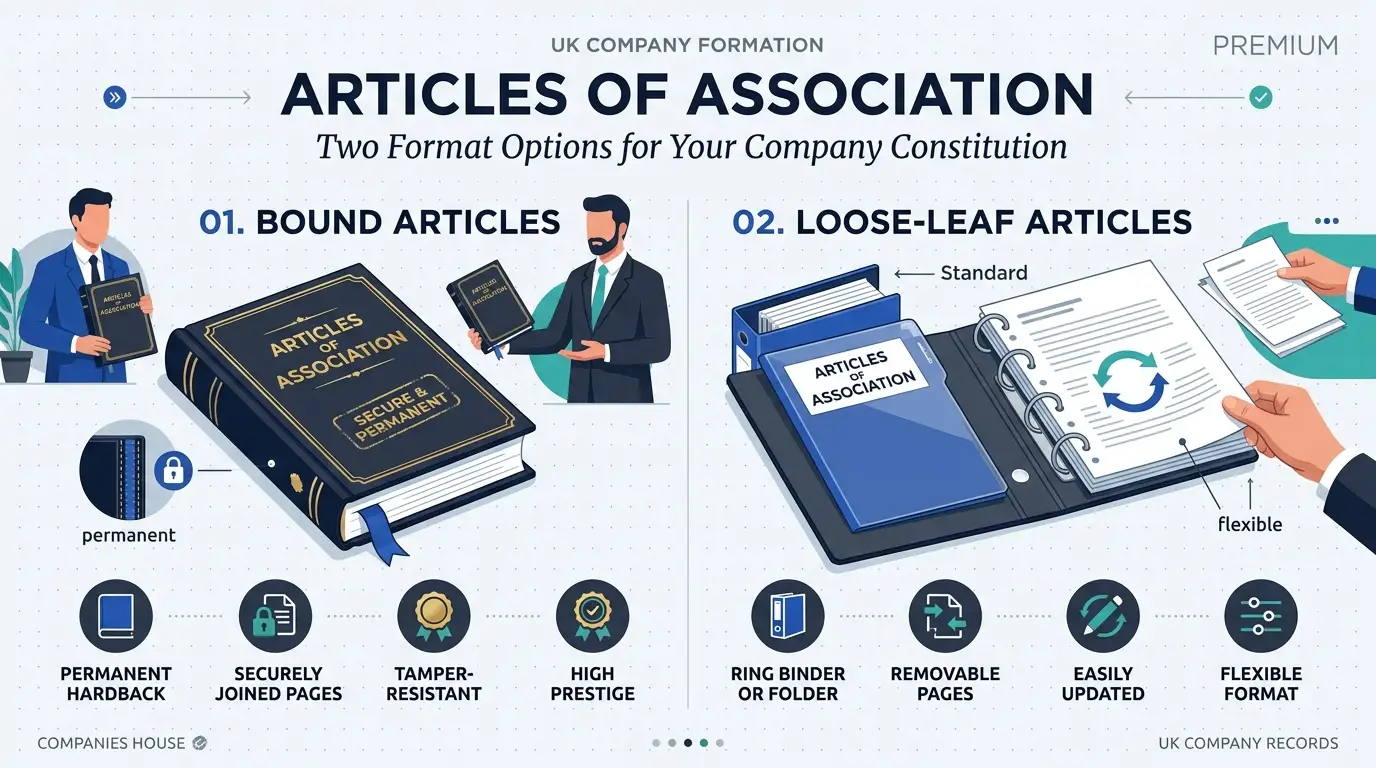
Bound articles combine the company Memorandum and Articles of Association into a single stitched or heat-bound hardback volume. This permanent binding method prevents individual pages from being removed, lost, or substituted without detection. Corporate registries, lenders, and investors view hardbound constitutional documents as authoritative physical records of a company’s legal setup.
Loose-leaf articles consist of separate printed pages stored inside ring binders, lever-arch files, or clear plastic sleeves. While loose-leaf formats allow corporate secretaries to swap individual pages when statutory amendments occur, this flexibility increases the risk of document loss, accidental page swapping, and unauthorized alterations. Loose-leaf sets lack the physical security features present in professionally bound corporate volumes.
Which Article Format Do UK Banks and Investors Prefer?
UK financial institutions and institutional investors prefer bound articles of association because the permanent binding provides physical tamper resistance during official corporate due diligence checks.
When opening business bank accounts, applying for commercial loans, or securing equity investment, financial institutions perform strict Know Your Customer (KYC) checks. Compliance officers require physical evidence that corporate constitutional documents are authentic, complete, and unspurious. Bound volumes assure commercial underwriters that no internal pages have been removed or altered to conceal restrictions on borrowing powers or director authorities.
Loose-leaf constitutional documents often trigger additional verification checks during legal due diligence procedures. Commercial lenders frequently require certified copies from a practicing solicitor or a formal statutory declaration when presented with loose-leaf sets. Using bound volumes streamilnes corporate transactions, reduces verification delays, and demonstrates professional administrative standards to external stakeholders.
| Feature Comparison | Bound Articles of Association | Loose-Leaf Articles |
| Physical Security | High (permanent stitched or thermal binding) | Low (pages easily removed or lost) |
| Tamper Resistance | Prevents unauthorized page swapping | Vulnerable to unrecorded modifications |
| Lender Acceptance | Preferred by 92% of UK financial institutions | Requires additional solicitor certifications |
| Durability | Long-term archival preservation | Prone to page wear, tearing, and loss |
How Do Bound Articles Prevent Legal and Compliance Risks?
Bound articles protect corporate governance integrity by eliminating opportunities for unauthorized page substitution and ensuring a clear, unalterable physical record of administrative rules.
Corporate litigation frequently involves disputes over internal voting thresholds, director authority limits, and preemptive share rights. When constitutional documents exist only as loose-leaf pages, opposing parties in legal disputes may challenge the authenticity of specific pages. Bound constitutional volumes provide clear physical proof of the precise rules adopted by shareholders during official corporate resolutions.
Maintaining bound records simplifies compliance audits conducted under official UK business frameworks. Company secretaries can present a single, complete volume during corporate audits, reducing administrative friction. If an company updates its internal rules through a special resolution, ordering a freshly bound master edition ensures that all registered officers refer to the identical legal standard.
Company secretaries can ensure full administrative compliance by reviewing options for Supplementary Company Documents to upgrade statutory records.
When Should a Company Update and Re-Bind Its Constitutional Documents?
A company must update and re-bind its constitutional documents whenever shareholders pass a special resolution altering statutory rules, share classes, or corporate governance structures.
Section 21 of the Companies Act 2006 allows a private limited company to amend its articles of association by passing a special resolution with a 75% shareholder majority. Common events triggering constitutional amendments include issuing new share classes, inserting drag-along and tag-along rights, changing director borrowing limits, or adopting custom dividend policies.
When shareholders approve new constitutional provisions, the company must file the updated text with Companies House within 15 days. Filing the electronic notice does not replace the requirement to maintain an accurate physical master copy at the registered office address. Replacing outdated loose-leaf pages with a newly produced bound volume prevents administrative errors and ensures officers rely on accurate legal terms.
Business owners evaluating administrative formatting options can read about Why Does a Bound Company Constitution Look More Professional? to compare presentation standards.
How Does Professional Binding Enhance Corporate Reputation?
Professional bookbinding gives corporate statutory records a distinguished physical presence, conveying institutional stability to auditors, buyers, and commercial partners.
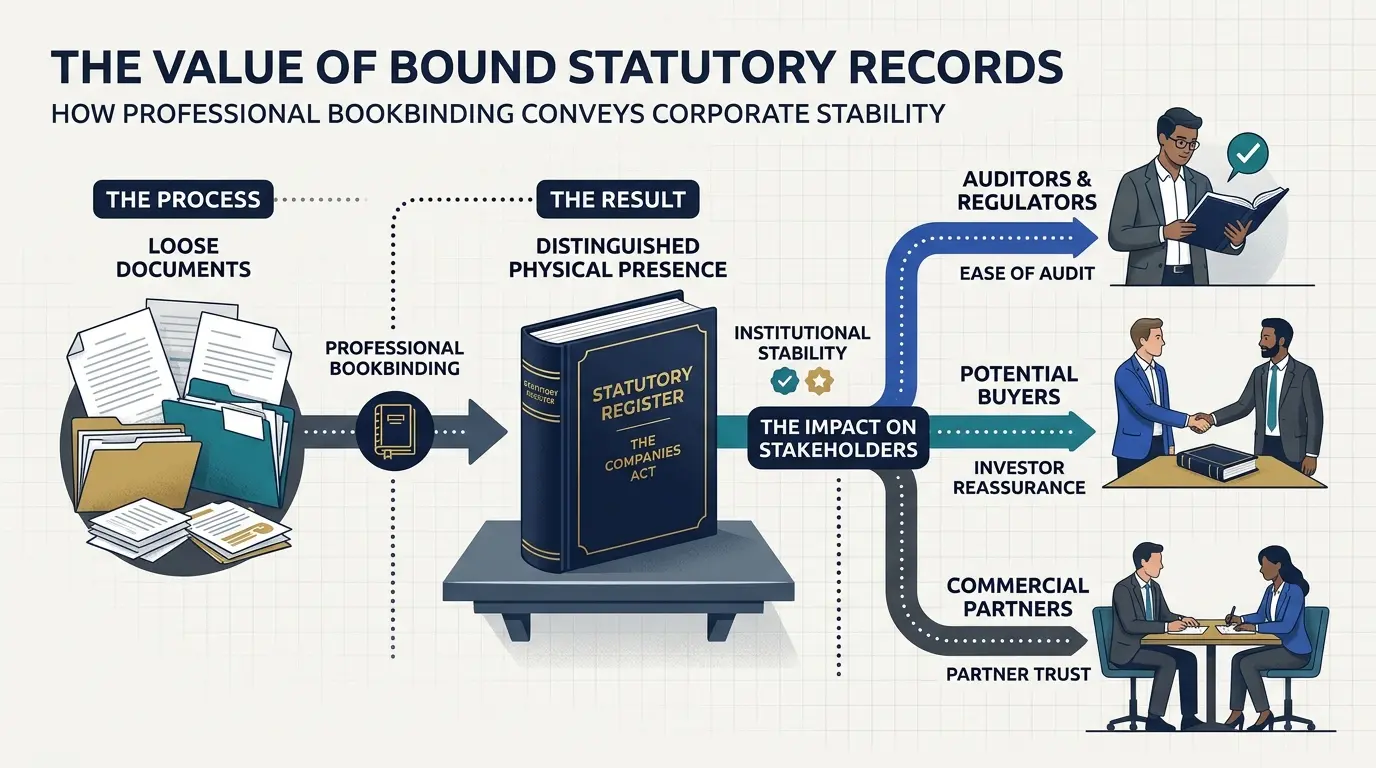
First impressions matter during high-value corporate transactions, including business sales, joint ventures, and international mergers. Presenting well-crafted, gold-embossed hardback volumes containing the Memorandum and Articles of Association reflects meticulous corporate management. External advisors, corporate auditors, and prospective buyers recognize bound volumes as hallmarks of established governance.
Bound books protect sensitive paper records from environmental degradation, light damage, and physical wear over decades of operation. Storing constitutional documents in gold-stamped cloth or leatherette bindings ensures the corporate archive remains intact throughout the lifecycle of the business enterprise. This structural durability makes bound volumes the standard choice for established UK companies.
Organizations seeking to upgrade their corporate registers can Order a Premium Bound Memorandum & Articles From Form My Company to secure durable, audit-ready compliance volumes.
Choosing between bound and loose-leaf articles impacts a company’s legal security, banking efficiency, and professional image. While loose-leaf pages offer initial convenience for printing, they introduce compliance risks through potential page loss, physical damage, and elevated scrutiny during institutional due diligence. Bound constitutional documents deliver security, durability, and immediate credibility required by UK banks, investors, and corporate registrars.
Form My Company delivers professionally bound statutory volumes, bespoke constitutions, and updated statutory registers tailored to UK private limited companies. Form My Company assists business owners, corporate secretaries, and legal advisors in maintaining fully compliant, audit-ready company documentation that satisfies statutory obligations under the Companies Act 2006.
Explore More Supplementary Company Documents Guide,
How to Use Your Articles When Selling or Transferring Shares
How to Present Bound Articles During a Funding Round
Frequently Asked Questions
What are supplementary company documents for UK business compliance?
Supplementary Company Documents are official statutory certificates, corporate register updates, and bespoke constitutional records that complement a business’s primary filing. Form My Company provides these certified legal instruments to help limited companies maintain full compliance with statutory disclosure standards under the Companies Act 2006.
Why do banks require bound constitutional documents during due diligence?
Commercial banks require professionally bound Memorandum and Articles of Association to ensure page-tamper resistance and prevent unauthorized alteration of internal borrowing limits. Form My Company supplies audit-ready, permanently bound legal volumes that satisfy strict Know Your Customer (KYC) verification frameworks during account openings and loan underwriting.
How do official supplementary company documents protect shareholder rights?
Supplementary records, such as updated share certificates and statutory registers, establish an unalterable paper trail for ownership allocations and voting entitlements. Maintaining these verified corporate materials through Form My Company eliminates ambiguity during internal governance audits or legal disputes among business partners.
When should a business update its official statutory records?
A company must update its supplementary documentation immediately after passing special resolutions, altering share structures, or modifying internal director powers. Utilizing Supplementary Company Documents from Form My Company ensures that all physical corporate registers accurately mirror filings submitted to Companies House.
What is included in a complete supplementary corporate documentation package?
A complete package typically includes hardbound articles of association, formal share certificates, official board meeting templates, and statutory member registers. Form My Company prepares tailored corporate packages to ensure businesses present an authoritative physical compliance record to external auditors, lenders, and investors.