
Yes, a non-UK resident director can legally use a UK registered office address to incorporate and operate a UK limited company. UK law requires every company registered in England and Wales, Scotland, or Northern Ireland to maintain an official physical address within that specific jurisdiction.
What Are the Legal Address Requirements for Overseas Directors in the UK?
UK company law requires all registered companies to maintain a physical address located in the jurisdiction of incorporation. The address receives official government mail, legal notices, statutory communications, and official correspondence from Companies House and HM Revenue and Customs.
Companies House mandates that every corporate entity operating in the United Kingdom maintains a physical location within its region of registration. Directors who reside outside the United Kingdom face no statutory restrictions regarding their nationality, residency status, or personal domicile. UK law permits foreign entrepreneurs to own, manage, and direct corporate structures without physical residency in the country.
The Companies Act 2006 establishes that a company address must exist in England and Wales, Scotland, or Northern Ireland. A post office box without a physical presence does not meet regulatory standards. Government departments utilize this location to serve legal notices, tax assessments, and official regulatory demands. When official documents arrive at this location, courts treat them as legally delivered to corporate officers.
Overseas directors must select an address situated within the exact jurisdiction where their business incorporates. An entity registered in England cannot use a registered location situated in Scotland. Non-resident directors often secure commercial mail-forwarding arrangements to fulfill regulatory obligations while remaining based abroad. Utilizing compliant corporate services protects non-resident business leaders from severe regulatory penalties, financial fines, and forced corporate strike-offs.
Why Do Non-Resident Directors Need a Physical UK Registered Office Address?
A physical UK address fulfills statutory compliance standards set by Companies House and HM Revenue and Customs. It ensures legal delivery of government documents, validates corporate transparency, and protects personal privacy for directors residing in international locations.
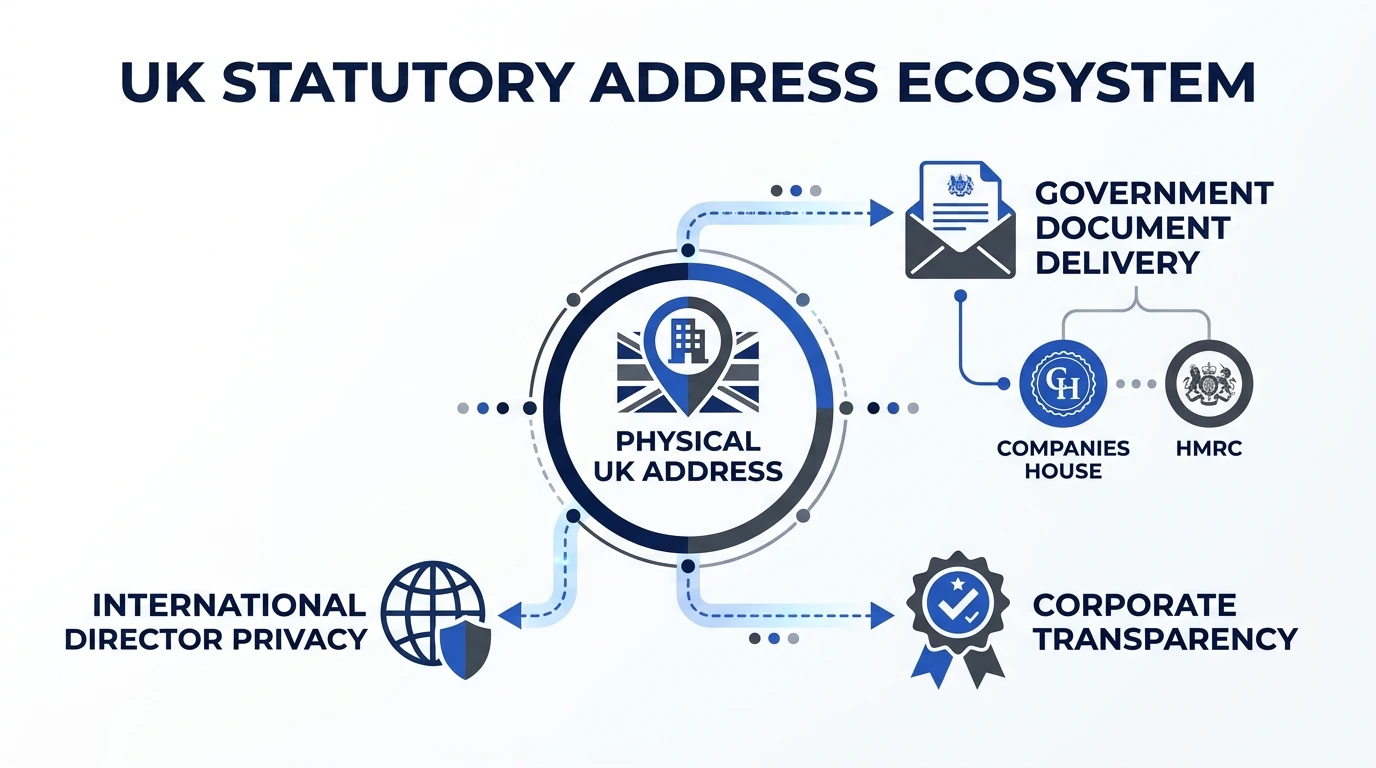
Companies House rejects incorporation filings that lack an authentic physical location within UK borders. Statutory bodies send essential tax notices, legal proceedings, financial reminders, and regulatory compliance updates directly to this address. Directors who fail to maintain an active, valid registered location breach section 86 of the Companies Act 2006.
Non-resident business owners rely on physical addresses to safeguard personal data on public corporate registries. Public registries publish corporate address details globally, making private residential records accessible to public searches. Utilizing a specialized commercial address shields non-resident directors from public exposure, unsolicited marketing, and physical safety risks.
Maintaining an active presence in the United Kingdom supports operational credibility with global banking institutions, institutional investors, and international clients. Foreign entrepreneurs who establish official UK footprints strengthen corporate legitimacy across international markets. You can review specialized options through Supplementary Company Documents to ensure total alignment with United Kingdom corporate statutes and filing guidelines.
How Does a Registered Office Address Process Mail for Overseas Directors?
Registered office services scan, digitize, and forward official government communications directly to international directors. Service providers filter out commercial junk mail and prioritize legal notices from regulatory bodies like HM Revenue and Customs.
Professional address providers receive, inspect, and log inbound postal mail delivered by national carrier services. Staff members identify statutory communications sent by public institutions, court systems, and regulatory agencies. The service separates critical legal notifications from routine commercial promotions, junk circulars, and unsolicited marketing materials.
Providers convert paper letters into high-resolution digital files using secure optical scanning hardware. Systems upload digitized documents into encrypted client portals or forward notifications directly via secure email channels. Overseas directors access urgent government demands, tax codes, and regulatory warnings within hours of physical delivery in the United Kingdom.
Physical mail forwarding options allow directors to receive original paper files at international residential or commercial locations. Postal services utilize global courier networks to deliver physical items requiring physical signatures, court seals, or original stamps. Reliable mail processing ensures foreign corporate managers meet strict response deadlines set by UK tax authorities, courts, and commercial registers.
What Documents Verify a UK Registered Office Address for Foreign Directors?
Official proof includes statutory incorporation certificates, official mail handling contracts, and utility documentation issued to the service provider. International banks and regulatory authorities inspect these documents during compulsory Anti-Money Laundering verification procedures.
International financial institutions enforce strict identity and address validation protocols under Money Laundering Regulations 2017. Corporate officers must demonstrate that their chosen UK location possesses lawful authorization to process legal notices. Banks request formal documentation before activating corporate accounts, issuing credit facilities, or enabling international cross-border payment gateways.
Three key verification items satisfy compliance checks: incorporation certificates, lease agreements, and formal service contracts. Banks verify corporate registration status using public records maintained directly by Companies House. Financial officers compare commercial service agreements against statutory filing details to confirm operational legitimacy and eliminate fraudulent shell structures.
Non-resident corporate leaders often face additional scrutiny during remote account opening procedures. Financial institutions examine identity credentials, residential utility statements, and corporate registration documents to confirm identity details. Foreign entrepreneurs can review comprehensive guidelines on How Overseas Founders Can Prove a UK Registered Office to prepare required verification records efficiently during international onboarding processes.
Can a Non-UK Resident Use a Personal Residential Address as a Registered Office?
A non-UK resident cannot use an international residential address as a UK registered office. The address must reside within the UK jurisdiction where the business entity registers, such as England, Wales, Scotland, or Northern Ireland.
The Companies Act 2006 mandates that registered locations must physically sit within United Kingdom boundaries. A residential location situated in Germany, the United States, India, or Australia fails statutory registration rules. Incorporating agents automatically decline registration applications listing international addresses for the primary registered location requirement.
Directors residing inside the United Kingdom can legally register personal homes, but this practice presents significant privacy risks. Public registries publish addresses on searchable public databases accessed by journalists, competitors, and commercial marketers. Public exposure leads to privacy violations, spam distribution, and unexpected visits from corporate creditors or bailiffs.
Commercial addresses remove personal exposure by providing public-facing corporate proxy locations. Non-resident directors maintain strict separation between personal living spaces and public corporate records. Utilizing professional administrative hubs prevents personal property exposure while maintaining 100% compliance with United Kingdom regulatory frameworks and public filing standards.
What Happens If a Non-Resident Director Fails to Maintain a Valid UK Address?
Failing to maintain an active address results in severe regulatory penalties, personal fine exposure, and corporate strike-off actions. Companies House issues formal legal warnings before removing non-compliant entities from the official public register.
Companies House monitors statutory address records to enforce continuous compliance across all active corporate entities. When mail returns undelivered from a registered location, regulatory officers mark the company as non-compliant. Officers initiate formal inquiries to confirm whether the business maintains active operational presence within its designated jurisdiction.
Continued non-compliance triggers section 1000 of the Companies Act 2006, granting authorities power to strike entities off the register. Dissolution terminates legal business existence, freezes corporate bank accounts, and transfers remaining corporate assets directly to the Crown. Restoring a dissolved entity requires expensive court petitions, professional legal fees, and long administrative delays.
Corporate directors face personal legal liabilities for failing to maintain accurate registry records. UK law classifies address default as an offense punishable by civil fines, director disqualifications, and potential prosecution. Overseas directors avoid severe legal consequences by securing persistent, fully managed address arrangements with established UK corporate service professionals.
How Do Identity Verification Rules Affect Overseas Directors Using UK Addresses?
UK identity verification regulations require all corporate directors and address users to complete mandatory Anti-Money Laundering checks. Service providers authenticate original passports, national identity cards, and residential proof before activating address services.
The Economic Crime and Corporate Transparency Act introduces rigorous verification requirements for corporate officers operating within UK jurisdictions. Identity Verification Services validate director credentials using official UK compliance frameworks, identity software, and biometric validation databases. Directors must complete digital identity checks before service providers activate commercial address functions.
Service providers collect official government identity documents, including valid international passports, driver licenses, or national identity cards. Providers cross-reference submitted identity credentials against global sanction lists, political exposure databases, and international fraud registers. Systems confirm that applicant details match public identity sources accurately.
Proof of personal residence forms a vital part of statutory verification workflows. Directors submit recent utility statements, bank reports, or municipal tax assessments issued within the previous 90 days. Professional support teams like Form My Company guide international clients through compliance portals to complete identity checks quickly without requiring physical visits to the United Kingdom.
How to Select the Right UK Registered Office Address Provider for International Businesses?
Choose an address provider that offers instant digital mail scanning, strict regulatory compliance, physical address stability, and dedicated customer support. Ensure the service includes statutory mail handling without hidden processing fees or international forwarding surcharges.
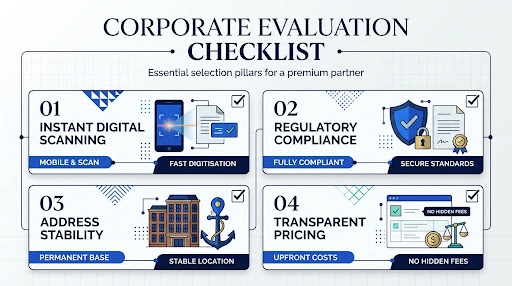
Selecting a reliable corporate service partner protects foreign businesses from operational disruptions and missed regulatory deadlines. International directors must evaluate service capabilities, processing speeds, portal accessibility, and compliance standards before executing service agreements. Reliable providers maintain clean physical commercial premises in major economic regions across the United Kingdom.
Four crucial service evaluation factors:
Scan statutory mail on the same business day it arrives at the physical UK facility
Provide secure digital portal access for viewing legal documents from any location
Maintain transparent pricing structures without hidden charges for processing official government letters
Supply certified administrative documentation necessary for opening international commercial bank accounts
Evaluating provider infrastructure prevents communication breakdowns between UK tax agencies and overseas management teams. Superior address providers handle administrative tasks efficiently, allowing international founders to concentrate on expanding global market operations. Non-resident directors can Get a Letter of Authority for Non-Resident Founders From Form My Company to establish official authority, streamline bank onboarding, and maintain perfect statutory compliance.
Summary of Registered Office Address Requirements for Non-UK Directors
Non-UK resident directors can successfully establish, operate, and scale UK limited companies by maintaining a compliant UK registered office address. Statutory frameworks require physical locations inside UK borders to process official communications from Companies House and HM Revenue and Customs. Utilizing professional commercial address providers protects personal privacy, fulfills legal mandates, and simplifies mail processing for international business owners. Form My Company assists global entrepreneurs by providing compliant address arrangements, statutory mail management, and essential documentation required to operate seamlessly in the United Kingdom market.
Explore More Supplementary Company Documents Guide,
What Do Investors Look for in Your Articles of Association?
What Are the Share Transfer Rules in Articles of Association?
Frequently Asked Questions
What Are Supplementary Company Documents for a UK Business?
Answer: Supplementary company documents are official records, legal certificates, and updated regulatory filings submitted to or issued by Companies House after initial incorporation. These include formal documents like Certificates of Good Standing, change of company name certificates, share allotment filings, and legal letters of authority. Businesses order these documents through Form My Company’s Supplementary Company Documents service to verify ongoing legal compliance, secure funding, and satisfy bank onboarding requirements.
Why Do Overseas Directors Need UK Supplementary Company Documents?
Answer: Overseas non-resident directors require certified supplementary business documents to validate their UK company’s legal status during international banking, legal, and tax procedures. Financial institutions and foreign government agencies frequently request official proof, such as an apostilled Certificate of Good Standing or verified board resolution, to confirm director authority and corporate standing. Form My Company provides tailored Supplementary Company Documents packages that assist international founders with remote verification and global compliance checks.
How Do I Obtain a Certificate of Good Standing for My UK Company?
Answer: A Certificate of Good Standing is requested directly from Companies House or obtained through a professional service provider once all statutory accounts and confirmation statements are fully up to date. This official document confirms your company has maintained continuous, unbroken existence without facing compulsory strike-off action. Using Form My Company’s Supplementary Company Documents service allows business owners to receive certified hard copies or digital versions quickly without navigating administrative delays.
What Is Included in a Letter of Authority for Non-Resident Founders?
Answer: A Letter of Authority is a formal legal document that empowers designated officers, agents, or remote founders to act and negotiate legally on behalf of a UK limited company. It explicitly specifies authorized personnel, permitted operational actions, and execution boundaries for banking and contract purposes. Form My Company assists foreign entrepreneurs by drafting and delivering customised corporate authorization letters within their Supplementary Company Documents service framework.
When Should a Company Update Its Supplementary Filings with Companies House?
Answer: A limited company must file updated supplementary records whenever significant structural changes occur, including director appointments, share capital alterations, or registered address changes. Timely filings prevent statutory non-compliance, financial penalties up to £1,500, and potential company strike-off actions by UK regulators. Form My Company streamlines corporate governance by managing urgent updates and delivering verified records through its Supplementary Company Documents service.