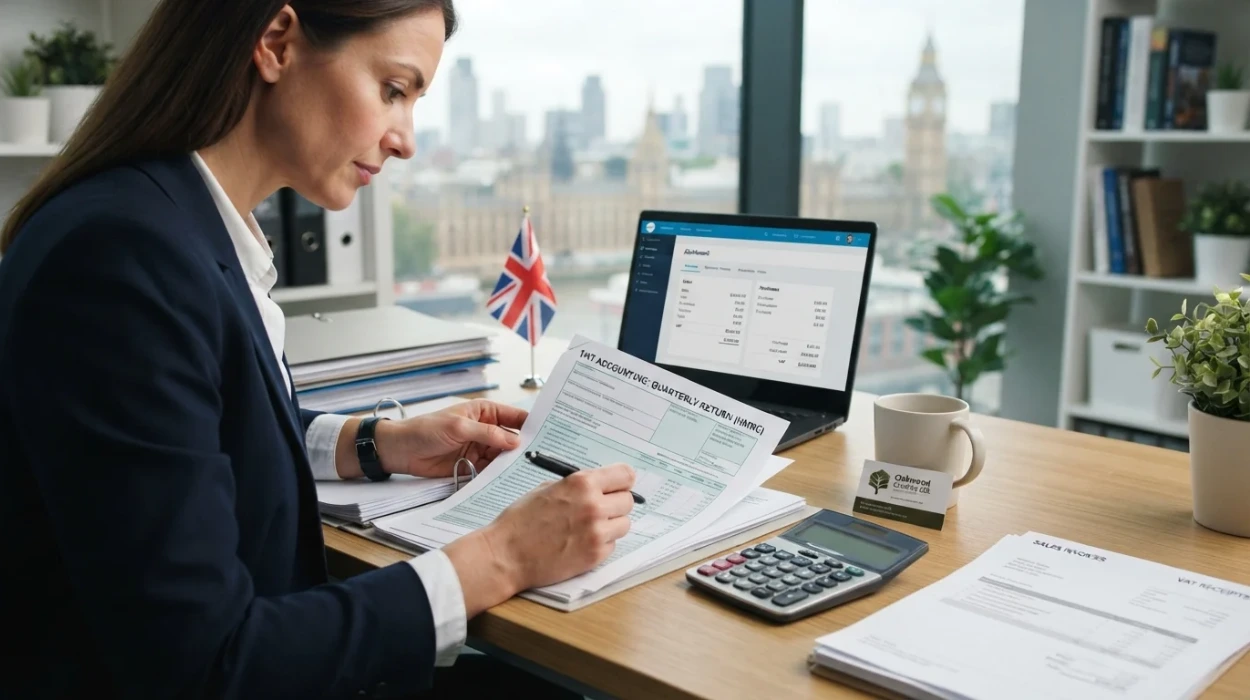
Preparing your first Value Added Tax return for Her Majesty’s Revenue and Customs requires exact digital record-keeping, correct calculation of output tax on sales and input tax on purchases, and timely submission through Making Tax Digital compliant software to avoid financial penalties.
What is a VAT return and why does your first submission matter?
A VAT return is an official financial report submitted to Her Majesty’s Revenue and Customs every three months that details total sales, total purchases, and the resulting tax liability or refund due.
Your first submission sets a compliance precedent with tax authorities. Accuracy prevents automated audits and cash flow disruptions. Businesses must reconcile all commercial transactions before the filing deadline.
Making Tax Digital mandates digital record keeping for all registered entities. Manual spreadsheets fail modern compliance standards. Companies must utilize authorized accounting software to bridge records directly with tax authority portals.
Errors during the initial filing trigger compliance reviews. Tax inspectors scrutinize early submissions closely. Correct preparation protects your enterprise from unexpected financial penalties and interest charges.
How do you calculate output tax and input tax correctly?
Output tax is the Value Added Tax charged on your taxable sales, while input tax is the tax paid on business purchases, and the net difference determines your actual payment or refund.
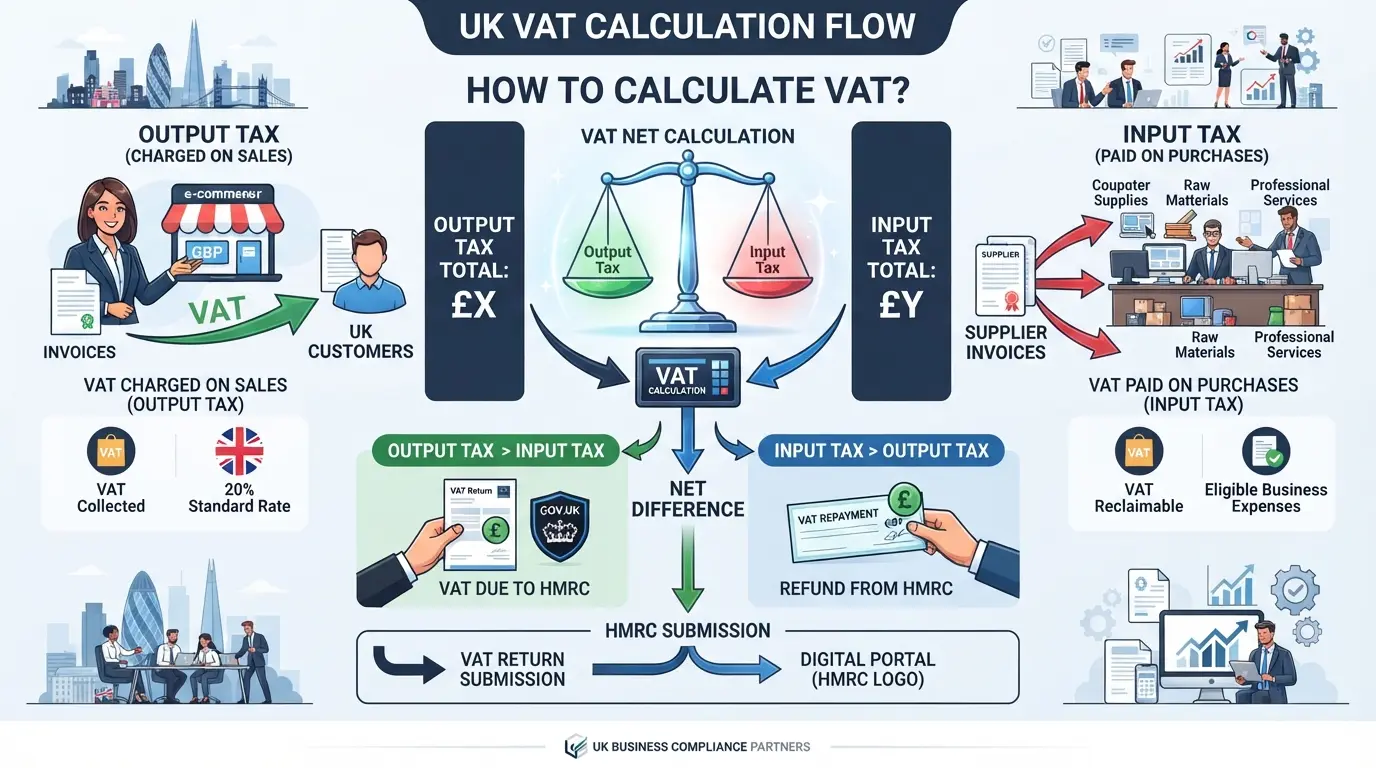
Sales invoices must display correct tax rates based on product classifications. Standard, reduced, and zero rates apply to different commercial goods. Applying wrong percentages skews your total tax liability calculation.
Purchases must relate directly to taxable business operations to qualify for tax recovery. Ineligible expenses cannot offset your liability. Receipts must feature valid vendor registration numbers.
Calculations require strict mathematical precision. Software automates these tallies to eliminate human arithmetic mistakes. Reconciling bank statements with sales ledgers confirms every transaction is accounted for.
What are the most common VAT return errors to avoid?
Common VAT return errors include claiming input tax without valid tax invoices, miscalculating partial exemptions, omitting non-sales revenue, and missing statutory submission deadlines.
Claiming tax recovery without official invoices violates compliance rules. Every deduction requires documentary proof from registered suppliers. Missing paperwork invalidates your recovery claim during an audit.
Partial exemption rules apply when businesses sell both taxable and exempt goods. Calculating the exact recoverable portion requires specific statutory formulas. Incorrect allocation leads to underpayment or overpayment.
Missing deadlines incurs immediate financial penalties from tax authorities. Automated late submission fines accumulate quickly. Enterprise leaders must schedule internal reviews well before the filing date.
Professional guidance ensures total compliance. Organizations often utilize expert VAT registration assistance to establish flawless financial workflows from day one. Proper setup prevents recurring calculation mistakes.
How does Making Tax Digital impact your filing process?
Making Tax Digital requires businesses to keep digital records and submit quarterly returns using approved software that links directly to government gateways.
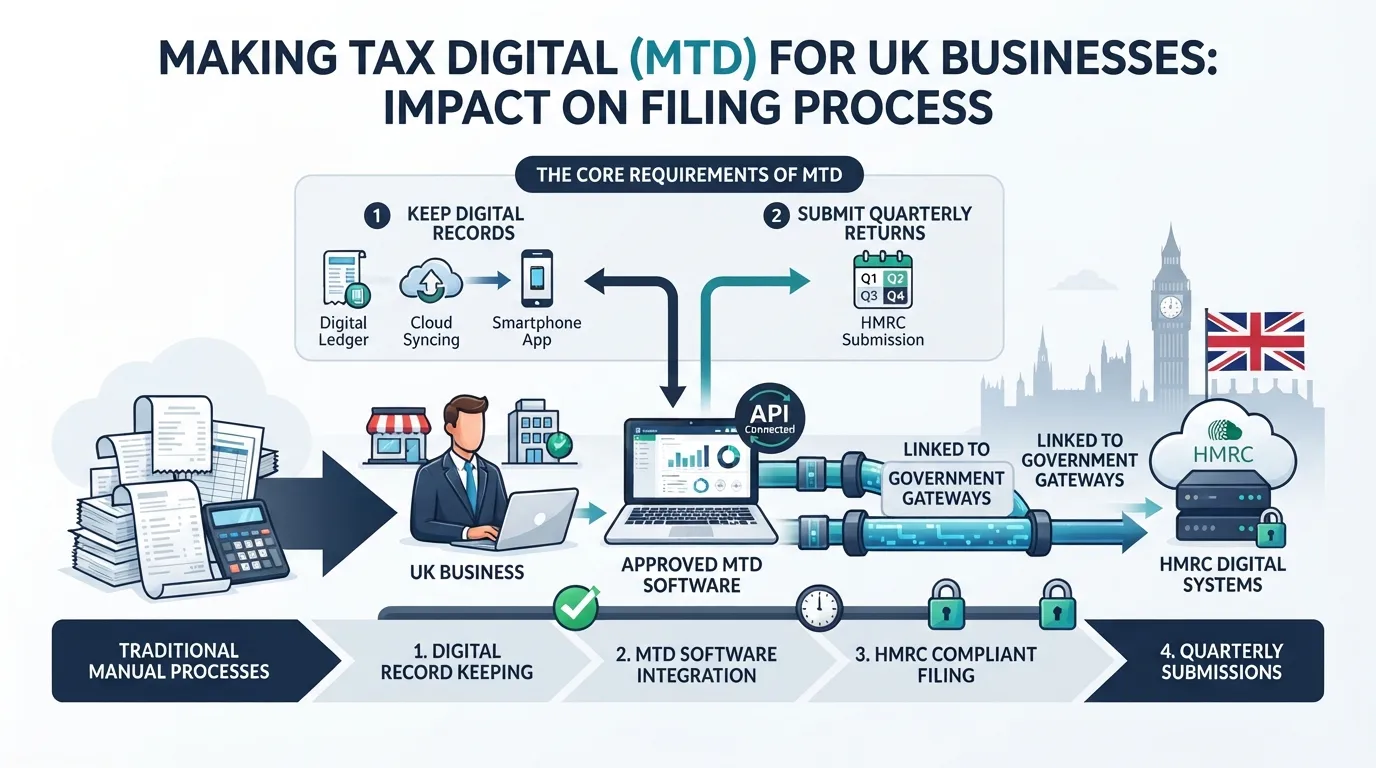
Traditional paper filing methods are entirely obsolete for registered entities. Digital links must connect original software records directly to tax portals. Manual data copying between systems creates unacceptable transcription risks.
Software solutions automate the generation of quarterly figures. Automated checks flag unusual transactions or missing data fields before submission. Enterprise finance teams save administrative hours through automated digital workflows.
Digital archives must remain accessible for six years. Tax inspectors can request historical transaction logs at any time. Secure cloud storage protects corporate financial data against physical loss.
To understand your foundational obligations better, review the core responsibilities of being a VAT-registered business. Compliance requires understanding both reporting rules and ongoing administrative duties.
Explore More VAT Registration Assistance Guide,
How to Audit Your Invoices to Ensure Correct VAT Sourcing and Calculations
How to Transition from the Standard VAT Scheme to Digital Cash Accounting
How do you submit your return and handle payments with HMRC?
Submission occurs through commercial accounting software authenticated with government Gateway credentials, followed by transferring any owed funds directly via electronic banking.
Review all final figures before authorizing the digital submission. Authorized signatories must approve the return data. Once transmitted, Her Majesty’s Revenue and Customs issues an instant digital receipt.
Payment must reach government bank accounts by the statutory deadline. Electronic payment methods include Faster Payments, Direct Debit, and corporate debit cards. Setting up a direct debit automates future payments securely.
If your purchases exceed your sales, a refund claim is processed. The tax authority verifies refund requests before releasing funds to your bank account. Keeping accurate records speeds up refund approvals.
For complex corporate restructurings or complete outsourced filing management, read about end-to-end support for your complete HMRC VAT registration process to secure professional oversight. Comprehensive management eliminates administrative stress and ensures absolute accuracy.
Preparing your first Value Added Tax return demands rigorous digital record keeping, precise tax calculations, and strict adherence to statutory deadlines. Avoiding common errors protects your enterprise from financial penalties and regulatory scrutiny. Form My Company delivers the technical expertise and operational support needed to streamline your compliance journey. Professional assistance ensures your financial reporting remains accurate, timely, and fully aligned with modern tax regulations.
Frequently Asked Questions
When should a UK business register for VAT?
A UK business must register for Value Added Tax if its taxable turnover exceeds the statutory threshold of £85,000 over any rolling 12-month period. Companies can also choose voluntary registration below this limit to reclaim input tax on business expenses. Form My Company provides expert VAT registration assistance to help business owners determine their exact legal obligation and manage the application timeline efficiently.
How long does it take HMRC to process a VAT registration application?
Her Majesty’s Revenue and Customs typically processes standard VAT applications within 14 to 30 days, though complex cases can take longer if additional checks are required. Delays often occur if information is missing or if supporting documentation requires manual verification. Utilizing professional VAT registration assistance through Form My Company ensures your application is submitted accurately the first time, minimizing unnecessary processing delays.
What information and documents are needed to apply for VAT registration?
Applying for VAT registration requires official company registration details, bank account information, estimated turnover figures, and details of your primary business activity. Directors must also provide valid identification and proof of address for security and compliance checks. Form My Company streamlines this documentation process through professional VAT registration assistance to ensure complete adherence to UK tax requirements.
Can I register for VAT voluntarily if my turnover is below the threshold?
Yes, businesses with a turnover below the statutory threshold can register for VAT voluntarily to reclaim the tax paid on business purchases and equipment. Voluntary registration can also enhance corporate credibility with larger clients who expect suppliers to be VAT-registered. Form My Company offers specialized VAT registration assistance to help startups and small enterprises evaluate whether voluntary registration makes financial sense for their operations.
What is Making Tax Digital and how does it affect VAT-registered businesses?
Making Tax Digital is an HMRC initiative that mandates eligible businesses to maintain digital financial records and submit quarterly returns using approved software. Registered entities must establish digital links between their record-keeping tools and government gateways to eliminate manual data entry errors. Form My Company integrates compliance support into their VAT registration assistance services to help new enterprises set up compliant digital workflows immediately.