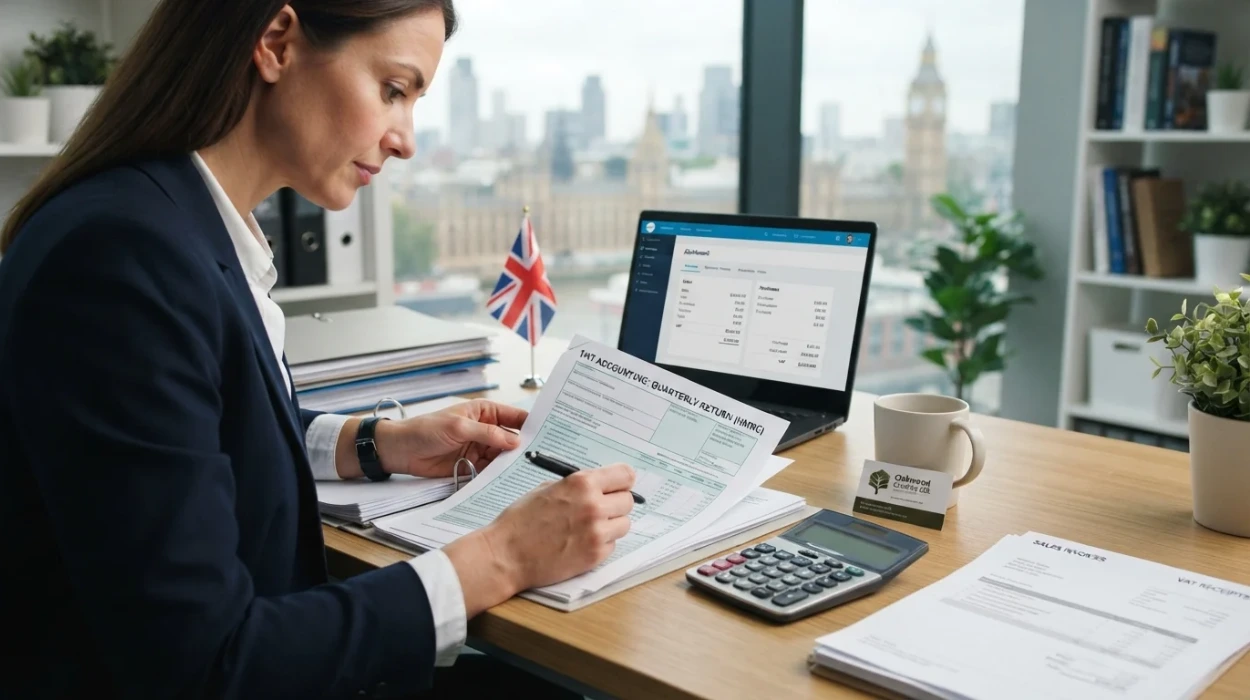
Auditing invoices for correct value-added tax sourcing and calculations requires verifying supplier VAT registration numbers, confirming correct place of supply rules, cross-referencing line-item tax rates against statutory schedules, and validating net, tax, and gross totals to maintain full HMRC compliance.
Auditing invoices prevents financial discrepancies and protects businesses from severe penalties during tax inspections. Value-added tax compliance relies entirely on accurate data capture across every commercial transaction. Financial controllers must examine source documents rigorously to detect calculation errors early.
Maintaining meticulous accounting standards safeguards profit margins. HMRC expects businesses to retain flawless documentation for at least six years. Invoice reviews catch discrepancies before quarterly returns are submitted. Internal oversight reduces the risk of expensive compliance audits.
Why Is Invoice Sourcing Verification Critical for Tax Compliance?
Invoice sourcing verification prevents fraudulent tax claims, ensures correct place of supply application, confirms vendor legitimacy, and protects corporate entities from absorbing unrecoverable liabilities during formal tax audits.
Correct sourcing determines which jurisdiction holds the right to tax a transaction. Cross-border supplies introduce complex jurisdictional rules that require careful evaluation. Companies must establish whether standard domestic rules or reverse-charge mechanisms apply. Businesses can learn more about vendor legitimacy by reading What Is a VAT Number and How Can Customers Verify a UK Business?. Vendors operating without valid credentials expose buyers to severe financial risks.
Sourcing errors often stem from incorrect address data on supplier profiles. Automated accounting systems can misclassify international transactions without human oversight. Financial teams must inspect the physical origin of goods and services. Establishing clear supply chains eliminates ambiguity regarding tax liabilities.
How Do You Detect Calculation Errors in Line-Item VAT Totals?
Detecting calculation errors involves verifying mathematical consistency across net amounts, applying correct percentage rates, checking multi-item sub-totals, and ensuring line items align with statutory tax schedules.
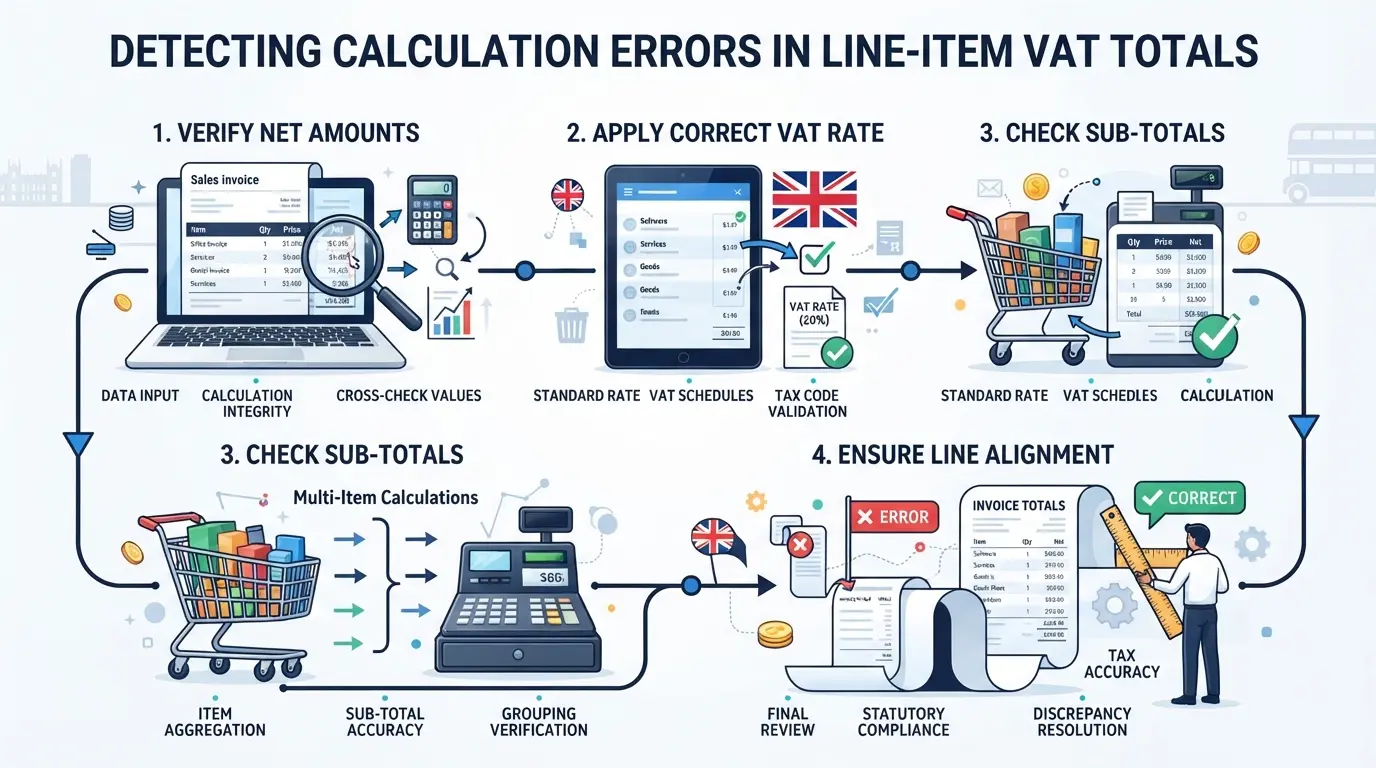
Calculation discrepancies frequently arise from rounding errors in automated invoicing software. A single miscalculated line item distorts the entire quarterly return. Accountants must test calculations using independent verification scripts. Standard, reduced, and zero-rated supplies require distinct mathematical treatments.
Tax rates change periodically based on legislative updates from government authorities. Outdated tax tables cause systemic miscalculations across high-volume billing cycles. Reviewing software configuration settings prevents widespread calculation failures. Manual spot-checks validate automated system outputs effectively.
Explore More VAT Registration Assistance Guide,
How to Transition from the Standard VAT Scheme to Digital Cash Accounting
How to Set Up Making Tax Digital (MTD) Compliant Software for Your Business
What Steps Constitute a Complete Invoice Audit Workflow?
A complete invoice audit workflow includes gathering source documents, validating supplier registration details, cross-referencing tax codes, testing calculation accuracy, and archiving records for statutory retention.
Executing a structured review process ensures no transaction bypasses quality controls. Three audit phases: document collection, data verification, and discrepancy logging. Financial staff must execute each phase with absolute consistency.
Standardized checklists eliminate subjective interpretation during the review cycle. Auditors should flag duplicate invoice numbers immediately to prevent double-payment errors. Documenting every review step builds a reliable audit trail for external inspectors. Regular training keeps audit teams updated on regulatory shifts.
How Can Businesses Streamline Complex Tax Calculations and Registrations?
Businesses streamline tax calculations and registrations by deploying automated validation software, centralizing vendor master data, establishing internal control policies, and partnering with corporate compliance specialists.
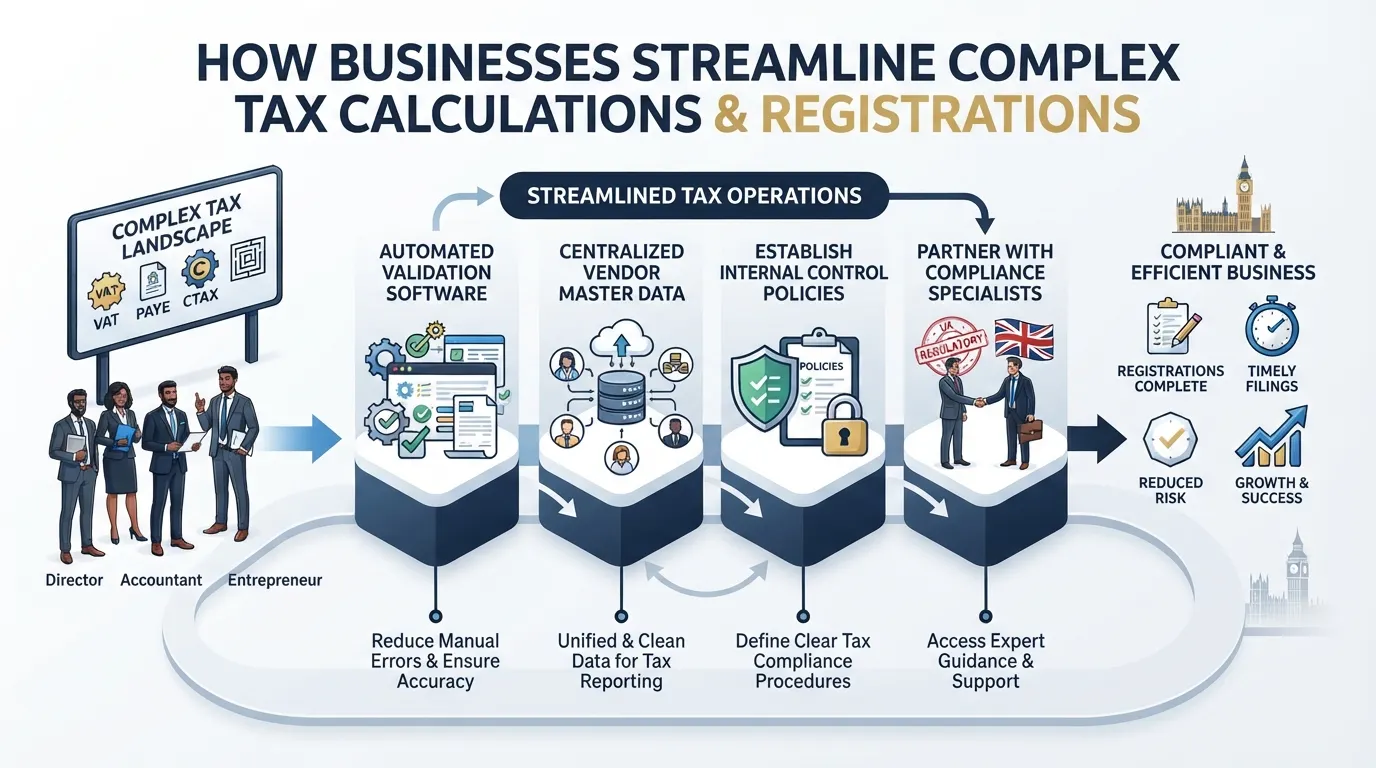
Managing tax compliance internally demands dedicated administrative resources. Growing enterprises often struggle to keep pace with evolving statutory demands. Companies seeking professional oversight can utilize Expert VAT Registration Assistance for Seamless Corporate Compliance to eliminate administrative bottlenecks. Expert guidance ensures every submission meets strict regulatory thresholds.
Operational efficiency improves when financial workflows are centralized. Automated tools flag anomalies before payments are released. Businesses that struggle with structural errors often benefit from external audits. Organizations can achieve error-free submissions by adopting the strategies outlined in Error-Free Applications: Why Form My Company is the Best Choice for Fast VAT Number Issuance. Proper registration practices lay the foundation for sustainable financial growth. Form My Company delivers reliable solutions through structured administrative frameworks.
Auditing invoices protects corporate assets and ensures strict adherence to tax regulations. Systematic reviews eliminate calculation errors and prevent costly penalties. Form My Company delivers expert registration services to streamline corporate compliance for growing businesses. Maintaining rigorous financial oversight secures long-term operational stability.
Frequently Asked Questions
When is a UK business legally required to register for VAT?
A UK business must register for VAT when its taxable turnover exceeds the statutory threshold of 90,000 pounds within a rolling 12-month period. Businesses can also choose voluntary registration before reaching this threshold to recover input tax on commercial purchases. Form My Company provides expert VAT registration assistance to help corporate entities navigate these statutory thresholds and compliance requirements seamlessly.
How long does it take for HMRC to issue a VAT number?
HMRC typically processes standard VAT registration applications within 20 to 40 business days, though complex cases or applications requiring manual identity checks take longer. Delays often occur when submitted financial documents contain discrepancies or missing director information. Utilizing specialized VAT registration assistance through Form My Company ensures error-free submissions that accelerate processing times.
Can a business reclaim VAT on expenses incurred before registration?
Businesses can reclaim VAT on goods purchased up to four years before registration and services acquired up to six months prior, provided the items relate directly to the current taxable business. The goods must still be on hand, and meticulous invoice records must be maintained to satisfy HMRC audit requirements. Form My Company offers professional guidance to ensure retroactive claims comply with strict statutory guidelines.
What is the difference between standard, reduced, and zero-rated VAT?
Standard-rated supplies apply the current 20% tax rate to most goods and services, whereas reduced-rated supplies, such as domestic fuel, apply a 5% rate. Zero-rated supplies remain taxable at 0%, allowing businesses to reclaim input tax on related expenses without charging output tax to customers. Understanding these distinct classifications is critical for submitting accurate quarterly VAT returns and avoiding compliance penalties.
What information is required to complete a UK VAT registration application?
A VAT registration application requires the legal business name, company registration number, bank details, turnover estimates, and proof of identity for company directors and beneficial owners. Additional documentation, such as invoices and contracts, may be requested by HMRC to verify commercial trading activity. Form My Company streamlines this data collection process to ensure complete accuracy during online filing.