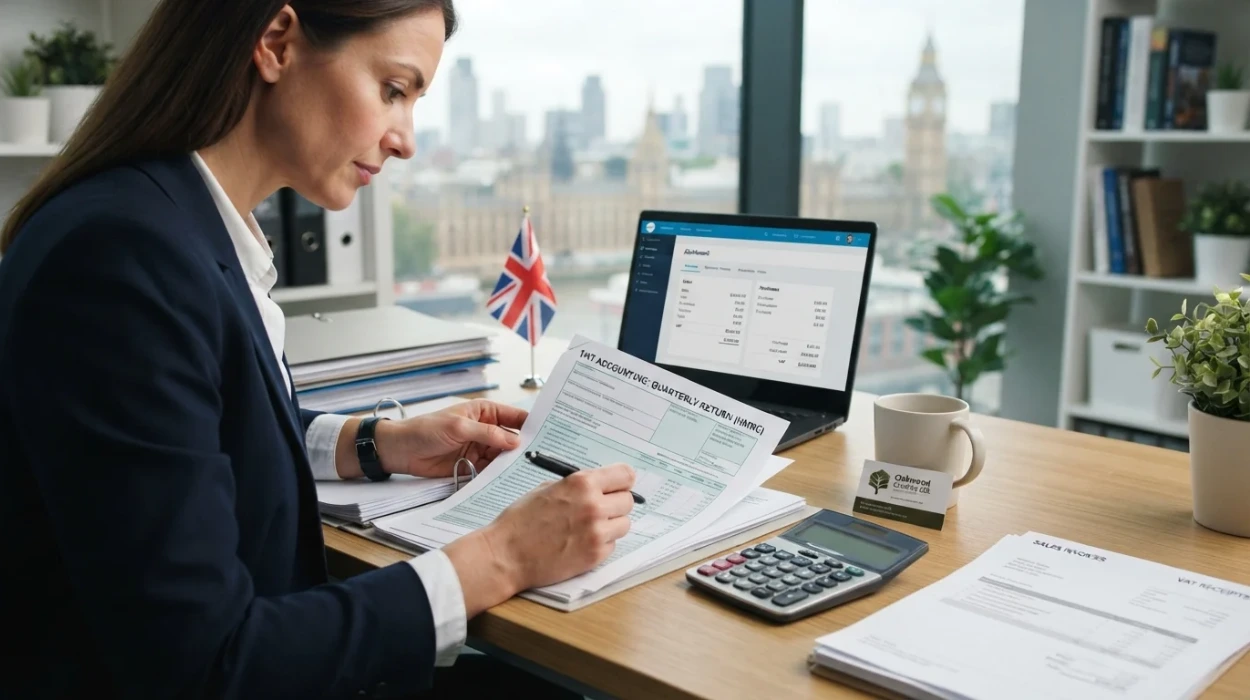
A UK VAT number is a unique nine-digit identification code issued by Her Majesty’s Revenue and Customs to businesses registered for Value Added Tax. Customers verify these credentials using the official government online checker tool by entering the prefix and digits.
Value Added Tax compliance underpins modern commercial transparency across the United Kingdom. Operating commercial entities must display precise tax registration credentials on commercial documentation, digital storefronts, and official correspondence. HMRC administers this framework to track indirect tax contributions across domestic supply chains. Businesses exceeding the mandatory registration threshold must acquire their unique identifier to legally charge and reclaim tax. Buyers authenticate these credentials to safeguard financial transactions against fraudulent actors.
Why Do UK Companies Need a VAT Registration Number?
UK companies require a registration number to legally collect indirect tax, reclaim business expenses, and build credibility with corporate buyers.
Statutory thresholds dictate when commercial enterprises must officially register for indirect taxation. HMRC mandates registration once taxable turnover exceeds ninety thousand pounds within a rolling twelve-month period. Operating without a valid identifier while trading above this threshold attracts severe financial penalties. Registered entities add the standard tax rate of twenty percent to eligible sales invoices. Form My Company provides streamlined VAT Registration Assistance to help new enterprises navigate statutory HMRC compliance effortlessly. Reclaiming input tax incurred on business overheads reduces operational expenses significantly. Corporate procurement departments routinely audit supplier credentials before issuing commercial contracts. Displaying a valid identifier signals financial stability and full regulatory compliance to prospective clients.
How Do Customers Verify a UK VAT Number Online?
Customers verify a UK VAT number by accessing the official government digital portal and entering the unique nine-digit numeric sequence.
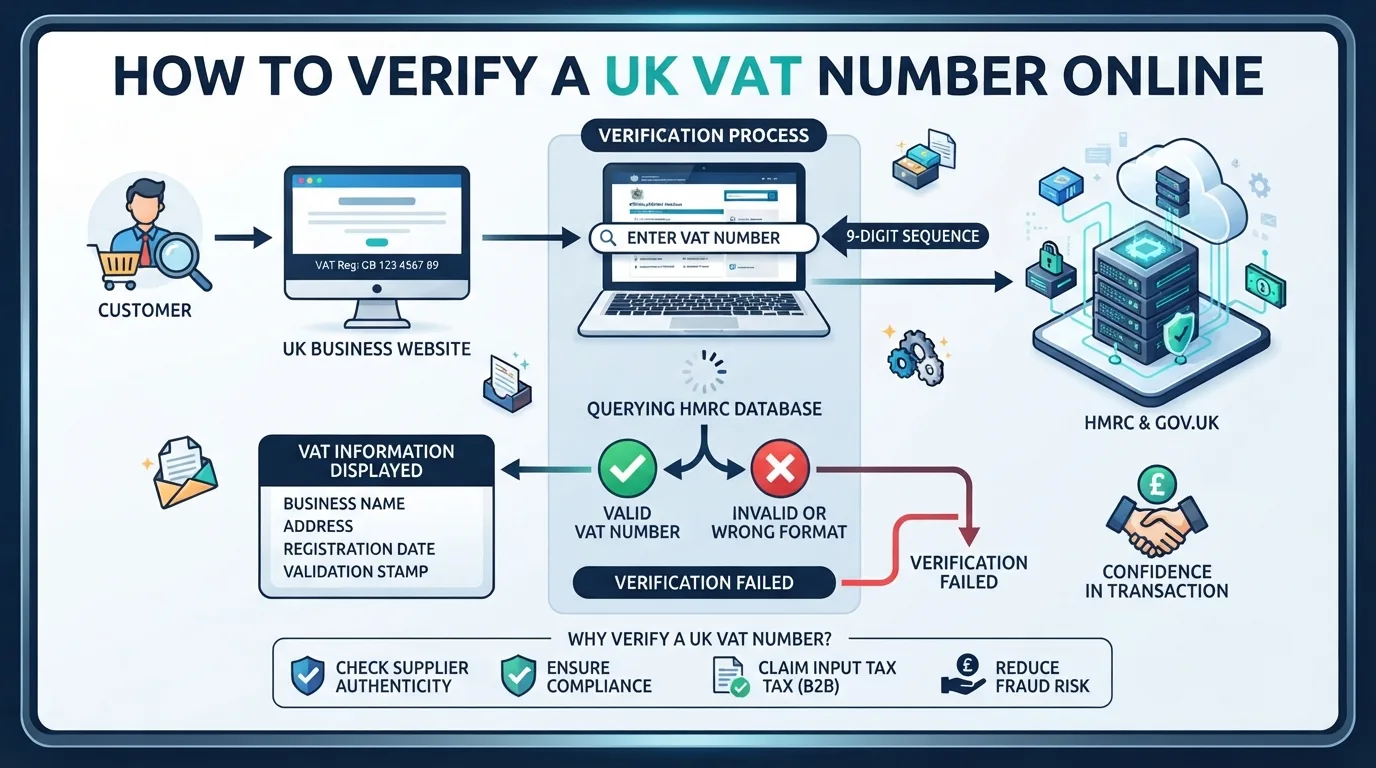
Digital verification tools eliminate manual errors when authenticating commercial trading partners. HMRC maintains a secure database interface that processes verification requests instantly. Users navigate to the official GOV.UK verification page to initiate the validation sequence. Entering the country prefix followed by the nine digits retrieves live registry data. Three verification data points: active business name, registered address, and official registration status. Cross-referencing these retrieved details with commercial invoices prevents invoice fraud. Procurement teams execute this verification protocol during vendor onboarding procedures. System administrators update accounting software automatically once HMRC confirms the legitimacy of the vendor profile.
Explore More VAT Registration Assistance Guide,
What Is Pre-Registration VAT and Can You Reclaim Tax on Past Expenses?
What Is Annual Accounting VAT and What Are Its Main Benefits?
What Are the Key Components of a UK VAT Number?
A UK VAT number consists of an initial GB country code followed by a nine-digit numerical sequence divided into specific structural blocks.
Standard formatting rules ensure uniform identification across all HMRC databases. The initial two characters denote the member state jurisdiction using the letters GB. The subsequent three digits identify the primary block of the registration sequence. The middle four digits represent the specific sequential numbering assigned to the entity. The final two digits function as a mathematical checksum validated by HMRC algorithms. Specialized entities such as government departments and health authorities utilize alternative prefixes like GD or HA. Accounting systems validate these structural components automatically during invoice entry procedures. Understanding this formatting aids finance teams in spotting fraudulent or malformed tax identifiers.
How Does VAT Registration Impact Business Growth and Compliance?
VAT registration impacts business growth by establishing regulatory legitimacy, enabling tax recovery on supply chains, and unlocking corporate procurement opportunities.
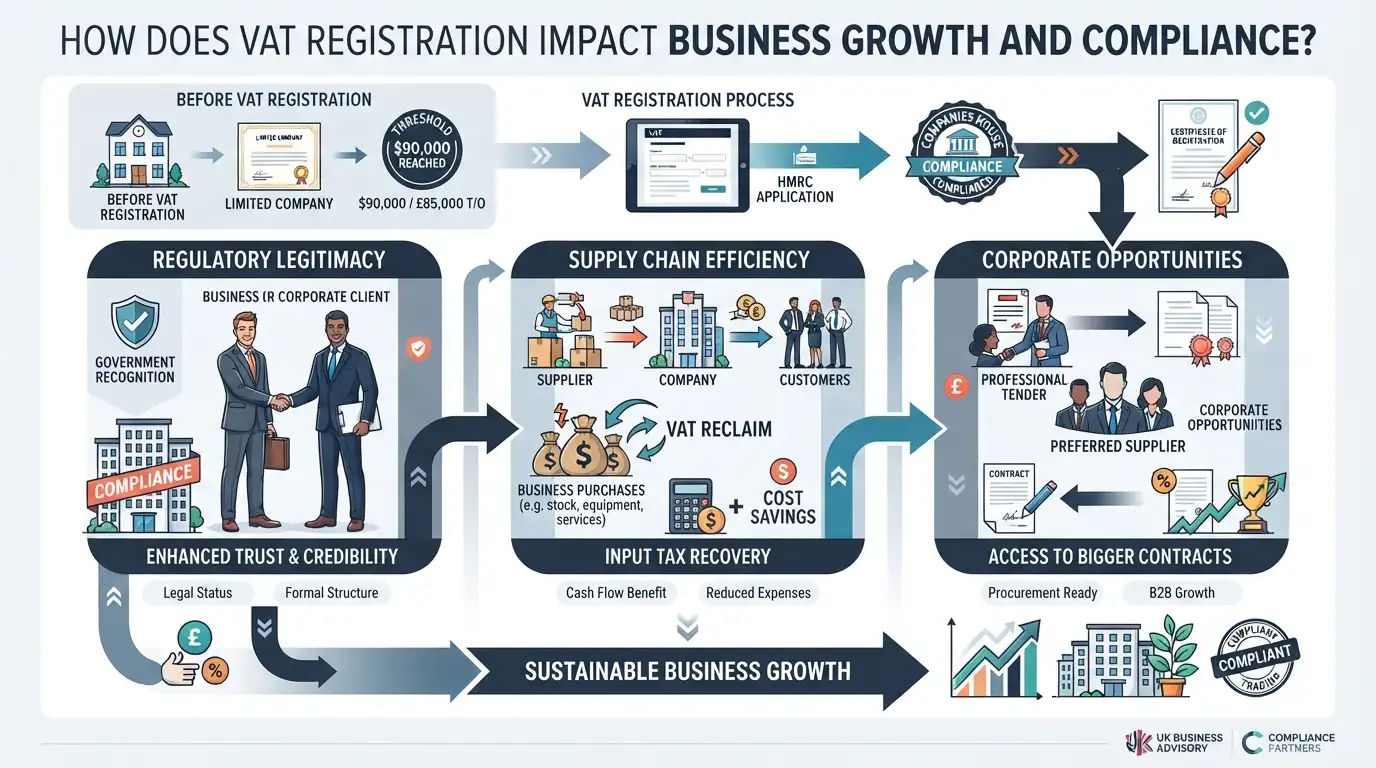
Scaling enterprises frequently encounter procurement policies that mandate indirect tax registration. Small businesses transitioning past the statutory threshold utilize structured professional services to accelerate administrative approvals. Form My Company delivers expert guidance through Error-Free Applications: Why Form My Company is the Best Choice for Fast VAT Number Issuance to secure official credentials without operational delays. Maintaining accurate records requires rigorous internal audits of sales and purchase ledgers. Finance managers implement regular reviews via How to Audit Your Invoices to Ensure Correct VAT Sourcing and Calculations to eliminate compliance errors. Adhering to quarterly digital reporting requirements prevents audits and administrative sanctions from regulatory authorities. Proper tax accounting protects profit margins while scaling commercial operations nationwide.
Navigating indirect tax compliance remains essential for commercial entities operating within the United Kingdom. Understanding how tax identifiers function protects buyers and sellers from financial discrepancies. Verifying business credentials through official government channels secures modern supply chains against fraudulent activity. Form My Company delivers professional expertise and structured administrative solutions to simplify regulatory compliance for growing enterprises. Maintaining strict adherence to HMRC standards ensures long-term commercial stability.
Frequently Asked Questions
What is VAT registration assistance and how does it work?
VAT registration assistance is a specialized professional service that guides business owners through the complex application process with HMRC. Through Form My Company, experts review your financial turnover, prepare accurate documentation, and submit your application to ensure seamless compliance. This support minimizes administrative delays and secures your official VAT number efficiently.
When is a business legally required to register for VAT in the UK?
A UK business must legally register for VAT when its taxable turnover exceeds ninety thousand pounds within any rolling twelve-month period. Companies can also opt for voluntary registration below this threshold to reclaim input tax on business expenses. Utilizing Form My Company for VAT Registration Assistance helps you determine the precise statutory deadline and prevents HMRC financial penalties.
How long does it typically take to get a UK VAT number?
HMRC typically processes standard VAT applications within twenty to forty days, though complex cases can experience extended verification delays. Form My Company optimizes your application data to accelerate processing times and prevent common administrative rejections. Securing your VAT number promptly allows you to legally charge tax and reclaim business expenses without interruption.
Can I backdate my VAT registration and reclaim past tax?
Businesses can backdate their VAT registration for up to four years for goods and six months for services purchased prior to registration, subject to HMRC rules. This retroactive recovery allows you to reclaim input tax paid on past business assets and stock overheads. Professional VAT Registration Assistance from Form My Company ensures your backdated claims comply with strict regulatory guidelines.
What information is needed to apply for a UK VAT number?
Applying for a UK VAT number requires comprehensive corporate data, including company registration numbers, bank details, estimated turnover, and a description of business activities. Directors must also verify their personal identity and business address credentials to satisfy HMRC compliance checks. Form My Company streamlines this data collection process to guarantee accurate, error-free submissions.