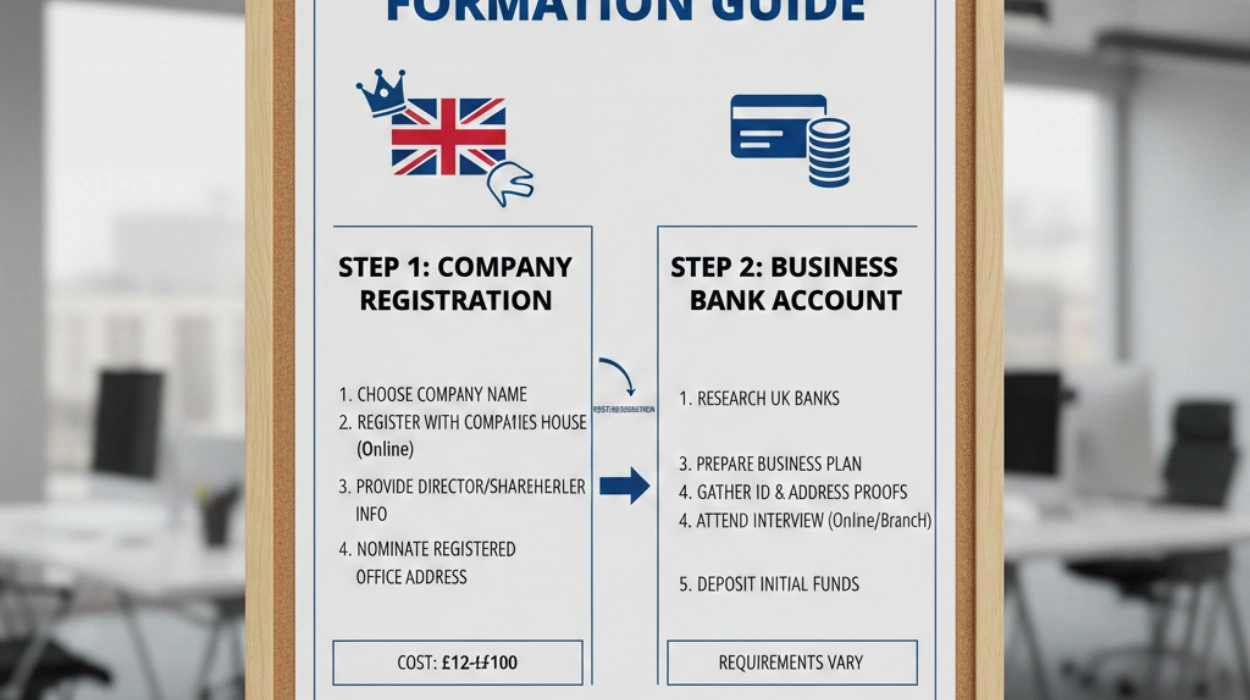
Company registration with bank account opening in the UK requires first incorporating at Companies House to obtain your certificate, then providing that plus director IDs, proof of address, and business details to banks like HSBC or digital providers like Starling. Form My Company facilitates both, bundling formation with bank-intro letters for swift approvals. This ensures segregated finances legally from launch.
Establishing a UK limited company via Companies House unlocks liability shields and credibility, but operational readiness hinges on promptly securing a business bank account—essential for separating personal/company finances, meeting HMRC compliance, and attracting investors. Legally recommended under Companies Act guidance, though not mandatory, sole directors risk unlimited liability without one during audits or disputes. With 5.5 million+ Ltds, banks scrutinise post-ECCTA 2023: accurate PSCs, AML checks via IDs/proofs.
Directors/shareholders face public registers exposing details unless service addresses used; virtual offices pair ideally. Digital banks (Tide, Revolut Business) approve in days versus high-street weeks, demanding incorporation certificate, MemArts, CRN, passports, utility bills <3 months, turnover forecasts. Non-residents add notarised proofs. This guide dissects tandem processes, empowering entrepreneurs with GOV.UK/HMRC-backed steps amid 2026 fintech surges. From sole traders to scaling SMEs, master these for seamless VAT/PAYE integration and growth. (202 words)
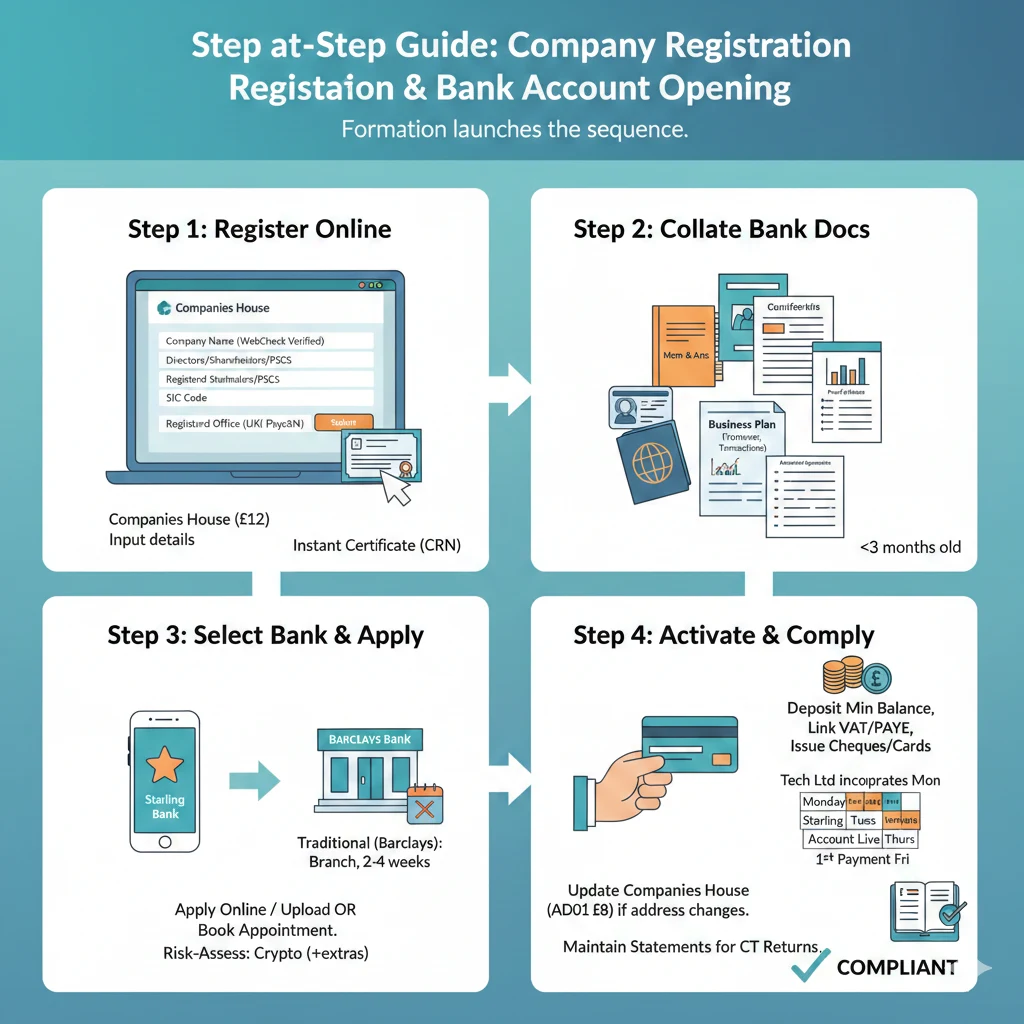
Step-by-Step Guide to Company Registration with Bank Account Opening
Formation launches the sequence. Step 1: Register online at Companies House (£12). Input name (webCHeck verified), directors/shareholders/PSCs, SIC, registered office (UK physical, jurisdiction-matched). Instant certificate yields CRN.
Step 2: Collate bank docs: Certificate, MemArts, director passports/driving licences, address proofs (utility/bank <3 months), business plan (turnover, transactions, suppliers). Authorised signatories list.
Step 3: Select bank—digital for speed (Starling: app-based, 1-2 days); traditional (Barclays: branch, 2-4 weeks). Apply online/upload or book appointment. Risk-assess: High-risk sectors (crypto) need extras.
Step 4: Activate: Deposit min balance if required, link VAT/PAYE, issue cheques/cards. Update Companies House if address changes (AD01 £8). Example: Tech Ltd incorporates Monday, applies Starling Tuesday with scanned docs, account live Thursday—first client payment Friday, compliant segregated. Maintain statements for CT returns.
Benefits and Potential Risks of Opening a Bank Account Post-Registration
Business accounts professionalise: segregated ledgers simplify HMRC audits, reclaim VAT seamlessly, prove solvency to lenders. Overdraft/invoicing/foreign exchange tools boost cashflow; FSCS £85k protection per person. Investor appeal: Transparent statements evidence traction.
Digital perks: No-fee basics, integrations (Xero), multi-currency for exports. Compliance eases PAYE/VAT filings; separates sole trader legacies.
Risks: Rejections (40% new firms)—incomplete docs delay trading. AML flags non-residents: Weeks-long holds. Fees erode micros (£5-20/month premiums). Overdrafts personal guarantees expose. Fraud: Weak security loses funds. Example: E-com Ltd skips account, mixes finances—HMRC disallows £10k expenses, audit nightmare. Virtual banks mitigate but check FSCS. Balances: Enhances credibility, risks manageable via prep.
Legal and Compliance Considerations
Companies Act mandates no bank but recommends segregation; HMRC CT guidance presumes for deductions. Post-incorporation, 14-day address/CRN updates. Banks enforce MLR 2017: Verify directors/PSCs >25%, source funds.
GOV.UK lists: ID (passport/licence), address proofs, incorporation docs. Non-residents: Notarised translations, business plans. ECCTA mandates Companies House ID verification pre-bank. Display account details? No, but invoices/letters need registered office.
MTD-CT/VAT links statements; PAYE direct debits. Penalties: False docs = fines/disqualification. Auditors demand 6-year records. Example: Fraudulent PSC hides ownership—bank freezes, Companies House strike-off. Overseas: PE risks tax. LLPs mirror. Consult for holdings.
Common Mistakes to Avoid
Incomplete docs: Missing MemArts rejects 30% apps. Example: Director forgets utility bill—2-week delay, lost contract. Wrong address: PO Box/virtual unproven fails AML.
Underestimating risk: Crypto/high-turnover needs enhanced due diligence, extras like audits. Non-resident oversights: No notarisation blocks. Business plan vague: “Trading” insufficient—detail suppliers/turnover.
Postponing: Trading personal risks liability. Ignoring fees: Premiums surprise micros. Example: Startup uses personal, HMRC denies £5k startup relief—switch costs time. Mismatch signatories/PSCs. Pre-verify with banks.
Practical Tips and Best Practices
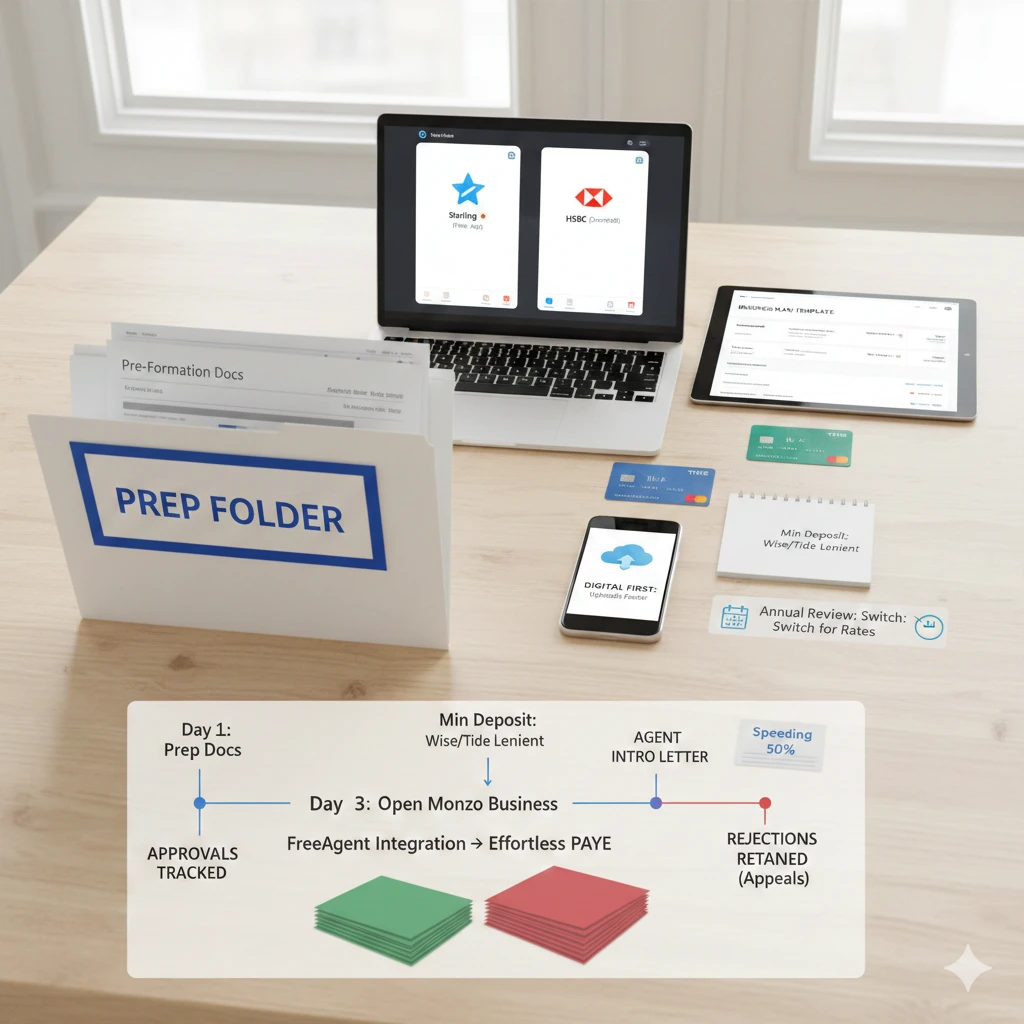
Prep folder: Scan all pre-formation. Compare banks: Starling (free, app), HSBC (overdraft). Business plan template: 1-page turnover/sources.
Digital first: Uploads faster. Non-UK? Wise/Tide lenient. Min deposit: Shop waivers. Integrations: Accounting syncs. Annual review: Switch for better rates.
Example: Consultant Ltd preps docs, opens Monzo Business Day 3, integrates FreeAgent—effortless PAYE. Track approvals; retain rejections for appeals. Agents provide intro letters speeding 50%.
Frequently Asked Questions
What documents open a UK business bank after registration?
Certificate of incorporation, MemArts, CRN, director/shareholder passports, <3-month address proofs, business plan/turnover details. Non-residents add notarised docs.
How long to open bank account post-company registration?
Digital: 1-5 days; traditional: 1-4 weeks. Prep cuts to hours.
Can non-residents register company and open UK bank?
Yes, with UK registered office, notarised IDs/proofs, detailed plan. Digital banks easier.
Do sole directors need business bank account?
Recommended for compliance/liability; not mandatory but HMRC prefers segregation.
What if bank rejects my new company account application?
Refine docs/plan, try digital alternatives, agents assist appeals.
Pairing company registration with bank opening establishes robust UK foundations, ensuring compliance and operations. Proactive prep averts delays, propels success.
If you’re ready to register your company with confidence, Form My Company provides fast, fully online company formation with expert compliance support, including bank account introductions, VAT & PAYE, virtual offices, and professional guidance. Get started today and let our specialists handle the paperwork while you focus on growing your business.