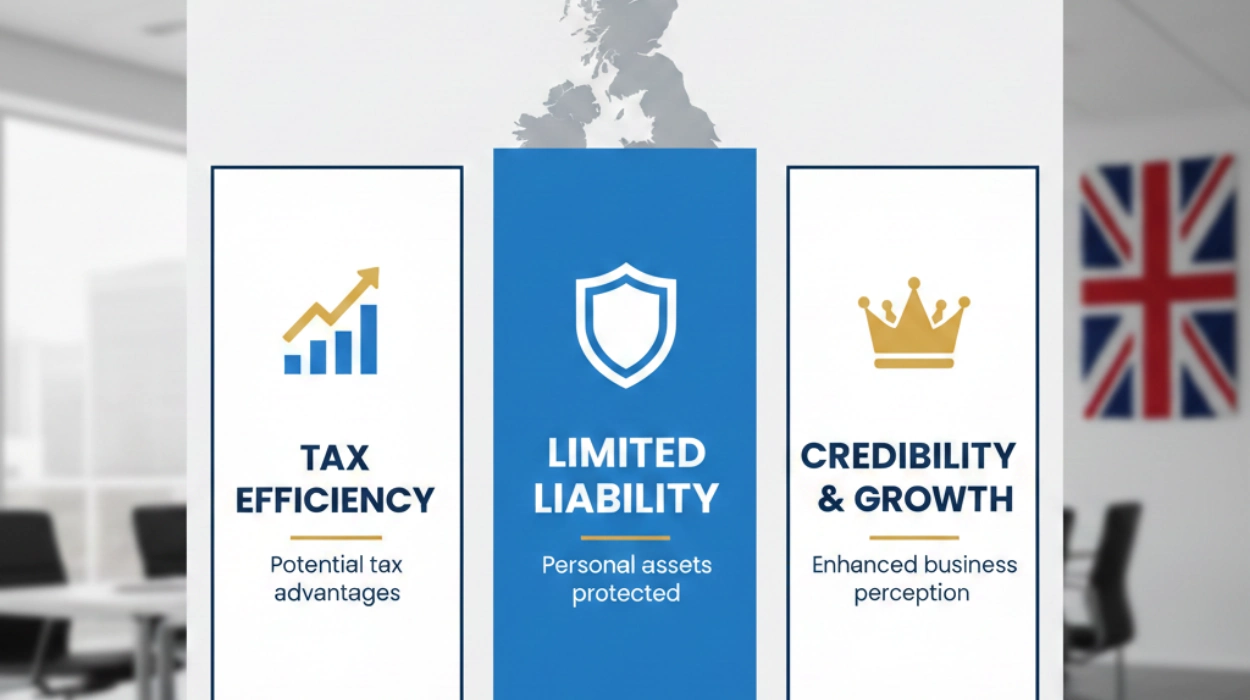
Starting a limited company in the UK provides limited liability protection for personal assets, tax efficiency through corporation tax and dividends, and enhanced credibility with clients, banks and investors—all accessible via simple Companies House online registration. This structure suits entrepreneurs scaling beyond sole trader limits, offering perpetual existence and share issuance for growth funding. In 2026, with stable 19–25% corporation tax rates and full expensing incentives, it’s the optimal choice for ambitious businesses worldwide.
Launching a limited company in the UK through Companies House delivers strategic advantages unmatched by sole traders or partnerships, positioning your venture for scalability, protection and professionalism under the Companies Act 2006. As a separate legal entity, a private limited company (Ltd) shields directors’ and shareholders’ personal assets from business debts, while enabling tax planning via salary/dividend combinations and access to R&D reliefs. Semantic keywords like “why start a limited company UK,” “limited company advantages 2026,” and “Companies House registration benefits” capture why over 1 million new entities form annually—many by non-residents seeking English law credibility.
Post-Brexit trade deals, double-tax treaties with 130+ nations, and no minimum share capital lower barriers, contrasting unlimited liability elsewhere. For freelancers turning scalable, e-commerce operators or international founders, a UK registered office elevates trust, easing Stripe/PayPal integration and loans. This guide unpacks motivations, processes, risks and compliance, grounded in HMRC/Companies House rules, empowering decisions—e.g., a Dubai consultant forms “GlobalConsult Ltd” for client wins and liability peace.
Step-by-Step: How to Start a Limited Company in the UK
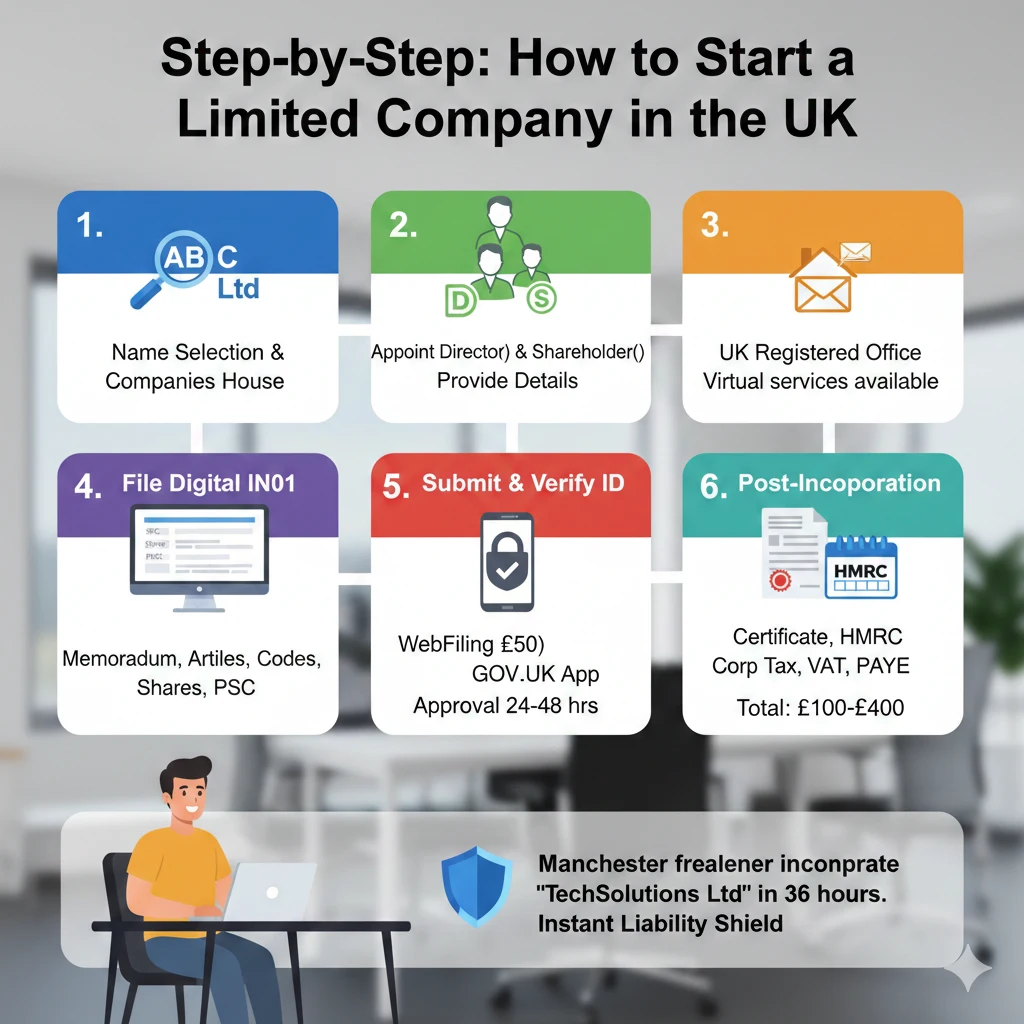
Forming a UK limited company begins with name selection—check availability on Companies House, ensuring uniqueness and “Ltd” suffix, avoiding trademarks/restricted terms. Appoint ≥1 director (any nationality, no residency required) and shareholder, providing details: name, DOB, nationality, occupation, residential (private) and service addresses. Secure a UK registered office (virtual services £50–£150/year for mail).
File digital IN01: memorandum/articles (model standard), SIC codes (e.g., 62020 consultancy), shares (100x £1), PSC (>25% control). Submit WebFiling (£50 from Feb 2026), verify ID via GOV.UK app. Approval in 24–48 hours yields Certificate/number. Register HMRC Corporation Tax (3 months trading), assess VAT (£90k), setup PAYE if employing. Total: £100–£400. A Manchester freelancer incorporates “TechSolutions Ltd” in 36 hours, gaining liability shield instantly.
Key Benefits Driving Entrepreneurs to Limited Companies
Limited liability safeguards personal wealth—creditors claim company assets only, vital for contracts risking disputes (e.g., product liability). Tax efficiency: 19% corporation tax (<£50k profits), dividends at 8.75% basic rate (no NI), versus sole trader 40%+. Credibility: “Ltd” impresses banks (easier business accounts), clients and investors (SEIS/EIS 50–30% reliefs). Perpetual succession survives owner changes; share issuance funds growth.
Flexibility: Reinvest pre-tax profits, claim full expensing (100% capex deduction), R&D 186% super-deduction. Pension contributions deductible. A £70k profit director extracts £45k post-tax optimally, sole trader £41k—savings reinvest. Global appeal: non-residents form remotely, accessing 140+ trade deals.
Potential Risks and Realistic Drawbacks
Compliance burdens rise: annual confirmation statements (£34), accounts, CT600—late filings fine £150–£1,500, risking strike-off. Director duties (diligence, conflicts) invite personal liability for breaches. Higher setup/admin costs (£300–£800/year accounting) vs sole trader zero. Public PSC register discloses owners.
IR35 catches “disguised employees”; VAT quarterly filings add overhead (£90k threshold). 2026 ID verification mandatory. Growth suits Ltd; micro-ventures overpay relatively. Mitigate via accountants, but simplicity lovers reconsider.
Legal and Compliance Essentials for Limited Companies
Companies Act 2006 mandates separate entity status: directors fiduciary-bound (best interests, records). File confirmation (officers/PSCs), accounts (micro <£632k), CT600 (9 months post-period). VAT/PAYE if thresholds hit. Registered office receives statutory mail. PSC publicises control.
2026 reforms: £50 incorporation, enhanced verification. GDPR applies for data. Regulated sectors need FCA. Non-compliance disqualifies directors. Form My Company ensures compliant formation, SIC accuracy, ongoing filings.
Common Mistakes New Founders Make
Delaying incorporation past £50k profits forfeits tax savings. Name clashes reject 20% applications. Invalid offices (PO Boxes) dissolve. Generic articles spark disputes. SIC errors mismatch HMRC. Skipping post-incorp registrations blocks trading. Assuming auto-banking ignores KYC. A startup refiles thrice over ID scans. Pre-checks/agents prevent.
Practical Tips and Best Practices for Success
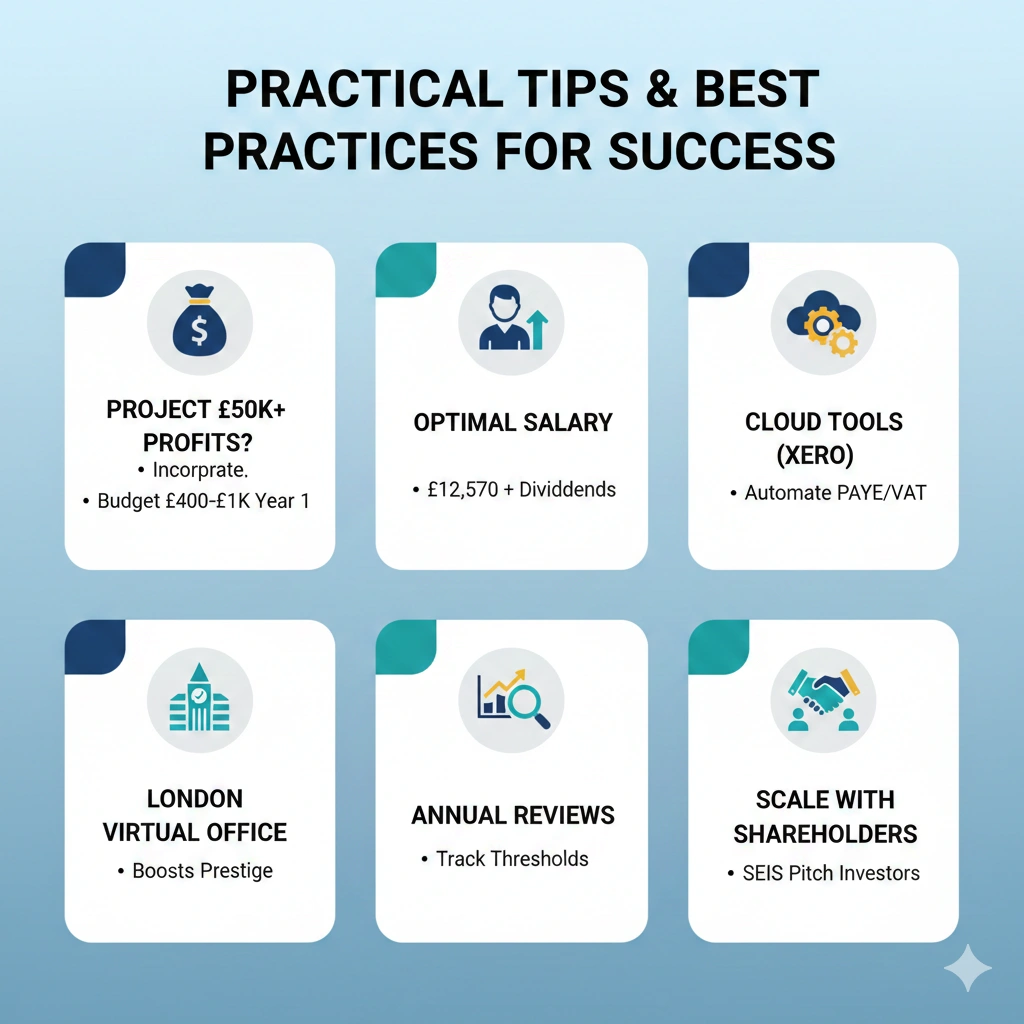
Project £50k+ profits? Incorporate. Budget £400–£1k year 1. Optimal salary £12,570 + dividends. Cloud tools (Xero) automate PAYE/VAT. London virtual office boosts prestige. Annual reviews track thresholds. SEIS pitch investors. Scale with shareholders.
FAQs: Why Start a Limited Company?
What is the main reason to form a Ltd?
Limited liability protects personal assets from debts.
Can non-UK residents start one?
Yes, remotely via Companies House; UK office required.
Tax advantages over sole trader?
19–25% CT + low dividends vs 20–45% income tax/NI.
Setup time/cost 2026?
24–48 hours, £50+ fees.
Ongoing obligations?
Accounts, confirmation, CT returns annually.
UK limited companies propel growth via protection, tax perks and prestige—ideal for scalers.
If you’re ready to register your company with confidence, Form My Company provides fast, fully online company formation with expert compliance support. Get started today and let our specialists handle the paperwork while you focus on growing your business.