
Professional call answering services enable small businesses to project a larger, more established presence by handling inbound calls professionally around the clock, capturing leads that might otherwise be lost. For UK companies post-formation, they integrate seamlessly with compliance needs like managing client queries on VAT or PAYE while freeing directors to focus on strategic growth. This service turns missed calls into revenue opportunities without the overhead of a full reception team.
The Role of Call Answering in Business Expansion
In today’s fast-paced UK market, professional call answering services have become indispensable for entrepreneurs and small businesses seeking to scale efficiently after company formation. Newly incorporated limited companies often operate with lean teams, where directors and shareholders juggle operations, compliance filings with Companies House, and client interactions. A dedicated call answering service steps in as a virtual receptionist, answering calls in your company name, screening enquiries, booking appointments and relaying messages instantly via app or email. This creates the illusion of a substantial operation, crucial when pitching to banks for business accounts or suppliers who check your registered office details online.
Beyond perception, these services directly support growth by ensuring no lead slips through during out-of-hours or peak times, when sole traders or small Ltd teams might miss 40-60% of calls. For businesses handling PAYE payroll or nearing VAT thresholds, prompt responses to supplier or HMRC queries prevent disruptions. Integrated with virtual office solutions, they complete a professional facade prestigious address plus polished phone manner accelerating trust-building with stakeholders. As remote work solidifies, call answering bridges the gap between agile startups and enterprise-level service, maximising every customer touchpoint.
Step-by-Step: Implementing Professional Call Answering
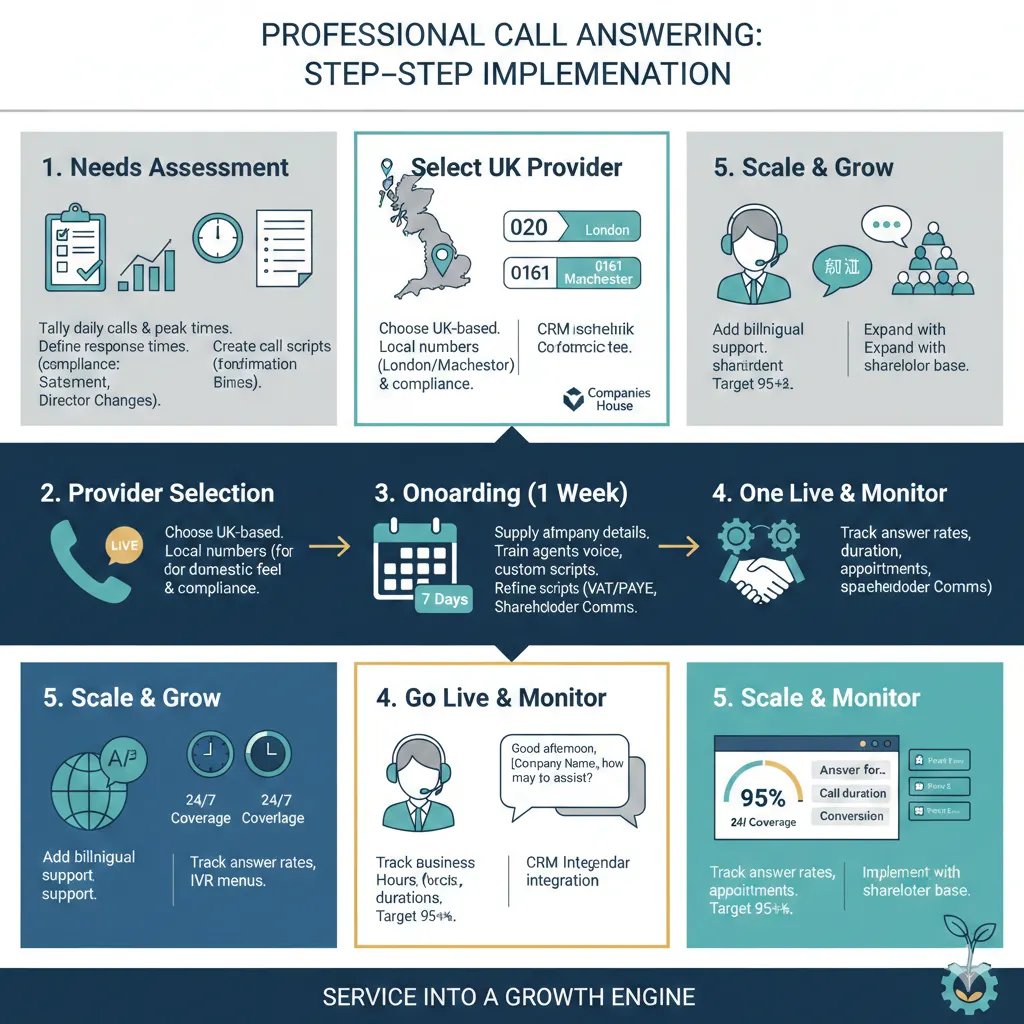
Begin with a needs assessment: tally your average daily calls, peak volumes (e.g., post-marketing campaigns), response times required and call scripts for consistency. For a post-incorporation Ltd company, include handling routine compliance queries like confirmation statement status or director changes. Select a UK-based provider with local numbers (020 London, 0161 Manchester) to match your registered office jurisdiction, ensuring calls feel domestic and compliant.
Onboarding takes one week: supply your company details, train agents on your brand voice via custom scripts (“Good afternoon, [Company Name], how may I assist?”), and integrate with your CRM or calendar for seamless lead routing. Test with live calls, refining scripts for VAT/PAYE enquiries or shareholder communications. Go live with 24/7 coverage if global clients demand it, or business hours plus overflow for budget control. Monitor via dashboards tracking answer rates (target 95%+), call duration and conversion to appointments. Scale by adding bilingual support or IVR menus as your shareholder base grows. This structured rollout turns a service into a growth engine.
Key Benefits and Associated Risks
The benefits of professional call answering are transformative for growth-stage businesses. First, lead capture skyrockets: services answer 80-90% of calls versus 20-30% for voicemail, converting enquiries into booked meetings that fuel revenue. For UK firms managing Companies House compliance, agents field routine questions on public records, freeing directors for high-value tasks like strategy or investor relations. Cost-wise, £50-£150 monthly replaces a £25k salaried receptionist, with scalability no PAYE setup or training overheads.
Enhanced professionalism impresses stakeholders: polished greetings align with your virtual registered office, boosting credibility for bank applications or supplier credit. Data shows 70% higher client retention from consistent service. Risks include script rigidity alienating callers if not personalised, or data breaches if providers lack GDPR accreditation critical for handling shareholder details. Over-reliance might erode direct client relationships, and poor providers deliver subpar accents or delays, damaging trust. Offshore options risk compliance flags from HMRC on UK-centric queries. Balanced implementation mitigates these, amplifying net positives.
Legal and Compliance Implications for UK Businesses
Call answering services intersect with UK legal frameworks, demanding careful provider selection to safeguard compliance. Under GDPR, agents process personal data (names, numbers, queries on VAT thresholds or PAYE salaries), requiring providers to demonstrate data protection via DPA contracts and annual audits. For limited companies, ensure scripts cover Companies House sensitivities—direct callers to public records rather than disclosing unfiled director/shareholder changes, avoiding insider trading perceptions.
Contractually, services must align with Companies Act duties: accurate message relay prevents missed statutory deadlines like annual accounts. HMRC views call data as business records for tax disputes, so retain logs for six years. PAYE employers benefit from agents scheduling payroll queries, but misrouting HMRC calls risks penalties. Use UK numbers to meet “establishment” tests for non-resident directors. Providers should offer call recording (with consent notices) for dispute resolution, compliant with PECR. Integrated with formation agents, they handle post-registration influxes seamlessly. Robust agreements ensure services enhance rather than expose compliance.
Common Mistakes Businesses Make with Call Services
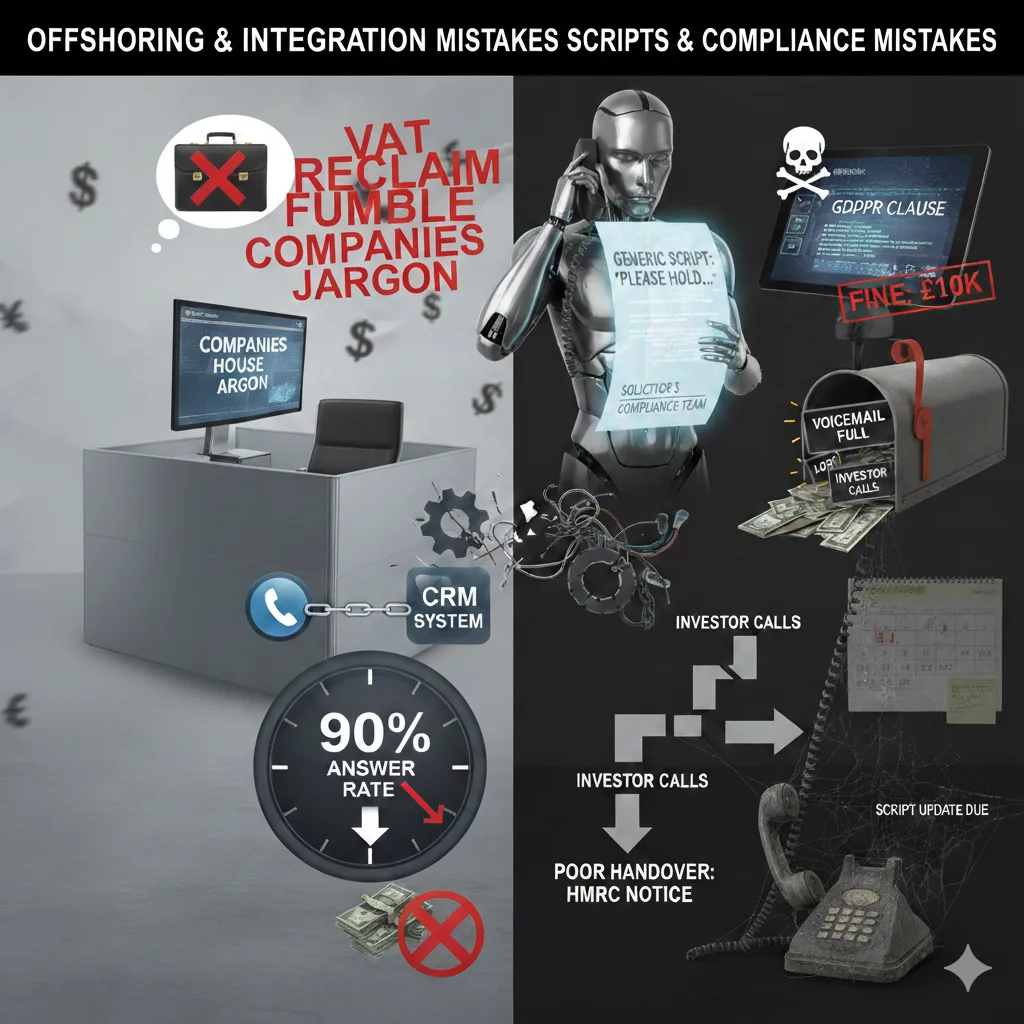
A prevalent error is choosing offshore providers for cost savings, ignoring UK callers’ preference for local accents and knowledge resulting in lost deals when agents fumble VAT reclaim queries or Companies House jargon. Another is generic scripts: without tailoring for your sector (e.g., “Confirm your shareholder allocation query with our compliance team”), calls feel robotic, eroding trust versus competitors.
Underestimating integration dooms setups failing to sync with CRM leads to duplicate follow-ups, frustrating clients. Overlooking SLAs means no penalties for <90% answer rates, allowing drops during peaks that miss investor calls. Neglecting GDPR clauses risks fines; one SME faced £10k after a breach exposed client PAYE details. Scaling without review: sticking to basic plans as volumes grow causes overflow voicemail. Poor handover processes lose context on urgent HMRC notices. Finally, treating it as set-and-forget ignores quarterly script updates for new compliance rules like economic substance. Learning from these preserves the service’s growth value.
Practical Tips and Best Practices for Maximum Impact
Optimise call answering by starting with a call audit: record a week’s traffic to identify patterns, scripting responses for 80% of volume (e.g., “For VAT registration, visit our site or hold for accounts”). Choose providers with UK data centres, 99% uptime and CRM plugins like HubSpot for auto-lead logging. Customise IVR: “Press 1 for sales, 2 for compliance” routes efficiently, reducing agent time.
Train via role-play: simulate shareholder disputes or PAYE queries for nuance. Monitor KPIs weekly abandon rates, NPS scores from post-call surveys and A/B test scripts quarterly. Integrate with virtual offices for cohesive branding: same provider handles mail and calls. Budget 20% buffer for peaks, negotiating volume discounts post-three months. Use analytics to correlate call conversions with revenue, justifying expansion. For directors, set escalation protocols for high-value calls. Quarterly business reviews with providers refine service, ensuring alignment with growth from formation to funding rounds. These habits compound into sustained competitive edge.
Professional call answering services propel UK businesses from lean operations to scalable enterprises, capturing growth opportunities while upholding compliance rigour. By managing calls professionally, they complement registered offices, VAT/PAYE processes and director duties, turning inbound enquiries into lasting client relationships.
If you’re ready to elevate your communications for growth, Form My Company provides fast, fully online company formation with expert compliance support, virtual offices, VAT & PAYE handling, and professional call answering. Get started today and let our specialists manage the details while you focus on expanding your business.
Frequently Asked Questions
How do call answering services integrate with company compliance?
They handle routine Companies House/HMRC queries via scripts, relaying urgents to directors while logging for records. GDPR-compliant providers ensure data security, supporting PSC and confirmation statement accuracy without direct disclosure.
What are typical costs for UK small businesses?
£40-£200 monthly, based on minutes (5-15p/minute). Plans scale: pay-per-call for startups, unlimited for high-volume Ltds handling VAT/PAYE influxes deductible against corporation tax.
Can non-UK directors benefit from these services?
Absolutely 24/7 coverage manages time-zone gaps, using UK numbers for local presence. Integrates with remote formation, routing investor calls seamlessly.
How quickly can I set up a service post-company formation?
Typically 24-48 hours: onboard scripts, test calls, go live. Providers familiar with new Ltds expedite for post-registration demand.
What metrics show the service is working?
Track 95%+ answer rate, 20%+ lead conversion, reduced missed calls. Tie to revenue: appointments booked versus pre-service.