
Essential infrastructure for growing a UK business remotely includes robust cloud collaboration tools, secure connectivity, compliant virtual offices, and cybersecurity frameworks tailored to Companies House and HMRC requirements. Directors and shareholders can scale operations seamlessly by integrating virtual registered offices with endpoint management and GDPR-aligned data protection. This setup ensures compliance while enabling productivity without physical premises.
Scaling a UK business remotely demands a foundation that supports company formation, ongoing compliance, and operational efficiency in a post-pandemic landscape where flexible working is enshrined in law. Entrepreneurs forming limited companies often overlook how virtual infrastructure underpins growth, from maintaining a credible registered office address to handling VAT and PAYE filings across dispersed teams. A virtual office not only satisfies Companies House stipulations but also provides meeting rooms and mail handling, projecting professionalism to clients and investors.
For directors juggling shareholder expectations, the right setup means real-time access to financials, secure document sharing for board resolutions, and tools that automate compliance tasks like confirmation statements. Without this, remote operations risk data breaches, regulatory fines, or stalled growth. Semantic elements like cloud-based accounting integrate directly with HMRC’s Making Tax Digital, while endpoint security protects sensitive shareholder agreements. This infrastructure evolves with your business structure, whether sole trader to Ltd or multinational expansion, fostering trust and scalability in a competitive market.
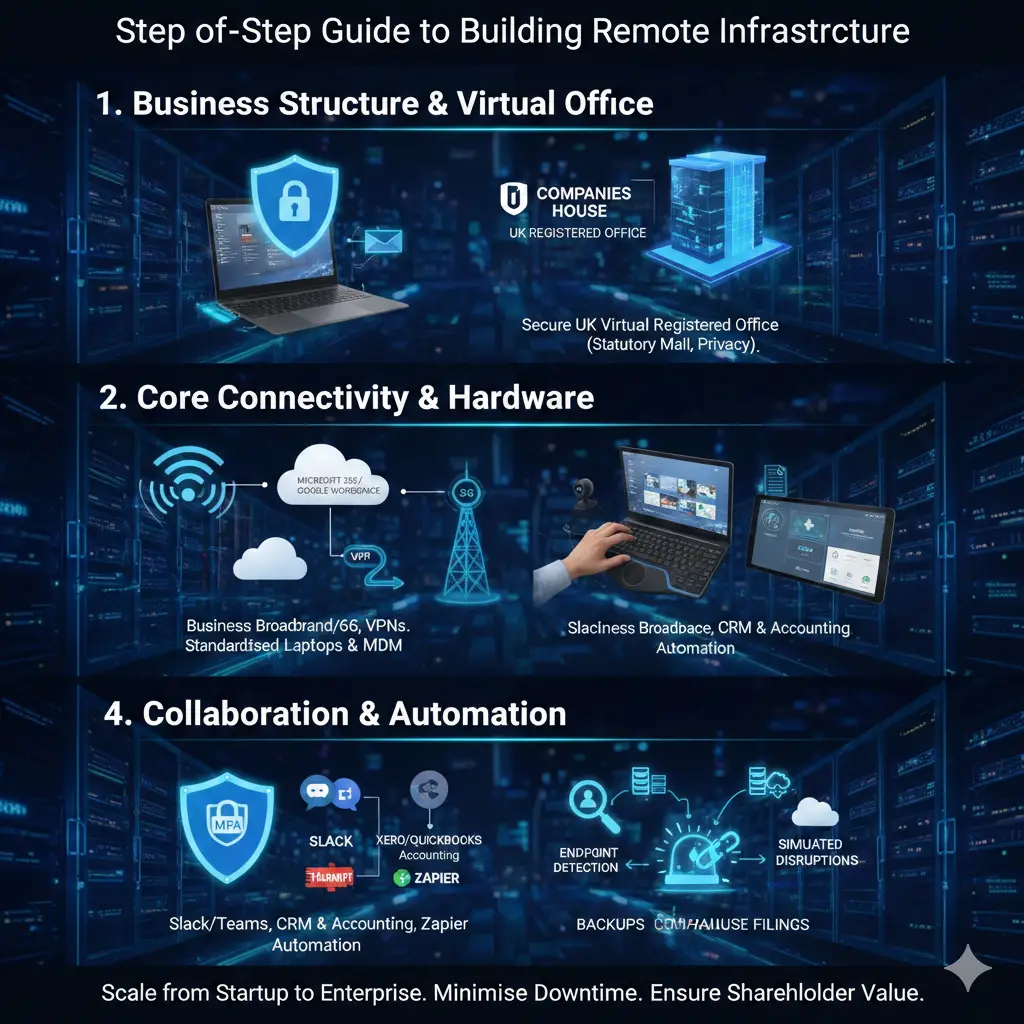
Step-by-Step Guide to Building Remote Infrastructure
Start with assessing your business structure: post-company formation, secure a virtual registered office compliant with Companies House to establish a professional UK base. This address receives statutory mail, shielding home addresses from public records and enabling remote directors to maintain legitimacy without leases.
Next, implement core connectivity via business-grade broadband or 5G with VPNs or zero-trust access, ensuring teams access cloud platforms like Microsoft 365 or Google Workspace. Standardise hardware laptops with webcams, ergonomic peripherals and deploy mobile device management (MDM) for uniform configurations, patching, and encryption.
Layer in collaboration tools: integrate Slack or Teams for communication, alongside CRM systems like Salesforce tied to your accounting software for VAT/PAYE tracking. Automate workflows with Zapier for Companies House filings.
Finally, fortify with cybersecurity MFA, endpoint detection, and backups then test via simulated disruptions. This phased approach scales from startup to enterprise, minimising downtime and ensuring shareholder value through resilient operations.
Benefits and Potential Risks of Remote Infrastructure
The advantages are profound for growing UK businesses. Cost savings top the list: virtual offices slash overheads by 70% versus physical spaces, freeing capital for expansion while meeting registered office needs. Scalability shines add users to cloud suites instantly, supporting shareholder dilutions or new directors without infrastructure overhauls.
Productivity surges with anytime access to shared drives for compliance docs, reducing approval delays on PAYE returns. Enhanced talent acquisition draws remote specialists, bolstering diverse business structures. Compliance integration, like auto-filing via cloud tools, mitigates HMRC penalties.
Risks include cyber vulnerabilities: unsecured home networks expose director data, risking GDPR fines up to 4% of turnover. Over-reliance on single providers causes outages, halting operations. Shadow IT unauthorised apps bypasses controls, complicating VAT audits. Poor ergonomics leads to wellbeing claims under UK employment law. Mitigation demands vendor audits, redundancy, and training, balancing gains against threats for sustained growth.
Legal and Compliance Considerations for Remote UK Businesses
UK company law mandates directors uphold duties under the Companies Act 2006, including timely filings regardless of location. A virtual registered office fulfils section 87 requirements, providing a principal place for Companies House correspondence while remote teams operate globally.
GDPR demands data protection impact assessments for cloud storage of shareholder pacts or PAYE records; pseudonymisation and UK-based servers ensure adequacy. HMRC’s Making Tax Digital requires quarterly VAT updates cloud accounting like Xero automates this, with audit trails proving compliance.
PAYE for remote staff involves real-time information submissions; tools must geofence for right-to-work checks. Flexible working requests, law since 2024, necessitate digital policy portals. For public companies, market abuse regulations apply to insider dealings—secure comms prevent leaks. Non-compliance risks director disqualification or fines; integrate legal tech for automated reminders, safeguarding business structures amid remote evolution.
Common Mistakes to Avoid in Remote Infrastructure Setup
A prevalent error is neglecting cybersecurity basics: skipping MFA exposes logins, leading to breaches of Companies House data and shareholder trust. Always enforce it universally.
Underestimating bandwidth causes video call failures during investor pitches; conduct speed tests and stipulate minimums in contracts.
Ignoring device standardisation breeds incompatibility mixing OS versions hampers collaborative edits on formation documents. Mandate MDM from day one.
Overlooking backup verification: automated snapshots fail silently, risking PAYE data loss. Schedule quarterly restores.
Forgetting virtual office integration: using a home address publicly invites spam and privacy issues; opt for professional services handling scans and forwards.
Skipping employee training on phishing or GDPR invites human error, amplifying fines. Regular simulations build resilience, preventing these pitfalls from derailing remote growth.
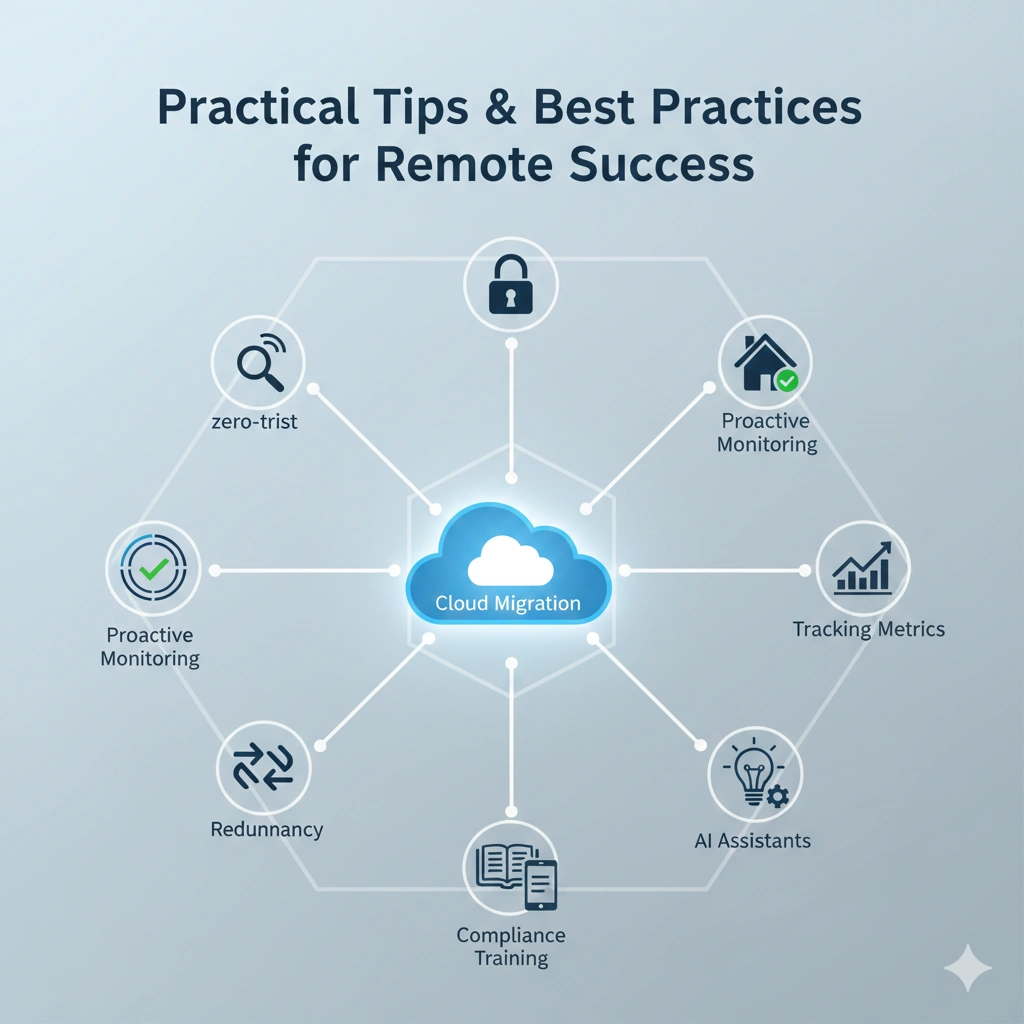
Practical Tips and Best Practices for Remote Success
Prioritise cloud migration: consolidate to Microsoft 365 for seamless Companies House integrations and VAT calculators. Audit licenses quarterly to curb waste.
Adopt zero-trust models: verify every access, ideal for multi-director teams reviewing shareholder resolutions remotely.
Implement proactive monitoring with tools like Microsoft Intune for endpoint health, preempting PAYE filing disruptions.
Foster hybrid policies: use virtual meeting rooms via registered office providers for compliant board sessions.
Budget for redundancy dual ISPs and geo-redundant backups ensure continuity.
Train quarterly on compliance: cover HMRC digital links and data subject requests.
Leverage AI assistants in suites for auto-summarising minutes, accelerating decisions.
Track metrics uptime, resolution times to refine, aligning infrastructure with growth objectives.
Mastering remote infrastructure empowers UK businesses to thrive amid compliance demands, from Companies House to HMRC, without geographical limits. Directors secure growth through scalable, secure systems supporting every business structure.
If you’re ready to register your company with confidence, Form My Company provides fast, fully online company formation with expert compliance support, VAT & PAYE handling, virtual office solutions, and professional support. Get started today and let our specialists handle the paperwork while you focus on growing your business.
Frequently Asked Questions
What virtual office features support Companies House compliance remotely?
Virtual offices provide a prestigious UK address for incorporation, mail scanning, and forwarding, fulfilling statutory requirements without physical presence. They often include meeting rooms for AGMs, ensuring directors meet quorum rules under the Companies Act.
How does remote infrastructure handle VAT and PAYE for growing teams?
Cloud platforms like QuickBooks integrate MTD-compliant submissions, automating quarterly VAT and real-time PAYE. Directors access dashboards for shareholder oversight, with encryption safeguarding sensitive payroll data against remote risks.
Can sole traders scale to Ltd companies using remote setups?
Yes, start with virtual registration, add cloud tools for filings. Transition seamlessly, maintaining compliance via digital signatures for PSC registers and annual returns.
What cybersecurity is essential for remote UK businesses?
MFA, EDR, and encrypted cloud storage protect against breaches. GDPR-aligned policies and incident response plans are mandatory for handling director/shareholder data.
How to choose remote tools for shareholder meetings?
Select platforms with recording, polls, and compliance logging like Teams Enterprise, ensuring valid resolutions even virtually.