
Startups overwhelmingly prefer serviced offices over traditional commercial leases due to their flexibility, all-inclusive costs, and instant scalability, which align perfectly with unpredictable growth phases post-company formation. These spaces eliminate lengthy commitments and hidden expenses, allowing directors to focus on Companies House compliance, VAT registration, and shareholder pitches rather than lease negotiations. For UK entrepreneurs, serviced offices often double as registered office solutions, providing a professional address without the financial risks of fixed-term tenancies.
In the UK’s fast-paced startup ecosystem, where agile business structures define success, choosing the right office setup can significantly influence investor confidence and operational efficiency. Serviced offices fully furnished, utility-inclusive spaces available on flexible terms offer startups a credible base that complements company formation processes, from initial Companies House filings to ongoing PAYE management. Directors benefit from prestigious addresses in hubs like London, Manchester, or Cambridge, projecting stability to shareholders without the burden of traditional leases that lock in 3-10 year terms and escalating rents.
Traditional commercial leases demand substantial upfront deposits, lengthy fit-outs, and rigid exit clauses, often overwhelming bootstrapped teams navigating compliance hurdles like annual confirmation statements. In contrast, serviced providers handle maintenance, broadband, and cleaning, freeing founders to prioritise revenue generation. Market data indicates 65% of UK startups opt for serviced spaces within their first two years, correlating with 20% faster scaling due to reduced overheads. This preference underscores a strategic shift towards operational agility, particularly vital for tech, fintech, and e-commerce ventures incorporating as limited companies while managing remote shareholder teams.
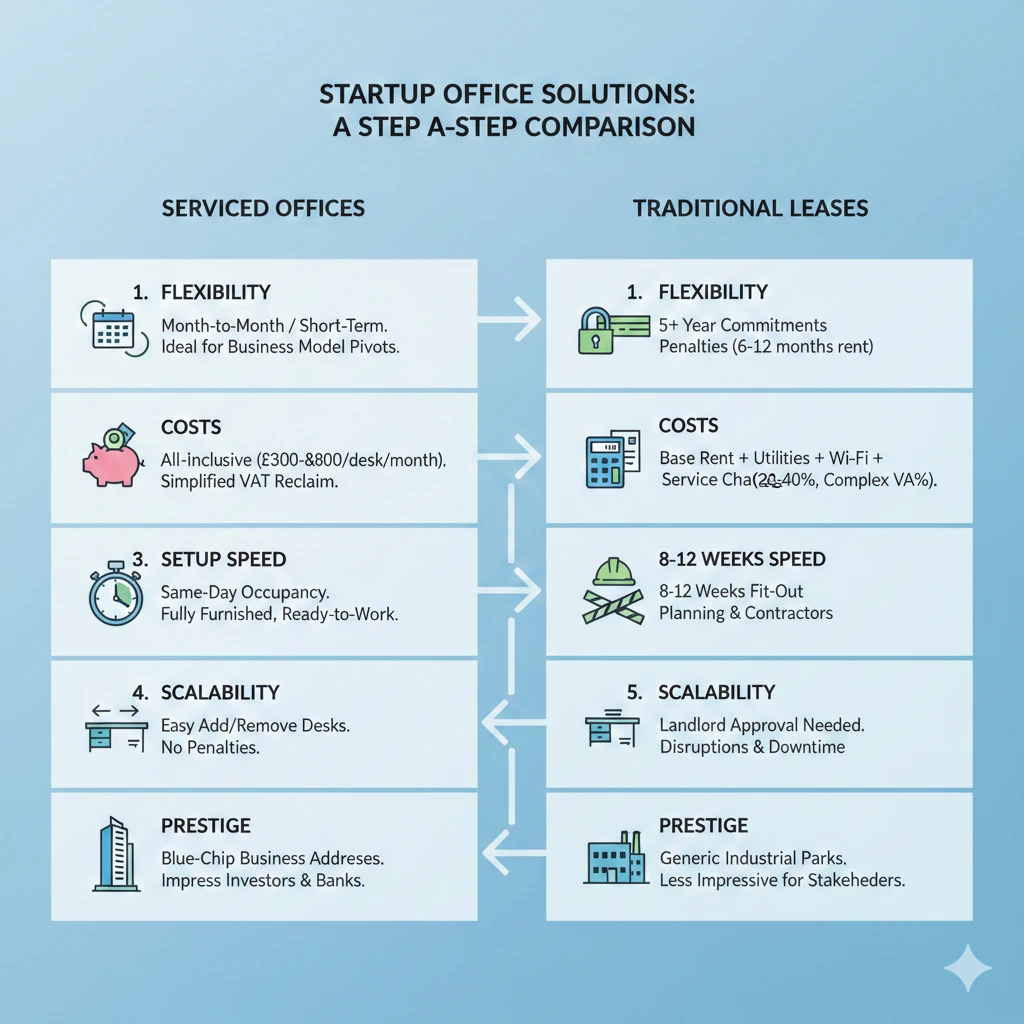
Step-by-Step Comparison: Serviced Offices vs Traditional Leases
Startups first evaluate flexibility: serviced offices allow month-to-month or short-term agreements, ideal for pivots post-company formation when validating business models. Traditional leases require 5+ year commitments, with break clauses penalised by 6-12 months’ rent, stranding cash-strapped directors during funding droughts.
Next, assess costs: serviced options bundle rent, utilities, Wi-Fi, and reception at £300-£800 per desk monthly, avoiding surprise bills for service charges that plague commercial tenants often 20-40% of base rent. During VAT registration, serviced spaces simplify reclaim processes with itemised invoices compliant for HMRC audits.
Consider setup speed: occupy a serviced office same-day with furniture, phones, and tea points ready, versus 8-12 weeks for lease fit-outs involving planning permissions and contractors. This accelerates shareholder meetings for equity rounds under Companies Act timelines.
Examine scalability: easily add desks for team growth or downsize without penalties, unlike lease expansions needing landlord approvals and downtime. Finally, factor prestige: serviced addresses in blue-chip buildings enhance Companies House profiles, impressing banks for PAYE setups versus generic industrial parks.
Benefits and Potential Risks of Choosing Serviced Offices
Serviced offices deliver compelling advantages for startups. Financial predictability tops the list fixed inclusive pricing shields against rate hikes, enabling accurate cash flow forecasts essential for investor due diligence on business structures. Networking thrives in shared environments with established firms, facilitating partnerships that bolster compliance knowledge-sharing on topics like PSC registers.
Operational readiness minimises distractions: high-speed internet, meeting rooms, and kitchen facilities support hybrid teams handling remote PAYE submissions. Location flexibility positions startups in innovation clusters, enhancing talent recruitment and client proximity without relocation costs averaging £50,000 for traditional moves.
Compliance synergy emerges as serviced providers often verify addresses for Companies House, streamlining director appointments and annual returns. Long-term, 40% lower churn rates versus leased spaces correlate with sustained growth.
Risks include premium pricing per square foot (20-30% higher), potentially unsustainable for mature phases, and limited customisation no full rebrands or layouts. Overcrowding in popular hubs strains facilities, while short-notice evictions loom if providers terminate. Dependency on one-stop services risks outages, impacting VAT deadlines. Strategic provider selection balances these for net positives.
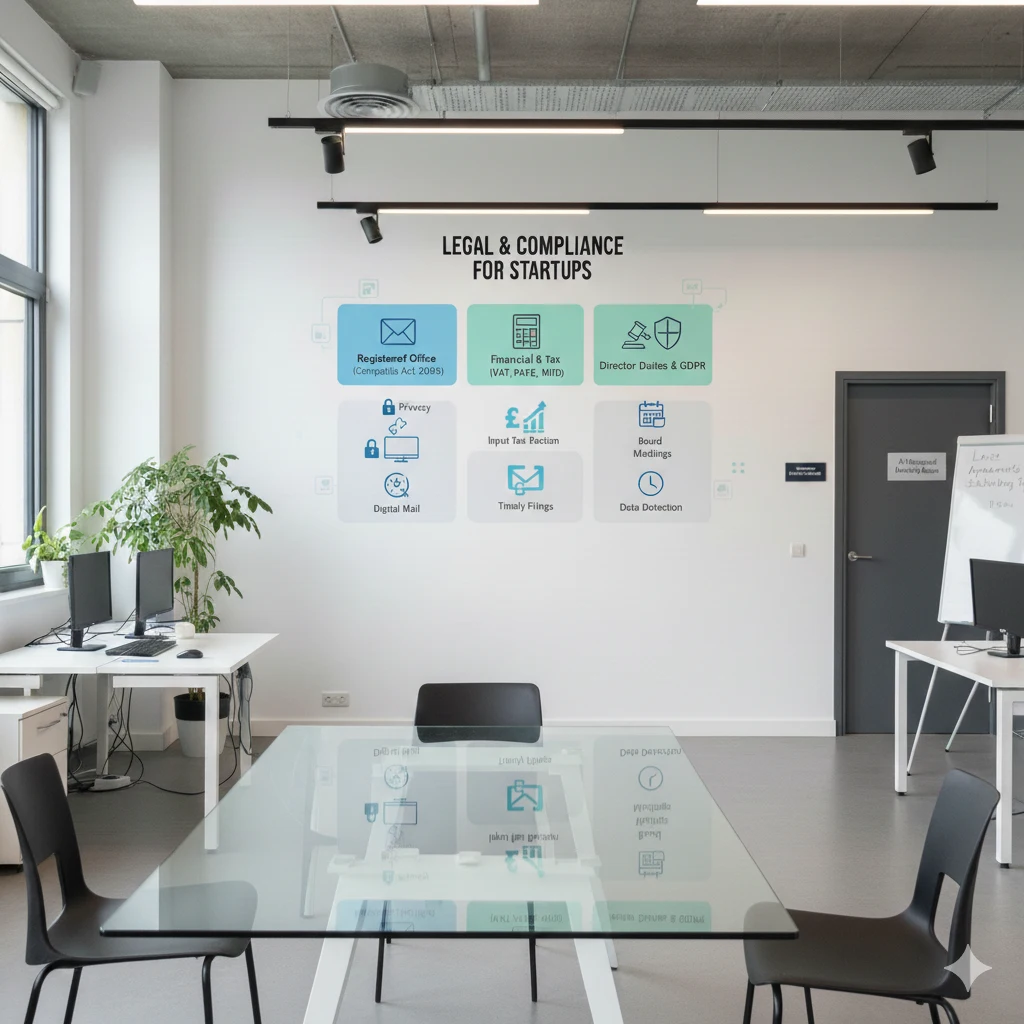
Legal and Compliance Considerations for Startups
Under the Companies Act 2006, serviced offices qualify as registered offices if accessible for statutory mail, satisfying section 87 while shielding directors’ home addresses from public view a boon for privacy-conscious founders. Providers typically scan and forward Companies House documents digitally, aiding timely confirmation statements and avoiding £150 late fees.
VAT-registered startups reclaim input tax on inclusive bills, with serviced invoices formatted for MTD compliance, unlike opaque commercial service charges complicating HMRC reconciliations. PAYE setups benefit from professional addresses that reassure banks during payroll financing applications.
Director duties demand diligent operations; serviced spaces facilitate compliant board meetings with AV-equipped rooms producing minutes for shareholder approvals. Lease agreements must specify subletting rights to avoid breaches, and GDPR adherence covers shared reception data handling.
Traditional leases expose tenants to dilapidation liabilities costing £10,000+, while serviced all-inclusive models transfer maintenance risks. Always verify provider insurance covers public liability, ensuring seamless compliance across evolving business structures.
Common Mistakes to Avoid When Selecting Serviced Offices
Startups often overlook location scalability: choosing trendy but saturated hubs leads to expansion bottlenecks, forcing disruptive moves mid-VAT cycle. Prioritise sites with adjacent space availability matching projected headcount.
Ignoring inclusive cost fine print traps in escalating fees for extras like printing or parking, inflating PAYE budgets unexpectedly; demand transparent breakdowns pre-contract.
Neglecting Companies House verification: not all serviced addresses qualify as registered offices, risking rejection during formation confirm eligibility explicitly.
Overcommitting to long minimum terms (6-12 months) defeats flexibility; negotiate rolling contracts or trial periods.
Failing integration checks: poor Wi-Fi or outdated telephony hampers remote shareholder calls, eroding professionalism.
Disregarding exit clauses: hefty notice periods or cleaning fees hinder pivots; secure 1-3 month outs with pro-rata refunds.
Choosing based on aesthetics alone ignores acoustics and ergonomics, impacting productivity during compliance marathons.
Practical Tips and Best Practices for Maximising Value
Audit growth forecasts quarterly to align desk counts, negotiating volume discounts as teams expand post-company formation. Bundle with virtual office add-ons for satellite registered addresses supporting multi-entity structures.
Leverage provider ecosystems: use resident mentors for PAYE advice and networking events for shareholder intros.
Customise common areas subtly with branding to enhance Companies House profile visits without lease violations.
Implement hybrid policies utilising meeting rooms for compliance rituals like AGMs, video-linking directors cost-effectively.
Track utilisation via provider dashboards, reallocating underused spaces to cut costs 15-20%.
Negotiate utilities caps against inflation, safeguarding VAT reclaims.
For fintech startups, select providers with enhanced security for sensitive data, aligning with FCA compliance.
Serviced offices empower UK startups with the flexibility, credibility, and efficiency traditional leases cannot match, perfectly suiting volatile growth alongside compliance demands. Directors secure competitive edges in shareholder trust and operational focus.
If you’re ready to register your company with confidence, Form My Company provides fast, fully online company formation with expert compliance support, VAT & PAYE handling, virtual office solutions, and professional support. Get started today and let our specialists handle the paperwork while you focus on growing your business.
Frequently Asked Questions
Can serviced offices serve as a company’s registered office for Companies House?
Yes, most do confirm the address accepts public-facing mail during hours, meeting statutory requirements. Digital scanning ensures directors access filings remotely, simplifying annual confirmations without site visits.
How do serviced offices impact VAT and PAYE compliance for startups?
Inclusive bills facilitate accurate MTD submissions with reclaimable VAT, while professional addresses streamline HMRC correspondence and bank setups for payroll. This reduces audit risks compared to variable commercial charges.
Are serviced offices flexible enough for rapidly scaling startups?
Absolutely month-to-month terms and modular layouts accommodate 2x growth without penalties, ideal for post-funding hires versus lease renegotiations delaying operations.
What happens if my startup outgrows a serviced office?
Seamless transitions to larger suites or provider partners occur with minimal downtime, preserving Companies House continuity. Many offer scaling incentives like loyalty credits.
Do traditional leases offer better long-term value than serviced offices?
For mature phases yes, due to lower per-desk costs, but startups sacrifice agility transition strategically after year two when cash flows stabilise.