

Selecting the right virtual office for your UK company registration is crucial for compliance, credibility, and convenience. The ideal virtual office provides a legal registered address accepted by Companies House while projecting professionalism to clients and partners. Below, we break down exactly how to find, assess, and choose the right provider for a seamless start to your UK business journey.
A virtual office has become a cornerstone for modern businesses, especially startups, freelancers, consultants, and overseas entrepreneurs registering companies in the UK. In simple terms, a virtual office provides a physical business address and related administrative services without the need for you to rent a physical workspace. For company formation, it’s more than just a mailing address it’s an official registered office legally required by Companies House.
Choosing the right virtual office is about more than finding an address; it’s about ensuring your company meets UK legal obligations, maintains privacy, and builds trust with customers. The best providers combine compliance expertise with practical features such as secure mail handling, director service addresses, and optional upgrades like call forwarding or meeting room access. Let’s explore step by step how to choose a virtual office that sets your new company up for long-term success.
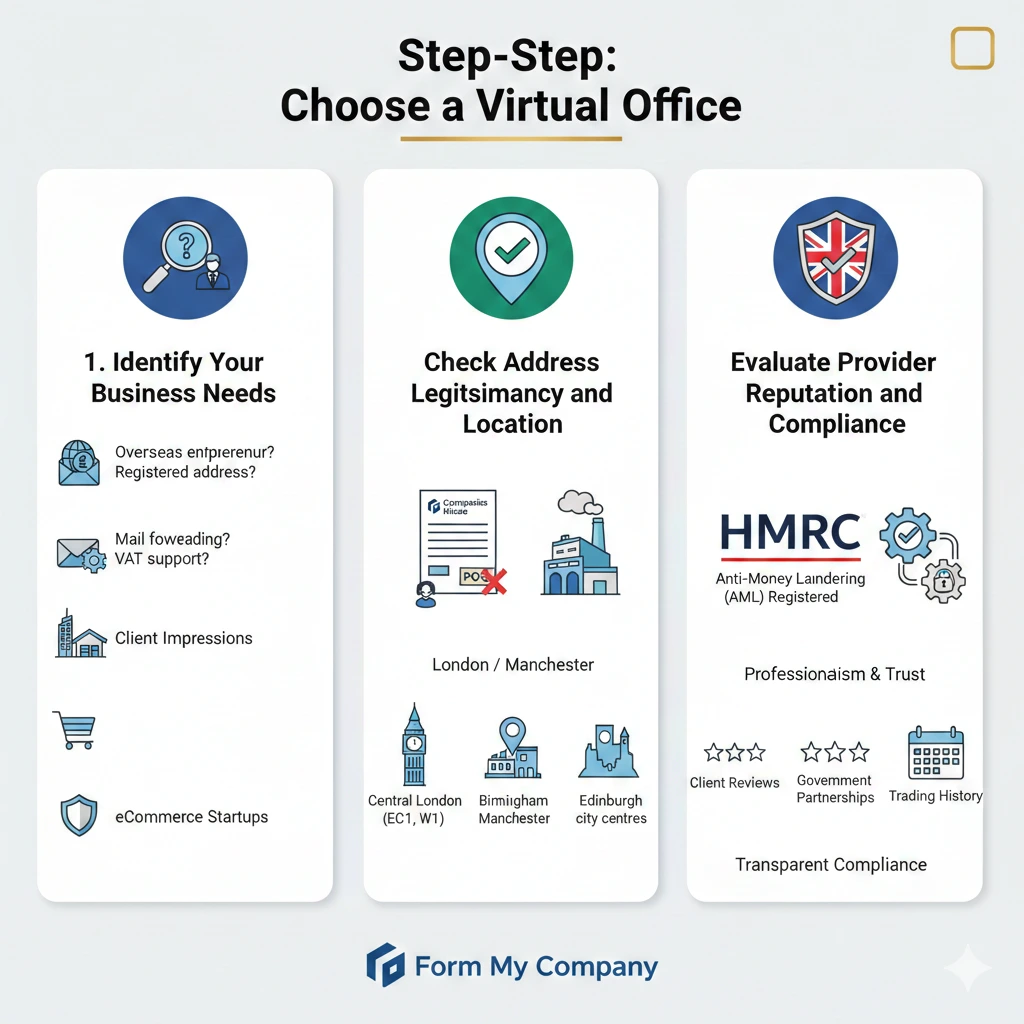
Step-by-Step: How to Choose a Virtual Office
Choosing a virtual office for UK company registration involves balancing compliance, convenience, and cost-effectiveness. Follow these key steps to make an informed decision.
1. Identify Your Business Needs
Before comparing providers, define what you actually need. Are you an overseas entrepreneur who simply requires a UK registered address? Or do you need a correspondence address for directors, VAT registration support, and mail forwarding? Understanding your needs helps you avoid paying for irrelevant extras.
If your business model relies on client impressions such as consulting, legal, or financial services a prestigious address in London or Manchester can significantly reinforce credibility. Meanwhile, eCommerce startups might prefer a cost-efficient address outside major cities. Choose a service aligned with your operational goals and brand image.
2. Check Address Legitimacy and Location
Not every “virtual office” provider offers an address accepted by Companies House. Always verify that the address meets the criteria for use as a registered office. Under the Companies Act 2006, your registered office must be a physical location in the UK (not a PO Box), capable of receiving official mail and legal documents.
Look for well-known business districts such as:
- Central London (e.g. EC1, W1)
- Birmingham, Manchester, or Edinburgh city centres
These convey professionalism and trust, which influences both investors and customers. Reputable locations can also help when applying for VAT, PAYE, or business bank accounts, as authorities often verify the legitimacy of your registered address.
3. Evaluate Provider Reputation and Compliance
This step is vital. A virtual office provider should be registered under HMRC’s Anti-Money Laundering (AML) regulations, ensuring your company’s identity verification process meets UK law. Unregulated providers risk rejection by Companies House or could expose your firm to compliance issues later.
Research client reviews, look for Companies House or government partnerships, and verify the provider’s trading history. Established firms like Form My Company maintain transparent compliance processes, enabling seamless integration of virtual office services into your company formation package.
Benefits of a Virtual Office
A virtual office offers far more than convenience it’s a practical solution that blends legal compliance with operational flexibility.
1. Legal Address for Company Registration
Every UK limited company must have a registered office address within its jurisdiction (England, Wales, Scotland, or Northern Ireland). A virtual office satisfies this requirement, ensuring all official notices from Companies House and HMRC are properly received and managed. This prevents missed deadlines or penalties for non-compliance.
2. Privacy and Professional Image
Listing your home address as the company’s registered office makes your personal details publicly visible on Companies House records. A virtual office shields your privacy while presenting a credible business front. For home-based and online businesses, this separation between personal and professional identity is invaluable.
3. Operational Flexibility
Virtual offices make it easier to expand into new regions or markets without relocating. For instance, an overseas entrepreneur can register a UK company and manage operations remotely while maintaining a genuine UK presence. Many providers also bundle services such as digital mail forwarding, call handling, and virtual receptionists ideal for remote teams.
Legal and Compliance Considerations
Legal compliance is a non-negotiable aspect of company registration. Here’s what you must understand before selecting a virtual office address.
1. Registered Office Requirements
Your virtual address becomes your official registered office with Companies House. It must remain active and accessible for legal correspondence at all times. The provider must be able to receive:
- HMRC tax notices
- Companies House reminders
- Legal or court documents
- Correspondence from financial institutions
Failure to receive or respond to official mail can have serious consequences, including fines, late filing penalties, or even company dissolution.
2. AML and KYC Compliance
Under the UK’s Money Laundering, Terrorist Financing and Transfer of Funds Regulations 2017, all company service providers including virtual office providers must perform identity verification on directors and beneficial owners. Ensure your chosen provider conducts a proper “Know Your Customer” (KYC) check before activating the service. This ensures your records are valid and compliant during registration and future filings.
3. Jurisdiction-based Registration
Select a provider offering an address in the same jurisdiction where your company is registered. For example, a company registered in Scotland must maintain a registered office in Scotland. This matters when filing confirmations or annual accounts to Companies House.
Common Mistakes to Avoid
Even experienced entrepreneurs can make errors when choosing a virtual office. Here are the most common pitfalls and how to avoid them.
1. Selecting the Wrong Address Type
Not all addresses are suitable for company registration. Some providers only offer mail forwarding services that do not qualify as registered offices. Always confirm that your package includes an official registered office address accepted by Companies House.
2. Ignoring Provider Credentials
Choosing an unregulated provider might seem cheaper, but it exposes you to compliance risks. Without AML supervision or verified business legitimacy, your company may face rejection during registration or scrutiny from HMRC and banks.
3. Failing to Update Records
If you change virtual office providers or addresses, you must update Companies House and HMRC immediately. Failure to do so can result in important correspondence being sent to your old address, potentially leading to missed filing deadlines or penalties.
4. Overlooking Hidden Fees
Review the provider’s pricing structure for renewal charges, mail handling limits, or forwarding costs. Transparent pricing indicates a trustworthy provider. Avoid “free” virtual office offers that later add mandatory renewal or admin fees.
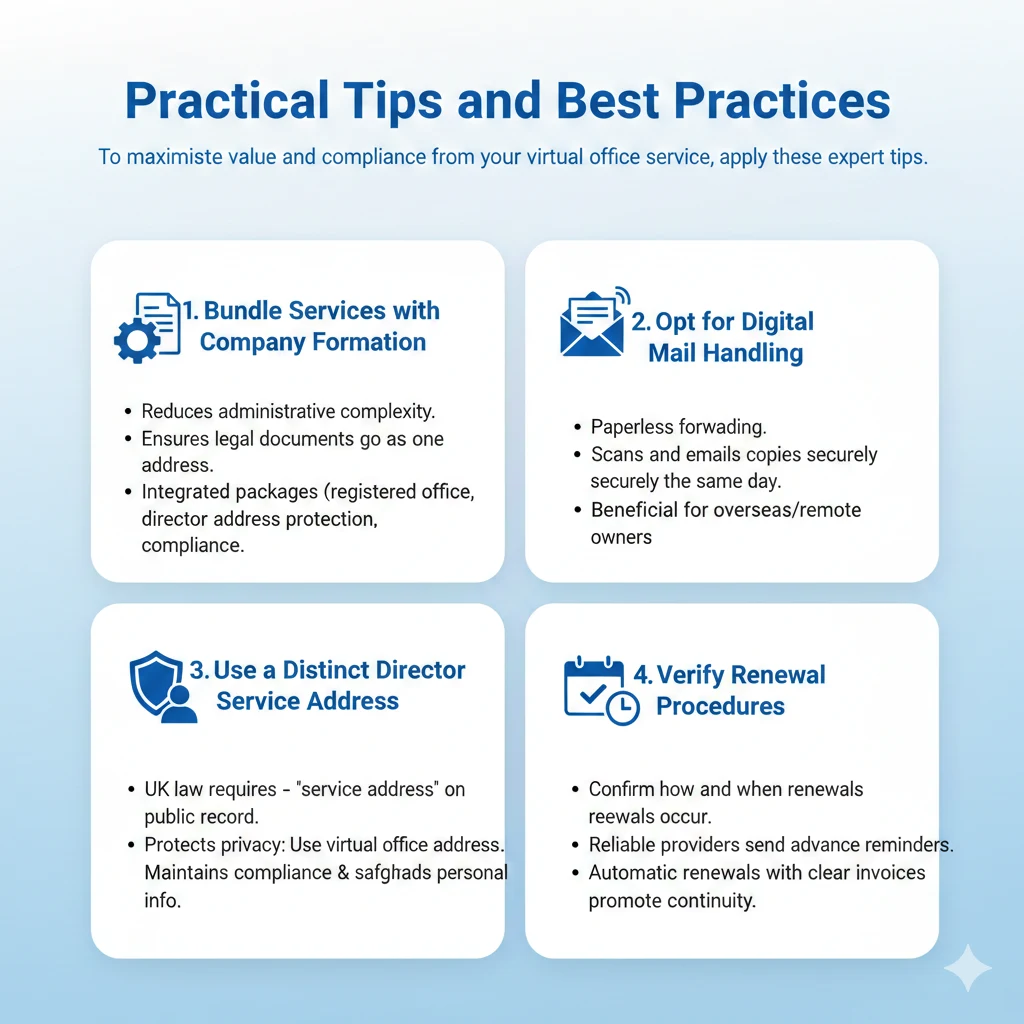
Practical Tips and Best Practices
To maximise value and compliance from your virtual office service, apply these expert tips.
1. Bundle Services with Company Formation
Using one provider for both company formation and virtual office services reduces administrative complexity. It ensures all legal documents from incorporation to VAT registration—are sent to the same address. Providers like Form My Company specialise in integrated packages covering registered office, director address protection, and compliance management.
2. Opt for Digital Mail Handling
Paperless forwarding ensures you never miss important documents. Choose a provider that scans official letters and securely emails copies the same day. This is particularly beneficial for overseas directors or remote business owners.
3. Use a Distinct Director Service Address
Under UK law, directors must list a “service address” on public record. To protect privacy, use the virtual office provider’s director address service instead of your home address. This maintains compliance while safeguarding your personal information.
4. Verify Renewal Procedures
Confirm how and when service renewals occur. Reliable providers send advance reminders to ensure no lapse in your registered address service. Automatic renewals with clear invoices promote business continuity.
A well-chosen virtual office is more than a convenient tool it’s fundamental to compliance, branding, and operational efficiency in UK company formation. Prioritise providers that combine official AML registration, transparent pricing, and comprehensive mail handling. An address that enhances credibility while fulfilling legal requirements strengthens your company’s foundation from day one.
If you’re ready to register your company with confidence, Form My Company provides fast, fully online company formation with expert compliance support. From registered office and director address protection to VAT and PAYE registration, our team ensures you meet every legal obligation while projecting professionalism. Get started today and let our specialists handle the paperwork while you focus on growing your business.
Frequently Asked Questions
1. Can I use a virtual office as my company’s registered address?
Yes. As long as the provider’s address is in the correct jurisdiction (England, Wales, Scotland, or Northern Ireland) and meets Companies House requirements, it’s fully valid for registration purposes.
2. What’s the difference between a registered office and a trading address?
The registered office is your company’s official legal address for government correspondence. A trading address is where daily operations occur. A virtual office can serve as your registered office, even if your trading activities take place elsewhere.
3. Are virtual offices accepted for VAT registration?
Yes, but HMRC may request proof of genuine business activity (e.g. contracts, invoices, or client communications). Choosing a reputable virtual office provider strengthens your application’s credibility.
4. Can multiple companies use the same virtual office address?
Absolutely. Many businesses legally share a single address through a licensed provider. However, each company is individually identifiable through its registered name and incorporation number.
5. What happens if I don’t renew my virtual office service?
If you fail to renew, mail redirection and compliance support will stop. Companies House records will still display your old address until you formally update it so always renew promptly to maintain compliance.