
Hiring a professional training room gives your team a focused, distraction-free environment with the right technology, space, and facilities to learn effectively. It signals that you take development seriously, helps you deliver compliant training, and protects productivity in your normal office. For UK businesses, using external training rooms can also support company formation, HR onboarding, and compliance journeys in a structured, professional way.
As your business grows, the quality of your training directly influences performance, staff retention, and ultimately profitability. Trying to run serious training sessions in a cramped office meeting room or over a patchy video call will only take you so far. Professional training room hire offers a dedicated, well-equipped space designed for learning and collaboration, with layouts, technology, and facilities that support everything from new starter inductions to specialist compliance training. For directors and shareholders, investing in the right environment is a tangible way to protect the value of the business and demonstrate commitment to staff development.
In the UK, training needs often link directly to company formation and regulatory obligations. When you start employing staff and register for PAYE, you inherit responsibilities around health and safety, data protection, and sometimes sector-specific regulations. Structured training delivered in a professional venue can help you prove you have taken “reasonable steps” to meet these standards. Whether you are onboarding your first employees or upskilling a growing team across multiple locations, a good training room can dramatically increase engagement and knowledge retention compared with an improvised internal setup.
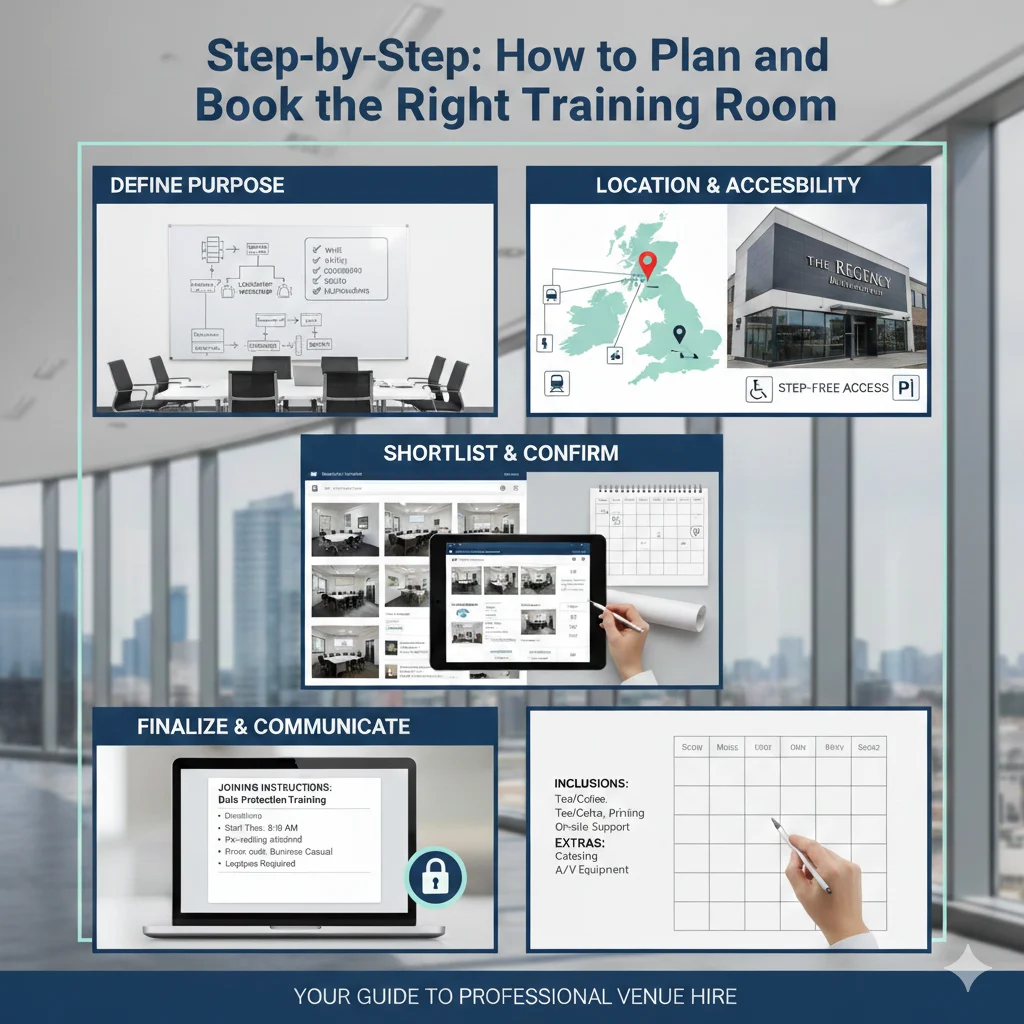
Step-by-Step: How to Plan and Book the Right Training Room
Booking a professional training room is more than checking a date and clicking “confirm”. A structured approach helps you choose a venue that genuinely supports your objectives rather than simply housing your team for the day.
Start by defining the purpose of the session in concrete terms. Are you training new hires as part of a rapid post-incorporation expansion, running a director and senior management workshop on governance and Companies House responsibilities, or delivering technical training around VAT, PAYE, or accounting systems? Clarifying the purpose allows you to specify the type of space you need: a classroom-style setup for structured teaching, a U-shape for interactive discussions, or cabaret-style tables for group work. Make a list of essential facilities such as high-speed Wi‑Fi, dual screens or projection, sound system, flipcharts, and breakout areas for smaller group exercises.
Next, think about location and accessibility. For a UK-wide team, transport links are critical: central locations close to major railway stations, parking options, and step-free access for any attendees with mobility needs. If you are bringing in external trainers, advisers, or investors, a reputable business address potentially the same provider as your registered office or virtual office adds gravitas and continuity to your brand. Once you have a shortlist of venues, ask for photos, floorplans, and a detailed list of inclusions and extras (for example, whether tea and coffee, printing, and on-site support are included or charged separately). Confirm the room capacity relative to your group size so people have space to move, interact and work on laptops without feeling cramped.
Finally, lock in your booking with clear timings, cancellation terms, and any special requirements. Share joining instructions with your team well in advance, including directions, start times, and expectations (e.g. laptops required, pre-reading, dress code). If your training covers compliance topics like data protection, health and safety, or regulatory reporting, ensure you have the necessary materials and that the venue can support any confidentiality needs, such as private rooms for sensitive case discussions.
Benefits and Potential Risks of Training Room Hire
Professional training rooms can offer a strong return on investment when used strategically. One of the biggest benefits is focus: taking your team away from their usual desks removes day‑to‑day distractions like emails, phone calls, and ad-hoc questions, allowing them to immerse themselves in the material. Purpose-built rooms typically have better acoustics, sightlines and airflow than repurposed meeting rooms, which helps maintain energy over long sessions. The right environment signals that the business is serious about development, which can boost morale and show employees that directors and shareholders are actively investing in their growth rather than treating training as a tick‑box exercise.
Another major advantage is access to professional facilities that you may not have in-house, especially if you are a startup operating from a serviced office, co‑working space or primarily remote. Training venues often come equipped with reliable AV technology, high-speed internet, and on‑site technical support reducing the risk of delays or technical issues during critical sessions. This is particularly important when you are running time‑sensitive training around company policies, risk management, or regulatory changes that affect compliance with HMRC, Companies House or sector regulators. Additionally, external venues make it easier to bring together distributed teams, which strengthens culture and improves collaboration.
There are, however, potential risks to consider. Costs can escalate if you book more capacity or more premium locations than you need, or if you underestimate the preparation required and end up cancelling or rescheduling at short notice. Poor venue choice can undermine the session: noisy environments, unreliable technology, or inconvenient locations can frustrate attendees and distract from learning. There is also a risk of treating room hire as a silver bullet—without well-designed content and follow‑up, even the best venue cannot fix poorly structured training. To maximise value, businesses need to pair a suitable space with clear objectives, good facilitation, and plans for reinforcing learning back in the workplace.
Legal and Compliance Considerations
From a legal and compliance standpoint, professional training is not just a “nice to have” once you begin employing staff; it ties directly into your duties as a UK employer and company director. The Health and Safety at Work etc. Act 1974 and related regulations place obligations on employers to provide adequate information, instruction and training to employees. Using a professional training room can help you deliver structured health and safety inductions, fire warden training, and risk-awareness briefings that demonstrate you have taken reasonable steps to protect your workforce. Keeping records of attendance, materials used, and trainer credentials can be valuable if you ever need to evidence these efforts.
For companies that have recently formed or restructured, there are also governance and regulatory aspects to consider. Directors need to understand their responsibilities under the Companies Act, including filing deadlines with Companies House, maintaining accurate registers, and meeting their duties towards shareholders and creditors. Likewise, staff involved in finance and HR need proper training on VAT, PAYE, payroll processes, and handling confidential data in line with UK GDPR. A professional training venue can provide a suitable setting for confidential discussions, particularly if you are dealing with sensitive topics such as whistleblowing, financial controls, or internal investigations.
Confidentiality and data protection should be factored into your choice of venue. Ensure the provider has appropriate security measures in place, including secure access, clear desk policies in shared areas, and options for private rooms if you need to discuss client data or internal financial information. If sessions involve third-party trainers or advisers, you may want to put non‑disclosure agreements in place and brief everyone on how participant data (e.g. attendance lists, feedback forms) will be handled. For regulated sectors such as financial services, legal, or healthcare, all of this becomes even more important, as training content may relate directly to regulatory rules and internal policies that need to be handled with care.
Common Mistakes to Avoid
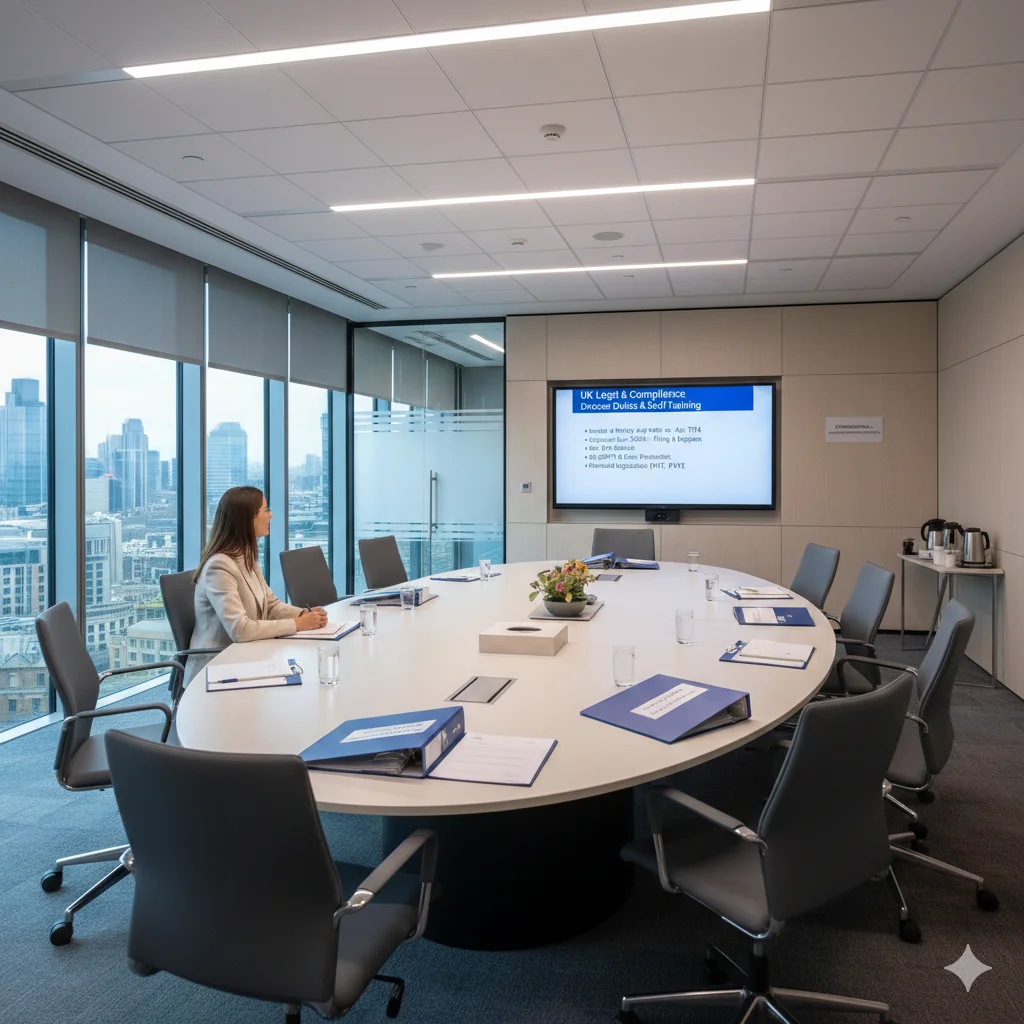
One common mistake is treating training room hire as an afterthought rather than a strategic decision. Businesses sometimes book the cheapest or closest venue without considering whether it supports the specific type of training they are running. For example, a narrow boardroom with fixed furniture may be unsuitable for interactive workshops or practical exercises, while an open-plan room in a noisy building may distract participants from complex technical content. Failing to align room layout, facilities and location with the goals of the session can reduce engagement and lead to poor learning outcomes.
Another frequent error is underestimating the importance of logistics and preparation. If you do not test AV equipment beforehand or confirm connectivity for remote attendees, you risk wasting valuable time at the start of the session. Likewise, neglecting to communicate clear joining instructions, breaks, and catering arrangements can leave participants frustrated or late, particularly if they are travelling from other cities. Businesses also sometimes try to “cram” too much into a single day because the room is booked, leading to information overload and fatigue. This is especially counterproductive for compliance training, where retention and understanding are crucial.
Finally, some companies overlook follow‑up entirely, assuming that once the training day is over the job is done. Without reinforcement, even high‑quality training can fade quickly from memory. Failing to gather feedback means you miss opportunities to improve future sessions or identify gaps in understanding. From a legal perspective, not keeping proper records of who attended which sessions can create problems if you later need to prove that staff were trained on particular procedures or obligations. Avoiding these mistakes requires you to view training room hire as one piece of a broader learning and compliance strategy, not just a facilities expense.
Practical Tips and Best Practices
To get the most from professional training room hire, start by aligning each session with a clear business and compliance objective. For example, you might run an induction day for new employees following a period of growth after company formation, a workshop on updated VAT rules for your finance team, or a session for managers on handling disciplinary procedures fairly. Once objectives are clear, design the agenda around a realistic amount of content, with regular breaks and interactive elements that keep people engaged. Provide pre‑reading or short e‑learning modules where possible so that time in the training room focuses on discussion and application rather than one‑way lectures.
When choosing a venue, favour providers that understand small business and startup needs, particularly those who also offer virtual office, registered office, or meeting room services. This can give your team a consistent, professional environment to work in, and make it easier to handle other administrative tasks such as receiving Companies House or HMRC correspondence. Confirm practical details such as room capacity, layout options, natural light, ventilation, and accessibility. Ask whether you can arrive early to set up, whether on‑site support will be available during your session, and what happens if you need to extend your booking due to over‑running discussions or Q&A.
On the day, arrive early with your facilitator or trainers, test all equipment, and have a backup plan if the technology fails (for instance, printed materials or alternative presentation formats). Collect feedback at the end of the session, focusing on what worked well, what could be improved, and whether participants feel more confident in the subject matter. After the event, circulate materials, summaries, and any updated policies, and schedule follow‑up sessions where necessary. Keep clear records of attendance and content covered to support future audits or regulatory reviews. By treating the training room as a strategic asset rather than a simple hire, you can significantly increase the impact of each session on team performance and compliance.
Professional training room hire can play a pivotal role in maximising team success, especially for growing UK businesses navigating company formation, regulatory obligations, and rapid change. By providing a dedicated, well-equipped space for learning, you improve engagement, strengthen compliance, and demonstrate a clear commitment to your people. The key is to match the right venue with clear objectives, thoughtful design, and solid follow‑up so that each session delivers measurable value.
If you’re ready to register your company with confidence, Form My Company provides fast, fully online company formation with expert compliance support. From professional registered office and virtual office services to VAT & PAYE registration and support with training and governance, our specialists are here to help. Get started today and let our team handle the paperwork while you focus on growing your business and developing your team.
Frequently Asked Questions
When should a small business start using professional training rooms?
You should consider professional training rooms as soon as you move beyond very small, informal sessions and start dealing with structured onboarding, compliance topics, or multi‑disciplinary teams. Once you are employing staff, managing PAYE, and handling client data, a dedicated training space helps you deliver more consistent and effective development.
Are training room hire costs tax-deductible for UK companies?
Yes, training room hire is typically treated as a legitimate business expense where the training is for business purposes, such as staff development, compliance, or skills training. For VAT‑registered companies, you can usually reclaim VAT on qualifying hire and catering costs, provided you keep proper invoices and records.
Can I use the same provider for training rooms and my registered office?
Many providers offer a combination of registered office services, virtual offices, meeting rooms, and training facilities. Using the same provider can simplify administration, give your business a consistent professional presence, and often provide better value through bundled packages.
How far in advance should I book a professional training room?
For popular city‑centre locations, especially during peak periods like spring and autumn, booking four to six weeks in advance is sensible. For smaller groups or off‑peak times, two to three weeks may be enough, but early booking gives you more choice of room layout, timings, and additional services such as catering.
What should I look for in a contract or booking agreement?
Check the cancellation and rescheduling policy, payment terms, exactly what is included in the hire fee (equipment, refreshments, on‑site support), and any additional charges for overtime or damages. Make sure you know the arrival time, security procedures, and who to contact on the day if something goes wrong.