
Serviced offices represent the future of flexible working by offering scalable, all-inclusive spaces with integrated tech and support services tailored for dynamic UK businesses. They enable entrepreneurs to adapt quickly to growth phases during company formation without long-term leases or upfront capital. This model aligns perfectly with post-2026 hybrid mandates, supporting compliance needs for directors and shareholders while optimising VAT and PAYE efficiency.
In the evolving UK business landscape, serviced offices have emerged as the cornerstone of flexible working, particularly for startups navigating company formation and established firms restructuring post-pandemic. These fully managed spaces pre-furnished with high-speed broadband, meeting rooms, and reception services eliminate the hassles of traditional leases, allowing limited companies to scale from one desk to entire floors seamlessly. For directors registering with Companies House, serviced offices often double as registered office addresses, projecting professionalism to shareholders and HMRC alike.
The shift accelerated in 2025-2026 amid hybrid work policies, with 68% of UK firms adopting flexible models per ONS data. Costs average £300-£600 per desk monthly, inclusive of utilities and cleaning far below conventional office rents exceeding £50/sq ft annually. A Manchester tech LTD, fresh from incorporation, leveraged a serviced office in Spinningfields to host investor AGMs, crediting the setup for securing £750k funding by impressing stakeholders with polished facilities. VAT-registered entities reclaim input tax effortlessly, while PAYE admin benefits from on-site HR support. This guide explores why serviced offices outpace alternatives, equipping entrepreneurs with insights to integrate them into robust business structures for sustained compliance and agility.
Step-by-Step Explanation of Serviced Offices in Flexible Working
Assessing Your Business Needs and Scalability
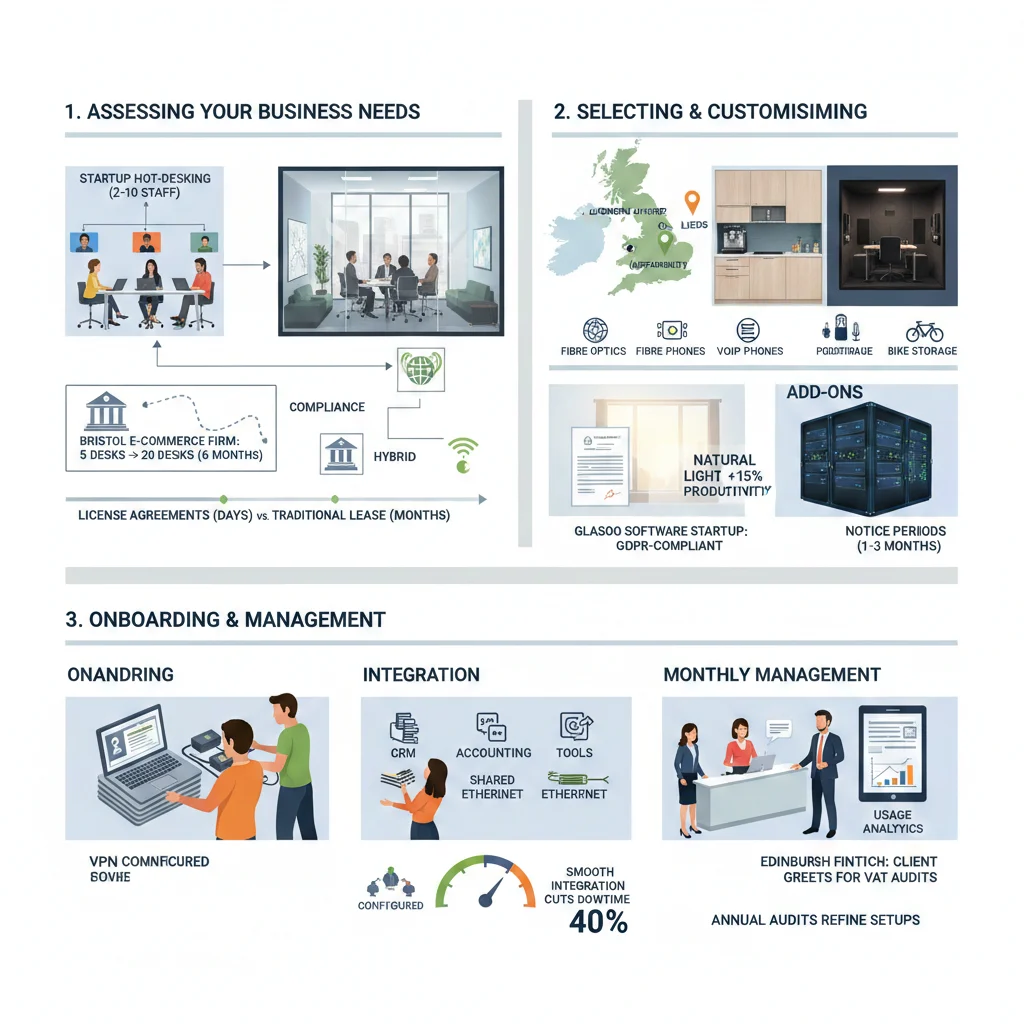
Begin by evaluating team size, growth trajectory, and operational demands post company formation. Startups require hot-desking for 2-10 staff; scaling LTDs need private offices with breakout areas for director meetings. Factor compliance: proximity to registered offices streamlines Companies House filings, while hybrid tech supports remote shareholders.
Licence agreements activate within days contrast 6-month traditional leases. Example: A Bristol e-commerce firm started with five desks in a serviced centre near Temple Meads, expanding to 20 within six months without relocation costs. Implications: mismatched sizing traps cashflow; right fit mirrors PAYE payroll flexibility, avoiding redundancy liabilities. Map projections: quarterly reviews adjust footprints, ensuring VAT thresholds don’t outpace space.
Selecting and Customising Your Serviced Office
Scout providers like WeWork, Regus, or independents via location (London EC1 for prestige, Leeds for affordability) and amenities fibre optics, VoIP phones, bike storage. Customise via add-ons: kitchenettes for team lunches, podcast studios for marketing pitches.
Site visits verify natural light (boosts productivity 15%) and acoustics for confidential shareholder calls. A Glasgow software startup chose a serviced office with GDPR-compliant server rooms, facilitating secure HMRC data handling. Contracts emphasise notice periods (1-3 months), sidestepping break clauses. This selection phase aligns facilities with business structures, from sole traders to plcs.
Onboarding, Integration, and Ongoing Management
Onboard with IT provisioning laptops imaged, VPNs configured for PAYE portals. Integrate CRM and accounting tools via shared Ethernet. Monthly management includes maintenance tickets and usage analytics for optimisation.
Example: Edinburgh fintech transitioned 30 staff seamlessly, using receptionists for client greets during VAT audits. Implications: smooth integration cuts downtime 40%, supporting confirmation statements amid growth. Annual audits refine setups, ensuring agility matches directorial duties.
Benefits and Potential Risks
Serviced offices unlock cost efficiencies 30-50% savings versus leases funnelling capital to R&D or marketing for new incorporations. Flexibility accommodates hiring surges without voids; all-inclusive bills simplify PAYE forecasts. Prestige addresses enhance investor pitches, with networking lounges fostering partnerships.
Tech ecosystems cloud backups, cybersecurity bolster compliance resilience. Wellbeing amenities like gyms reduce absenteeism 20%. Risks: premium pricing erodes margins for low-turnover firms; short-term mindset delays culture-building. Oversubscription strains facilities; dependency risks service hikes. A Birmingham consultancy mitigated by hybrid clauses, balancing risks with VAT reclaims. Benefits prevail for agile enterprises.
Legal and Compliance Considerations
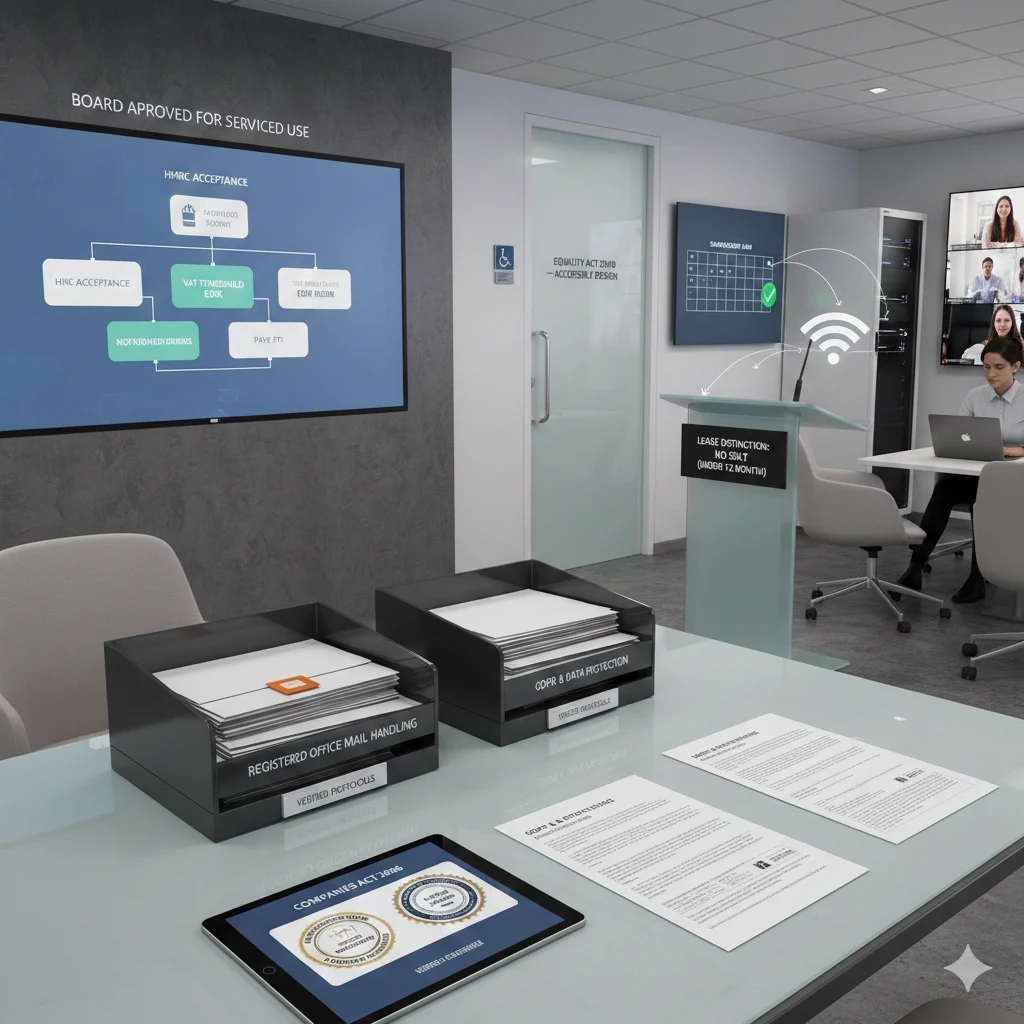
Serviced licences comply with Companies Act 2006 as registered offices if mail-handled reliably verify provider protocols. Directors maintain service addresses privately; HMRC accepts for VAT (£90k threshold) and PAYE RTI submissions.
GDPR thrives via secure Wi-Fi and DPAs; Equality Act met through accessible designs. Lease distinctions avoid SDLT licences under 12 months exempt. Implications: non-compliant spaces risk striking off; robust setups support shareholder AGMs flawlessly. For pics, articles permit serviced use with board approval. Integrating with virtual offices hybridises perfectly.
Common Mistakes to Avoid
Overcommitting to large spaces pre-growth wastes budgets scale incrementally. Ignoring notice periods traps in overages; read renewal auto-clauses. Neglecting VAT treatment assumes full reclaim mixed-use apportions.
Tech assumptions fail hybrids; test integrations. Case: Leeds LTD faced £5k downtime from unvetted Wi-Fi during Companies House inspection. Skipping provider due diligence reveals hidden fees (15% services). Location bias overlooks regional talent pools. Checklists safeguard compliance integrity.
Practical Tips and Best Practices
Trial monthly licences before annuals, benchmarking providers via NPS scores. Hybrid: designate core days for collaboration. Negotiate bundles AV, printing for 10-20% savings, VAT-exclusive.
Sustainability: choose BREEAM-rated sites with EV charging for green shareholders. Example: Liverpool SaaS synced serviced office with Slack for PAYE queries, cutting response times 50%. Quarterly space audits align with forecasts. Pair with virtual registered offices for full coverage. These optimise for enduring flexibility.
Serviced offices herald flexible working’s future, delivering scalability, compliance, and efficiency for UK entrepreneurs across business lifecycles.
If you’re ready to register your company with confidence, Form My Company provides fast, fully online company formation with expert compliance support, VAT & PAYE handling, virtual office solutions, and professional guidance. Get started today and let our specialists handle the paperwork while you focus on growing your business.
Frequently Asked Questions
Are serviced offices valid Companies House registered offices?
Yes, must ensure document receipt; most providers comply fully. Shields directors’ privacy while meeting s.113 CA 2006 obligations seamlessly.
How do they impact VAT and PAYE compliance?
Accepted fully; inclusive bills simplify input reclaims. On-site support aids RTI payroll, preventing HMRC penalties for LTDs.
Can startups use serviced offices for investor meetings?
Ideal, prestige and tech impress stakeholders. Central locations near virtual offices streamline director logistics.
What risks in scaling with serviced offices?
Over-reliance on short terms; mitigate via hybrid policies and growth clauses in licences.
How to select for hybrid shareholder AGMs?
Prioritise Zoom Rooms, secure boardrooms; ensure quorum tech for valid resolutions.