Private interview rooms significantly enhance recruitment success by fostering a professional, confidential, and focused environment for both employers and candidates. They create the right atmosphere to assess potential hires objectively, reduce distractions, and help candidates feel comfortable sharing insights that drive better hiring decisions.
Recruitment is one of the most critical processes for any company, regardless of size or industry. The ability to identify, attract, and select top talent directly impacts an organisation’s growth, productivity, and reputation. Yet, many businesses underestimate how much the interview setting influences outcomes. Conducting interviews in private, dedicated rooms plays a pivotal role in ensuring fairness, professionalism, and compliance with UK employment and data protection laws.
When companies particularly new startups and SMEs operate from shared spaces or coworking environments, confidentiality and impression management often get overlooked. A structured interview conducted in a private space encourages open communication, supports unbiased evaluation, and strengthens your recruitment brand. Just as company formation requires careful attention to compliance and presentation, so too does the recruitment process. A well-managed interview environment reflects the discipline and legitimacy of a properly registered company in line with Companies House requirements.
Creating a Professional First Impression
First impressions matter profoundly in business. For candidates, the interview location is often their first physical interaction with your organisation’s brand. A well-prepared private interview room signals credibility, stability, and attention to detail traits every entrepreneur should demonstrate to both investors and new hires.
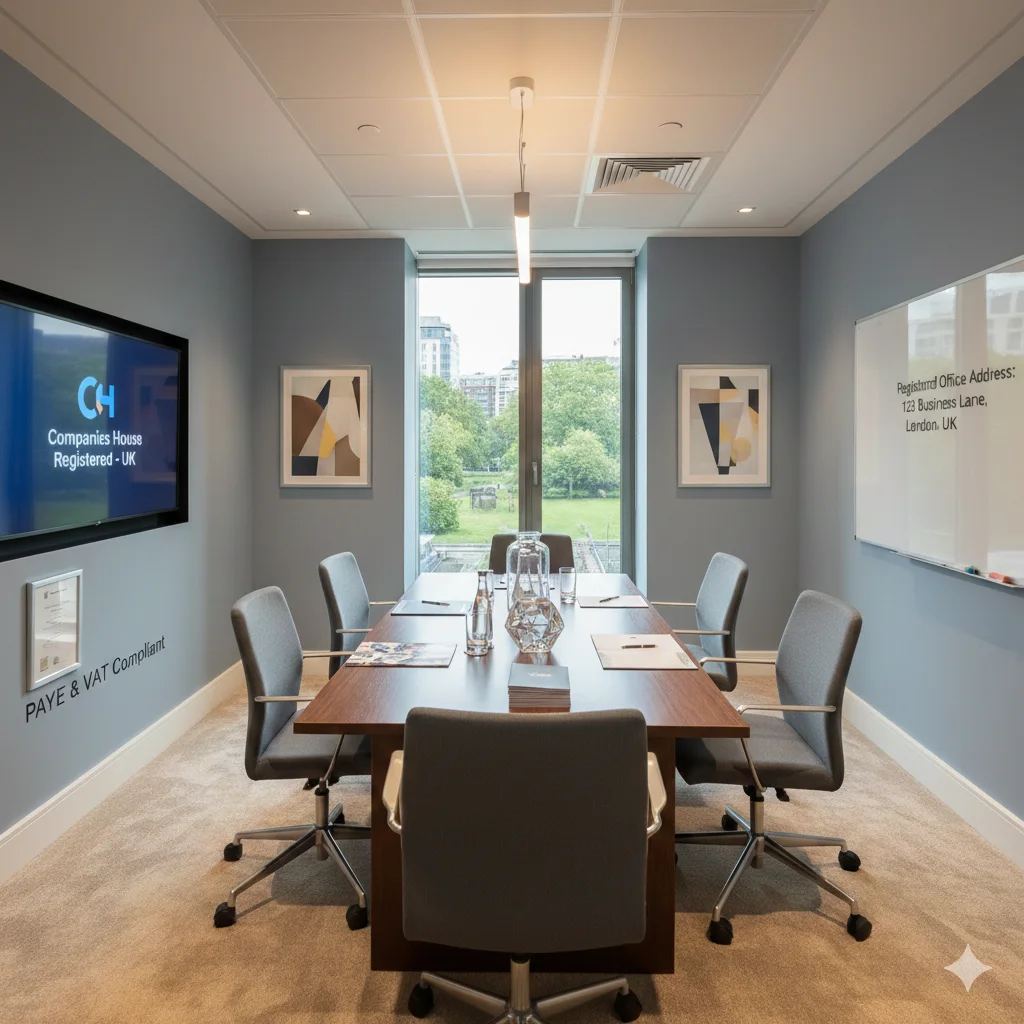
Imagine inviting a potential senior manager to an interview in a noisy café or a shared coworking nook. It immediately undermines your business professionalism and may suggest a lack of operational structure. On the other hand, a quiet, well-equipped interview room reflects the integrity and organised mindset of a company that values its people and infrastructure. Such spaces convey the same sense of readiness that is evident when a business has completed all fundamental setup stages registered with Companies House, acquired a registered office address, and established PAYE and VAT schemes for transparency and compliance.
Candidates perceive private rooms as an indicator that the employer is genuinely invested in the process and values discretion. This perception not only boosts their confidence but also positions your enterprise as attractive and reliable, a crucial factor in competitive talent markets.
Improving Focus and Evaluation Quality
The interview process demands concentration from both parties. External distractions background noise, interruptions, or the informal setting of open offices disrupt the flow of conversation and can distort the interviewer’s assessment. Private interview rooms remove these variables, helping interviewers remain attentive and structured.
Effective recruitment depends on evaluating not just what a candidate says, but how they respond under different scenarios. In a quiet, controlled environment, employers can better interpret responses, observe body language, and note subtleties that might go unnoticed in chaotic surroundings. A properly designed private space also facilitates technical assessments, presentations, or compliance checks that form part of more advanced screening stages.
Moreover, from a compliance standpoint, it’s vital to ensure interviews are free from environmental bias. Under UK employment law, recruitment should follow fair practice, giving every candidate equal opportunity. Conducting interviews in consistent, private settings ensures all applicants are assessed under identical conditions reinforcing equality, professionalism, and transparency.
Protecting Confidentiality and Data Compliance
Confidentiality is not only an ethical responsibility but also a legal one under the UK General Data Protection Regulation (UK GDPR). Employers often handle sensitive personal data during recruitment CVs, employment histories, identification documents, and occasionally financial information for background checks. Conducting interviews in private rooms helps maintain control over these materials, preventing accidental disclosure or data breaches.
A candidate’s information must be stored, shared, and discussed responsibly. Holding interviews in private prevents unauthorized individuals from overhearing personal details and protects your business from potential legal repercussions. Furthermore, it demonstrates your company’s seriousness about compliance, an essential part of managing a registered office and adhering to Companies House obligations.
For small businesses and startups, especially those using virtual offices or shared facilities, reserving private meeting rooms for interviews is a cost-effective way to maintain high standards of confidentiality without committing to full-scale premises. It reinforces your identity as a compliant, credible enterprise equipped to handle corporate responsibilities, from VAT registration to payroll management.
Enhancing Candidate Experience and Employer Reputation
A positive candidate experience is now central to successful recruitment. Talented professionals have options, and how they’re treated during interviews significantly influences whether they accept an offer. A private interview room offers physical comfort, controlled lighting, and privacy allowing candidates to relax and express themselves authentically.
This comfort creates better dialogue and leads to more accurate assessments. Candidates can discuss their motivations, career goals, and even disclose sensitive information, such as the need for flexible arrangements or compliant work authorisation documents, without fear of being overheard. This transparency helps employers make well-informed hiring choices.
From an employer branding perspective, candidates often discuss their experiences online. Interviews conducted in a professional environment leave a lasting impression that can translate to positive employer reviews, helping attract higher-quality talent in the future. The result mirrors how a company benefits from presenting itself as properly registered, tax-compliant, and structurally sound when appealing to clients or shareholders.
Benefits and Potential Risks
Private interview rooms provide a range of advantages for both employers and candidates:
- Professionalism: They reflect organisational maturity and attention to compliance.
- Confidentiality: Sensitive discussions remain secure, protecting both parties.
- Consistency: Every candidate experiences comparable conditions, ensuring fairness.
- Focus: Reduced noise and interruptions enhance communication accuracy.
- Brand image: A clean, private space conveys credibility and care.
However, risks can emerge if these spaces are inadequate or poorly managed. Neglecting to maintain interview rooms such as failing to check audio-visual setups, accessibility, or temperature can sour the candidate’s perception. Some businesses also overlook legal considerations like equal access for candidates with disabilities. A poorly managed environment can undo the very professionalism you aim to demonstrate. Therefore, applying the same diligence to interview room management as you would to company compliance such as annual confirmation statements or maintaining the registered office address is essential.
Legal and Compliance Considerations
In the UK, recruitment is governed by multiple legal frameworks, including the Equality Act 2010, the Employment Rights Act 1996, and UK GDPR. Each law influences how interviews should be conducted and stored.
A private interview room contributes to compliance by keeping discussions confidential, secure, and appropriately documented. Employers must also:
- Ensure interview notes and recordings are stored securely and only shared with authorised personnel.
- Avoid discriminatory questions or comments, whether intentional or casual.
- Provide reasonable adjustments for candidates with disabilities, such as accessible spaces or assistive technology.
In regulated sectors, such as finance or legal services, additional due diligence may apply. Startups under compliance obligations post-company registration such as VAT or PAYE setup should integrate interview privacy as part of their broader governance standards. Demonstrating that your business handles sensitive information respectfully strengthens your standing with both regulators and employees.
Common Mistakes to Avoid
Even established businesses can make errors when managing recruitment spaces. Frequent mistakes include:
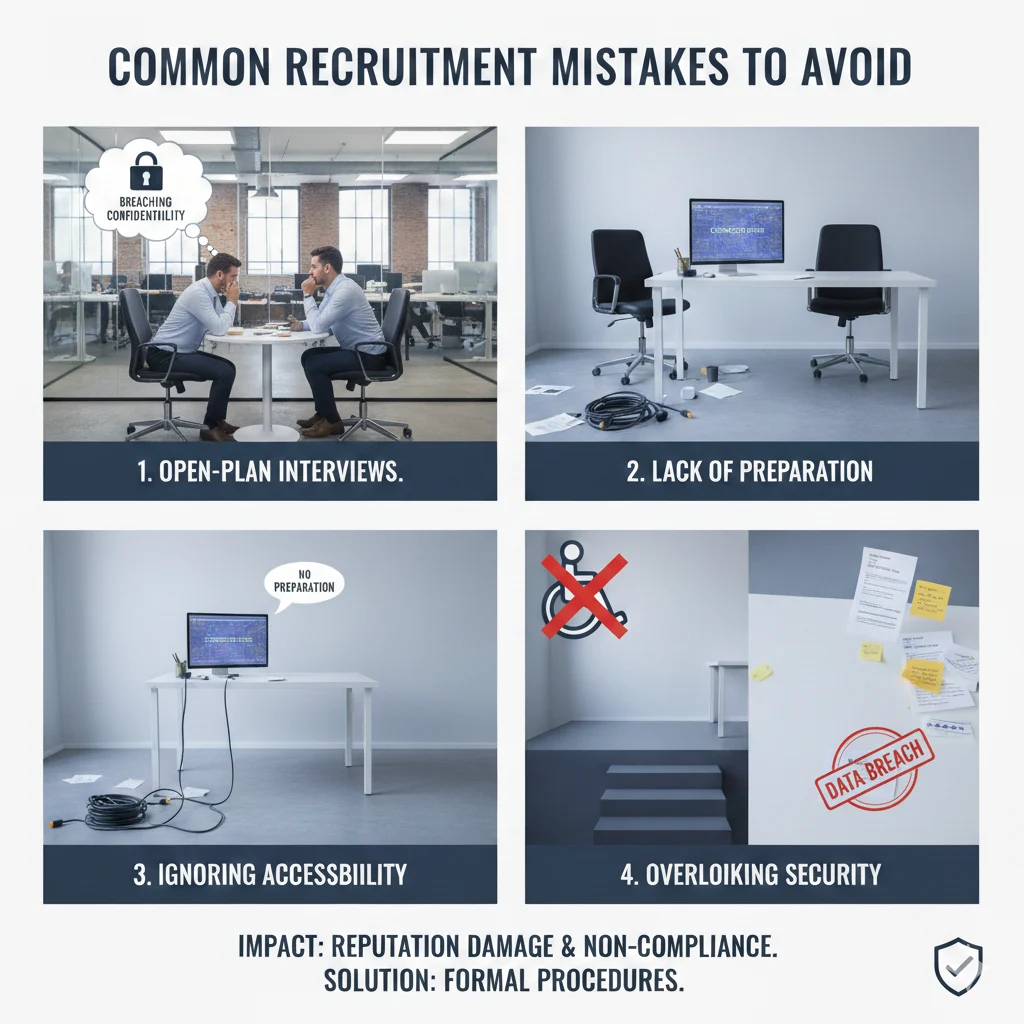
- Conducting interviews in open-plan areas: This breaches confidentiality and distracts participants.
- Lack of preparation: Failing to test video calls, ensure seating comfort, or arrange documentation reflects poorly on interviewers.
- Ignoring legal accessibility requirements: Every candidate must have equal physical access to interview spaces.
- Overlooking follow-up security: Leaving interview notes or personal documents exposed on desks can constitute data breaches.
Each of these mistakes can damage employer reputation and undermine compliance efforts. Similar to missing statutory filing deadlines or not updating Companies House about director changes, these oversights signal weak internal management. Setting a formal procedure for interview preparation ensures consistent professionalism across hiring rounds.
Practical Tips and Best Practices
Employers can elevate recruitment quality by following a structured approach when organising private interview rooms:
- Book early and personalise space use: Add your company’s branding to signal identity and confidence.
- Check equipment and layout: Ensure adequate ventilation, lighting, and connectivity for virtual or hybrid interviews.
- Schedule adequate buffer time: Avoid back-to-back interviews to prevent candidates from overlapping.
- Maintain confidentiality: Dispose of printed CVs securely and store notes in password-protected files.
- Offer refreshments and comfort: Small gestures show respect and improve candidate perception.
Where budget or location is a concern, virtual office providers often offer rentable interview rooms ideal for entrepreneurs who have completed company registration but aren’t yet ready for permanent premises. These facilities reflect the professionalism of a compliant, structured enterprise without the overheads of traditional offices.
Private interview rooms are more than just spaces; they are strategic tools that define professionalism, compliance, and brand credibility in the hiring process. They ensure fairness, confidentiality, and focus, all while strengthening your company’s reputation as an employer of choice. For newly registered businesses, adopting such practices from the outset reinforces your image as a structured, compliant, and growth-ready enterprise.
If you’re ready to register your company with confidence, Form My Company provides fast, fully online company formation with expert compliance support. Get started today and let our specialists handle your registration, VAT, PAYE, and office setup, so you can focus on building the team that drives your success.
Frequently Asked Questions
Why is privacy important in interviews?
Privacy ensures candidates can speak freely without fear of being overheard, fostering honest answers. It also protects personal data and maintains legal compliance under UK GDPR.
Can private interview rooms enhance employer reputation?
Absolutely. They show candidates that your business operates with professionalism and respect a strong signal of corporate maturity similar to presenting valid company registration and compliance credentials.
Are private rooms only for large companies?
Not at all. Even small businesses and startups can benefit by renting professional meeting spaces within virtual offices or coworking hubs, building credibility early on.
What are the compliance implications of interview privacy?
Data protection, equality, and non-discrimination laws all apply. Proper privacy safeguards prevent breaches and potential penalties.
How can startups with limited budgets ensure interview privacy?
They can partner with professional service providers offering affordable office and meeting space packages, ensuring confidentiality without long-term leases.