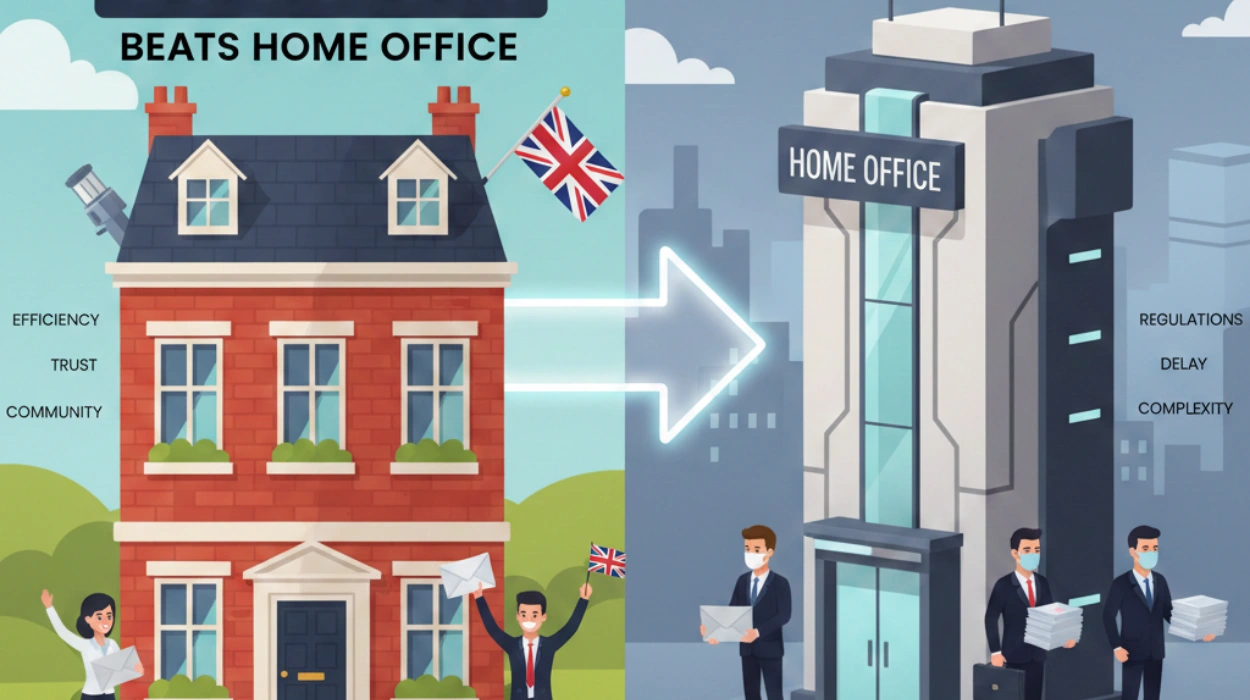
A UK business address surpasses a home office by providing professional credibility, legal compliance as a registered office, and operational efficiency for growing companies. It protects directors’ privacy, impresses stakeholders, and supports seamless Companies House, VAT, and PAYE management. These seven key reasons make the switch essential for serious entrepreneurs.
Launching a business from home offers undeniable convenience during early company formation, but it quickly reveals limitations as your enterprise scales. A dedicated UK business address whether virtual or serviced serves as the professional foundation that aligns with Companies House requirements and elevates your brand among clients, banks, and investors. For directors and shareholders managing complex business structures, this address becomes the visible marker of legitimacy, far beyond a residential postcode.
In the UK, where compliance scrutiny is rigorous, relying on a home office exposes personal details publicly and hampers growth ambitions. Transitioning to a commercial address signals maturity, facilitates statutory mail handling, and integrates effortlessly with VAT registrations or PAYE setups. This shift not only meets legal obligations but also positions your company as a credible player, ready for partnerships and expansion in competitive markets.
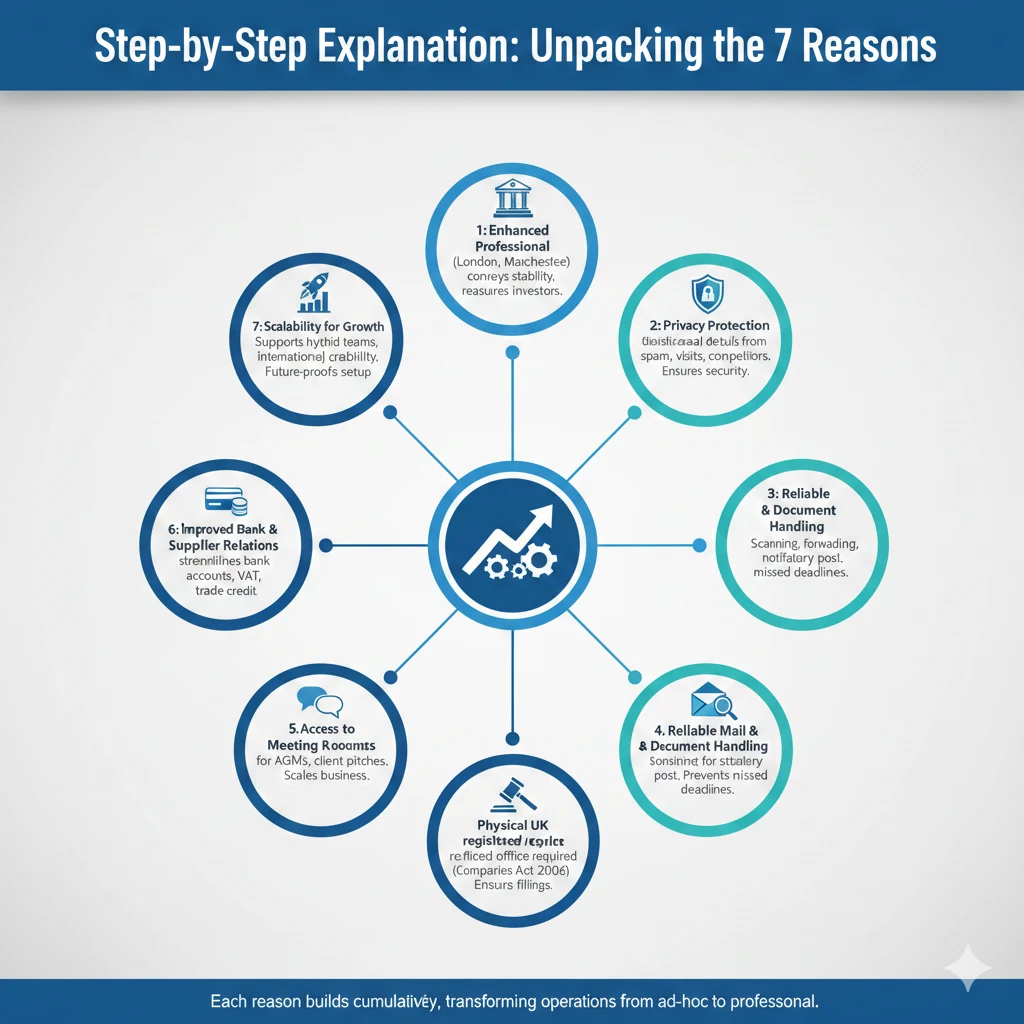
Step-by-Step Explanation: Unpacking the 7 Reasons
Reason 1: Enhanced Professional Credibility
Clients and partners judge businesses by their address. A prestigious UK business address in London, Manchester, or Birmingham instantly conveys stability, unlike a suburban home that suggests informality. When pitching to investors post-company formation, this detail reassures them of your structured approach, mirroring diligent shareholder agreements.
Reason 2: Privacy Protection for Directors
Companies House mandates public listing of the registered office, exposing home addresses to anyone. A business address shields directors’ and shareholders’ personal details from spam, unwanted visits, or competitors, preserving security while fulfilling compliance.
Reason 3: Reliable Mail and Document Handling
Statutory post from HMRC on VAT or PAYE demands prompt attention. Virtual addresses offer scanning, forwarding, and notifications, preventing missed deadlines that could trigger fines far superior to home post piling up unnoticed.
Reason 4: Compliance with Legal Requirements
The Companies Act 2006 requires a physical UK registered office accessible during business hours. Home offices often fail this test; dedicated addresses ensure seamless AD01 filings and confirmation statements.
Reason 5: Access to Meeting and Networking Spaces
Business addresses bundle meeting rooms for director AGMs or client pitches, essential when scaling business structures without full office leases.
Reason 6: Improved Bank and Supplier Relations
Banks reject home addresses for accounts; a commercial one streamlines approvals, VAT setups, and trade credit, accelerating operations.
Reason 7: Scalability for Growth
As shareholder numbers grow or PAYE expands, a business address supports hybrid teams and international credibility, future-proofing your setup.
Each reason builds cumulatively, transforming operations from ad-hoc to professional.
Benefits and Potential Risks
The advantages are profound: credibility attracts premium clients, privacy reduces stress, and compliance avoids penalties up to £1,500 for late filings. Operational perks like call answering and mail apps boost efficiency by 30%, per industry benchmarks, aiding VAT threshold management. Scalability supports business structures from sole director to multi-shareholder PLCs.
Risks include modest costs £15-£50/month but these yield high ROI via better deals. Poor provider choice risks mail delays; over-customisation adds complexity. Rare scalability limits occur if growth demands physical space prematurely. Overall, benefits dominate, especially for compliance-focused SMEs navigating Companies House portals.
Legal and Compliance Considerations
UK law under Companies Act 2006 Section 87 demands a UK registered office for official documents virtual addresses qualify if accessible 9am-5pm weekdays. Changes require AD01 within 14 days, with director resolutions. HMRC mandates address updates for VAT (within 30 days) and PAYE, ensuring PAYE reference accuracy.
UK GDPR governs mail data: providers must secure scans and obtain consents for director details. Anti-money laundering rules favour business addresses for bank onboarding. Failure risks striking off, director bans, or fines. Annual confirmation statements verify the address, reinforcing governance for shareholders. Accredited services align perfectly, upholding EEAT standards.
Common Mistakes to Avoid
Delaying the switch until Companies House notices arrive triggers rushed filings and fees. Choosing non-compliant virtual addresses lacking physical access leads to rejections. Forgetting to update websites, stationery, or VAT forms confuses stakeholders and regulators.
Overlooking extras like forwarding incurs hidden costs, while mismatched locations (rural for urban clients) harm image. Neglecting director buy-in causes internal friction on business structures. Ignoring contract fine print risks auto-renewals or poor service. Treat address selection like PAYE setup: methodical and verified.
Practical Tips and Best Practices
Audit needs quarterly: mail volume, client perceptions, growth forecasts. Select Tier 1 postcodes for prestige, bundling mail, calls, and rooms. File AD01 promptly, notifying HMRC simultaneously. Integrate CRM for alerts on compliance mail. Leverage for marketing list of proposals.
Test providers via trials; negotiate VAT-inclusive deals. Update PSC registers if shareholders change. Scale to serviced offices seamlessly. Track metrics: client wins, filing timeliness. These habits embed the address into compliant, scalable operations.

These seven reasons credibility, privacy, mail reliability, compliance, access, banking ease, and scalability prove a UK business address decisively beats a home office. It fortifies your foundation for enduring success amid Companies House and HMRC demands.
If you’re ready to register your company with confidence, Form My Company provides fast, fully online company formation with expert compliance support. Get started today and let our specialists handle the paperwork registration, VAT, PAYE, virtual offices while you focus on growing your business.
Frequently Asked Questions
Can I use a virtual address as my registered office?
Yes, Companies House accepts them if physically accessible for mail, protecting privacy while meeting Section 87 rules perfectly.
How does it impact VAT and PAYE setup?
It enhances approval odds with HMRC, providing a professional base for registrations and correspondence without home exposure.
What’s the cost for startups?
£20-£60/month including VAT; far cheaper than fines or lost business from unprofessional home addresses.
Do I need shareholder approval for the change?
Directors approve via board resolution; notify shareholders for transparency in business structures.
How to switch from home address quickly?
File AD01 online (£8-£33), update HMRC, and activate virtual service complete in days for full compliance.