
Serviced offices save small businesses money through flexible terms avoiding lengthy commitments, all-inclusive bills eliminating surprise costs, reduced setup expenses, scalable space adjustments, and maintenance-free operations. For newly formed limited companies at Companies House, these spaces provide a professional registered office without the financial burden of traditional leases. This approach supports rapid scaling while ensuring compliance with UK regulations like VAT and PAYE.
In the dynamic UK business environment, entrepreneurs forming limited companies often grapple with balancing growth ambitions against fixed overheads, particularly when selecting a registered office or operational base post-Companies House incorporation. Traditional long-term leases, typically spanning 5-10 years, lock directors and shareholders into escalating rents, repair liabilities, and dilution risks if market conditions shift. Serviced offices, by contrast, offer fully equipped, short-notice spaces with rolling monthly contracts, IT infrastructure, and reception services included, making them ideal for startups transitioning from virtual offices or home addresses.
This flexibility proves crucial during the first two years, when 60% of small businesses face cashflow pressures according to British Chambers of Commerce data. For businesses navigating VAT registration thresholds or PAYE for early hires, serviced offices minimise upfront capital outlay, allowing reinvestment into marketing or product development. Whether operating as a sole director entity or with multiple shareholders, these spaces project credibility to clients and HMRC without the pitfalls of conventional commercial property commitments. By integrating seamlessly with compliance needs, serviced offices empower founders to focus on expansion rather than estate management.
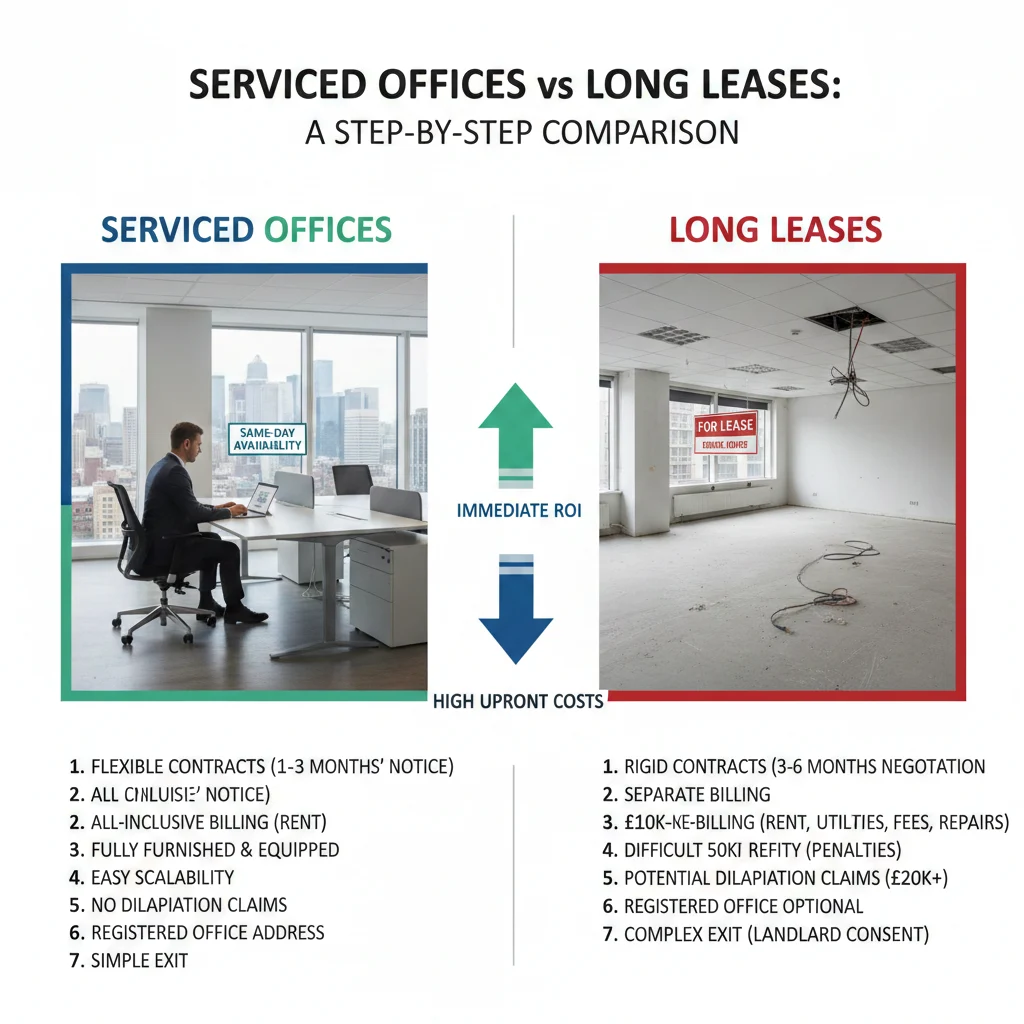
How Serviced Offices Differ from Long Leases: A Step-by-Step Comparison
Serviced offices operate on a fundamentally different model to long leases, starting with contract flexibility that bypasses the 3-6 month negotiation and legal fees typical of traditional agreements. Step one involves selecting a space via online viewing often same-day availability versus agents’ viewings and surveys for leases. Providers furnish and equip rooms with high-speed broadband, phones, and meeting access, contrasting the £10,000-£50,000 refit costs for empty leaseholds, including partitioning and cabling compliant with business rates valuations.
Step two covers billing: serviced offices bundle rent, utilities, cleaning, and security into one monthly invoice, often excluding VAT recoverable for registered businesses, while long leases demand separate payments for service charges, insurance, and repairs under full repairing and insuring (FRI) terms. Directors avoid dilapidation claims at lease end, where costs can exceed £20,000 for wear and tear. Third, scaling adjusts effortlessly upsizing or downsizing with 1-3 months’ notice versus break clauses triggering penalties after year three. For Companies House filings, serviced addresses qualify as registered offices if mail-handling is included.
Finally, exit is straightforward: no assignments or sublets needed, unlike leases requiring landlord consent and fees. This process suits scaling firms post-incorporation, handling shareholder meetings in on-site boardrooms without extra hire charges, delivering immediate ROI through operational efficiency.
5 Key Ways Serviced Offices Save Money: Detailed Breakdown
First, flexible terms eliminate commitment risks; a 12-month lease might cost £30,000 upfront deposit plus rent, while serviced options start at £250 per desk monthly with no deposit, saving £20,000 initially for a four-person team. This cash preservation aids VAT payments or PAYE remittances during growth.
Second, all-inclusive pricing caps expenses £500 per desk covers everything versus £400 rent plus £100 utilities and £50 maintenance on leases, totalling 25% savings. Businesses recover input VAT on services, boosting margins for director dividends.
Third, zero setup costs: desks, WiFi, and branding arrive ready, sparing £15,000 refurbs. Fourth, scalability prevents overcommitment; expand from 2 to 10 desks seamlessly, avoiding void periods that plague 20% of leased spaces per RICS reports.
Fifth, no maintenance liabilities providers handle HVAC, compliance checks, and health & safety, dodging £5,000 annual outgoings. Cumulatively, these save 30-50% versus leases, per industry benchmarks, fuelling reinvestment.
Risks include premium per-desk rates if occupancy exceeds 80%, or location limitations versus bespoke leaseholds. However, for most SMEs, savings dominate.
Benefits and Potential Risks of Choosing Serviced Offices
Beyond direct savings, serviced offices enhance professionalism with staffed receptions managing Companies House mail and client calls, vital for credibility in shareholder pitches. Networking opportunities in shared lounges foster partnerships, while global providers offer multi-site expansion without new leases. For VAT-registered firms, inclusive billing simplifies HMRC audits, and PAYE startups benefit from meeting rooms for interviews.
Time savings compound finances: directors reclaim 10-15 hours weekly from facilities management, redirecting to revenue activities. Case study: a Manchester tech firm saved £45,000 yearly switching post-formation, scaling 40% faster.
Risks involve dependency on provider stability check financials to avoid disruptions and potential non-qualifying registered office status if mail forwarding lapses, risking Companies House strikes. Over-reliance might delay permanence signals to banks. Mitigated by short trials, benefits far outweigh for scaling businesses.
Legal and Compliance Considerations for UK Businesses
Serviced offices fully comply with Companies Act 2006 for registered offices, provided they accept official mail like confirmation statements or HMRC notices, with most providers offering scanning apps. Business rates are included or passed transparently, unlike leases where directors face appeals and voids.
VAT treatment favours serviced users: inclusive pricing allows full reclaim on facilities if partly exempt activities are minimal. PAYE implications are neutral, but inclusive utilities aid expense claims. For regulated sectors, ensure fire risk assessments and DDA compliance, standard in reputable centres.
Shareholder agreements benefit from neutral venues for AGMs, avoiding home address disclosures. Always verify provider’s insurance covers public liability, protecting directors from third-party claims. Non-compliance risks fines, but vetted operators align seamlessly with UK structures from Ltd to PLCs.
Common Mistakes to Avoid When Switching to Serviced Offices
A top error is ignoring total cost comparisons, assuming per-desk premiums exceed leases—factor inclusions to reveal true savings. Overlooking registered office suitability leads to Companies House rejections; confirm mail protocols explicitly.
Selecting mismatched locations hampers client access, inflating travel costs. Neglecting scalability clauses traps growing teams in inflexible plans. Failing to negotiate add-ons like extra parking overlooks £2,000 annual savings.
Rushing without site visits risks poor acoustics or culture fit, eroding productivity. Ignoring exit fees in hybrids mimics lease pitfalls. Due diligence averts these, ensuring cost efficiencies materialise.
Practical Tips and Best Practices for Maximising Savings
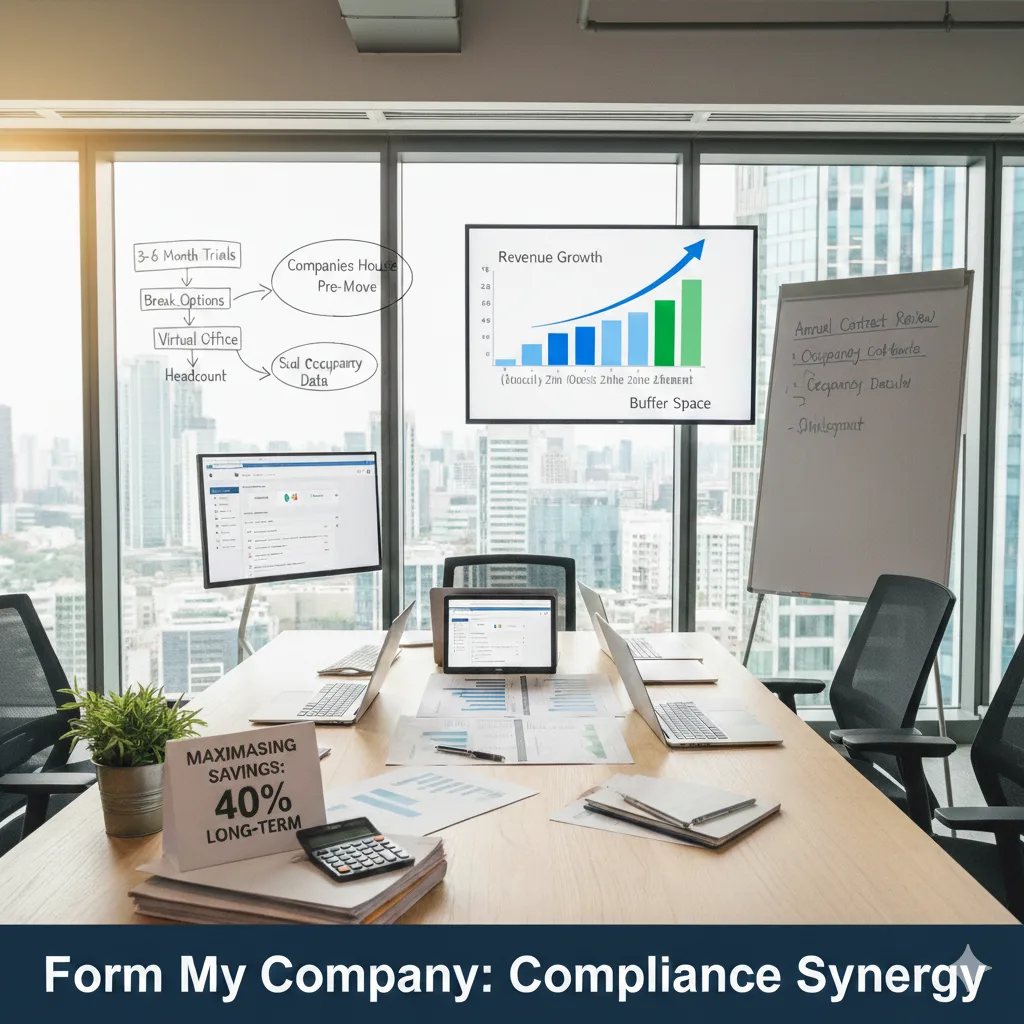
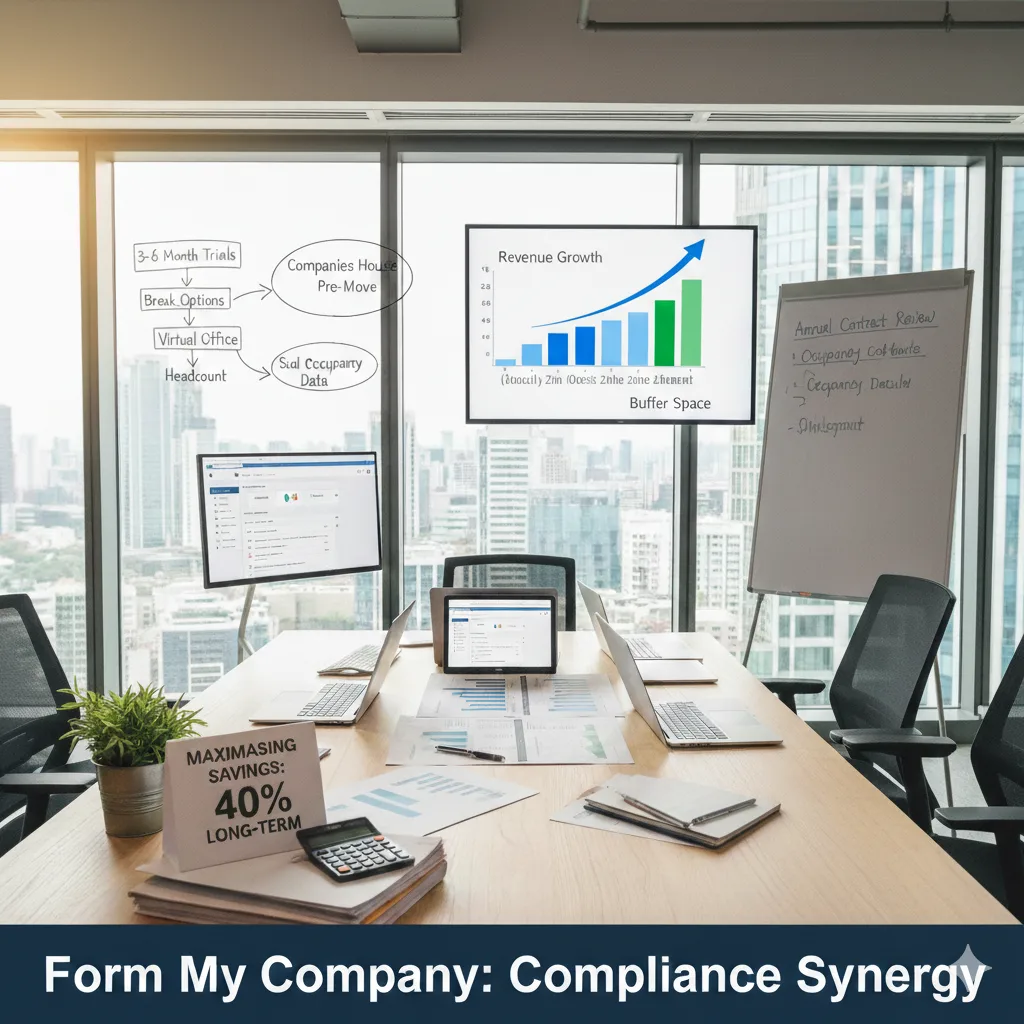
Audit needs first: project headcount growth tied to revenue forecasts, selecting 20% buffer space. Negotiate 3-6 month trials with break options, and bundle virtual office for Companies House pre-move. Track savings via spreadsheets comparing lease quotes.
Integrate CRM with reception for seamless handovers, and utilise free events for leads. Review contracts annually for renewals, leveraging occupancy data. Pair with Form My Company for compliance synergy.
Scale smartly: start solo, expand modularly. These practices lock in 40% savings long-term.
Serviced offices deliver substantial savings over long leases through flexibility, inclusions, and efficiency, empowering UK businesses to scale compliantly without property pitfalls.
If you’re ready to register your company with confidence, Form My Company provides fast, fully online company formation with expert compliance support, virtual office options, VAT & PAYE handling. Get started today and let our specialists manage the essentials while you build your success.
Frequently Asked Questions
Can serviced offices serve as a Companies House registered office?
Yes, most do with mail handling and forwarding, meeting statutory requirements without director address exposure. Confirm in contracts to avoid filing issues.
How much can a small business save annually?
Typically £15,000-£40,000 for 4-10 desks, covering setup, maintenance, and flexibility versus 3-year leases, per provider data.
Are there VAT benefits for serviced offices?
Absolutely, recover input VAT on bundled services if VAT-registered, unlike partial blocks on lease utilities, enhancing cashflow.
What if my business outgrows the space quickly?
Monthly flexibility allows upsizing with minimal notice, no penalties, ideal for post-PAYE growth phases.
Do serviced offices comply with HMRC and PAYE audits?
Yes, inclusive billing simplifies records, with providers supplying statements for expense claims and inspections.