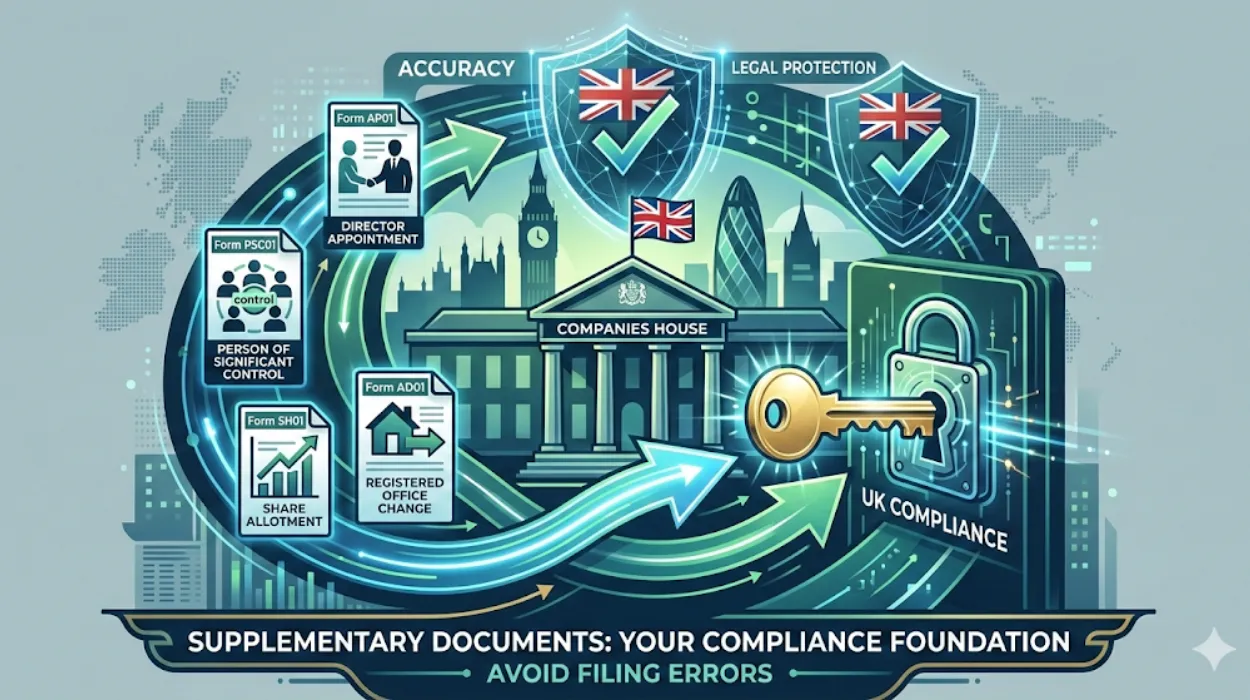
Many UK businesses make critical errors with their supplementary company documents, often due to oversight, lack of compliance knowledge, or unclear filing practices. These mistakes can lead to legal issues, rejected filings, or administrative penalties from Companies House.
Supplementary company documents form the backbone of corporate record-keeping from share transfers and director updates to address changes and business structure amendments. Mismanaging them risks not just administrative setbacks but the business’s credibility and compliance status. Understanding where companies commonly go wrong, and how to correct those errors, is vital for smooth operations and long-term governance reliability.
Understanding Supplementary Company Documents
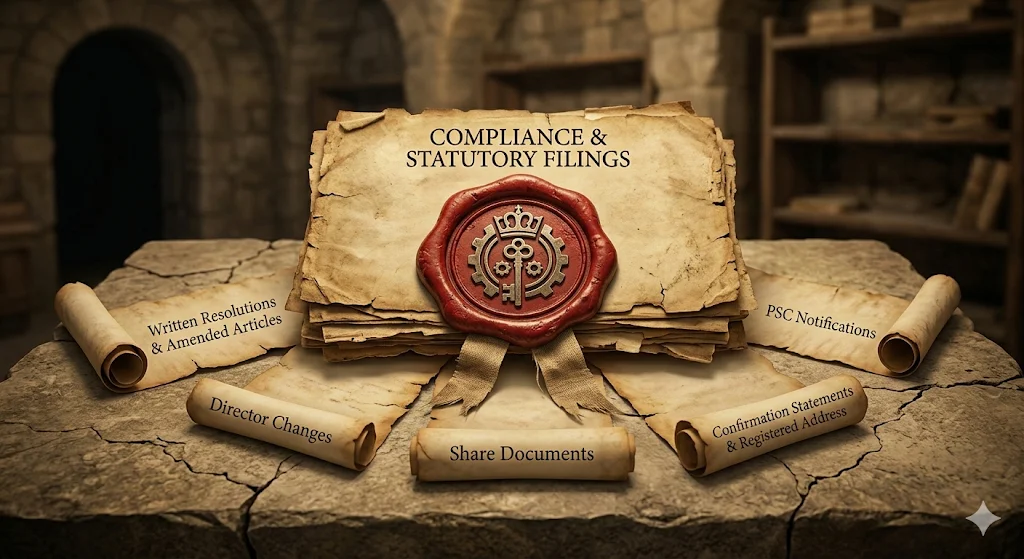
Supplementary company documents refer to the collection of records that complement your company’s main statutory filings. These can include:
- Written resolutions and amended articles of association
- Director appointment or resignation forms
- Share allotment or transfer documents
- Confirmation statements and registered address updates
- PSC (Persons with Significant Control) notifications
While each may seem routine, they collectively ensure your business remains transparent and compliant under the Companies Act 2006. Even a simple omission can trigger compliance notifications or warning letters from Companies House.
Why Accuracy in Filings Matters
Inaccurately completed or missing supplementary documents can result in more than administrative inconvenience. Misfiling can compromise your company’s official record, delay business processes, or expose directors to legal responsibility.
Compliance-related filings also influence a company’s public profile and trustworthiness. For example, a delay in updating a registered address might prevent key communications from regulators or clients. Similarly, incomplete share transfer details can cause disputes among shareholders. Professional handling of these documents ensures all statutory information remains updated and verifiable.
Common Mistake 1: Submitting Outdated Document Templates
Many businesses rely on outdated or incorrect document templates downloaded years ago. Since Companies House frequently revises filing formats and form references, older versions can quickly become invalid. For instance, form AP01 (appointment of director) and TM01 (termination of appointment) have been periodically updated to include new compliance details. Using retired formats often leads to rejection, creating unnecessary administrative delays.
To avoid this, always download the latest versions directly from the Companies House official portal before completion and submission.
Common Mistake 2: Incomplete Director and Shareholder Information
Another recurring issue is the omission of mandatory details such as service addresses, dates of appointment, or nationality in director filings. Similarly, share allotment documents lacking share class, value, or number of shares can render filings incomplete.
The resulting errors may require businesses to retract or resubmit documentation, delaying compliance alignment. Ensuring that all personal and corporate data align across every supplementary filing helps maintain consistency and credibility in your company’s records.
Common Mistake 3: Misreporting Changes to Share Structure
Changes in share distribution or new share classes must be documented both internally and with statutory authorities. Many entrepreneurs forget that even minor amendments in shareholder equity such as transferring shares among existing members necessitate revised documentation and internal meeting minutes.
Failure to record or report these updates can cause irregularities in the company’s capital structure, confusing both shareholders and potential investors. Supplementary company documents help formalize these adjustments and keep Companies House and corporate records synchronized.
Common Mistake 4: Delayed Confirmation Statement Updates
A Confirmation Statement ensures that your registered company information remains accurate, from directors to shareholders and persons of significant control. Filing it late or omitting new details between submission cycles is one of the most frequent issues for small companies.
Every UK company is legally required to submit a confirmation statement at least once every 12 months. Missing this filing schedule can lead to penalties or even company dissolution notices. An organized approach to supplementary filings prevents compliance breaches and sustains good standing status.
Common Mistake 5: Mixing Registered and Trading Address Updates
A subtle but common mistake is confusing a company’s registered address (official legal correspondence location) with its trading address (where daily business occurs). When a change occurs, companies sometimes update only one and neglect the other, leading to inconsistencies across official records.
Such discrepancies can misdirect regulatory communication and create audit complications. Meticulously documenting both address types within your supplementary company documents ensures that Companies House information reflects the company’s current operational base accurately.
Common Mistake 6: Overlooking Minutes and Written Resolutions
Many directors mistakenly view minutes of meetings or written resolutions as informal internal notes. In reality, they serve as crucial supplementary company documents that validate board decisions from director appointments to share reallocations. Without these records, companies lack legal evidence of corporate decision-making processes.
Keeping a structured archive of board minutes, whether electronic or printed, underpins regulatory integrity and aids in future audits or investor reviews.
Common Mistake 7: Failing to Notify Changes in PSC (Persons with Significant Control)
Under UK law, every company must declare who exerts significant control whether through shareholding, voting rights, or management influence. A frequent oversight is neglecting to update this information when ownership or control structures shift.
Failure to notify these changes within the statutory 14-day period can lead to enforcement action. Maintaining timely PSC filings as part of your supplementary company documents reinforces transparency and compliance credibility.
Preventing Documentary Compliance Issues
Preventing these common errors hinges on adopting a systematic approach:
- Always use the latest Companies House templates and digital forms.
- Cross-verify all entries with official company records.
- Maintain a log of all document updates, submissions, and acknowledgments.
- Work with professionals familiar with evolving UK compliance frameworks.
It’s also advisable to review your document practices annually. Partnering with experienced service providers like Form My Company ensures all filings are consistent, compliant, and audit-ready.
The Role of Supplementary Company Documents in Compliance Assurance
These documents are more than bureaucratic checklists they shape how regulatory bodies, banks, and potential partners view your business. A well-maintained document trail reflects strong corporate governance and operational credibility.
For mid-stage businesses aiming to scale, investing in accurate and complete record management is pivotal. Through expert review and correction, supplementary documents like share allotments, director filings, and resolution archives strengthen the structural and operational integrity of your company.
For detailed guidance on how these records underpin broader governance stability, review our related article: how supplementary company documents support UK compliance.
How Form My Company Helps Ensure Accuracy
Form My Company supports businesses at every stage from formation to ongoing compliance through precise documentation and legal formatting support. Its Supplementary Company Documents service provides reliable document preparation, verification, and submission assistance tailored to your company’s evolving needs.
By delegating your statutory documentation to a specialist, you avoid costly errors, meet Companies House deadlines, and maintain impeccable compliance posture without administrative strain.
To learn how expert assistance can protect your filings and streamline professional operations, explore our commercial insight piece:
Secure Supplementary Company Documents with Expert Support.

Final Thoughts
Errors in supplementary company documents may seem minor, but they can have serious implications for compliance and reputation. Accuracy, timeliness, and awareness of regulatory changes form the foundation of responsible corporate management.
By entrusting professional partners like Form My Company, UK businesses safeguard their corporate standing through reliable, compliant, and efficiently managed documentation. Proactive governance starts with getting the details right one document at a time.
What are supplementary company documents in the UK?
Supplementary company documents are official records filed alongside a company’s main statutory reports, such as director changes, share transfers, and confirmation statements. From My Company helps businesses ensure these documents comply with Companies House regulations and remain accurate for legal and governance purposes.
Why are supplementary company documents important for compliance?
These documents maintain a company’s transparency and verify accurate corporate data with Companies House. From My Company ensures all supplementary company documents are correctly prepared and submitted to prevent compliance breaches or rejected filings.
How often should supplementary company documents be updated?
Supplementary company documents must be updated whenever key company details change for example, after appointing a director or issuing new shares. From My Company advises reviewing and filing updates promptly to maintain continuous compliance.
What happens if my supplementary company documents are incorrect?
Filing incorrect or incomplete supplementary documents can lead to rejection by Companies House or potential compliance penalties. From My Company helps businesses identify and correct documentation errors to preserve good standing and legal accuracy.
Can a service provider manage supplementary company documents on my behalf?
Yes. Professional providers like From My Company can prepare, verify, and file supplementary company documents for UK businesses, ensuring all statutory records are handled correctly and submitted on time.