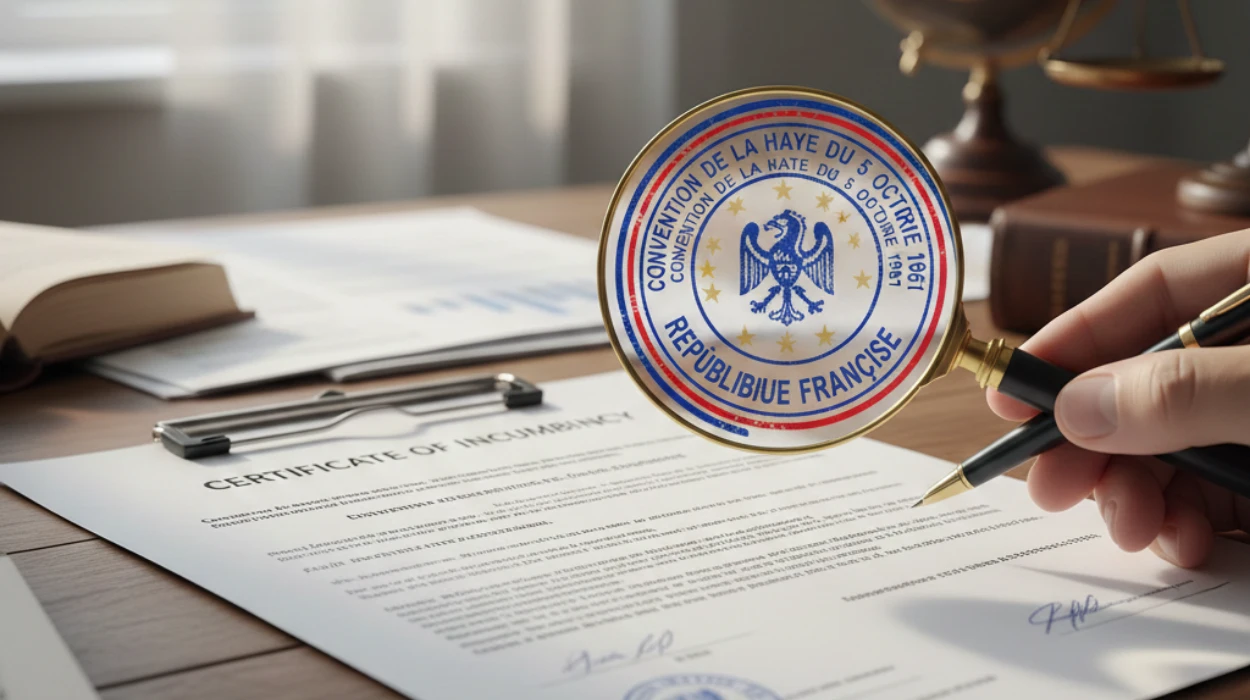
A Certificate of Incumbency needs an apostille stamp because it verifies the document’s authenticity for international use and confirms that your company’s officers and directors are officially recognized under UK law. Without an apostille, most foreign authorities and banks will not accept the document as valid proof of company status.
Understanding the Certificate of Incumbency
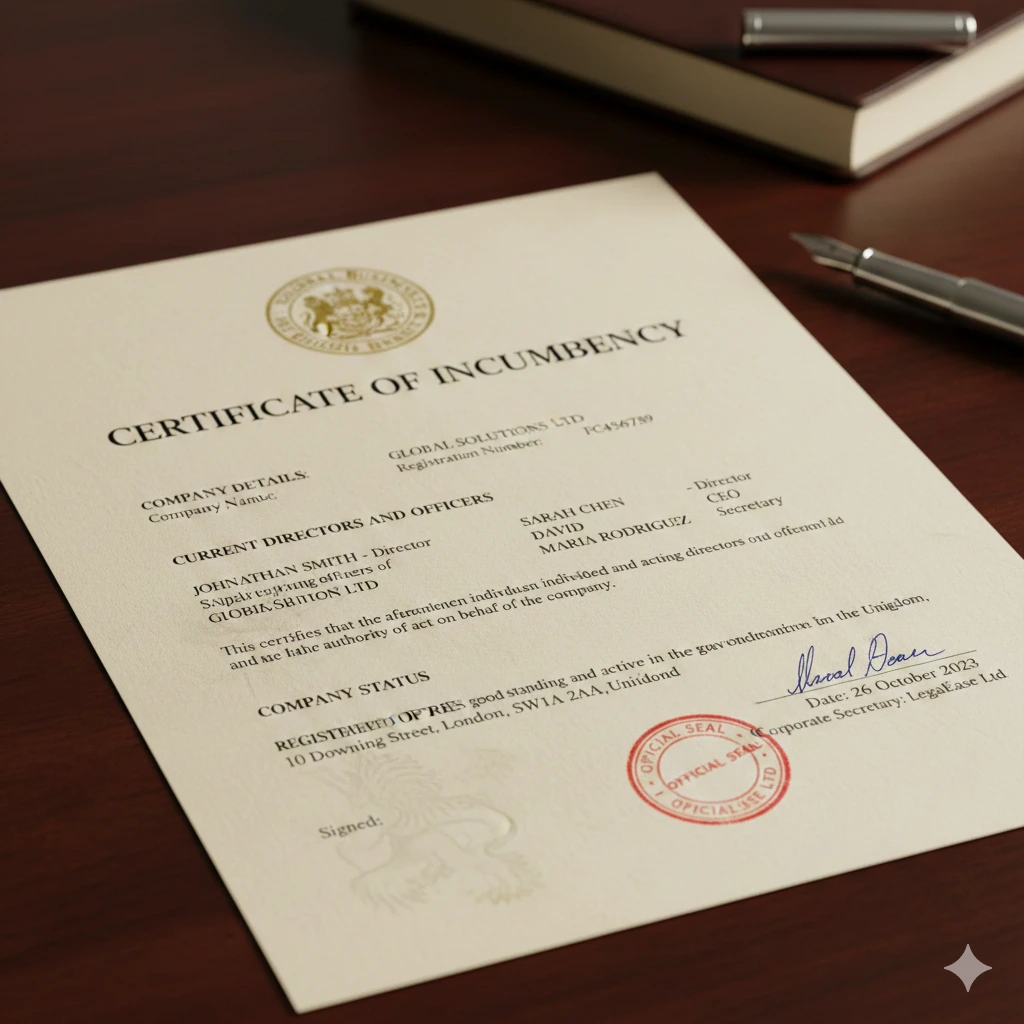
A Certificate of Incumbency is an official document issued by a company’s registered agent or corporate secretary. It lists the company’s current directors, officers, and in some cases, shareholders, proving their authority to act on behalf of the business. This document often includes details like:
- The company name and registration number
- Names and positions of active directors and officers
- Confirmation that the company is in good standing or active
- The company’s registered office address
For many UK companies expanding overseas, applying for foreign bank accounts, or engaging in international transactions, this certificate is a key piece of corporate verification.
Why Apostille Authentication Matters
When operating outside the UK, your corporate documents must pass international legal standards specifically, the Hague Apostille Convention. Under this framework, an apostille serves as a universal authentication mark showing that the document was issued and signed by a legitimate UK authority.
In essence, an apostille stamp:
- Confirms the document is genuine and issued by an authorised UK body.
- Allows the document to be recognised in over 120 member countries.
- Prevents unnecessary translation or embassy legalisation for most jurisdictions.
Without an apostille, international institutions such as banks, government offices, or corporate registrars may reject your Certificate of Incumbency, delaying or even halting essential transactions.
The Role of Apostilled Certificates in International Banking
When opening or maintaining business accounts abroad, banks require strong evidence that company representatives are legally empowered to act. An apostilled Certificate of Incumbency supplies exactly that.
For example, international financial institutions often require this document when a UK company seeks to open a corporate account overseas. The apostille assures the foreign bank that the document has been verified under international law and that it accurately reflects the company’s management and legal existence.
For more context on how this process fits within global banking procedures, our related article, How to Open a Corporate Bank Account Outside of the UK, explores these requirements in greater detail.
What the Apostille Stamp Confirms
An apostille stamp from the UK’s Foreign, Commonwealth & Development Office (FCDO) confirms several essential details:
- The authenticity of the issuing authority’s signature.
- The capacity in which the person signing the document acted.
- The identity of any official stamp or seal used on the document.
This ensures that a UK-issued Certificate of Incumbency can circulate seamlessly in other parts of the world, including jurisdictions such as the UAE, Cyprus, Singapore, and Hong Kong all common destinations for UK businesses expanding abroad.
Each Apostilled Document is effectively certified for global recognition, giving it legal standing without further embassy-level verification in most cases. To understand how to secure apostille services for corporate paperwork, companies can review Form My Company’s Apostilled Documents service page.
Key Scenarios Where an Apostille Is Essential
Foreign Bank Account Verification
Banks outside the UK require companies to submit legally attested proof of company leadership. Without an apostilled certificate, the bank cannot verify that your directors or officers are officially authorised. This verification protects financial institutions from potential fraud or misrepresentation.
International Expansion and Contracting
When signing legal contracts or agreements with partners in other jurisdictions, an apostilled Certificate of Incumbency validates your company’s authority to enter into binding commitments. It streamlines compliance with local regulations and provides a clear assurance of authenticity to overseas entities.
Cross-border Investments or Mergers
Investors, legal consultants, and regulators often request apostilled certificates to ensure that your company structure and leadership details comply with both local and international standards during merger or acquisition processes.
Opening Subsidiaries Abroad
When establishing branch offices or subsidiaries, local authorities commonly require certified corporate documents. Having an apostille stamped Certificate of Incumbency accelerates approvals and ensures your submission meets international standards.

The Apostille Process Explained
Obtaining an apostille is a step-by-step verification procedure that ensures your corporation’s certificate meets formal criteria.
Preparing the Document
Your company secretary or registered agent prepares and signs the Certificate of Incumbency. It must include all current directors and officers, signed and dated appropriately. Accuracy at this stage prevents delays during the certification process.
Notarisation (If Required)
Some jurisdictions require an additional layer of notarisation before the FCDO can issue an apostille stamp. A UK notary public confirms the authenticity of the signatory and ensures that all details comply with legal standards.
FCDO Apostille Stamping
The document is then submitted to the Foreign, Commonwealth & Development Office. Here, the office reviews and attaches the official apostille confirming that the certificate originates from a legitimate UK entity. The completed apostilled document can now be used internationally.
Why Foreign Banks and Authorities Insist on Apostille Stamps
Foreign regulators and financial institutions rely on apostilled business documents to prevent illicit activity and maintain transparency. Since it removes uncertainty surrounding a document’s authenticity, the apostille stamp safeguards both parties the UK company and the receiving institution during verification.
From opening accounts to signing multinational contracts, the apostille simplifies compliance under the Hague Convention framework. Without it, businesses may need embassy legalisation processes, which are slower and more costly, especially in non-Hague Convention countries.
Benefits of Having an Apostilled Certificate of Incumbency
An apostilled Certificate of Incumbency offers several operational and reputational advantages:
- Faster international transactions. Banks and partners can verify your documents without secondary checks.
- Legal credibility abroad. Your corporate documents carry formal recognition worldwide.
- Reduced administrative friction. No extra legalisation steps for Hague Convention members.
- Stronger compliance profile. Regulators see apostilled certificates as credible and compliant under international corporate governance practices.
This balance of efficiency and legal reliability is why experienced companies rely on professional service firms like Form My Company for document apostille management.
Common Mistakes When Submitting Certificates for Apostille
Even minor errors can lead to document rejection or processing delays. Businesses should watch for:
- Outdated director lists or company officer details.
- Unsigned or incorrectly formatted certificates.
- Missing corporate seals or legal stamps.
- Submitting photocopies instead of the original signed certificate.
Using a professional documentation service ensures every stage from certificate preparation to final apostille issuance meets exacting international standards.
How Form My Company Streamlines Apostille Certification
Form My Company provides businesses with end-to-end support for obtaining Apostilled Documents, ensuring every corporate record satisfies international recognition criteria. The team manages document preparation, certification, and submission with precise compliance control and transparency.
For companies navigating the complexities of opening international bank accounts or completing overseas transactions, Form My Company helps accelerate document verification and compliance readiness.
To see how this links to financial onboarding, explore Get Your Business Documents Apostilled for International Banking, which covers how apostilled corporate paperwork supports global financial operations.
The Bottom Line
A Certificate of Incumbency without an apostille holds little international authority. For any UK company expanding operations abroad, opening offshore bank accounts, or signing contracts with foreign partners, the apostille stamp is the universal language of authenticity.
By obtaining properly apostilled documents, your business demonstrates legitimacy, safeguards reputation, and accelerates international approval processes. With professional guidance from Form My Company, these steps become simple, compliant, and aligned with global business standards.
What are apostilled documents and why are they needed?
Apostilled documents are official papers that have been certified with an apostille stamp to verify their authenticity for international use. They confirm that a UK-issued document, such as a Certificate of Incumbency or Power of Attorney, is legally recognised abroad. From My Company assists businesses in securing apostilled documents to meet international regulatory requirements.
How long does it take to get documents apostilled in the UK?
In the UK, the process of obtaining apostilled documents typically takes between 2 to 10 working days, depending on how the documents are submitted to the Foreign, Commonwealth & Development Office (FCDO). From My Company ensures timely preparation and submission to help businesses meet international deadlines efficiently.
Which documents commonly require an apostille for international use?
Common documents that require an apostille include certificates of incorporation, certificates of incumbency, board resolutions, and powers of attorney. These are often needed when opening foreign bank accounts, setting up overseas entities, or signing contracts. From My Company handles apostilled documents for a wide range of corporate and legal uses.
Is notarisation required before getting an apostille?
Some documents must be notarised before an apostille can be issued, especially those signed by company directors or officers. Notarisation verifies the identity of the signatory, while the apostille confirms the document’s official UK origin. From My Company guides clients on whether notarisation is required for their specific documents.
Are apostilled documents accepted worldwide?
Apostilled documents are recognised in all countries that are members of the Hague Apostille Convention, which includes over 120 jurisdictions. In non-member countries, additional embassy legalisation may be necessary. From My Company ensures apostilled documents are correctly prepared for use in your target country