
Yes, you can keep your home address off the Companies House register by using a professional business address as your registered office and service address from the start. This approach ensures your personal details remain private while meeting all legal requirements for UK company registration.
Why Privacy Matters for Directors
Public exposure of personal addresses on the Companies House register poses significant risks for company directors and persons with significant control (PSCs). Anyone can access these details through a simple company search, potentially leading to unwanted solicitations, harassment, or even safety concerns. For instance, using a home address as the registered office makes it visible in the company’s public profile, while a director’s service address appears alongside their name in officer records.
The UK’s Economic Crime and Corporate Transparency Act 2023 has heightened scrutiny on company transparency, but it also emphasizes protecting individuals from undue exposure. Directors often overlook this during formation, only realizing later when historical filings reveal their home details permanently. Proactive privacy measures not only safeguard your lifestyle but also project a professional image to clients and partners.
Understanding Registered Office Requirements
Every UK limited company must maintain a registered office address in England or Wales (or Scotland/Northern Ireland as applicable), where official documents from Companies House and other authorities are served. This address appears prominently on the public register and cannot be a PO Box; it must be a physical location capable of receiving mail. Failing to comply can result in fines or strike-off proceedings.
Home addresses are commonly used initially due to convenience, but this choice embeds personal information into the public domain forever. Even if you change the address later, past filings remain accessible in the filing history. The key is selecting a compliant alternative that aligns with privacy goals without compromising legal obligations.
Using a Business Address Service
A dedicated business address service provides a prestigious, non-residential location to serve as both your registered office and director service address. These services handle mail forwarding, scanning, and sometimes redaction requests, ensuring seamless compliance. For example, providers like Form My Company offer business address solutions that protect privacy while enhancing credibility with a London or regional postcode.
Such services are cost-effective compared to renting physical office space and scale with your business needs. They receive statutory post on your behalf, forwarding it securely to your preferred location. This setup keeps your home entirely off the register, ideal for freelancers, e-commerce owners, or startups prioritizing discretion.
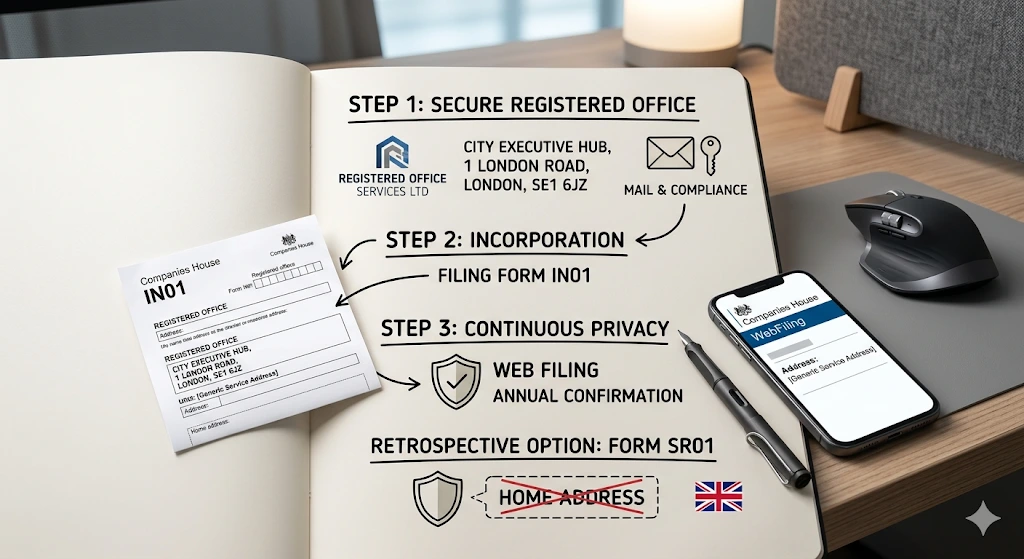
To avoid listing your home address entirely, integrate privacy from day one during company formation.
Start by choosing a registered office provider before filing your incorporation documents with Companies House. Services verify the address meets legal standards, often including extras like mail management.
Next, specify the same or a compatible service address for all directors and PSCs on form IN01. This ensures consistency and immediate protection across records.
For ongoing protection, update any changes promptly via WebFiling or annual confirmation statements, always using the business address.
If you’ve already registered with a home address, apply retrospectively using form SR01 to suppress it from public view where possible, though prevention remains superior.
Differences: Registered Office vs Service Address
The registered office is the company’s official address for legal service, visible on the public register and filing history. In contrast, a director’s service address is for their correspondence as an officer, also public unless protected.
Both can be the same business address service, streamlining management. Using your home for either exposes it; a professional alternative covers both without overlap.
Consider a director running a consultancy from home: listing a business address service maintains separation, allowing home-based operations privately. For deeper insights, explore Registered Office vs. Trading Address: Choosing the Right Setup.
Handling Existing Home Address Filings
If your home address already appears, Companies House allows removal applications via form SR01, costing £30 per document. Eligible cases include service addresses or past registered offices; provide details like your name, DOB, and the address to suppress.
Approval hides the address from public view but retains it internally for authorities. You’ll need an alternative service address if still an active officer. Processing takes weeks, and not all historical records qualify especially pre-2003 filings.
Combine this with switching to a business address to prevent future exposure. Form My Company streamlines such transitions, ensuring compliance post-suppression.
Legal and Compliance Considerations
UK law mandates accurate, up-to-date addresses on the register, with penalties for non-compliance up to £5,000. Privacy protections balance this via SR01 and service address options, but you must prove ongoing relevance.
Post-2023 reforms require identity verification, further underscoring professional addresses’ role in legitimacy. Credit agencies may still access suppressed details unless you apply separately for withholding under risk-of-harm criteria (£100 fee).
Always consult formation experts to navigate nuances, particularly for LLPs or overseas directors.
Benefits of Prestigious Addresses
Opting for a high-profile business address, such as in London, elevates your brand while shielding personal details. Clients perceive stability from a central location, boosting trust in proposals or websites. Buy a Prestigious London Business Address to Protect Privacy the meeting room access, reinforcing professionalism without home involvement.
Practical Scenarios for Privacy Protection
Imagine a tech startup founder in a quiet suburb: using Form My Company’s business address keeps their location private amid investor pitches, avoiding public scrutiny.
A family-run e-commerce business similarly benefits, routing orders through the service while home remains off-radar.
Even established firms relocate registered offices to such services during expansions, maintaining director anonymity amid growth.
These examples illustrate how business address services adapt to diverse operations, from solopreneurs to scaling enterprises.
Long-Term Privacy Maintenance
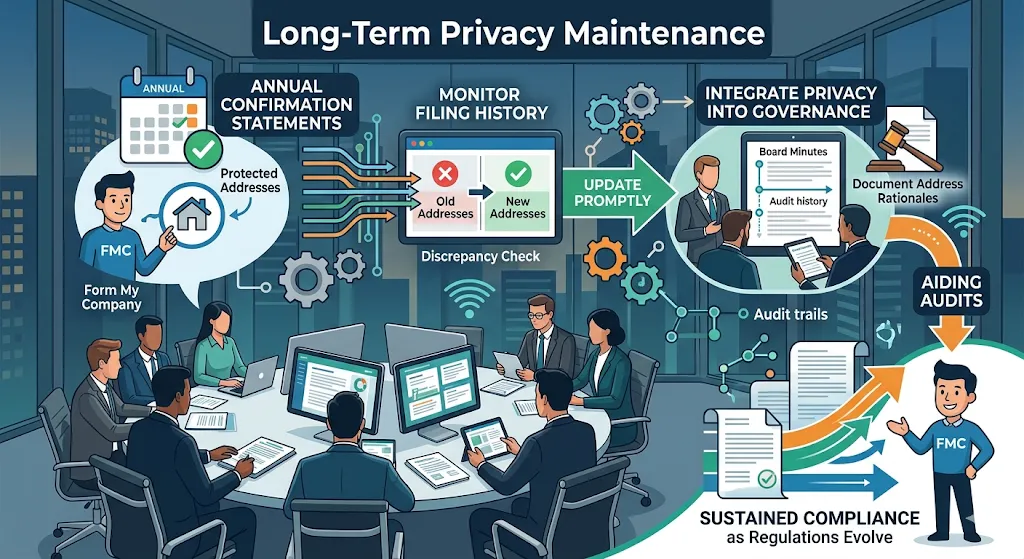
Annual confirmation statements offer chances to reaffirm protected addresses. Monitor filing history for discrepancies and update promptly.
Integrate privacy into governance: board minutes can document address rationales, aiding audits.
Form My Company provides ongoing support, ensuring sustained compliance as regulations evolve.
Choosing the Right Provider
Evaluate providers on location prestige, mail handling speed, and integration with Companies House filings. Look for UK-wide coverage and additional features like virtual offices.
Form My Company’s business address service stands out for seamless setup and privacy focus, tailored for UK entrepreneurs.
Maintaining privacy through a professional business address is straightforward and essential for modern directors. Form My Company delivers reliable business address solutions, empowering you to focus on growth without personal exposure risks.
What is a business address service?
A business address service provides a professional, non-residential UK address for company use on public documents, websites, and stationery. From My Company offers Business Address solutions that handle mail forwarding while keeping your home address private from registers like Companies House.
Can I use a business address for Companies House registration?
Yes, a business address can serve as your registered office or director service address with Companies House, ensuring compliance without exposing personal details. From My Company’s Business Address meets legal requirements for physical mail receipt and official document service.
How does a business address protect my privacy?
It replaces your home address on public records, preventing exposure to anyone searching Companies House or similar databases. Services from From My Company forward mail securely, maintaining separation between personal and business information.
What is the difference between registered office and business address?
A registered office is the mandatory legal address for company filings, while a business address is often used for general correspondence and branding. From My Company’s Business Address can fulfill both roles, streamlining operations for UK limited companies.
Can I use a business address for mail forwarding and VAT registration?
Most business address services, including From My Company’s Business Address, provide mail scanning, forwarding, and support VAT registration where a physical UK address is needed. This ensures seamless handling of official correspondence without a personal address.