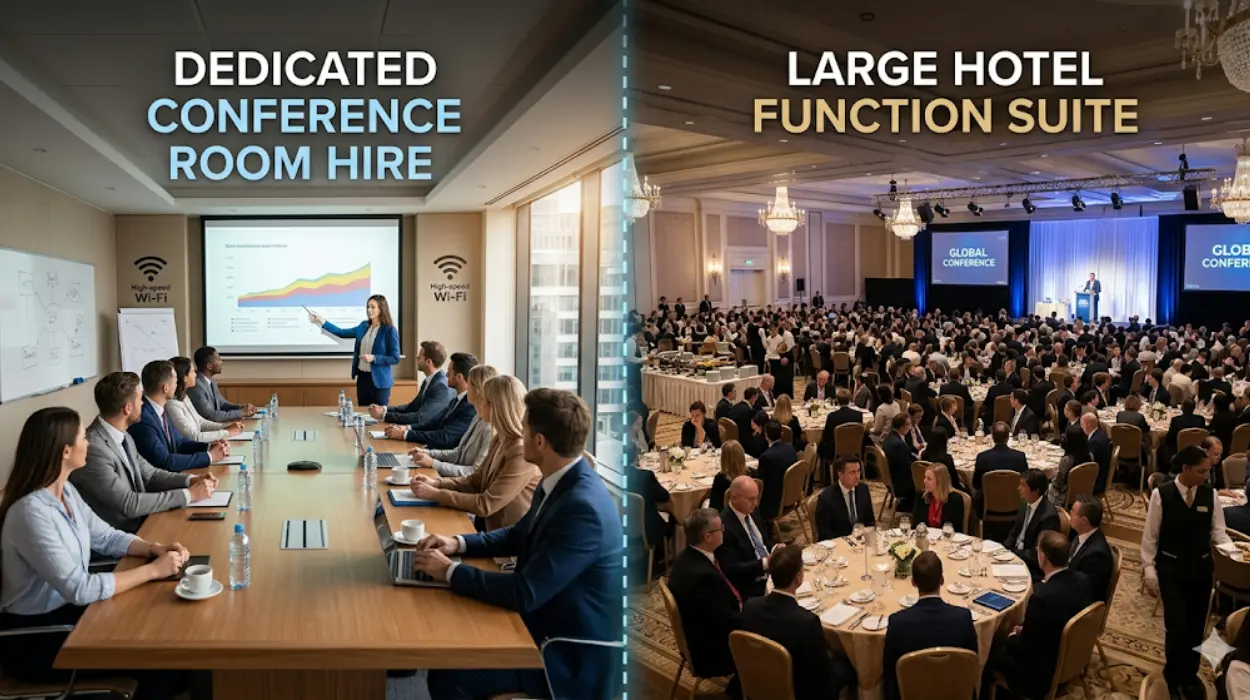
Conference room hire typically offers a more focused, cost‑effective, and flexible environment for business meetings and seminars, while large hotel function suites are better suited for high‑profile events that need on‑site accommodation, catering, and a “grand” setting. Choosing between the two depends on your budget, group size, tech needs, and the image you want to project.
When conference room hire is the better choice
Conference Rooms Services provide professional spaces for secure business meetings, client presentations, and small‑scale training sessions without the overhead of full‑service hospitality. Independent or coworking‑based conference rooms are often quieter, purpose‑built, and more conducive to serious discussion than hotel‑style function suites.
Cost and scalability
Meeting‑room rentals are frequently 30–50% more cost‑effective than comparable hotel conference spaces because they strip away large‑scale hospitality costs such as concierge, laundry, and 24/7 catering. Hotel function suites usually bundle AV equipment, catering, and staffing into a single package, which can inflate the price if you do not need all of those services.
- You only pay for the space and time you use, often in hourly or half‑day blocks.
- Smaller teams can rent a 6–12‑seat conference room without paying for a 100‑seat hall.
For example, a one‑day seminar with 30 attendees may cost significantly less in a dedicated conference room than in a hotel function suite with the same capacity, especially if you bring in your own catering or order simple refreshments.
Professional atmosphere and privacy
A neutral, professional backdrop helps participants stay focused on the agenda rather than on the “hotel” environment. Many professionals in fields such as law, finance, and consulting choose conference room hire specifically for discretion and confidentiality.
- Meeting‑room facilities are designed for business, not leisure, so they avoid the visual distractions of lobbies, bars, and holiday‑style decor.
- Layouts are often more modular, with sound‑proofed pods and breakout spaces that let groups split off for small‑group discussions.
For a corporate strategy day or board‑level meeting, this level of control over the environment can make the session feel more serious and tightly run.
When large hotel function suites are the better fit
Large hotel function suites shine when logistics, appearances, and convenience matter more than tight cost control. They are especially useful for multi‑day conferences, investor days, or external events where attendees will travel from different locations.
All‑in‑one convenience
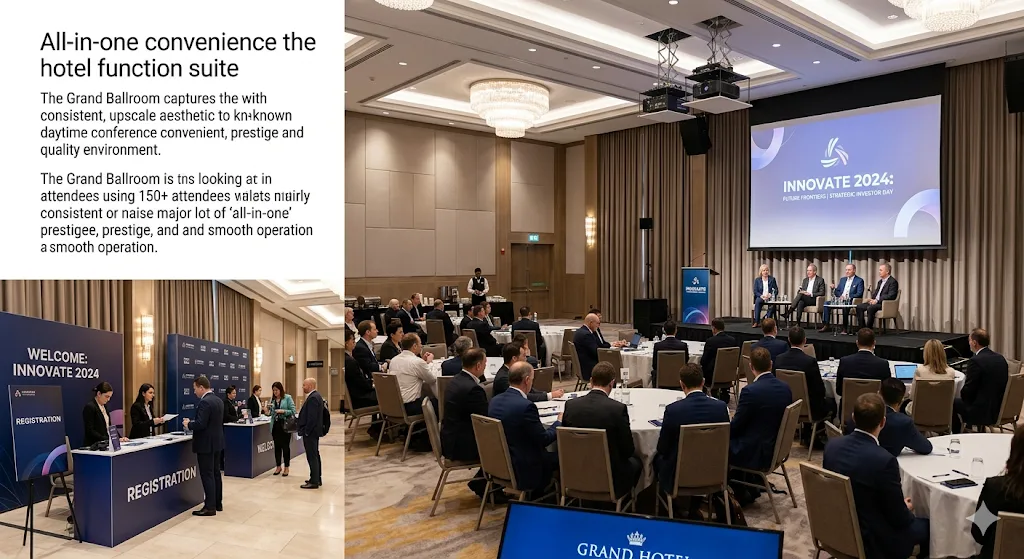
Hotels typically bundle meeting space, catering, accommodation, and on‑site support, which greatly reduces planning complexity. Function suites usually come with house AV equipment, stage setups, and dedicated event staff, so you do not need to source external suppliers unless you have very specific requirements.
- For a full‑day product‑launch event with 150 guests, you can book a single package that covers the room, meals, overnight stays, and basic tech.
- Hotels often provide branded registration desks, signage, and dedicated banquet managers, which can underpin a polished brand experience.
This “one‑stop” model is ideal if your team has limited time to coordinate venues, caterers, and AV vendors.
Branding, prestige, and accommodation
A well‑known hotel can add a sense of prestige to your event, especially if you are hosting external stakeholders such as investors, partners, or senior clients. The location, name recognition, and lobby environment can subtly reinforce your company’s image.
- Regional franchises or international chains project a consistent, upscale aesthetic that many organizations associate with trust and professionalism.
- If attendees are coming from out of town, on‑site lodging eliminates travel time between venue and hotel, which improves punctuality and reduces fatigue.
For a quarterly business‑review event or a high‑profile networking dinner, a hotel function suite can be a strategic choice for both comfort and image.
Tech, layout, and attendee experience
How a space is laid out and equipped often has a bigger impact on engagement than its size alone. Modern Conference Rooms Services increasingly focus on AV, acoustics, and flexible layouts to support active collaboration.
Layout flexibility
Conference rooms in coworking or business‑centric spaces are often designed with modular furniture, mobile whiteboards, and reconfigurable tables. This makes it easier to switch between presentation mode, breakout‑group work, and interactive workshops.
- You might start with a theatre‑style layout for a keynote, then rapidly reconfigure into cabaret or round‑table setups for small‑group discussions.
- Hotel function suites can be more rigid, especially if they are shared with weddings or public events, which may limit how much you can change the setup.
For a training‑heavy seminar or innovation workshop, that ability to adapt the layout quickly supports a more dynamic agenda.
Technology and connectivity
Reliable Wi‑Fi, screens, and video‑conferencing tools are now essential for most corporate events. Many independent conference rooms equip their spaces with plug‑and‑play AV systems aimed specifically at business users, while hotels may prioritize general‑purpose rigs.
- Example: A hybrid‑format meeting with 10 in‑room attendees and 20 remote participants can run smoothly in a conference room with built‑in video‑conferencing pods and dedicated bandwidth.
- Hotels may still require extra fees for premium AV packages or additional technicians, which can quickly increase the total cost.
When tech is mission‑critical, forecasted usage and redundancy should factor into whether you choose a conference room versus a hotel function suite.
Booking ease, availability, and duration
How quickly you can secure the space and how tightly your schedule is locked in often steers the venue choice. Dedicated conference rooms usually offer more flexible booking windows and shorter lead times than large hotel function suites.
Lead times and last‑minute changes
Hotels often require longer lead times for major function suites, especially for peak days such as weekends or holidays, and may insist on minimum guest counts or spend thresholds. Conference room providers, by contrast, tend to allow hour‑by‑hour or half‑day bookings with relatively short notice.
- A last‑minute client‑pitch meeting with 12 people can frequently be accommodated in a conference room on the same day, while a hotel may need weeks of notice for a similarly sized room.
- Cancellation and rescheduling policies on conference‑room platforms are often more elastic, with clear hourly or daily rates instead of rigid block‑booking constraints.
For agile, fast‑moving teams that cannot commit to a fixed long‑term plan, this flexibility can be decisive.
Duration and value
Hotel function suites often come in “day” or “half‑day” blocks that include catering, which can be wasteful if you only need a short meeting. Conference room hire lets you pay strictly for the time you use, from 1–2 hours up to a full day.
- A 90‑minute board review in a large hotel suite with compulsory tea and coffee service may cost more than a 3‑hour block in a dedicated conference room with optional refreshments.
- Repeated use of conference room blocks over several weeks can sometimes unlock discounted repetition rates or monthly packages, especially within a single provider network.
This pay‑per‑use model is particularly attractive for companies that host frequent internal meetings rather than occasional large‑scale events.
How Form My Company fits into the decision
For businesses weighing Conference Room hire against large hotel function suites, working with a specialist provider such as Form My Company can simplify the trade‑offs. Form My Company offers professional Conference Rooms Services in locations that balance accessibility, tech readiness, and professional atmosphere, often at a lower barrier to entry than full‑service hotels.
Tailoring space to your MOFU needs
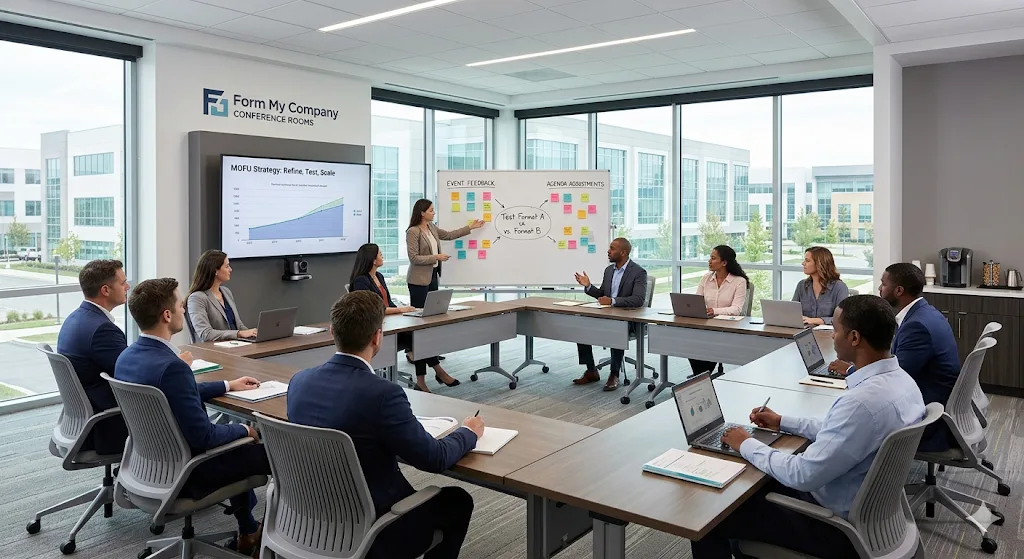
At the middle‑of‑funnel (MOFU) stage, many organisations are evaluating how to run effective seminars, training sessions, and client meetings without overcommitting to expensive venues. Form My Company’s Conference Rooms let teams test formats, adjust layouts, and refine agendas in a controlled setting before scaling up to larger events.
- You can trial a half‑day seminar format in a mid‑sized conference room, then expand to a larger venue or hybrid‑event model once impact and attendance are proven.
- The provider’s focus on business‑centric spaces helps maintain a professional tone that aligns with B2B seminars, board briefings, and stakeholder workshops.
Connecting to your content‑marketing journey
If you are exploring how venue choice affects attendee engagement and learning outcomes, Form My Company’s Conference Rooms Services can anchor a broader content‑marketing strategy. For example, you might first read about Planning a Seminar? Why Venue Tech and Layout is Key to Success to understand environmental design, then move to Rent Modern Conference Rooms for Corporate Events and Seminars when you are ready to book a space that matches your objectives.
Readers looking for a practical, cost‑sensitive option for frequent business gatherings can explore Form My Company’s Conference Rooms page to compare layouts, tech specs, and booking options rather than defaulting to more expensive hotel function suites. By aligning venue choice with budget, tech needs, and the desired attendee experience, organisations can consistently deliver high‑impact events without overspending on prestige that does not translate into results.
What are the benefits of hiring conference rooms for business meetings?
Hiring Conference Rooms provides a professional, distraction‑free environment tailored for business discussions, client presentations, and team workshops. From My Company’s Conference Rooms services feature reliable AV, flexible layouts, and secure settings that support focused collaboration without the overhead of large hotel venues.
How do I choose the right size of conference room for my event?
The right conference room size depends on the number of attendees, layout style (theatre, boardroom, or classroom), and whether you need breakout space. From My Company offers various Conference Rooms configurations that can comfortably host small board meetings, medium‑sized training sessions, or larger team briefings.
Are there hourly rates for conference room hire in the UK?
Yes, many providers offer hourly or half‑day rates for Conference Rooms rather than full‑day blocks, which helps control costs for shorter meetings. From My Company’s Conference Rooms services typically include flexible booking windows so you only pay for the time you use.
Can I use a conference room for hybrid or virtual meetings?
Modern Conference Rooms are designed for hybrid meetings, with built‑in video‑conferencing, screens, and strong Wi‑Fi for remote participants. From My Company’s Conference Rooms support secure online collaboration, making them suitable for webinars, virtual training, and mixed in‑person and remote sessions.
How does conference room hire compare with hotel meeting rooms?
Conference room hire often offers lower costs, quieter environments, and more flexible booking terms than hotel meeting rooms. From My Company’s Conference Rooms services focus on business‑centric spaces with professional tech and layouts, making them ideal for regular meetings and seminars without full‑service hospitality.