Hiring a dedicated training room differs from using a general conference room because the space is selected around the activities participants need to complete. Training rooms are designed to support structured learning, group exercises, presentations and breakout discussions, while general conference rooms typically prioritise meetings, negotiations and business presentations. The right choice depends on your workshop objectives, group size, equipment requirements, session length and budget.
For UK businesses planning a corporate workshop, choosing an appropriate venue helps create a more practical environment for collaboration and knowledge sharing. A dedicated training room may be the better option for sessions involving exercises and group participation, while a conference room can suit a strategy meeting or a presentation-led event. Understanding these differences helps businesses select a space that fits the session instead of paying for facilities they do not need.
How Is Hiring a Dedicated Training Room Different from Using a General Conference Room?
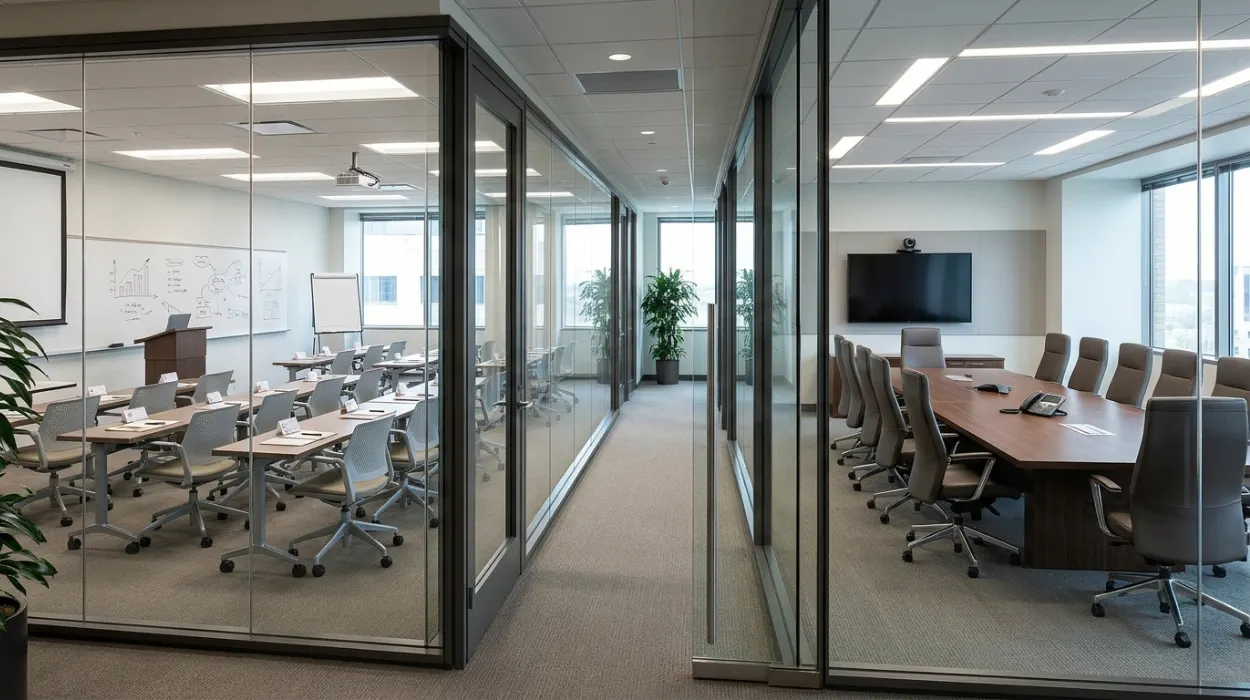
Hiring a dedicated training room gives businesses a space intended for learning activities, with layouts and equipment that support instruction, discussion and participation. A general conference room is usually arranged for business meetings, presentations and decision-making, although some conference rooms can also accommodate training.
The key distinction is the intended use rather than the room name alone. A well-equipped conference room may work perfectly for a workshop, while a training room may also support team briefings and presentations.
Consider these practical differences:
Purpose: Training rooms support learning, demonstrations and interactive exercises. Conference rooms typically support meetings, presentations and discussions.
Layout: Training rooms may offer classroom, U-shaped or collaborative arrangements. Conference rooms often use boardroom or presentation-style layouts.
Equipment: Training spaces may provide whiteboards, flipcharts, presentation screens and tools for group activities. Conference room facilities vary according to the venue.
Breakout activities: A training room may be easier to organise around small-group tasks and practical exercises.
Session length: The most suitable space depends on comfort, seating, breaks, ventilation and the activities planned, not simply on the number of hours booked.
Businesses comparing different venue options can also review Form My Company’s training room hire service to assess the available facilities and booking options.
What’s the Difference Between Hiring a Training Room Versus a General Conference Room for a Corporate Workshop?
The difference is how effectively the room supports the workshop format. A training room is generally a strong fit for sessions that combine presentations with exercises, feedback and group work. A general conference room is often suitable for workshops that focus on discussion, planning or presenting information around a shared table.
For example, a staff development workshop may require a whiteboard, space for team exercises and seating that can be rearranged throughout the day. A project planning workshop may need a large table, a screen and reliable connectivity for reviewing documents. Both can take place in either type of room if the venue provides the right facilities.
Before booking, match the room to the session agenda. List the activities, expected attendance, presentation needs and any remote participation requirements. Then confirm the room’s layout, equipment and capacity with the provider.
Layout and Equipment: Which Room Supports Your Workshop Best?
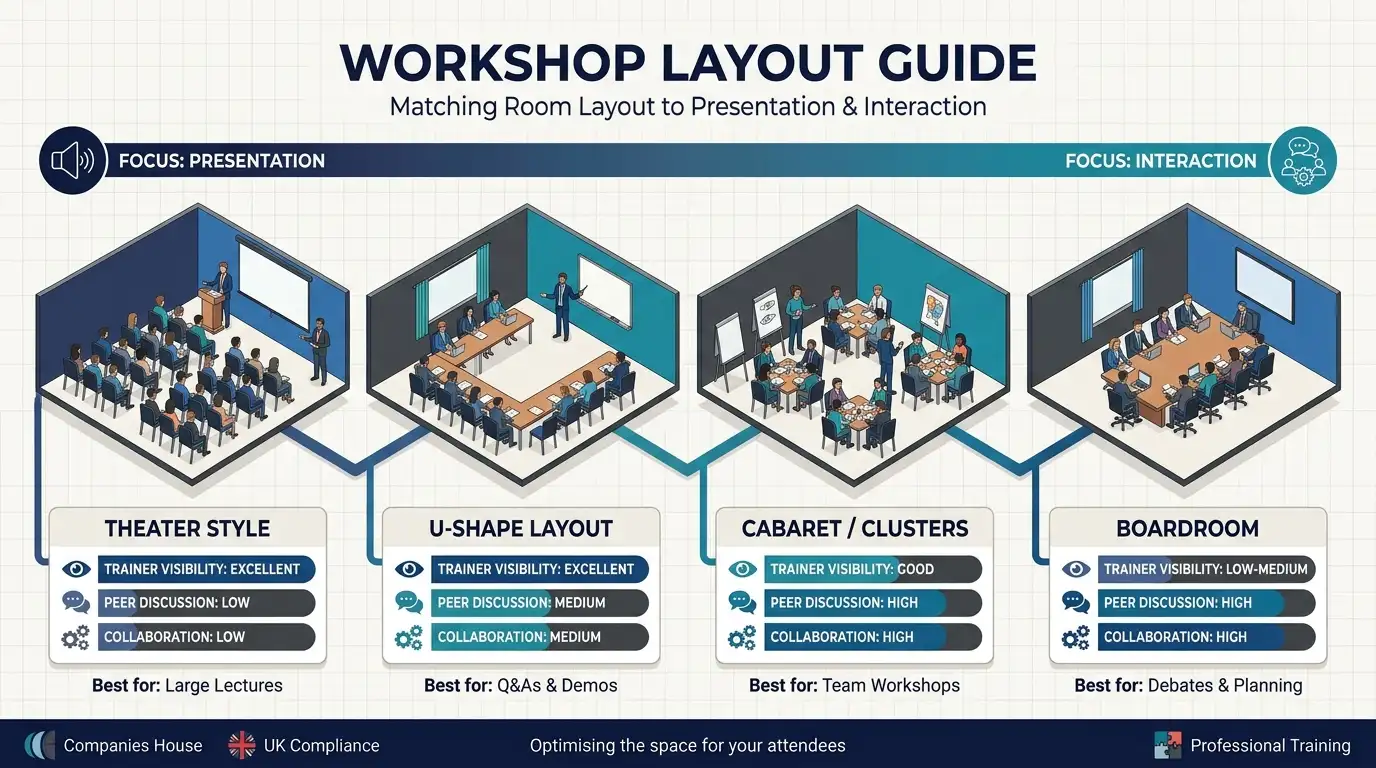
The layout affects how easily participants can see the trainer, contribute to discussions and work together. The best arrangement depends on the balance between presentation and interaction.
Classroom and U-shaped layouts
Classroom seating places participants facing the trainer and presentation screen. It can suit structured instruction, software demonstrations and sessions where attendees need to take notes.
A U-shaped layout gives the trainer access to participants while allowing people to see one another. It can work well for discussions, facilitated exercises and workshops that require frequent contributions.
Boardroom and collaborative layouts
Boardroom seating places attendees around a central table. It suits management discussions, planning meetings and small-group workshops where everyone needs to review shared material.
Collaborative layouts group participants around smaller tables or work areas. They can make team exercises and breakout discussions easier to manage, provided the room has enough space to move comfortably.
Essential equipment checklist
Before confirming a booking, check that the room includes the facilities your session requires:
A suitable screen or projector for presentations.
Reliable Wi-Fi and appropriate connection options.
Whiteboards or flipcharts with markers.
Comfortable seating and adequate table space.
Power sockets for laptops and other devices.
Suitable lighting and ventilation.
Audio and video equipment if remote participants will join.
Space for group exercises, movement or breakout discussions where needed.
Equipment should be confirmed with the venue rather than assumed from the label training room or conference room. Businesses can also compare meeting room hire options when a smaller, discussion-led setup is more appropriate.
Capacity and Pricing: What Should Businesses Compare?
Capacity and price should be assessed together. A lower hourly rate does not necessarily make a room more cost-effective if the space is unsuitable for the group or requires additional equipment hire.
Match capacity to attendance
Confirm the venue’s stated capacity for the layout you intend to use. A room may accommodate more people in theatre-style seating than in a classroom or boardroom configuration. Breakout activities may also require additional space.
Provide the venue with an accurate attendee estimate and ask whether the proposed layout will leave enough room for movement, materials and equipment. Avoid choosing a space based only on its maximum advertised capacity.
Compare the full booking cost
Ask whether the quoted price covers the facilities and services needed for the session. Relevant factors include:
Hourly, half-day or full-day rates.
Equipment or technical support charges.
Setup time and access before the session.
Refreshments or catering, if required.
Changes to the booking or additional hours.
Parking and travel costs for participants.
Request a clear quotation so you can compare venues on the same basis. Do not assume that every training room costs more than a conference room, or that every conference room provides fewer facilities. Pricing varies by location, capacity, duration and included services.
Which Room Suits a Full-Day Workshop?
For a full-day workshop, choose a room that can support the entire agenda without creating unnecessary obstacles for participants. A dedicated training room is often a practical option when the day includes instruction, team exercises, demonstrations and regular changes between activities.
A general conference room may be sufficient for a workshop built around presentations, boardroom discussions and collaborative decision-making. The important consideration is whether the room remains suitable as the session moves from one activity to another.
Before booking a full-day venue, consider:
Comfort: Check seating, table space, lighting and ventilation.
Session flow: Confirm whether the room supports every planned activity.
Breaks: Check access to refreshments and suitable break areas.
Technology: Test the presentation setup and any video-conferencing equipment in advance.
Accessibility: Confirm that the venue meets the practical access requirements of attendees.
Booking arrangements: Establish arrival times, setup access and the process for extending the booking if necessary.
Businesses that need a workspace for activities beyond a single workshop can also explore serviced office options. These may suit teams that need a professional working environment alongside meeting facilities.
Acoustics, Comfort and Participant Engagement
Room conditions influence how easily participants follow presentations and contribute to discussions. Clear speech, manageable background noise, suitable lighting and comfortable seating help people concentrate on the session.
A dedicated training room may be configured for instructor-led activities and group participation. However, the quality of the environment depends on the actual room, its furnishings, occupancy and equipment. A well-maintained conference room can also provide a comfortable and productive workshop setting.
When assessing a venue, ask whether participants at the back of the room can see the screen, whether people can hear one another clearly and whether the arrangement supports interaction. If the workshop includes remote attendees, confirm that microphones, speakers and cameras can capture contributions from different parts of the room.
Avoid relying on generic engagement or retention statistics when choosing a venue. The outcome depends on several factors, including the quality of the training, the facilitator, the relevance of the material and how actively participants take part.
Flexibility for Different Corporate Workshop Types
Different workshops require different room arrangements. Selecting a flexible space helps businesses avoid unnecessary disruption when the agenda includes more than one activity.
Workshop type | Suitable room features |
|---|---|
Employee onboarding | Presentation screen, clear sightlines and space for questions |
Skills training | Whiteboard, demonstration equipment and practical working space |
Team-building workshop | Movable furniture and room for group exercises |
Strategy planning | Shared tables, presentation facilities and space to review documents |
Compliance briefing | Clear presentation setup, suitable seating and reliable connectivity |
Hybrid workshop | Reliable internet, suitable microphones, speakers and cameras |
For more context on choosing a venue around the intended business activity, read Premium Hotels vs. Dedicated Conference Rooms: Which Is Better?. This comparison can help businesses evaluate whether a purpose-built business venue or a hotel setting better fits their requirements.
How Should Businesses Prepare for Hybrid Workshops?
Hybrid workshops require the room’s technology to support both in-person and remote participants. The most important factors are clear audio, visible presentation material, reliable connectivity and a straightforward way for remote attendees to contribute.
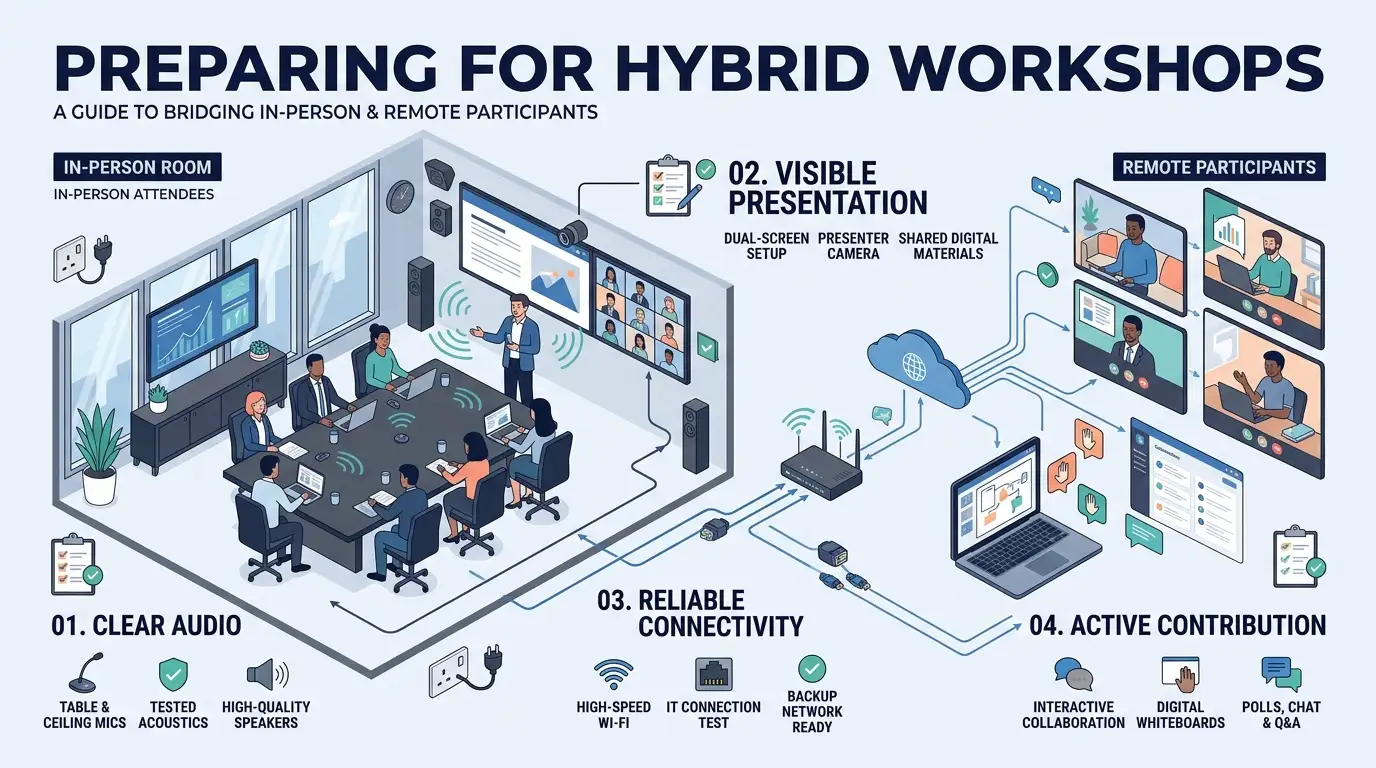
Before booking, confirm whether the venue provides a suitable camera, microphone, speaker system and screen-sharing facilities. Ask whether the room supports the conferencing platform your organisation uses and whether technical assistance is available if required.
A short equipment test before the event can identify connection issues and sound problems before attendees arrive. If remote participation is essential, include it in the venue requirements from the beginning rather than treating it as an optional extra.
Which Should You Choose: a Dedicated Training Room or a Conference Room?
Use the following checklist to make the decision:
Choose a dedicated training room when the agenda includes structured instruction, practical exercises, breakout discussions or frequent changes in seating arrangements.
Choose a general conference room when the session focuses on meetings, presentations, planning or discussions around a shared table.
Consider either option when the venue provides the right layout, capacity, equipment and level of comfort.
Compare total booking costs rather than hourly prices alone.
Confirm hybrid technology, accessibility and setup arrangements before making the booking.
The best option is the one that supports the workshop objectives and provides the necessary facilities within the available budget. Room type is a useful starting point, but the specific venue features and booking terms should guide the final decision.
Ready to Book a Suitable Workshop Space?
Form My Company provides business space options for organisations that need a professional setting for meetings, training and collaborative work. Review the available training rooms and meeting rooms to compare the options against your attendance, agenda and equipment needs.
Before booking, confirm availability, room capacity, included facilities, access arrangements and the complete price. Providing these details in advance helps the venue recommend an appropriate setup and reduces the likelihood of last-minute changes.
A suitable workshop environment supports effective communication and a smoother session. Whether you need a dedicated training room or a general conference room, make the choice according to the activities planned and the practical requirements of your attendees.
Also explore,
Frequently Asked Questions
How is hiring a dedicated training room different from using a general conference room?
A dedicated training room is generally arranged to support learning, exercises and group participation. A general conference room is typically designed for meetings and presentations. The right choice depends on the session format, required equipment, attendance and budget.
What’s the difference between hiring a training room versus a general conference room for a corporate workshop?
A training room often offers layouts and facilities suited to instruction and interactive activities. A conference room may be better for discussion-led workshops and planning sessions. Compare the actual facilities and confirm that the chosen room supports every activity on the agenda.
What equipment should a corporate training room provide?
Depending on the session, useful facilities include a presentation screen, reliable Wi-Fi, whiteboards or flipcharts, comfortable seating, power sockets and suitable audio-visual equipment. Confirm which items are included in the booking.
Is a training room more expensive than a conference room?
Not necessarily. Prices vary according to location, capacity, duration, facilities and additional services. Compare the complete quotation for each venue, including equipment, setup access and any extra charges.
Can a conference room be used for a full-day training workshop?
Yes, if it has sufficient capacity, comfortable seating, suitable equipment and a layout that supports the planned activities. For sessions involving frequent exercises or breakout work, a dedicated training room may be more convenient.