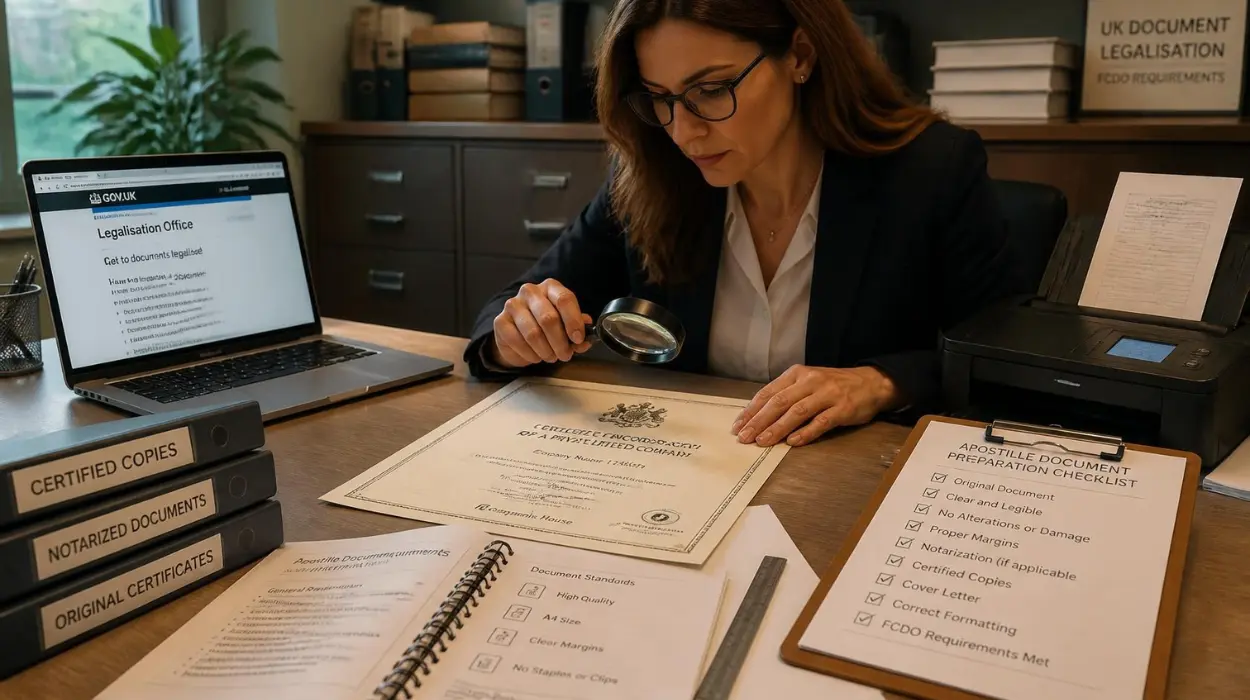
Imagine you’re on the verge of securing a lucrative international contract or opening a high-tier corporate bank account, only for the process to stall because you’re asked for a document you don’t currently have in your files. It’s a common hurdle for many UK directors who find themselves asking: What Is a Certificate of Good Standing and Why Do Businesses Request One? While your Certificate of Incorporation proves your business was born, this specific document, now officially termed a summary statement, proves it’s still healthy and compliant in the eyes of global partners.
It’s frustrating when complex paperwork stands between you and your next big milestone. You need clarity on whether your company meets the necessary standards right now. This guide will help you discover why this essential document is the key to proving your company’s compliance and unlocking international business opportunities in 2026. We’ll explain the updated Companies House fees, outline the eligibility criteria for your directors, and provide a clear path to obtaining your certificate quickly and reliably.
Key Takeaways
- Learn how a Certificate of Good Standing acts as a professional passport, proving your company has been in continuous existence since its incorporation.
- Understand the specific reasons why banks and global partners require this document, answering the core question: What Is a Certificate of Good Standing and Why Do Businesses Request One?
- Check your company’s eligibility by ensuring your filings are up to date and your board includes at least one natural person.
- Discover how to legalise your documents with an Apostille service to unlock international trade and contract opportunities in 2026.
- Streamline your administrative tasks by using an authorised agent to secure your official summary statement quickly and accurately.
Understanding the Certificate of Good Standing: A Professional Passport for Your Company
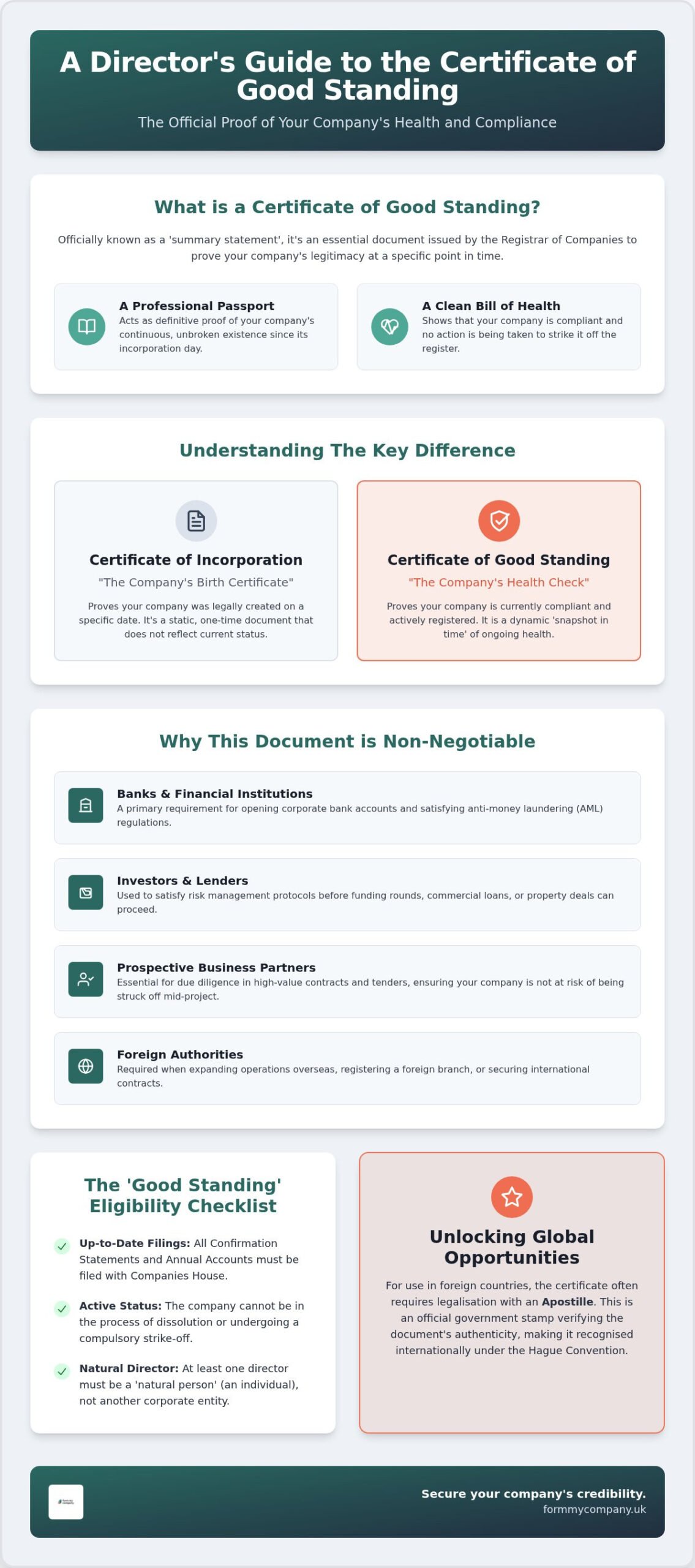
A Certificate of Good Standing is an official document issued by the Registrar of Companies. It serves as a definitive confirmation that your limited company has been in continuous, unbroken existence since the day it was incorporated. Think of it as a “clean bill of health” for your business. It proves that you’ve stayed up to date with all statutory filings and that no action is currently being taken to strike your company off the register. This document is essential for any director looking to demonstrate their firm’s legitimacy to external parties.
When entrepreneurs ask, “What Is a Certificate of Good Standing and Why Do Businesses Request One?”, they’re usually looking for a way to verify their credibility during high-stakes negotiations. It’s a snapshot in time. Because business compliance can change from month to month, the certificate reflects your status only at the moment it’s issued. It doesn’t guarantee future compliance, but it provides immediate peace of mind to anyone conducting due diligence on your enterprise. If your filings aren’t current, the Registrar simply won’t issue the document, making it a powerful tool for building trust.
Good Standing vs. Incorporation: Knowing the Difference
Your Certificate of Incorporation is effectively a birth certificate; it proves your company was created. However, it doesn’t tell a potential partner if the company is still active or if it’s facing compulsory strike-off. In 2026, original incorporation documents are often insufficient for modern due diligence because they lack current context. These two documents work together to provide a complete corporate history. While incorporation proves your start, a certificate of good standing proves your ongoing health and reliability. It’s the difference between knowing a business exists and knowing it’s safe to work with.
The Role of Companies House in 2026
The Registrar’s role is to maintain the integrity of the British business register, ensuring every entity remains transparent and accountable. Digital records have transformed how third parties verify your status, making real-time data more accessible than ever. Despite these digital shifts, a physical or official digital certificate remains the gold standard for banks and international authorities. The Registrar of Companies is the ultimate authority for UK corporate status. By maintaining accurate records, they ensure that the British business environment remains one of the most respected in the world. When you request your summary statement, you’re tapping into this established system of trust to advance your own commercial goals.
Why Do Banks, Partners, and Investors Request This Document?
When you move beyond basic trading, your business enters a world of rigorous due diligence. Banks, investors, and high-value partners don’t just take your word for it. They require verifiable proof that your company is compliant. This leads many directors to ask: What Is a Certificate of Good Standing and Why Do Businesses Request One? Essentially, it acts as a filter, separating active, compliant businesses from those that have neglected their statutory duties. It provides a level of security that a simple search on the public register cannot always satisfy.
If you’re looking to open a high-street or international business bank account, this document is often non-negotiable. Modern anti-money laundering regulations mean banks must verify that a company is in “good standing” before they offer credit or facilities. Similarly, when you’re entering into significant commercial contracts or tenders with larger corporations, they’ll check your status to ensure you aren’t at risk of being struck off the register mid-project. It’s about risk mitigation for the person you’re doing business with.
Investors and lenders use the certificate to satisfy their own risk management protocols. Whether you’re seeking venture capital or a commercial loan, the “clean bill of health” provided by the Registrar is a fundamental requirement. It reassures them that the entity they’re funding is legally robust and up to date with its filings. Without it, you might find that funding rounds or property deals stall at the final hurdle.
International Trade and Foreign Jurisdictions
Expanding your operations overseas brings a new set of administrative challenges. Foreign authorities usually require proof that a UK entity is active and not dissolved before they’ll allow you to set up an overseas branch or sign local leases. This is where the connection between Good Standing and Apostilled Documents becomes critical. An Apostille legalises your certificate for use in countries that are members of the Hague Convention, facilitating smoother cross-border transactions. It ensures that your UK status is recognised and respected by foreign government departments.
Financial and Legal Credibility
Commercial mortgage lenders are particularly strict. They need to know that the borrower is a valid legal entity throughout the life of the loan. For Limited Liability Partnerships (LLP), providing a certificate is often the only way to prove professional status to external stakeholders. It also helps when negotiating with suppliers or trade credit insurers, as it demonstrates a commitment to transparency. If you’re preparing for growth, you can order your certificate today to ensure your company stays ahead of these requirements.
The Eligibility Criteria: What ‘Good Standing’ Actually Means
Achieving ‘Good Standing’ status isn’t an automatic right for every registered entity. It’s a status earned through consistent administrative diligence. Many business owners ask, What Is a Certificate of Good Standing and Why Do Businesses Request One? whilst trying to understand why their application was rejected. To qualify, your company must meet strict criteria set by the Registrar. For a private limited company, this means having at least one director who is a ‘natural person’, meaning an individual rather than another company. Public limited companies require at least two directors, with at least one being a natural person, plus a qualified secretary.
Your filing history must be spotless. All annual accounts must be filed and not overdue. Additionally, your Confirmation Statement must be submitted on time. If there is any active action to strike the company off the register, or if the company is in the process of dissolution, the Registrar will refuse to issue the statement. Essentially, your record at Companies House must be current and clear of any red flags for you to be considered eligible.
Modern Compliance and the ECCTA 2026 Landscape
The landscape of UK corporate compliance shifted significantly with the full implementation of the Economic Crime and Corporate Transparency Act (ECCTA). By 2026, the requirements for ‘Good Standing’ have become even more stringent. It’s no longer just about filing dates; it’s about verified data. All directors and People with Significant Control (PSCs) must have their identities verified. An inaccurate or incomplete PSC Register can now directly prevent you from obtaining a summary statement. The Registrar now holds increased powers to remove non-compliant companies or those with suspicious data, making your internal record-keeping more vital than ever.
Common Reasons for Ineligibility
Missing a single deadline for an annual return can trigger a status change that blocks your eligibility immediately. Another common pitfall is failing to maintain a valid registered office address. If mail from Companies House is returned or if your address is flagged as invalid, your standing is compromised. If your company status changes whilst an application is pending, the request will be cancelled. Maintaining your standing is an ongoing commitment to transparency. It ensures your business remains ready for any opportunity that requires you to answer: What Is a Certificate of Good Standing and Why Do Businesses Request One?
What Information Is Included on a Companies House Certificate?
Every certificate acts as a bespoke record of your company’s current status. When directors ask, “What Is a Certificate of Good Standing and Why Do Businesses Request One?”, they’re usually looking for the specific data points that prove their firm’s legitimacy to a third party. At its core, the document includes your full company name and registration number. It also features the date of incorporation and the definitive statement that the company is in good standing. This “summary statement” is the official language used by the Registrar in 2026 to confirm your compliance.
Beyond these basics, the certificate can be tailored to include specific details that provide a deeper look at your corporate structure. Standard inclusions often cover:
- Director details: Names, and sometimes dates of birth or appointment dates.
- Secretary details: The name of the current company secretary, if applicable.
- Registered office address: The official address currently on record with the Registrar.
- Issued share capital: A breakdown of the company’s shares and their total value.
Customising Your Certificate for Specific Needs
Tailoring the information is crucial for meeting external requirements. Banks typically demand the names of all active directors to satisfy their Know Your Customer (KYC) protocols. If you’re in the middle of an investment round, including your issued share capital provides the transparency venture capitalists require. You aren’t stuck with a one-size-fits-all document. You can choose additional verification levels depending on your commercial goals, ensuring that every detail required by your partner is present and correct.
Verification and Security Features
Authenticity is protected by several official markers. Each certificate carries the official seal of the Registrar of Companies and a signature from an authorised officer. Third parties can verify these documents by checking the unique reference numbers against the public register. Whilst digital versions exist, many banks still require a physical, printed copy for their permanent records. This physical document remains the gold standard for high-level due diligence, especially when dealing with property lenders or international authorities. To ensure your document contains every detail required for your specific bank or contract, you can order an official Certificate of Good Standing through our streamlined service.
How to Obtain Your Certificate with Form My Company
Navigating government portals can be a slow, tedious task that distracts you from growing your business. At Form My Company, we’ve designed a streamlined process that allows you to request your official summary statement directly through our platform. As an authorised Companies House formation agent, we ensure your application is handled with professional accuracy from start to finish. We specialise in helping foreign nationals navigate the specific requirements of UK ventures, ensuring your international expansion remains on track. Our Digital and Print Packages provide the flexibility you need, whether you require an immediate PDF for an online application or a physical copy for your bank’s permanent records.
When you’re ready to stop asking What Is a Certificate of Good Standing and Why Do Businesses Request One? and start leveraging its benefits, our team is here to help. We strip away the intimidation factor of administrative compliance, positioning your company as a reliable partner in any jurisdiction. By choosing an expert facilitator, you avoid the common filing errors that often lead to rejected applications and wasted time.
Fast-Track Your Business Administration
We focus on reducing the friction of dealing with government portals directly. Our system includes an internal check to ensure your company meets the basic eligibility criteria. If we find that your company is currently ineligible due to overdue filings, we’ll notify you before processing the order. This proactive approach saves you from unnecessary delays and administrative headaches. To further enhance your corporate image, you can integrate your certificate with our Virtual Office Services. This provides a prestigious UK business presence whilst ensuring your official documents are handled with the care they deserve.
Next Steps for Your Compliance Strategy
Understanding What Is a Certificate of Good Standing and Why Do Businesses Request One? is the first step; maintaining that status is an ongoing commitment. Real credibility comes from long-term “Good Standing,” which requires consistent attention to filing deadlines. The value of our Company Secretarial Service cannot be overstated here. We act as your organised guide, preventing the lapses that could compromise your status and future opportunities. Don’t let a simple filing error stall your growth or damage your reputation with investors. Secure your professional credibility today and Order Your Certificate of Good Standing through Form My Company.
Secure Your Company’s Future with Official Compliance
Maintaining your standing is more than a legal obligation; it’s a strategic asset that opens doors to global markets and high-level finance. By understanding What Is a Certificate of Good Standing and Why Do Businesses Request One?, you’ve taken the first step toward safeguarding your firm’s reputation. Whether you’re navigating the rigorous ECCTA 2026 landscape or expanding into foreign jurisdictions, this document provides the transparency that modern partners and lenders demand. It transforms your registered entity into a trusted, compliant professional partner.
You don’t have to manage these complex administrative hurdles alone. As an Authorised Companies House Agent, we provide expert support for UK and foreign directors to ensure your application is accurate and successful. We offer fast digital and physical delivery to meet your most urgent bank or contract deadlines. Take the friction out of your business administration and focus on what you do best: building your venture.
Order Your Official UK Certificate of Good Standing Online and take control of your corporate credibility today. Your next big opportunity is waiting; make sure your business is ready to seize it.
Frequently Asked Questions
How long is a Certificate of Good Standing valid for in the UK?
A Certificate of Good Standing does not have a formal expiry date, but it is effectively a snapshot of your company’s status at a specific moment. Most banks, solicitors, and international authorities require the document to be no more than three months old to ensure the data is current. If you provide an older certificate, the recipient may reject it, as your compliance status could have changed since the date of issue.
Can I get a Certificate of Good Standing for a dormant company?
Yes, you can obtain this document for a dormant company provided all statutory requirements are met. Your business must be up to date with its dormant company accounts and confirmation statements. Third parties often ask: What Is a Certificate of Good Standing and Why Do Businesses Request One? specifically for dormant entities to verify that the company is still active on the register and hasn’t been dissolved due to administrative neglect.
What happens if my company is not in good standing?
If your company is not in good standing, Companies House will refuse to issue the certificate until all defaults are rectified. This usually happens if you’ve missed filing deadlines for accounts or confirmation statements. Being in “bad standing” can lead to compulsory strike-off action and will almost certainly result in rejected bank account applications or failed contract tenders. You must bring all filings up to date before reapplying for the certificate.
How much does a Certificate of Good Standing cost in 2026?
As of February 2026, Companies House charges a standard fee of £22 for the dispatch of this document. For directors facing urgent deadlines, an express same-day service is available for £65, provided the order is placed before 11 am. These are the official government fees for the summary statement. Many businesses choose to use an authorised agent to handle the application process to ensure all details are submitted with professional accuracy.
Do I need an Apostille for my Certificate of Good Standing?
You will generally need an Apostille if you intend to use the certificate outside the United Kingdom. An Apostille is a form of legalisation that makes your UK document valid in countries that are members of the Hague Convention. This is essential for opening overseas bank accounts or setting up foreign branches. Without this additional verification, foreign government departments or legal entities may not recognise the authenticity of your official Companies House certificate.
Can a foreign national apply for this certificate for their UK company?
Absolutely. Any director of a UK company can apply, regardless of their nationality or residency status. Form My Company specialise in helping foreign and European nationals manage their UK administrative requirements. We ensure that your company meets all the necessary eligibility criteria, such as having at least one natural person as a director, so you can successfully obtain the document to support your international business ventures and global banking needs.
Is a Certificate of Good Standing the same as a tax clearance letter from HMRC?
No, these are two entirely different documents issued by different government departments. A Certificate of Good Standing is issued by Companies House and confirms your corporate existence and filing compliance. A tax clearance letter comes from HMRC and relates specifically to your tax liabilities and payment history. To answer “What Is a Certificate of Good Standing and Why Do Businesses Request One?”, remember it focuses on corporate status rather than financial tax positions.
How long does it take to receive the certificate from Companies House?
The standard dispatch time from Companies House is currently ten working days. If you require the document more quickly, the express service aims to process and send the certificate on the same day for orders placed before 11 am. Once dispatched, delivery time will depend on whether you have chosen a digital or print package. Using an agent can help streamline this process by ensuring your company is eligible before the application begins.