

A team development training space provides businesses with a dedicated environment where employees can develop professional skills, improve collaboration and participate in structured learning activities. The right training space supports focused discussions, practical exercises and knowledge sharing while helping organisations create a more productive working environment.
For UK businesses, team development is an important part of building an effective workforce. Whether a company is onboarding new employees, developing management skills or improving internal processes, having an appropriate space for training can make a meaningful difference to the learning experience. Professional facilities, suitable room layouts and reliable technology help businesses deliver organised sessions that support employee development and operational objectives.
What Is a Team Development Training Space?
A team development training space is a dedicated environment designed to support employee learning, professional development and collaborative activities. It provides the facilities needed for workshops, presentations, group exercises and structured training sessions.
Unlike ordinary office meeting areas, a dedicated training environment can accommodate different learning formats and provide suitable equipment for presentations, discussions and practical exercises.
Businesses use these spaces for activities such as:
Employee onboarding and induction programmes.
Management and leadership development.
Communication and teamwork workshops.
Technical and professional skills development.
Health and safety awareness sessions.
Internal policy and compliance training.
Team-building and collaborative exercises.
A suitable environment allows employees to concentrate on learning without the usual interruptions associated with everyday office operations.
How Does a Team Development Training Space Improve Business Performance?
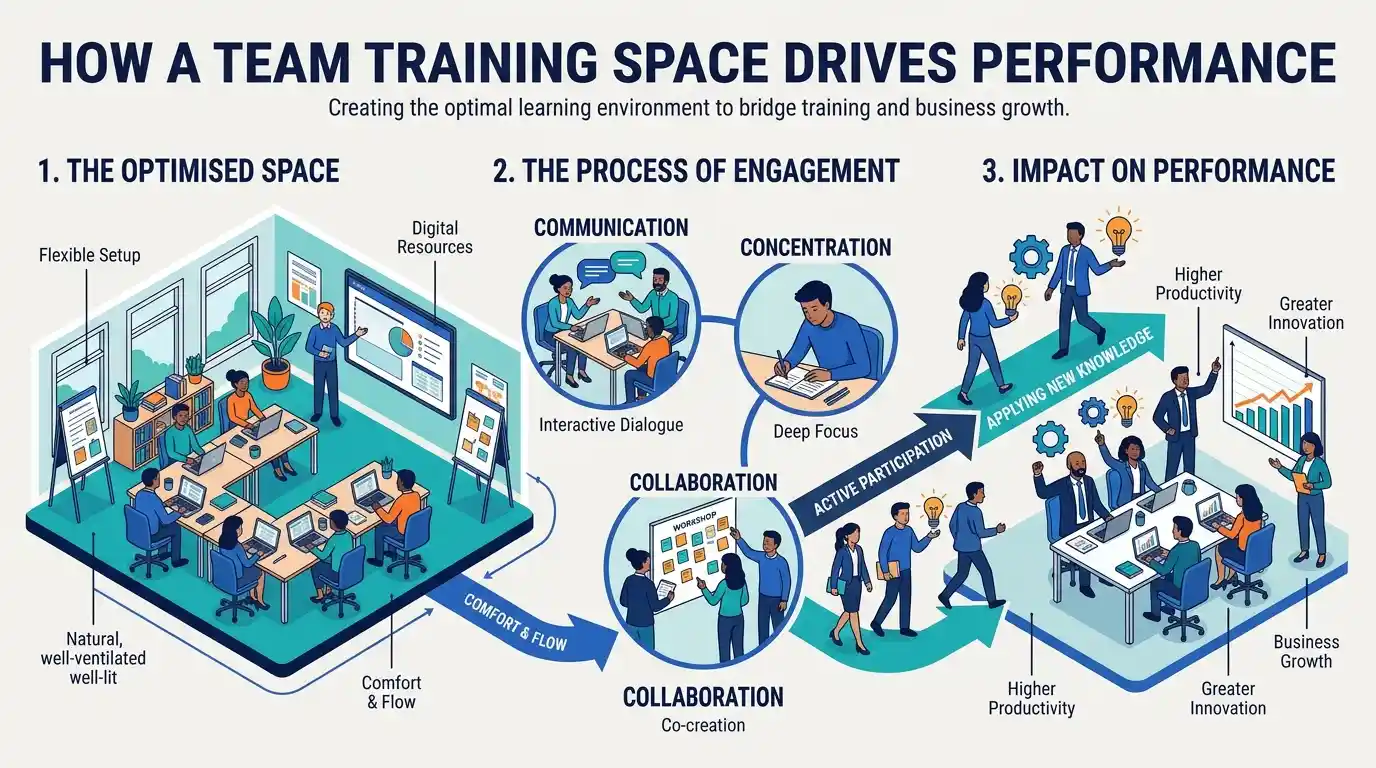
The quality of the learning environment influences how employees participate in training and apply new knowledge. A well-organised space helps businesses create conditions that encourage communication, concentration and collaboration.
Improved Employee Collaboration
Team development activities often require employees to exchange ideas, discuss challenges and work together on practical exercises. A dedicated space gives participants the opportunity to interact without the interruptions of their normal working environment.
Group discussions, problem-solving activities and collaborative workshops can help employees understand different responsibilities and develop stronger working relationships.
Better Learning and Knowledge Retention
A structured training environment supports different learning methods, including presentations, demonstrations, group exercises and discussions.
Employees can concentrate more effectively when the room has suitable seating, lighting, presentation equipment and sufficient space for activities.
Increased Employee Engagement
Providing a professional environment demonstrates that an organisation takes employee development seriously. Employees are more likely to participate actively when training sessions are organised, comfortable and relevant to their responsibilities.
More Effective Training Delivery
Dedicated facilities allow trainers and managers to organise sessions around specific objectives. Presentation screens, whiteboards, reliable internet and suitable seating arrangements help make training activities easier to deliver.
Common Uses of Team Development Training Spaces
Businesses use professional training environments for different operational and development requirements. The activities depend on company size, workforce responsibilities and organisational objectives.
Employee Onboarding and Induction
New employees need an understanding of company policies, workplace procedures, organisational expectations and their individual responsibilities.
A dedicated training space allows HR teams and managers to introduce these subjects through presentations, discussions and practical activities.
For businesses experiencing rapid growth, structured onboarding helps new employees understand their roles and integrate into existing teams.
Leadership and Management Development
Managers and supervisors benefit from structured development sessions covering communication, delegation, decision-making and performance management.
A suitable training environment provides space for leadership workshops, management discussions and practical exercises based on workplace situations.
Team-Building and Communication Workshops
Team development sessions can help employees improve communication and understand how their responsibilities connect with wider organisational objectives.
Activities may include group problem-solving, collaborative planning and discussions about workplace challenges.
Technical and Compliance Training
Businesses may organise training around workplace safety, data protection, internal procedures and industry-specific requirements.
The training content should reflect the organisation’s actual legal and operational responsibilities. Attendance records and supporting materials can help maintain evidence of completed training.
Performance Improvement Programmes
Managers can use training sessions to address identified skills gaps, introduce revised procedures and improve consistency across departments.
Regular development activities also provide opportunities to review progress and identify additional training requirements.
How to Set Up an Effective Team Development Training Space
Setting up an effective training environment requires more than providing a room and arranging chairs. Businesses should consider the purpose of the session, number of participants, available facilities and preferred learning methods.
Choose the Right Room Layout
The room arrangement should reflect the activities planned for the session.
| Room layout | Best suited for |
|---|---|
| Classroom | Presentations and structured instruction |
| U-shape | Group discussions and interactive workshops |
| Boardroom | Management meetings and decision-making |
| Theatre | Presentations involving larger audiences |
| Cabaret | Group exercises and collaborative activities |
Flexible layouts are particularly useful for businesses that organise different types of training throughout the year.
Provide Appropriate Technology
Technology supports modern training delivery and helps facilitators communicate information effectively.
Important facilities include:
High-speed internet connectivity.
Large presentation screens or projectors.
Whiteboards and flipcharts.
HDMI and presentation connections.
Audio and video equipment.
Support for virtual participants.
Printing facilities where required.
Technology should be tested before the session to avoid unnecessary interruptions.
Consider Space and Accessibility
Participants need sufficient room to move, interact and use their equipment comfortably.
Businesses should assess seating capacity, ventilation, lighting, accessibility and the availability of suitable facilities. Transport links and parking arrangements are also important when employees travel from different locations.
Create a Comfortable Learning Environment
A comfortable training space helps participants remain focused during longer sessions.
Consider natural lighting, suitable temperature control, ergonomic seating, refreshments and access to break areas.
The environment should also provide an appropriate level of privacy for confidential discussions and internal business matters.
Practical Tips for Successful Team Development Training
The effectiveness of a training programme depends on preparation, delivery and follow-up. Businesses should establish clear objectives and select activities that support the skills employees need to develop.
Establish Clear Training Objectives
Every session should have a defined purpose. Identify the knowledge, skills or behaviours employees are expected to develop.
For example, a management workshop may focus on delegation and communication, while an employee induction programme may cover workplace procedures and company policies.
Prepare a Structured Training Agenda
Organise the session into manageable sections and allocate appropriate time for each activity.
Include opportunities for questions, group discussions, practical exercises and breaks. Avoid overcrowding the agenda with too much information.
Encourage Active Participation
Training should involve employees rather than rely entirely on presentations.
Use case studies, group exercises, demonstrations and problem-solving activities to encourage participation and practical understanding.
Collect Feedback
Ask participants to provide feedback about the content, delivery and learning environment.
Feedback helps managers identify areas for improvement and plan more relevant development activities.
Monitor Training Outcomes
Review whether employees have applied the knowledge and skills gained during training.
Managers can assess progress through workplace observations, performance discussions and follow-up activities.
Choosing Between Internal Training Spaces and External Venues
Businesses can deliver training in their own offices or use external professional facilities. The appropriate option depends on available space, team size, equipment requirements and the nature of the programme.
| Consideration | Internal training space | External professional venue |
|---|---|---|
| Availability | Depends on existing office facilities | Can be booked when required |
| Equipment | Limited to available resources | May include dedicated presentation facilities |
| Distractions | Employees remain close to daily operations | Separate environment for focused sessions |
| Flexibility | Depends on office layout | Different room layouts may be available |
| Cost | Uses existing business facilities | Involves room hire charges |
| Team collaboration | Convenient for office-based teams | Suitable for bringing distributed teams together |
Internal spaces can be practical for smaller sessions and routine discussions. External venues can be useful when a business needs additional capacity, specialist facilities or a separate environment for focused development activities.
Businesses comparing different professional workspace options can also explore serviced offices and their advantages for modern businesses.
How to Choose the Right Professional Training Venue
Selecting a suitable venue requires consideration of both practical facilities and the objectives of the training programme.
Location and Transport Accessibility
Choose a location that participants can reach conveniently. Consider public transport, parking and accessibility requirements, particularly when employees are travelling from different offices.
Room Capacity and Layout
Confirm that the venue can accommodate the expected number of participants without compromising comfort or interaction.
Ask whether the room can be arranged in classroom, U-shape, boardroom or workshop formats.
Available Facilities
Check whether the venue provides presentation equipment, reliable internet, whiteboards, refreshments and technical assistance.
Confirm which facilities are included in the hire price and whether additional services involve separate charges.
Privacy and Security
Some development sessions involve internal policies, employee performance or sensitive organisational information.
Consider whether the venue provides private rooms, controlled access and appropriate arrangements for handling confidential discussions.
Booking Terms and Flexibility
Review booking durations, payment arrangements, cancellation policies and any additional charges.
Businesses that organise recurring development programmes should also consider whether the provider offers suitable booking flexibility.
How Professional Training Spaces Support Growing UK Businesses
As organisations expand, employee development becomes increasingly important. New employees need consistent onboarding, managers require leadership development and existing teams must adapt to changing responsibilities.
For newly incorporated businesses, structured training can support the transition from a small founding team to a larger workforce.
Supporting HR and Employee Administration
Employers need appropriate processes for employee onboarding, workplace policies, payroll administration and staff records.
When a business starts employing people, it must also understand its relevant employer responsibilities, including PAYE registration where required.
Supporting Governance and Management
Directors and senior managers benefit from understanding their responsibilities, internal decision-making processes and company reporting obligations.
Development sessions can provide opportunities to discuss governance procedures and improve management knowledge.
Supporting Flexible Working Arrangements
Businesses with remote or hybrid teams may need external facilities for occasional in-person development sessions.
Professional workspaces provide an alternative when an organisation does not have sufficient office facilities to bring everyone together.
Companies that need a professional working environment without committing to a permanent office can also explore serviced office solutions.
Training Rooms, Meeting Rooms and Conference Facilities: Understanding the Difference
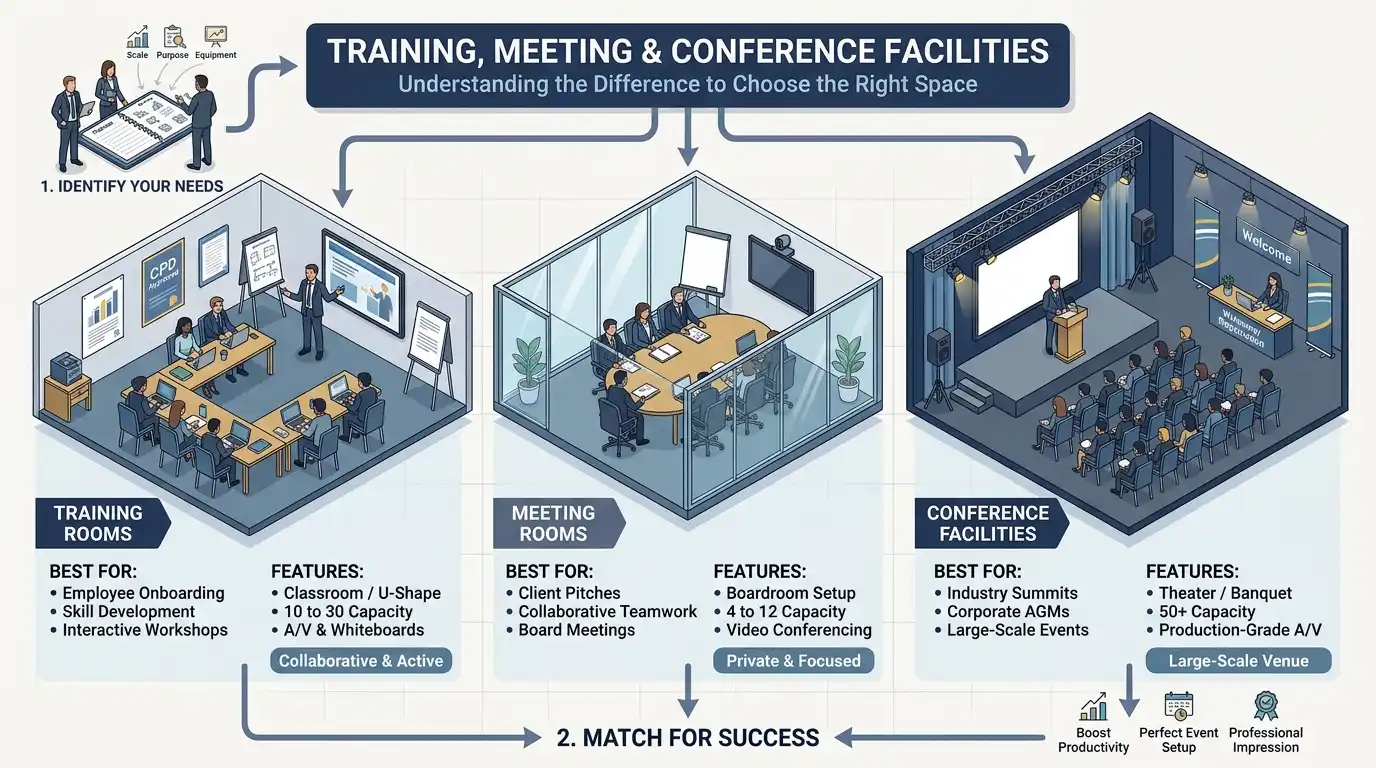
Different business spaces serve different purposes. Selecting the right facility helps organisations match their environment to the requirements of each session.
Training Rooms
Training rooms are designed for structured learning, employee development and interactive workshops. They generally provide flexible layouts, presentation equipment and facilities that support group activities.
Businesses looking for dedicated learning facilities can explore professional training room facilities.
Meeting Rooms
Meeting rooms are suitable for smaller group discussions, management meetings, planning sessions and client consultations.
They provide a professional setting for business communication and collaborative decision-making.
Conference Rooms
Conference rooms generally accommodate larger presentations, seminars, corporate gatherings and group discussions.
They may provide additional presentation facilities and seating arrangements for larger audiences.
When comparing external venues, businesses can also read Premium Hotels vs. Dedicated Conference Rooms: Which Is Better? to understand the differences between hotel venues and dedicated business facilities.
Legal and Compliance Considerations for Employee Training
UK employers have responsibilities relating to workplace safety, employee information and appropriate training. The requirements depend on the nature of the business, its activities and the risks employees face.
Health and Safety Training
The Health and Safety at Work etc. Act 1974 establishes general duties for employers to protect employees and others affected by their work.
Employers must provide appropriate information, instruction, training and supervision where required to support workplace health and safety.
The type of training depends on the work being performed and the risks identified through workplace assessments.
Data Protection Awareness
Businesses handling employee, customer or supplier information should ensure relevant staff understand their responsibilities under applicable data protection legislation.
Training can cover information security, access controls, appropriate data handling and procedures for reporting potential breaches.
Record-Keeping and Training Documentation
Maintaining suitable training records helps businesses monitor employee development and demonstrate which training activities have taken place.
Records may include:
Employee attendance.
Training dates and subjects.
Training materials.
Assessment results where applicable.
Relevant trainer information.
Follow-up actions and refresher requirements.
The records should be maintained in accordance with the organisation’s record-management and data-protection procedures.
Common Mistakes to Avoid When Planning Team Development Training
Businesses sometimes invest in training facilities without giving sufficient attention to the programme itself. Avoiding common planning mistakes helps improve the overall experience.
Choosing an unsuitable room: A space that is too small or poorly arranged can restrict participation and reduce comfort.
Ignoring technology requirements: Unreliable internet, unsuitable presentation equipment and missing connections can interrupt training sessions.
Setting unclear objectives: Training without defined outcomes makes it difficult to measure its effectiveness.
Overloading the agenda: Too much content in a single session can reduce concentration and limit opportunities for discussion.
Ignoring participant feedback: Failing to collect feedback prevents organisations from identifying weaknesses in their training approach.
Neglecting follow-up: Training should be supported by opportunities to apply new knowledge and review progress after the session.
Frequently Asked Questions
What is a team development training space?
A team development training space is a dedicated environment for employee learning, professional development and collaborative activities. It supports workshops, presentations, group discussions and practical training exercises.
Why is a dedicated training space important for team development?
A dedicated space provides an environment where employees can concentrate, participate in discussions and develop professional skills without the usual workplace distractions. It also supports organised training delivery and collaboration.
What facilities should a team development training space include?
A suitable training space should provide comfortable seating, reliable internet, presentation screens, whiteboards, appropriate lighting and sufficient room for group activities. Additional facilities may include refreshments, printing and technical support.
How do businesses use training spaces for employee development?
Businesses use training spaces for onboarding, leadership development, technical instruction, compliance awareness, communication workshops and team-building activities.
Should businesses use internal or external training spaces?
Internal spaces can be suitable for smaller sessions and routine activities. External venues are useful when businesses require additional capacity, specialist equipment or a separate environment for focused training.
How can businesses measure the success of team development training?
Businesses can review participant feedback, training assessments, workplace performance and the application of newly developed skills. Comparing outcomes with the original training objectives helps assess effectiveness.
How often should employees receive team development training?
Training frequency depends on business requirements, employee responsibilities, identified skills gaps and relevant legal or industry requirements. Organisations should review training needs regularly and arrange refresher sessions where appropriate.
Can professional meeting rooms also be used for team development?
Yes. Meeting rooms can accommodate smaller workshops, planning sessions and collaborative activities, provided their facilities and layout suit the training requirements. Larger or more structured programmes may benefit from dedicated training facilities.
Create a Better Environment for Business Development with Form My Company
A suitable team development training space supports employee learning, collaboration and professional growth. By selecting appropriate facilities, establishing clear objectives and reviewing training outcomes, businesses can create development programmes that contribute to stronger workplace performance.
Form My Company provides professional business facilities and company support services for organisations at different stages of growth. Businesses can explore its professional meeting room services for management discussions, collaborative sessions and other business activities.
Whether you are establishing a new company or managing an expanding workforce, Form My Company offers business facilities and administrative support to help you maintain a professional working environment. Explore the available services and choose the facilities that match your organisational requirements.