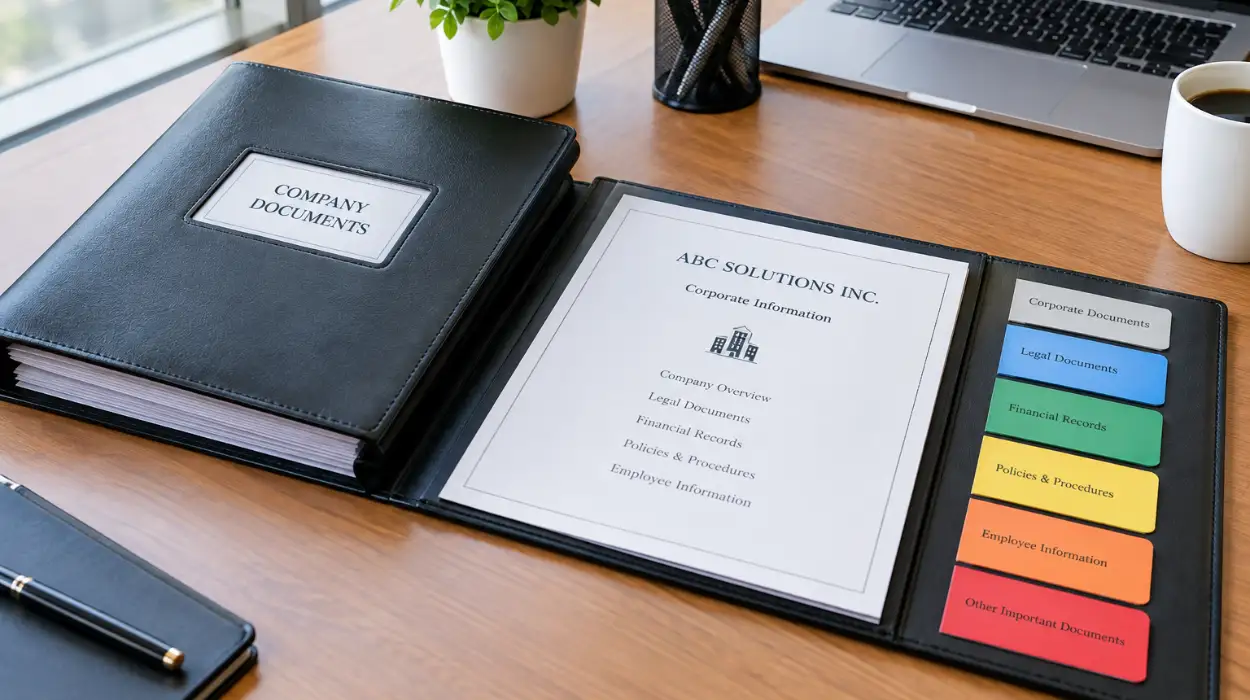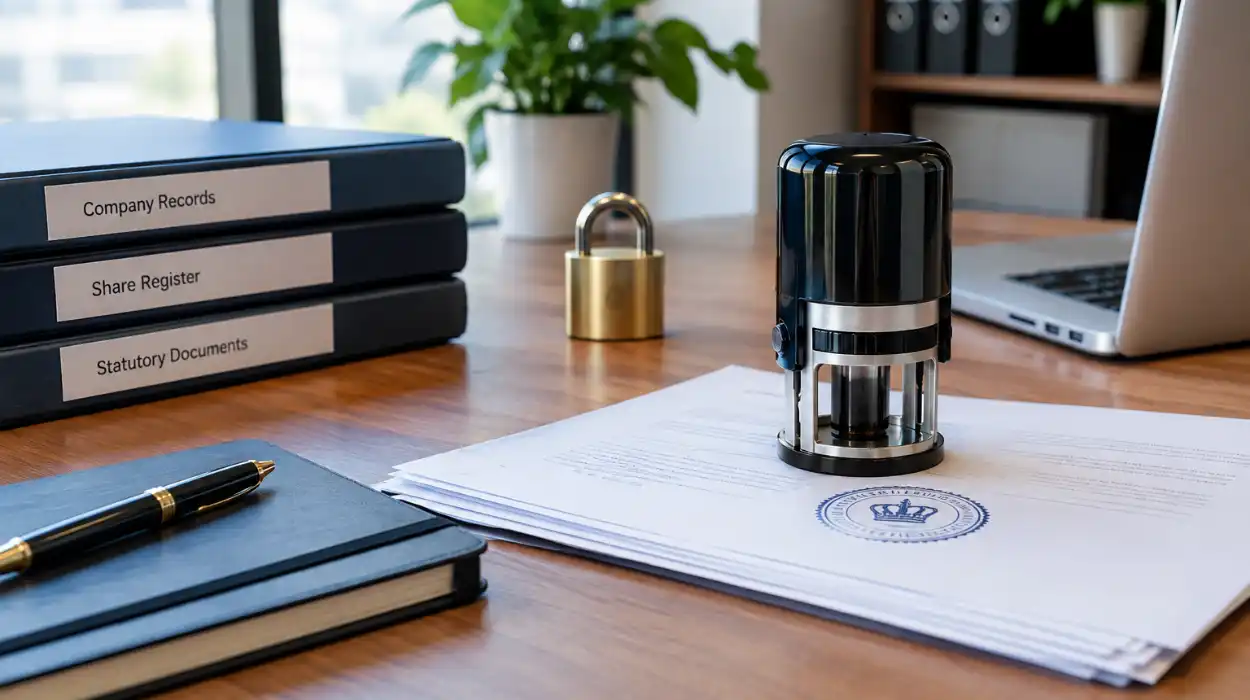
Protect your company seal and register from misuse by storing physical records in secure, fireproof safes, restricting access exclusively to authorized directors, maintaining digital audit logs for statutory registers, and implementing strict physical sign-out protocols for official corporate stamping tools.
Safeguarding corporate stationery and statutory registers remains vital for UK corporate governance. Unauthorized access to a company seal or register exposes organizations to fraudulent share transfers, falsified board resolutions, and severe legal liabilities under the Companies Act 2006. Corporate entities must establish rigorous internal controls to secure these physical and digital assets against internal and external threats. Implementing strict governance frameworks protects corporate integrity and preserves legal compliance across all business operations.
What Are the Primary Risks of Company Seal and Register Misuse?
Company seal and register misuse leads directly to unauthorized share transfers, fraudulent loan agreements, falsified director appointments, and catastrophic breaches of statutory compliance standards.
Unauthorized individuals exploit unsecured company seals to execute fraudulent legal documents, binding corporations to financial obligations without board approval. When bad actors gain access to physical registers, they manipulate shareholder allocations and alter ownership percentages. These illicit modifications trigger complex legal disputes, expensive litigation, and severe regulatory penalties from Companies House. Securing these vital assets prevents malicious actors from hijacking corporate identity or altering official company structures.
Organizations face distinct vulnerabilities when physical and digital corporate records lack proper oversight. Consider the following key exposure vectors:
Stealing physical corporate seals to execute unauthorized binding contracts
Forging director signatures on share certificates without board resolutions
Altering statutory registers to manipulate company ownership percentages
Accessing unsecured storage cabinets containing confidential corporate history
How Can You Implement Secure Physical Storage for Seals and Registers?
Secure physical storage requires dedicated fireproof safes, dual-custody key management systems, restricted room access, and continuous physical monitoring of corporate seals and paper registers.
Physical security forms the foundational baseline for protecting corporate assets against theft and tampering. Companies must store metal company seals, embossing stamps, and bound statutory registers within certified fireproof and tamper-evident safes. Access to these secure containers must remain restricted to authorized company directors or nominated company secretaries. Maintaining a physical access log records every instance when the safe is opened, creating clear accountability across the organization.
| Security Measure | Purpose | Implementation Standard |
| Fireproof Safes | Protect physical registers from fire and water damage | Certified to standard EN 1047-1 or equivalent |
| Dual-Custody Keys | Prevent single-person access to sensitive seals | Require two separate authorized keys to open |
| Access Logs | Track every physical interaction with corporate records | Maintain a signed paper or digital entry log |
| Restricted Rooms | Limit general staff entry to record storage areas | Use biometric locks or coded electronic keycards |
What Digital Safeguards Protect Statutory Registers Today?
Digital safeguards protect statutory registers through encrypted cloud storage platforms, role-based access controls, automated immutable audit trails, and multi-factor authentication protocols.
Modern UK corporate administration frequently involves maintaining digital versions or companion records alongside traditional paper books. Cloud-based corporate secretarial tools secure data by enforcing strict user authentication and restricting viewing privileges based on specific job roles. Immutable audit trails record every digital modification, capturing timestamps, user IDs, and specific data alterations. Utilizing these technologies ensures that any unauthorized attempt to access or modify corporate data is detected and recorded immediately.
Implementing digital protection standards requires specific technical procedures to safeguard electronic records. Organizations should execute these verified administrative actions:
Enforce multi-factor authentication for all administrative login portals
Encrypt all digital statutory registers using advanced AES-256 protocols
Restrict viewing and editing permissions based on verified user roles
Maintain automated backups on isolated, offsite cloud infrastructure
Why Is Strict Access Control Essential for Corporate Governance?
Strict access control is essential because it guarantees that only legally authorized officers execute binding corporate decisions and maintain official statutory records.
Corporate governance frameworks mandate that statutory registers and company seals remain under the direct control of appointed directors or company secretaries. Unrestricted office access creates severe vulnerabilities where disgruntled employees or external visitors can tamper with sensitive corporate materials. Establishing clear operational boundaries ensures that every corporate action complies strictly with internal articles of association and statutory requirements.
When organizations streamline their administrative setup through a professional Company Pack, they receive organized physical registers and high-quality sealing tools designed for secure deployment. Proper governance requires clear protocols outlining who holds authority to apply the company seal. Maintaining transparent lines of responsibility prevents internal fraud and reinforces corporate credibility with financial institutions, auditors, and regulatory bodies.
Explore Our Company Pack Guide,
Looking for Interview Room Features That Keep Candidate Data Safe?
How to Protect a PSC’s Personal Details on the Register?
How Do You Handle Lost or Compromised Corporate Records?
Handling lost or compromised corporate records requires immediate board notification, filing formal loss notices with Companies House, issuing public legal warnings, and replacing compromised materials.
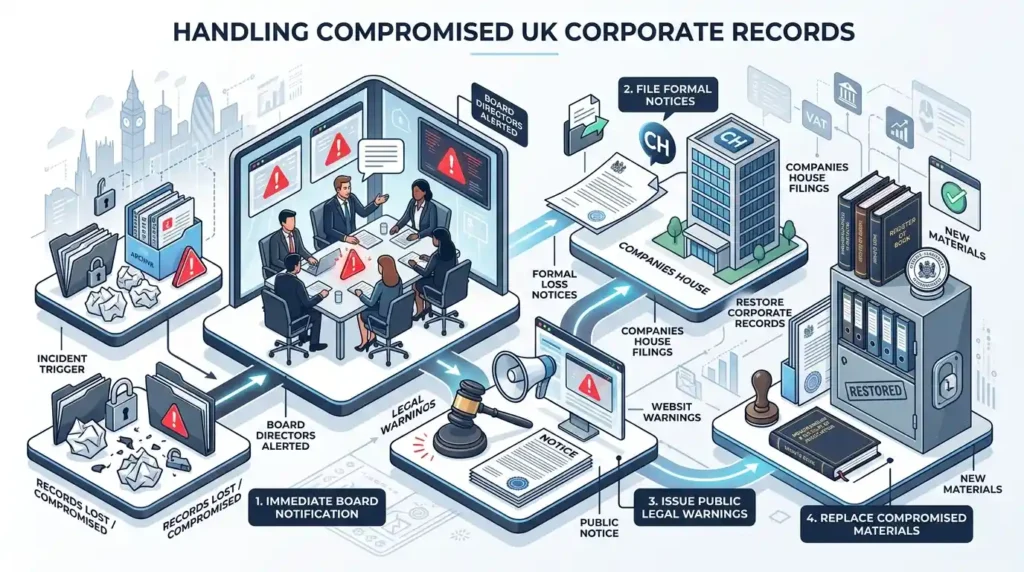
Discovering that a company seal or register is missing or compromised demands swift, decisive corrective action by corporate leadership. Directors must convene an emergency board meeting to document the security breach and pass formal resolutions invalidating the missing items. Informing Companies House immediately prevents fraudulent filings from being processed against the active corporate profile. Organizations must also issue public notices in official gazettes to protect the business against fraudulent contracts executed using the missing seal.
Executing a structured recovery plan minimizes ongoing legal and financial exposure after a security incident. Companies should follow these precise mitigation steps:
Convene an emergency board meeting to formally record the security breach
Notify Companies House immediately regarding missing or stolen statutory books
Publish formal loss notices in the official London Gazette publication
Order replacement seals and register binders to restore secure operation
Frequently Asked Questions
What items are included in a standard corporate Company Pack?
A standard Company Pack provided by Form My Company typically contains bound statutory registers, a metal company seal, and a custom company rubber stamp. These essential physical stationery items enable UK corporate entities to maintain accurate records and execute formal documentation efficiently.
Is a physical company seal legally required for UK businesses?
While the Companies Act 2006 does not make a physical company seal legally mandatory for every UK company, many corporate articles of association still require one for executing deeds and formal documents. Using a professional Company Pack ensures your business retains the necessary tools to meet specific internal governance and execution requirements.
How should a company register and seal be stored securely?
Statutory registers and metal company seals should be stored inside certified fireproof safes with restricted, dual-custody access limited exclusively to authorized directors or company secretaries. Proper physical safeguarding prevents unauthorized personnel from altering shareholder records or executing fraudulent binding agreements.
What should you do if your company register or seal is lost?
If your corporate register or seal is lost or stolen, directors must immediately convene a board meeting, document the security breach, and notify Companies House. Ordering a replacement setup through Form My Company allows businesses to quickly restore secure record-keeping and maintain proper statutory compliance.
How do digital registers compare to traditional paper statutory books?
Digital registers offer enhanced searchability, automated audit trails, and secure cloud encryption, whereas traditional paper books provide tangible legal verification for physical corporate governance. Many UK businesses utilize a comprehensive Company Pack to maintain reliable physical registers alongside their secure electronic records.