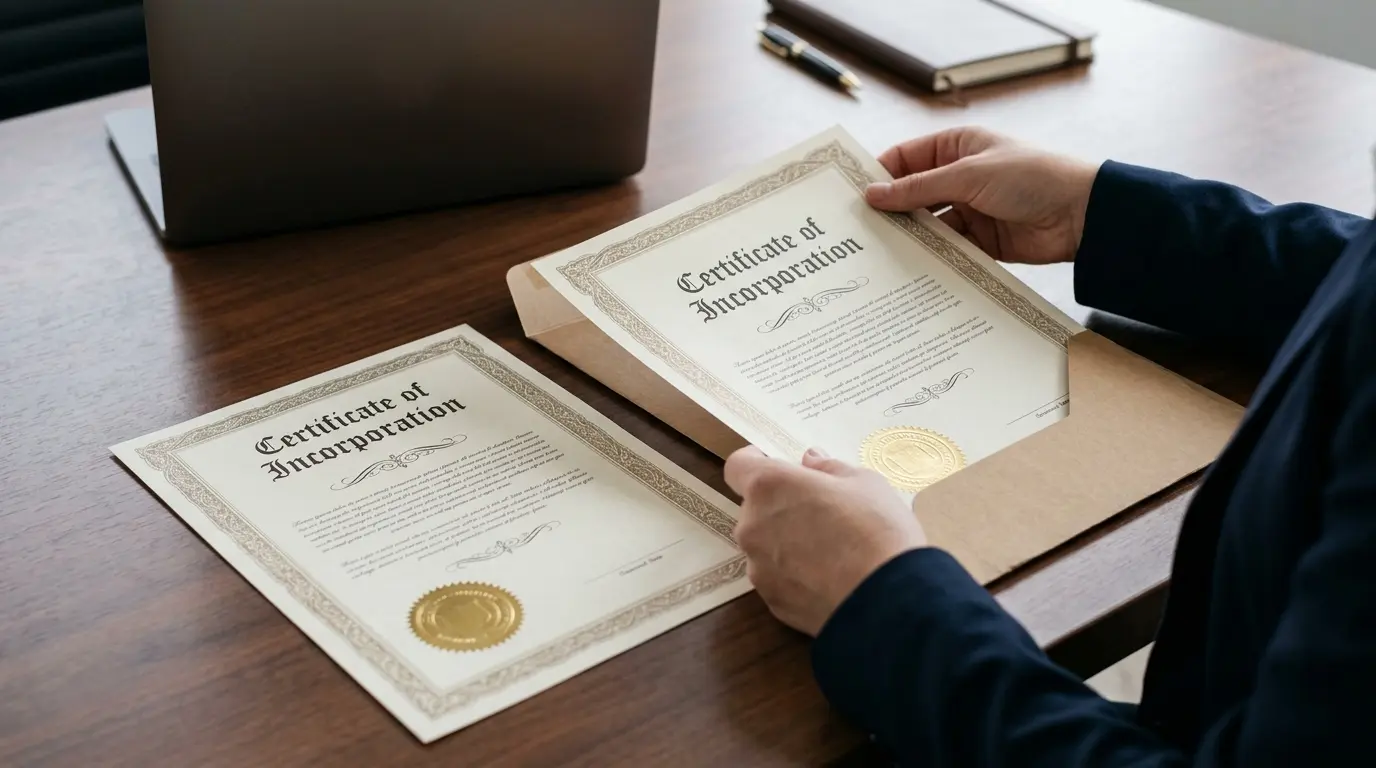
To verify your business, present your Certificate of Incorporation to banks, lenders, or official bodies as legal proof of legal existence. It validates your registered company name, unique company number, incorporation date, and jurisdiction under UK company law.
What Is a Certificate of Incorporation and Why Do Verification Bodies Request It?
A Certificate of Incorporation is a legally binding document issued by Companies House that proves a business exists as a distinct legal entity. Financial institutions and regulatory bodies request it to confirm legitimate registration, corporate structure, and statutory compliance.
Companies House issues this statutory document immediately upon successful corporate registration under the Companies Act 2006. It serves as the official birth certificate of a UK private limited company or public limited company. Financial institutions, merchant processors, local authorities, and commercial landlords request this document during mandatory compliance checks. These organizations must verify that a corporate entity possesses a legal identity independent of its individual directors or shareholders.
Official verification bodies use the document to cross-reference corporate details against the public register. The certificate contains four primary data points: the full registered company name, the unique eight-digit company registration number, the official date of incorporation, and the legal jurisdiction. When financial institutions initiate Anti-Money Laundering procedures, they examine these exact parameters to prevent corporate identity fraud. Obtaining certified business credentials ensures seamless identity validation across banking and corporate compliance workflows.
Which Organizations Require Your Certificate of Incorporation for Business Verification?
Banks, merchant account providers, commercial landlords, insurance underwriters, foreign trade agencies, and government procurement officers require your Certificate of Incorporation. These organizations demand official proof of corporate registration before executing legal contracts, granting credit lines, or issuing operational licenses.
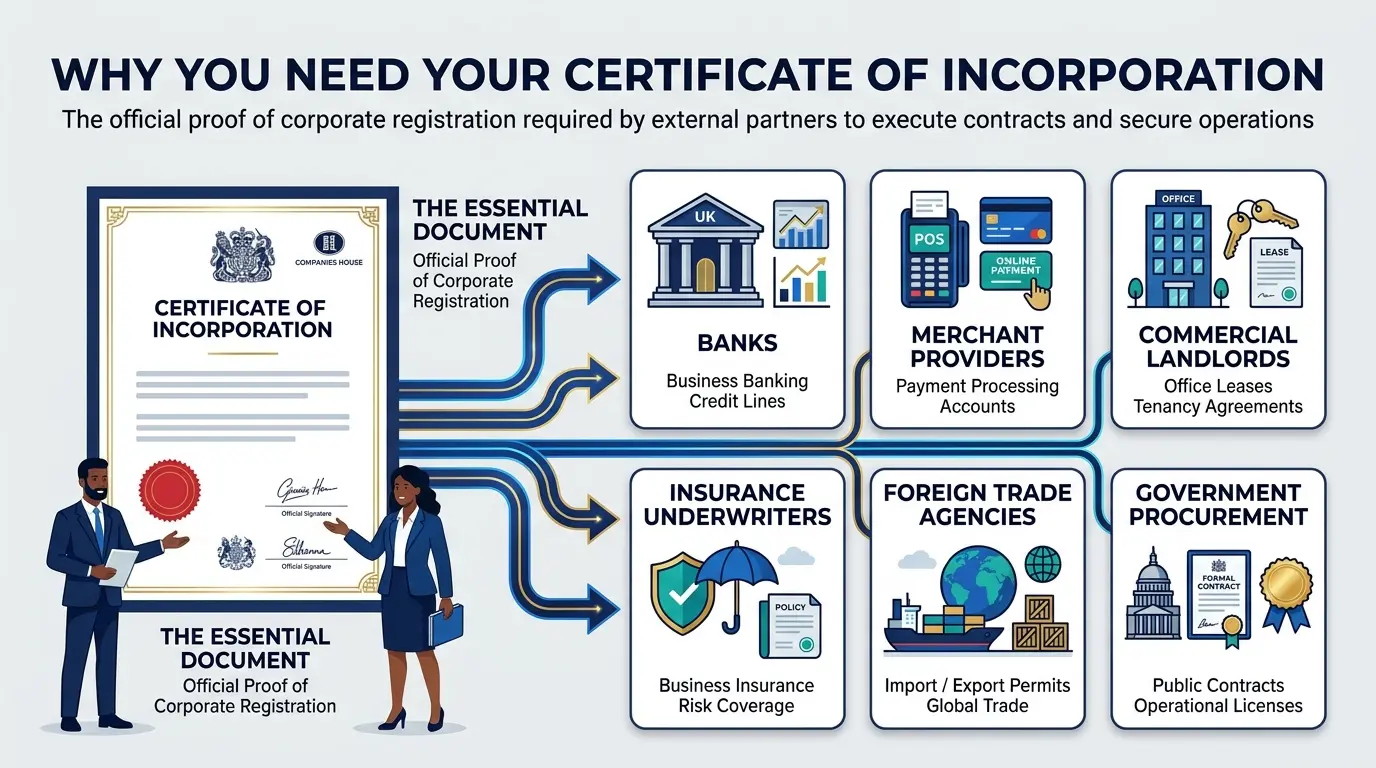
High-street banks and digital challenger banks mandate corporate identity checks prior to opening a commercial business account. Compliance teams cross-reference the details on your official document against director identification records to fulfill Know Your Customer regulations. Merchant account providers, such as payment gateways and card processing vendors, execute identical protocols before authorizing merchant accounts.
Commercial real estate landlords and property management agencies require legal proof of incorporation before drafting commercial lease agreements. Corporate insurance underwriters examine incorporation data to establish risk profiles and confirm legal standing before issuing professional indemnity policies. Furthermore, government procurement departments require validated corporate status when businesses bid for public sector contracts. Companies expanding into international markets must present their incorporation document to foreign embassies, overseas customs authorities, and international trade bodies.
How Do You Use Your Certificate of Incorporation to Open a Business Bank Account?
You use your Certificate of Incorporation to open a business bank account by submitting the document alongside proof of director identity and address details. Banks verify the registration number and company name directly against Companies House records to approve account creation.
UK banking institutions follow strict legal guidelines under the Money Laundering Regulations 2017. When you submit a business bank account application, the bank’s compliance software validates your official certificate details. The bank matches the registered office address and company number against active public filings. Discrepancies between application forms and incorporation records trigger immediate compliance holds.
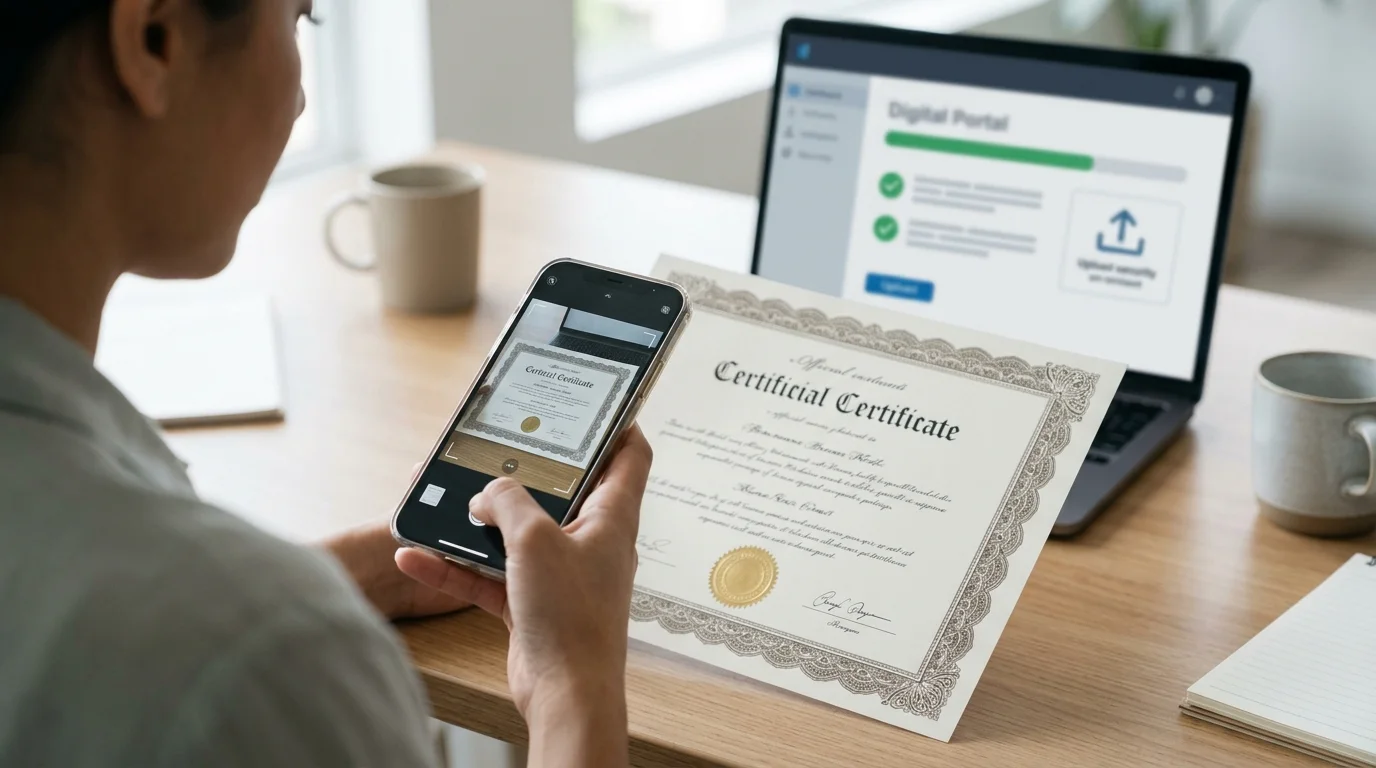
Financial institutions accept digital PDF versions or physical paper copies depending on their internal verification framework. Most digital banking platforms process electronic corporate certificates using automated optical character recognition systems. Traditional brick-and-mortar banks frequently request physical copies or certified true copies authenticated by a qualified solicitor. Once compliance officers confirm the structural details on the certificate, the bank link director profiles to the corporate entity and opens the business account.
How Does the Certificate of Incorporation Validate Your Company Structure to Investors and Lenders?
The Certificate of Incorporation validates company structure by establishing the exact legal form, founding date, and original corporate jurisdiction. Investors and commercial lenders review this primary document during due diligence to confirm legal operating authority and corporate liability structures.
Venture capital firms, angel investors, and commercial lending institutions conduct exhaustive due diligence protocols before allocating capital. The incorporation document provides definitive evidence that the business operates as a limited liability entity rather than a sole trader or unregistered partnership. This distinction protects investor capital by confirming that corporate liabilities remain separate from personal assets.
Lenders evaluate the official date of incorporation to calculate operational history and financial stability. A company with an established registration timeline demonstrates lower operational risk compared to newly incorporated entities. Furthermore, institutional investors review the certificate to confirm the underlying governing framework, such as incorporation under the Companies Act 2006. For comprehensive corporate due diligence, businesses often order Supplementary Company Documents to present a complete profile of corporate standing to external financial partners.
What Steps Should You Take to Verify Your Business for International Contracts and Overseas Trade?
To verify your business internationally, present your Certificate of Incorporation to foreign partners, apply for an Apostille certificate, and submit legal translations. Foreign governments and overseas suppliers validate these authenticated credentials to confirm your legal operating status in the United Kingdom.
International trade agreements require heightened identity verification protocols to satisfy foreign commercial laws. Overseas suppliers, foreign tax authorities, and international clients cannot directly access standard UK public registries with ease. Therefore, UK exporters must submit their primary incorporation document to the Foreign, Commonwealth & Development Office for official legal authentication.
The authentication process adds a Hague Apostille certificate to the reverse side of your incorporation document. This legal attachment proves to international authorities that the underlying UK document is genuine and legally valid. If you trade with non-Hague Convention jurisdictions, the embassy of the destination country must also embassy-attest the document. Businesses entering global markets must maintain accurate documentation to navigate international compliance checks seamlessly.
How Do You Replace a Lost or Damaged Certificate of Incorporation for Verification Purpose?
You replace a lost or damaged Certificate of Incorporation by downloading a free digital copy from Companies House or ordering a physical legal-paper replacement. Official verification processes require a certified paper copy or pristine electronic document to pass compliance checks.
Corporate records can easily become misplaced, physically damaged, or corrupted during routine business administration. Because banks and government agencies reject damaged or unreadable documentation, securing an exact duplicate is essential. Companies House maintains permanent electronic records for every registered company, allowing directors to download a basic PDF replacement through the online portal without paying statutory fees.
However, many formal institutions reject basic printed home copies for high-value transactions, mortgage applications, or apostille services. Third-party verifiers often demand official paper documents printed on heavy security paper featuring statutory crests and official seals. When third-party auditors require physical proof of corporate origin, directors choose to order a legal-paper Certificate of Incorporation from Form My Company to meet strict evidentiary standards.
How Do You Ensure Your Corporate Records Remain Compliant During Identity Audits?
You ensure corporate record compliance during identity audits by filing annual confirmation statements, updating statutory registers immediately, and maintaining accurate director details. Compliance auditors compare active Companies House entries directly against your Certificate of Incorporation.
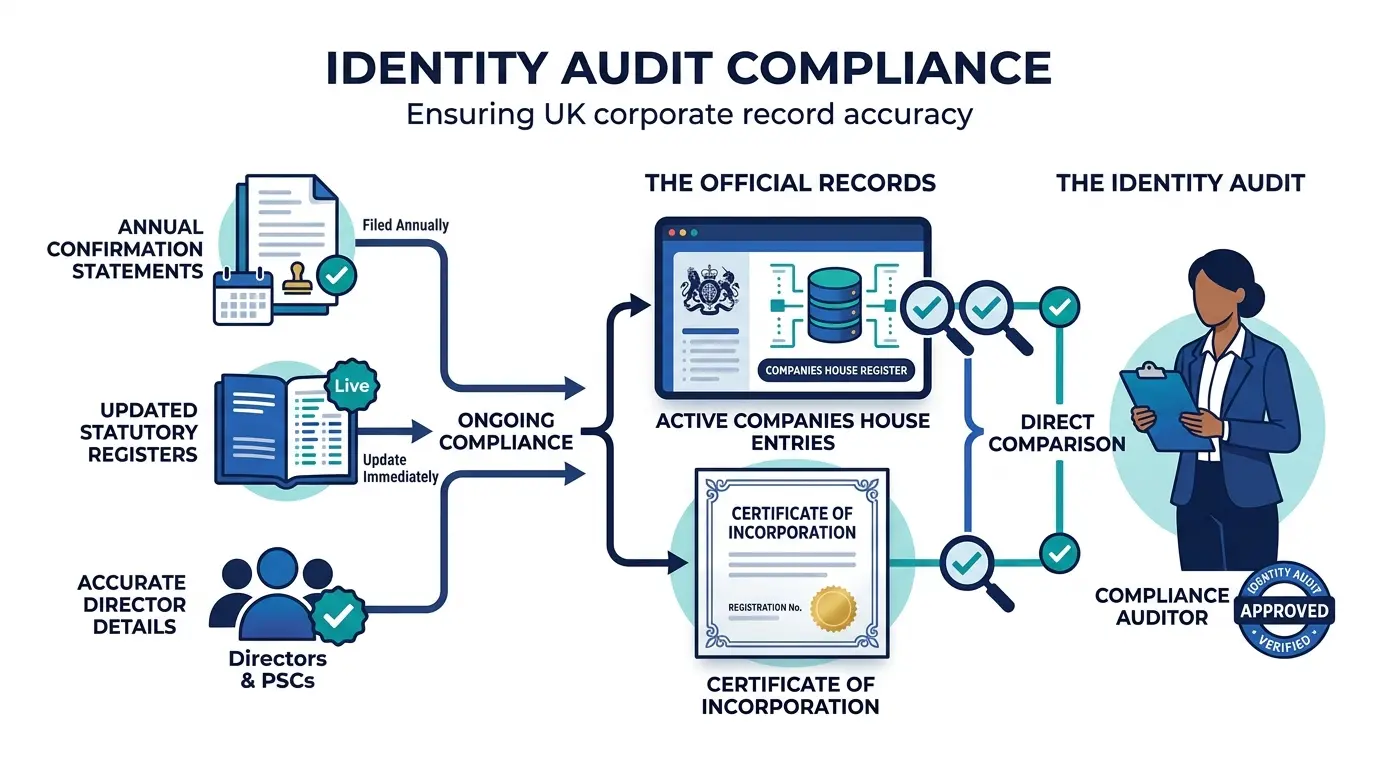
A Certificate of Incorporation proves initial registration, but verification bodies also assess your ongoing legal standing. During corporate identity audits, compliance officers perform secondary checks to confirm that your business remains active on the central register. If a company fails to file annual confirmation statements or accounting records, Companies House initiates strike-off proceedings, rendering the incorporation certificate functionally void for commercial transactions.
Directors must update the official register within 14 days of any internal corporate changes. Three critical updates include changes to registered office addresses, director appointments or resignations, and alterations to Persons with Significant Control. When compliance auditors detect discrepancies between your paper certificate and live digital records, they pause identity verification workflows. Maintaining accurate statutory books ensures seamless validation during routine bank reviews and contract negotiations. For broader guidance on foundational documentation, review our article explaining what a Certificate of Incorporation proves about your business to understand its full regulatory scope.
How Form My Company Supports Your Business Verification Needs
Maintaining authoritative corporate records remains essential for satisfying strict regulatory frameworks, securing commercial financing, and executing enterprise contracts. Form My Company provides complete corporate document solutions designed to streamline identity verification for UK businesses. Whether you require official duplicate credentials, Apostille authentication for overseas trade, or specialized corporate filings, Form My Company delivers fast, legally compliant documentation directly to your organization.
Explore More Supplementary Company Documents Guide,
How to Use Your Articles When Selling or Transferring Shares
How to Present Bound Articles During a Funding Round
Frequently Asked Questions
What are supplementary company documents for a UK business?
Supplementary company documents are official legal certificates and registered corporate records—such as Certificates of Incorporation, Certificates of Good Standing, and Memorandum and Articles of Association—that verify a business’s legal standing. Organizations like banks, investors, and foreign government authorities require these credentials during formal identity and compliance checks. Businesses can obtain official, legally compliant copies directly through Form My Company to satisfy regulatory requirements.
Why do banks and lenders require official supplementary company documents?
Banks and financial institutions require supplementary company documents to fulfill mandatory Anti-Money Laundering (AML) and Know Your Customer (KYC) regulatory protocols. These certified records confirm a company’s active legal existence, registered address, and official director structure before an account can be opened or credit lines approved. Ordering certified document packages from Form My Company ensures financial verification bodies receive accurate, legally recognized documentation.
How do I order a physical Certificate of Incorporation or certified corporate records?
You can order physical legal-paper versions of your Certificate of Incorporation and other supplementary company documents through specialized corporate service providers like Form My Company. Official paper duplicates are printed on high-grade security paper featuring statutory crests required by lenders, courts, and foreign embassies. Once requested, these official documents are authenticated and dispatched directly to your registered business address.
What supplementary documents are needed for international trade and legal authentication?
International trade bodies, overseas suppliers, and foreign governments typically require an authenticated Certificate of Incorporation, Articles of Association, and a Hague Apostille certificate. These supplementary company documents prove that a UK corporate entity operates legally within its home jurisdiction under UK company law. Form My Company assists businesses in securing and apostilling these necessary legal credentials for seamless overseas verification.
How quickly can Form My Company deliver official supplementary company documents?
Form My Company processes and dispatches official supplementary company documents within 24 to 48 hours depending on the specific certificate and authentication tier required. Digital PDF copies are often delivered on the same business day for immediate submission, while official legal-paper duplicates and apostilled documents are sent via tracked post. This rapid turnaround helps businesses meet strict banking, legal, and contractual deadlines without operational delays.