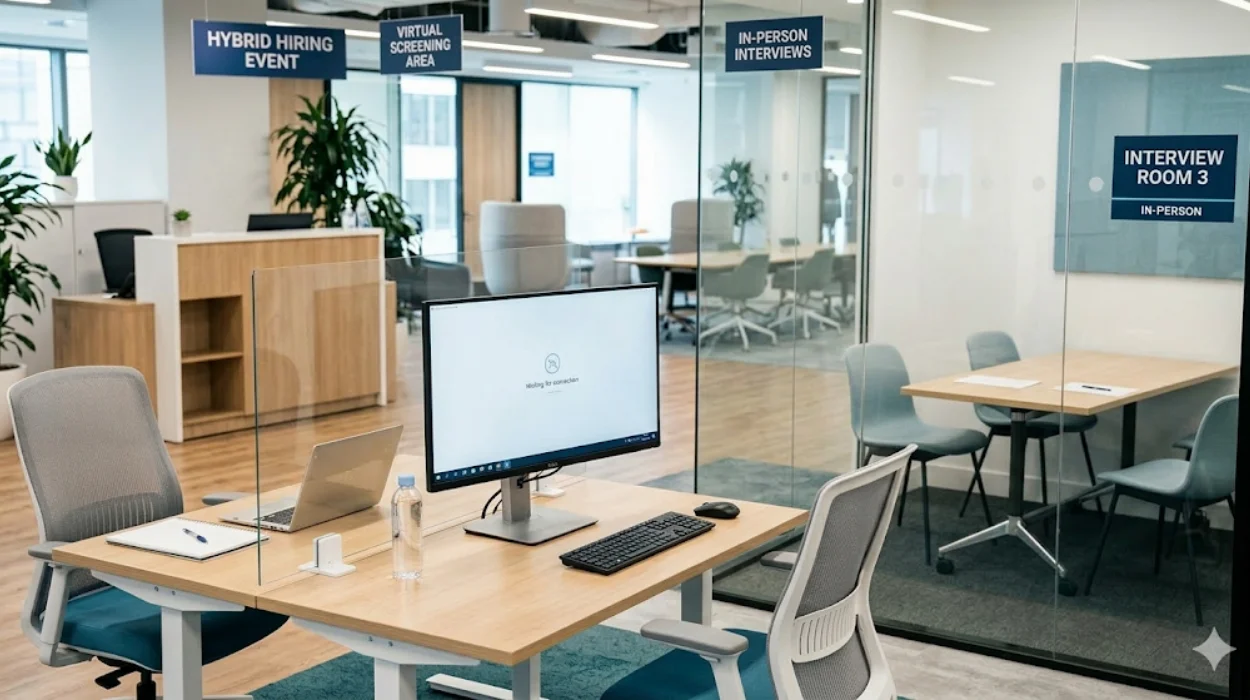
Hybrid hiring combines the efficiency of virtual interviews with the impact of in-person meetings. It allows employers to streamline early screening online, then use professional interview rooms to finalise hiring decisions effectively and confidently.
The Rise of Hybrid Hiring in Modern Recruitment
Recruitment has become a two-stage process. First, virtual tools help companies conduct quick, remote screenings to identify potential fits. Next, shortlisted candidates are invited to in-person interviews where rapport, professionalism, and culture fit are properly assessed. This blend of digital convenience and human contact is defining the future of hiring.
The hybrid hiring model emerged strongly after the pandemic era, when employers realised remote interviews could efficiently reduce time-to-hire but also noticed something was lost when final decisions were based solely on screens. As hybrid work persists, hybrid hiring bridges that gap, creating a more balanced and evidence-based approach.
Why the Best Hires Still Need Room-Based Interviews
Video interviews are ideal for initial assessment: they are time-efficient, inexpensive, and globally accessible. However, the decisive phase of hiring especially for leadership or client-facing positions still benefits deeply from in-person meetings.
Physical interaction allows hiring managers to read subtle cues like body language, interpersonal energy, and confidence that are often missed on camera. Moreover, being in a dedicated, professional space signals seriousness both to the candidate and to senior decision-makers.
Example: A company may conduct first-round Zoom interviews for ten candidates. After narrowing to three finalists, it books professional interview rooms to create a structured, private setting that supports high-quality discussion and evaluation. This final step often determines whether someone has both the skill and the chemistry to join the team.
Virtual Screening: The Efficiency Engine of Hiring
Virtual screening has revolutionised how HR teams handle early recruitment stages. Instead of spending hours on logistics, teams can now:
- Host preliminary interviews via video platforms.
- Evaluate more candidates in less time.
- Record sessions for multi-person review.
- Focus on data-driven decision-making with AI-assisted notes or transcripts.
By filtering effectively online, employers reserve in-person meetings for the most promising applicants. This prevents resource waste and accelerates time-to-hire.
However, virtual screening’s biggest limitation is depth. Candidates may perform well remotely due to prepared answers, technology comfort, or environmental control. That’s why hybrid hiring relies on the in-person validation stage to confirm impressions gathered digitally.
The Case for Controlled, Professional Interview Rooms
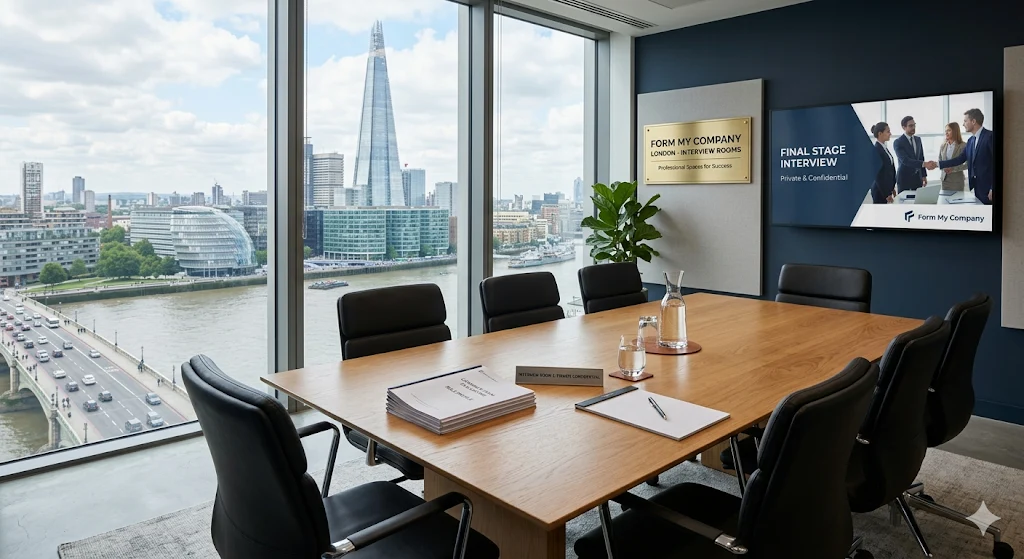
After virtual screenings, transitioning to an in-person setting is crucial for balanced assessment. Professional interview rooms like those available through Form My Company’s Interview Rooms play a pivotal role in maintaining evaluation integrity.
These purpose-designed spaces support the final hiring stages by offering:
- Noise-free, private environments for uninterrupted conversations.
- Neutral, business-standard settings that remove informal bias.
- Reliable technology and infrastructure for hybrid setups when needed.
- A professional impression of your company to high-calibre candidates.
Interview rooms also offer psychological neutrality: candidates aren’t on home ground or in a public setting, allowing fairer assessment of confidence and communication style.
This stage mirrors the insights discussed in the earlier top-of-funnel article, Why In-Person Interviews Still Outperform Zoom for Final Hires, which explained how physical presence enhances decision accuracy in the final rounds.
When to Switch from Virtual to In-Person
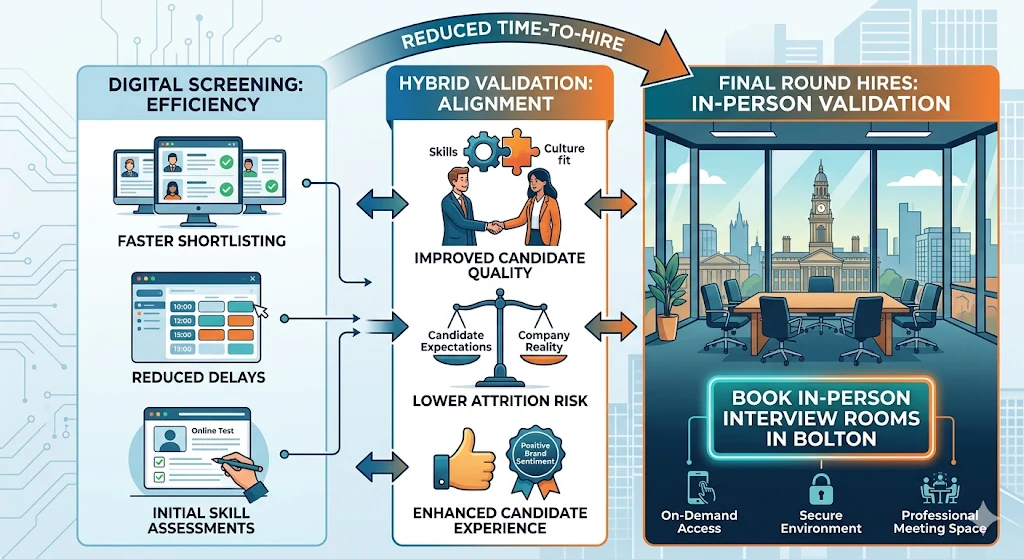
Timing matters in hybrid hiring. Switching too early or too late can undermine the efficiency benefit. Experienced recruiters recommend transitioning to in-person interviews after two digital filters:
- Initial Screening: Video or pre-recorded Q&A to gauge baseline competence.
- Manager Discussion: Live virtual session assessing technical or functional expertise.
- Final Assessment (In-Person): The decisive meeting focused on collaboration, problem-solving, and mutual expectations.
This third stage justifies the use of professional spaces like FMC’s Interview Rooms Service, designed for private and formal hiring sessions.
Here, decision-makers test situational judgment, cultural alignment, and communication criteria nearly impossible to measure conclusively over remote channels.
Hybrid Hiring Across Different Roles
Not all roles require the same balance of virtual and in-person engagement. For instance:
- Tech and back-office roles: May rely more heavily on digital screening, using practical tests and online panels before limited final meetups.
- Sales, management, and client-facing roles: Almost always necessitate face-to-face interviews, where presence, trust, and interaction quality are key.
- Creative and design positions: Often benefit from hybrid portfolio reviews, combining virtual presentations with in-room critique sessions for real-time collaboration.
The adaptability of hybrid hiring makes it versatile across industries yet its success hinges on structured logistical planning and the right physical infrastructure.
The Logistics Challenge: Coordinating Hybrid Interviews
Effective hybrid hiring requires smooth transitions between online scheduling tools and physical room management. Many companies now integrate scheduling platforms with on-site services to minimise friction.
For example, booking interview rooms through Form My Company gives recruiters a ready-to-use, fully equipped space without administrative hassle. FMC’s managed facilities handle setup, reception, and connectivity allowing HR teams to focus solely on candidate evaluation, not coordination.
Additionally, having a consistent environment for final interviews reduces cognitive bias. Candidates are compared under fair and equal conditions, rather than within varied office setups or informal venues.
Enhancing Employer Branding Through Professional Settings
Hybrid hiring is not just about logistics; it’s also a signal of brand professionalism. Conducting final-round interviews in well-appointed rooms demonstrates respect for the candidate’s time and seriousness about the selection process.
Brand reputation influences candidate decision-making, especially in competitive job markets. A company that transitions from virtual screening to professional face-to-face interviews projects stability, organisation, and credibility.
When managed by providers like Form My Company, these environments also extend your corporate image offering the polish of a professional setting even if you don’t maintain permanent office space in that location.
Integrating AI and Analytics into Hybrid Hiring
Recruitment technology now supports hybrid workflows seamlessly. AI-driven applicant tracking systems (ATS) can:
- Analyse virtual interview data for tone, engagement, and consistency.
- Recommend ideal timings for in-person follow-ups.
- Sync candidate information across digital and physical touchpoints.
Yet, while AI improves efficiency, the final decision still benefits from human observation. That’s why hybrid hiring, supported by structured spaces, merges machine efficiency with human discernment.
How Hybrid Hiring Improves Hiring Outcomes
By combining digital efficiency with physical validation, hybrid hiring generates measurable improvements:
- Reduced time-to-hire: Lower scheduling delays and faster shortlists.
- Improved candidate quality: Dual-stage assessments ensure skills and fit align.
- Lower attrition risk: Face-to-face rapport reduces misalignment post-hire.
- Enhanced candidate experience: Professional, well-organised interview flow creates positive brand sentiment.
Such outcomes reflect a mid-funnel strategy prospects (employers) already understand the importance of good hiring but need practical ways to execute it effectively. This is where hybrid hiring backed by secure, on-demand interview room services becomes the competitive differentiator.
Connecting the Funnel: From Insights to Action
While early-stage articles educate audiences about recruitment models, mid-funnel content (like this) guides them toward tangible actions. The next natural step for decision-makers ready to implement hybrid processes is understanding how to operationalise these insights locally.
That’s why dedicated resources such as Book In-Person Interview Rooms in Bolton for Final Round Hires provide commercial guidance for taking the next step from strategy understanding to execution.
A Professional Environment, Delivered by Form My Company
Form My Company supports the hybrid hiring movement by providing flexible interview room services that make the final stage of recruitment both professional and seamless. Each environment is designed to reflect confidentiality, comfort, and corporate readiness helping teams focus on decisions, not distractions.
As businesses keep refining hybrid hiring structures, high-quality physical spaces remain crucial. They ensure that even in a digitised recruitment world, the final choice of who represents your organisation happens face-to-face, in a dedicated, professional environment.
What are interview rooms used for in recruitment?
Interview rooms provide private, professional spaces for conducting candidate interviews, assessments, and meetings. They ensure confidentiality, focus, and a neutral setting where employers can evaluate applicants effectively without workplace distractions.
How do interview rooms from Form My Company support hybrid hiring?
Form My Company’s interview rooms support hybrid hiring by offering dedicated spaces for final-round, in-person interviews after virtual screenings. This setup helps employers validate candidate fit and professionalism in a controlled, face-to-face environment.
What features should a professional interview room include?
A high-quality interview room should include soundproofing, comfortable seating, stable Wi-Fi, and presentation or video facilities. These features help maintain an efficient and confidential interview process that reflects well on both company and candidate.
Can interview rooms be booked for same-day use?
Many providers, including Form My Company, offer flexible booking for interview rooms, often available on the same day. This allows HR teams and hiring managers to schedule in-person sessions quickly as part of fast-moving recruitment timelines.
Why are dedicated interview rooms better than office meeting spaces?
Dedicated interview rooms are designed specifically for recruitment, ensuring privacy, neutrality, and a distraction-free environment. Unlike standard office spaces, they help create a fair and consistent experience for every candidate evaluated.