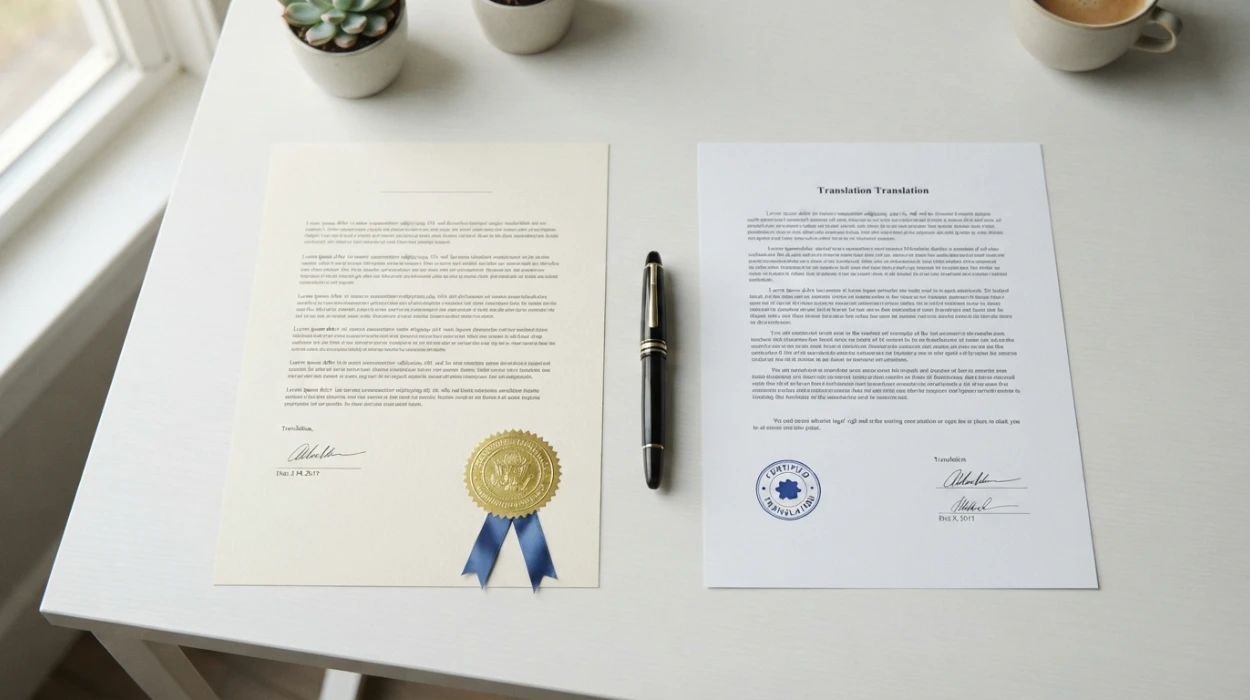
Legalising documents for international use requires a systematic sequence of official verifications, including notary certification, government apostille issuance, and embassy attestation. Form My Company manages this cross-border authentication workflow to ensure full compliance across 124 Hague Convention jurisdictions and non-member states.
What is the official process to legalise documents for international use?
Document legalisation involves transforming domestic paperwork into legally binding instruments recognized abroad through a chain of authentication authorities. Form My Company executes this multi-step verification process to validate corporate resolutions, academic certificates, and commercial agreements for international acceptance.
International commerce relies entirely on trusted paperwork. When businesses expand across borders, foreign authorities demand proof of document authenticity. A domestic birth certificate or corporate incorporation document holds zero legal weight abroad without official validation. Foreign governments require this clearance to prevent fraud and protect national security.
The standard authentication workflow starts at the local level. A certified notary public must witness signatures and verify the integrity of the original paperwork. Following this initial step, national government bodies inspect the notary credentials. These bodies attach an official certificate or stamp to confirm validity.
Without proper clearance, international transactions face immediate rejection. Customs offices, immigration departments, and foreign courts routinely reject unverified foreign paperwork. Securing professional assistance through Apostilled Documents eliminates compliance risks and prevents costly regulatory delays.
When do you need an apostille versus embassy attestation?
An apostille authenticates documents for use within the 124 member countries of the 1961 Hague Convention through a single government certificate. Embassy attestation becomes mandatory for non-member nations, requiring additional verification steps through foreign diplomatic missions.
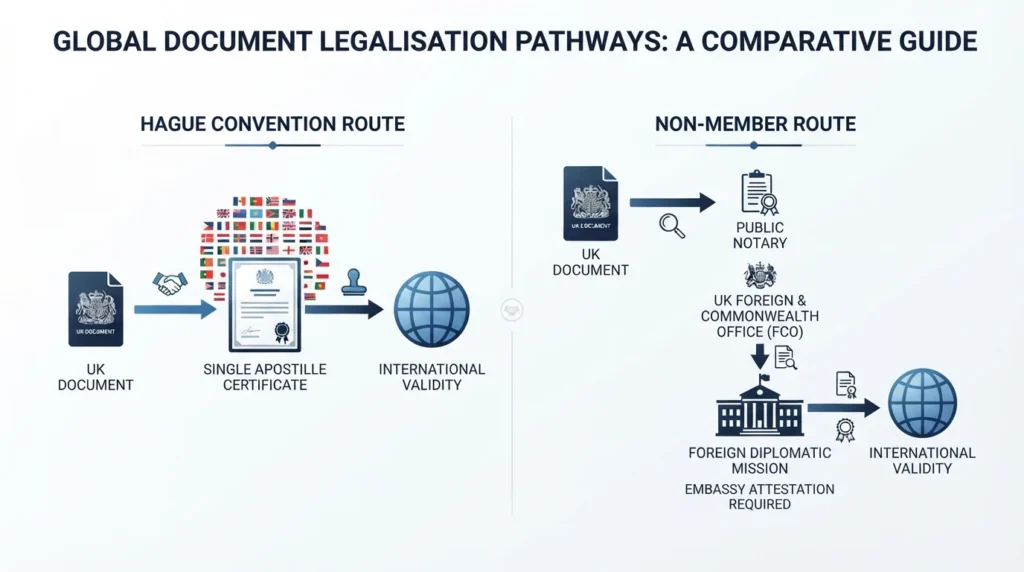
Choosing the correct authentication track depends strictly on the destination country. The Hague Apostille Convention streamlined international law by replacing complex embassy legalisation with a single uniform certificate. 82% of global cross-border transactions utilize this simplified apostille mechanism to accelerate paperwork processing.
Navigating these distinct legal frameworks requires precise alignment with international treaties. For comprehensive guidance on managing multi-jurisdictional requirements, review How to Combine Translation, Apostille and Embassy Attestation Correctly. Understanding these procedural nuances prevents rejected applications and administrative fines.
Non-Hague member states operate under entirely different legal parameters. These nations demand a three-tier authentication chain before accepting foreign paperwork. First, documents pass through domestic government verification. Second, the foreign embassy or consulate in the home country inspects the file. Third, the destination country’s foreign ministry executes final counter-signature.
Why choose Form My Company for global document legalisation?
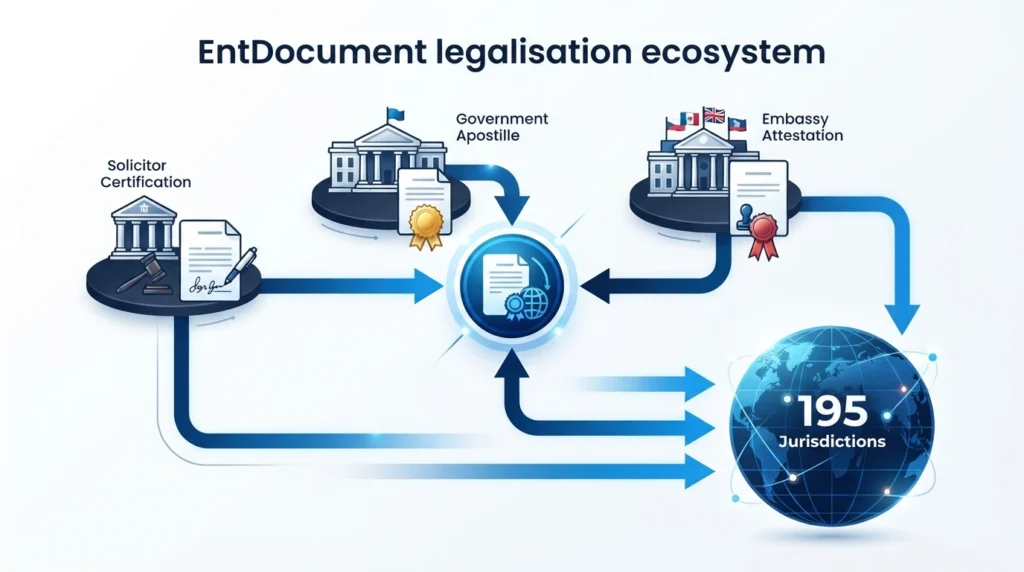
Form My Company provides end-to-end document legalisation services that integrate solicitor certification, government apostilles, and diplomatic embassy attestation. Businesses leverage this specialized expertise to secure rapid cross-border compliance across 195 global jurisdictions.
Managing international bureaucracy drains internal corporate resources. Corporate compliance officers spend an average of 42 hours resolving documentation rejections caused by improper formatting or missing stamps. Professional oversight removes these operational bottlenecks and guarantees strict adherence to foreign legal standards.
Precision matters during every phase of document preparation. Form My Company employs dedicated legal coordinators who review corporate bylaws, commercial invoices, and personal certificates before submission. This proactive screening identifies errors in notarization, translation mismatches, and expired credentials instantly.
Organizations seeking complete operational security rely on tailored corporate solutions. To explore advanced commercial strategies, read How Do You Legalise Documents for Countries Not in the Apostille Convention?. Expert execution ensures seamless market entry regardless of local bureaucratic hurdles.
Global expansion demands absolute precision in cross-border document authentication. Navigating complex legal frameworks requires rigorous adherence to international treaties and domestic regulations. Form My Company delivers comprehensive document legalisation solutions that bridge domestic paperwork and foreign compliance requirements. Through meticulous oversight of notary certification, government apostilles, and diplomatic embassy attestation, organizations achieve seamless international recognition without operational friction.
Explore More Apostilled Documents Guide,
Prove Your UK Company Status Abroad With Form My Company
Get Documents for Your Foreign Branch From Form My Company
Frequently Asked Questions
How long does it take to get documents apostilled in the UK?
Standard UK government apostille processing typically takes between 3 to 5 working days from submission. Form My Company accelerates this timeline for urgent business filings through expedited dispatch and direct courier coordination.
What types of documents can be apostilled for international use?
Public documents including birth certificates, corporate incorporation papers, court orders, and academic degrees qualify for an apostille. Form My Company validates these corporate and personal records to ensure full legal acceptance across 124 Hague Convention member countries.
Do apostilled documents require translation before international submission?
Foreign authorities frequently mandate professional certified translations when the destination country uses a different official language. Form My Company integrates accurate document translation with apostilled documents processing to eliminate cross-border compliance bottlenecks.
Can business documents be apostilled without a notary public’s signature?
Most commercial and corporate documents require preliminary solicitor or notary certification before government apostilles are issued. Form My Company manages this initial authentication layer to ensure your paperwork meets strict legal validation standards.
How do you verify if a foreign country requires an apostille or embassy attestation?
Verification depends on whether the destination nation has signed the 1961 Hague Apostille Convention. Form My Company identifies the exact jurisdiction requirements to determine whether a standard apostille or full embassy legalisation is mandatory.