
Could a business creditor come after your home or savings? It depends on how your business is structured and what you’ve agreed to personally. If you’re researching protecting personal assets from business debts UK, the key point is simple: limited liability can reduce your exposure, but it doesn’t remove every route to personal responsibility.
It’s understandable to assume that forming a limited company puts a firm barrier between business debts and your personal finances. In practice, personal guarantees, certain director-related liabilities and financial distress can change the picture. Sole traders also face a different level of personal exposure from limited companies and limited liability partnerships (LLPs).
This guide explains how business and personal liability differ, compares common UK structures and sets out situations where personal assets may still be at risk. It also covers practical safeguards to consider before problems develop, including separating business and personal finances and responding promptly to financial difficulty. If you’re considering incorporation, understanding both the protection and its limits can help you make an informed decision about the structure and the administrative steps involved.
Key Takeaways
- Understand what personal liability means and which business debts could put your own assets at risk.
- See why a personal guarantee can create an obligation separate from debts owed by the company, and why its terms matter.
- Compare sole trader, limited company and LLP structures to understand how each affects personal exposure.
- Use practical steps to reduce risk, including separating finances, keeping clear records and documenting company decisions.
- Learn how protecting personal assets from business debts UK starts with choosing a suitable structure while recognising that incorporation isn’t a guarantee against personal liability.
Protecting personal assets from business debts in the UK: what is actually at risk?
A business failing doesn’t automatically make every owner personally liable for what it owes. The answer depends on the business structure and the legal basis of the creditor’s claim. Personal liability means an individual is legally responsible for a debt, which may put their own money or property within reach of a creditor’s claim.
For example, if a limited company buys stock on credit in its own name, the supplier’s claim is generally against the company. That differs from an owner’s personal credit card debt, which is owed by the individual. The distinction matters: a company debt belongs to the company, whilst a personal debt belongs to the individual who owes it. This guide provides general information, not advice tailored to your circumstances.
What does limited liability mean in practice?
A limited company is a separate legal person from its shareholders. It can own assets, enter contracts and owe money in its own name. Limited liability describes the general principle that a shareholder’s responsibility for company debts is limited, rather than automatically extending to all their personal wealth.
For a shareholder, the usual limit is any amount still unpaid on their shares. If the shares are fully paid, they generally won’t have to pay company creditors simply because the company cannot meet its bills. That separation is a key reason business owners consider incorporation when assessing protecting personal assets from business debts UK.
Limited liability isn’t an absolute shield, however. It doesn’t erase obligations an individual accepts personally or prevent liability where a separate legal basis applies. A company’s debts and a director’s or shareholder’s own responsibilities must be considered separately. The company structure alone doesn’t answer every question.
Which personal assets might cause concern?
Common concerns include personal savings, a home and a share in jointly held property. Whether a creditor can pursue an individual’s assets depends on who owes the debt, the agreements involved and the legal basis for the claim. Owning or running a company does not, by itself, make every company creditor a personal creditor.
For instance, if a company owes rent under a lease signed only in the company’s name, the landlord’s claim is generally against the company. If an owner has separately agreed to be responsible for that obligation, the position may differ. The wording and scope of any personal commitment matter, as can the circumstances surrounding the debt.
Joint ownership also needs careful consideration. A claim against one person doesn’t automatically mean another owner is personally liable for the same debt, but the debtor’s interest in jointly held property may be relevant. Don’t assume either that the whole property is exposed or that joint ownership makes it untouchable. The outcome depends on the applicable rules and details of the claim.
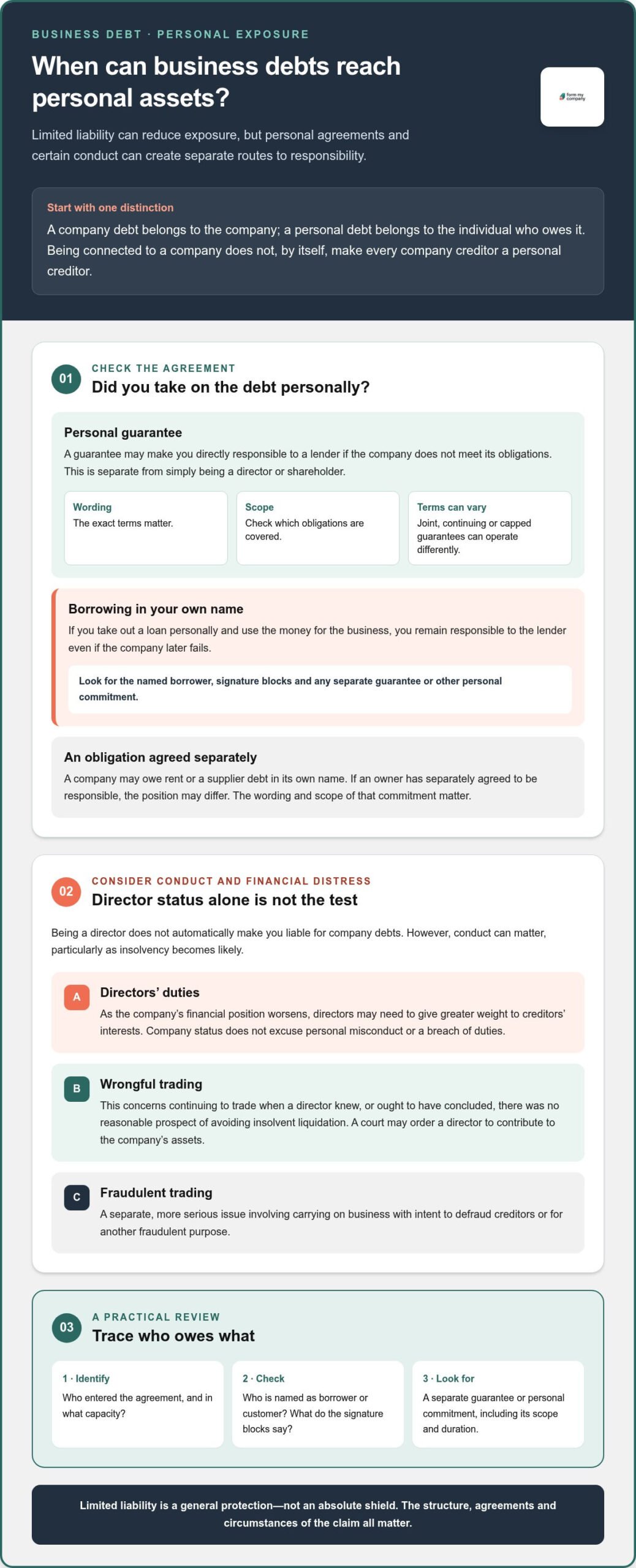
Start by identifying who entered the agreement and in what capacity. Check the named borrower or customer, the signature blocks and any separate guarantee. This helps distinguish company obligations from personal ones before you assess the protections and exceptions that apply to your circumstances.
When can business debts reach personal assets despite limited liability?
Limited liability doesn’t cancel obligations you accept personally. A company may owe a supplier or lender in its own name, but a separate agreement or specific conduct can create personal exposure for an owner or director. The key question is not simply whether you’re connected to the company, but what you agreed to and what happened.
Personal guarantees and personal borrowing
Signing a personal guarantee may make you directly responsible to a lender if the company doesn’t meet its obligations. That’s different from being a director or shareholder: those roles alone don’t usually make you personally liable for ordinary company debts. A guarantee’s wording matters. Joint, continuing or capped guarantees can operate differently, so don’t assume a cap, shared responsibility or end date without understanding the document.
Director conduct and insolvency-related risks
Director status doesn’t automatically make you liable for company debts. However, conduct can matter, particularly as insolvency becomes likely. Directors have duties, and they may need to give greater weight to creditors’ interests as the company’s financial position worsens. Company status does not excuse personal misconduct or a breach of duties.
Wrongful trading concerns continuing to trade when a director knew or ought to have concluded there was no reasonable prospect of avoiding insolvent liquidation. A court may order a director to contribute to the company’s assets. Fraudulent trading is a separate, more serious issue involving carrying on business with intent to defraud creditors or for another fraudulent purpose; it can lead to personal liability and criminal consequences. Misfeasance can involve misuse of company property or breach of duty, and may also result in a court order requiring a director to repay or contribute.
These are not automatic consequences of business failure. The facts, evidence and applicable insolvency rules matter. If the company is struggling to pay debts, keep accurate records, document decisions and seek appropriate professional advice promptly rather than assuming that trading on will solve the problem.
Tax can create another potential route: HMRC may issue Personal Liability Notices to directors for certain unpaid deductions, including PAYE, National Insurance contributions or Construction Industry Scheme deductions, where the relevant conditions are met. Insolvency procedures and terminology can differ across the UK, so check current guidance for the relevant jurisdiction before acting. GOV.UK explains the basics of limited companies and personal asset protection.
Understanding these exceptions is central to protecting personal assets from business debts UK. If you’re weighing incorporation, explore company formation support alongside your separate decisions about structure and personal commitments.
Sole trader, limited company or LLP: which structure changes personal exposure?
Your business structure affects who is responsible when debts arise. A sole trader and their business are not separate legal persons, so business debts are generally the owner’s personal responsibility. A limited company and an LLP are separate legal entities, creating a different starting point, but neither structure removes every route to personal liability.
Use this comparison to understand the broad distinctions. The details of a contract, personal commitments and individual conduct can change the outcome.
| Structure | Who is generally liable for business debts? | Typical separation and key exceptions |
|---|---|---|
| Sole trader | The owner personally | No legal separation between owner and business. Personal assets may be exposed to business creditors. |
| Limited company | The company | Separate legal entity. Shareholder liability is generally limited to any unpaid amount on their shares, but guarantees, personal misconduct or breaches of duty may create personal exposure. |
| LLP | The LLP | Separate legal entity. Members generally benefit from limited liability, subject to personal guarantees, their own conduct and applicable legal duties. |
Sole trader: straightforward structure, direct personal exposure
A sole trader can run a business without creating a separate legal person, which can make the structure simpler to operate. The trade-off is direct personal exposure: if the business cannot pay a supplier, the owner is generally responsible for the debt. Keeping a separate business bank account and clear records can make it easier to track income, spending and tax, but it doesn’t create a legal boundary between business and personal assets.
Limited company or LLP: separation with important qualifications
A limited company has its own legal identity, while an LLP is a separate body corporate from its members. In each case, the entity generally owes its own debts, and owners or members aren’t automatically liable for them solely because of their role. But personal guarantees, personal wrongdoing and relevant legal duties can affect the position. These structures also bring administration and compliance responsibilities, such as maintaining records and meeting filing obligations.
There isn’t one universally safest option. Consider how you’ll trade, whether you’ll work alone or with others, how you plan to share ownership, and whether borrowing may involve personal commitments. A sole trader structure may suit a straightforward solo business, while a company or LLP may better fit other ownership or trading needs. Each choice comes with different responsibilities as well as different liability implications.
Before deciding, compare the structures against your actual plans rather than relying on the label alone. GOV.UK’s guide to choosing a business structure in the UK outlines the main options. Understanding these distinctions is a practical first step in protecting personal assets from business debts UK, but the right structure depends on your circumstances.
Practical steps to reduce personal exposure to business debt
Good habits won’t erase a personal guarantee or prevent every liability, but they can help you spot problems early and make better-informed decisions. Use this checklist to strengthen your approach to protecting personal assets from business debts UK.
Build sound financial and administrative habits
- Keep company and personal finances separate. Use company accounts for company income and spending. Record any money you put into or take out of the business correctly, rather than treating company funds as your own.
- Keep records current. Maintain accurate accounts, contracts, invoices and evidence of payments. Up-to-date records make it easier to understand what the business owes, what is due and when.
- Monitor cash flow and overdue liabilities. Review expected income alongside upcoming payments. A cash-flow forecast can help reveal a shortfall early, before missed payments become a pattern.
- Document important company decisions. Record what was decided, when and why, particularly if the company is under financial pressure. This supports clear oversight and helps show how directors considered the company’s position.
- Read borrowing documents before signing. Check whether you’re borrowing personally or on the company’s behalf. Identify any guarantee, the obligations it covers and whether it is capped, joint or continuing. Don’t assume that your role as director alone tells you who owes the lender.
- Review insurance for specific risks. Business insurance may respond to risks described in its policy, subject to its terms and exclusions. It doesn’t automatically pay every company debt or release you from a personal guarantee, so understand what the cover does and doesn’t address.
Respond early when the business struggles to pay
Take persistent cash-flow pressure seriously. Warning signs include overdue tax, rent or supplier payments, repeated missed payment dates, and difficulty meeting liabilities as they fall due. Don’t wait for a formal insolvency process to consider what the figures are telling you.
If the company may be insolvent, directors should take prompt, informed steps. Get qualified insolvency or legal advice, keep financial records available and document decisions as the situation develops. The right course depends on the company’s circumstances, so avoid relying on a general checklist as a substitute for advice specific to the business.
Don’t transfer company assets to yourself, relatives or another business to put them beyond creditors’ reach. Such steps can create further legal risks and may be challenged. Before selling or moving assets during financial distress, seek appropriate advice and keep a clear record of the reasons and terms.
These practices won’t guarantee that personal assets are protected, but they can help you understand obligations and act responsibly before pressure escalates. If you’re considering a separate legal structure, explore company formation options as an administrative step, while assessing the structure’s limits and responsibilities.
Choose a suitable UK structure and take the next step with confidence
Choose a business structure by looking beyond the level of liability protection. Consider who will own and run the business, how it will trade, whether it may need to borrow, and what administration you can manage. These factors help you compare options realistically. Incorporation can create a separate legal entity, but it doesn’t guarantee that your personal assets will be protected from every business-related claim.
Prepare before registering a business
Before you register, map out the essentials. Who will own the business? What activities will it carry out? Will you need borrowing, and could a lender ask you to provide a personal guarantee? Thinking through these questions can help you identify personal commitments and administrative responsibilities before you choose an entity.
Keep the structure decision separate from related risk-management choices. Insurance, contract terms and sound financial controls may each matter, but none is a substitute for understanding the structure itself. If you’re dealing with significant personal assets, complex ownership or substantial liabilities, consider tailored legal or accounting advice alongside general information. The right approach depends on your circumstances.
It can also help to list the practical requirements you’ll need to manage, such as maintaining business records and meeting filing obligations. A structure that suits your ownership and trading plans should also be one whose ongoing responsibilities you understand.
Move from research to company formation
Once you’ve compared the options, company formation can be the administrative next step. Form My Company provides formation support for limited companies, LLPs and PLCs, with a range of package options.
Keep the distinction clear: formation establishes the relevant legal entity, but it doesn’t determine every future liability or remove the effect of personal guarantees, conduct or applicable duties. Review borrowing documents separately, put appropriate financial controls in place and seek advice on questions that depend on your individual circumstances.
If you’ve decided a company or LLP fits your plans, compare the available company formation packages as a practical next step. Take time to understand the structure and responsibilities you’re choosing. That careful preparation is central to protecting personal assets from business debts UK, without treating incorporation as a guarantee of protection.
Make your next business decision with clarity
If you’re ready to take the administrative step of setting up a company or LLP, Form My Company offers formation support for limited companies, LLPs and PLCs. Package options include Digital, Digital & Print and Fully Inclusive. Formation helps establish the chosen entity, but it isn’t a guarantee against personal liability.
Explore company formation options and take your next step with a clearer plan. With the right preparation, you can move forward with confidence.
Frequently Asked Questions
Can a business creditor take money from a director’s personal bank account?
Is a director’s spouse responsible for the company’s debts?
No, marriage alone doesn’t make a spouse liable for company borrowing. They could have a separate obligation if, for example, they jointly borrowed money or signed a guarantee. Jointly owned property can raise separate questions about each person’s interest and the creditor’s rights; it doesn’t automatically make the spouse responsible for the debt. If a claim is possible, avoid transferring or changing ownership of assets without advice. The ownership documents and any agreements are important.
Can company debts affect a director’s personal credit score?
Company debts don’t usually appear as the director’s personal debts merely because they hold office. A personal guarantee, personal borrowing, or a judgment against the director could affect their own credit position. For example, if the director signs a guarantee for a company credit facility and becomes liable under it, the consequences may extend beyond the company’s records. Check the finance agreement and relevant credit report, as reporting practices and lenders’ decisions can vary.
Are company debts inherited when a director dies?
Can HMRC make a director personally responsible for company tax debts?
Unpaid company tax doesn’t automatically make a director personally liable. However, HMRC may use Personal Liability Notices in certain circumstances involving unpaid PAYE, National Insurance contributions or Construction Industry Scheme deductions. The rules and facts matter, and this isn’t a complete list of possible routes to liability. If the company can’t pay tax, check current HMRC guidance and get tailored advice quickly. Keep tax records and correspondence organised so the company’s position can be assessed accurately.
Does business insurance cover personal guarantees?
Don’t assume it does. A business insurance policy may cover particular insured events, but that doesn’t automatically repay a loan or release a guarantor from their agreement with a lender. The policy wording, exclusions and limits determine what may be covered. Read the insurance policy alongside the guarantee, and distinguish any insurance protection from the lender’s rights. If a guarantee has been called upon or the business is under financial pressure, obtain independent professional advice before deciding how to respond.