
Could registering for VAT affect your business before you reach the threshold? For UK businesses, compulsory vat registration generally applies when VAT-taxable turnover goes over £90,000 in a rolling 12-month period. But turnover isn’t the only consideration: voluntary registration may suit some businesses, while the effect on prices, cash flow and customers also deserves attention.
If you’re unsure whether to register, you’re not alone. The rules can feel complicated, and getting the timing wrong or overlooking what changes afterwards can add pressure. This guide explains when registration is compulsory or voluntary, which deadlines to watch and how VAT may affect sales and business finances.
You’ll also learn what to prepare, including digital records, VAT returns and the information needed to apply. Whether you’re starting a business or your turnover is growing, you’ll have a clearer route to your next step, including administrative support through Form My Company’s VAT Registration Service.
Key Takeaways
- Track VAT-taxable turnover across each rolling 12-month period to spot when compulsory registration may apply.
- Understand how vat registration can affect pricing, invoices, customer conversations and day-to-day administration.
- Weigh the potential to reclaim VAT on eligible purchases against the extra record-keeping and return-filing responsibilities.
- Organise your business details, taxable activity and turnover information before preparing to register.
- Use Form My Company’s registration assistance when you’re ready to take the next step.
VAT registration in the UK: when it becomes relevant to your business
VAT registration means telling HMRC that your business is accountable for VAT on its taxable sales. Once registered, a business generally charges VAT where it applies and accounts for it to HMRC. Start by looking at what you sell and its value, not your profit or the money passing through your bank account.
For most UK-established businesses, compulsory registration is triggered by either of two tests: taxable turnover goes over the threshold in a rolling 12-month period, or you expect it to exceed the threshold in the next 30 days alone. These tests work differently, so monitor both as sales grow. The rules can also depend on whether your supplies are taxable and where your business is established. Overseas businesses making taxable supplies in the UK may face different registration requirements, so seek specialist advice if your circumstances are complex.
How the VAT registration threshold applies
HMRC’s current compulsory VAT registration threshold is £90,000. Taxable turnover is the value of sales that count towards VAT, including zero-rated supplies. Exempt supplies are generally excluded. It isn’t your profit, and it may not match total income if that includes exempt or non-business income.
For the rolling-period test, review each month’s taxable sales alongside the preceding 11 months. Don’t assess turnover only by your financial year or tax year: a business can cross the threshold part-way through either. For example, a sharp rise in summer sales could take your latest 12-month total over the threshold even if your full-year forecast remains below it.
The separate forward-looking test applies if you expect taxable turnover to exceed £90,000 in the next 30 days alone, for example, after securing a large contract. Check HMRC’s notification deadline and effective registration date as soon as the trigger applies. Don’t wait for the money to arrive or for the rolling-period test to catch up. After registration, HMRC issues a VAT number, also known as a VAT identification number, for use in relevant business transactions.
When voluntary registration may be worth considering
A business making taxable supplies can generally choose to register before reaching the compulsory threshold. Whether it makes commercial sense depends on your customers, costs and capacity to handle VAT administration.
- Customer mix: If you mainly sell to VAT-registered businesses, they may be able to reclaim VAT you charge, subject to the rules. If you sell to consumers, VAT may affect the price they pay or the amount you keep if you hold prices steady.
- Purchases: Registration may allow recovery of VAT on eligible business costs, but not every purchase qualifies, and recovery isn’t automatically greater than the VAT you’ll owe.
- Administration: Consider whether you can maintain suitable records, issue VAT invoices where required and file returns on time.
Voluntary registration isn’t a guaranteed saving or a mark of business readiness. Compare likely VAT on sales and purchases with the practical workload, then decide whether it fits your business. If you’ve concluded it’s appropriate, Form My Company offers a VAT registration assistance service.
What changes after VAT registration: prices, records and returns
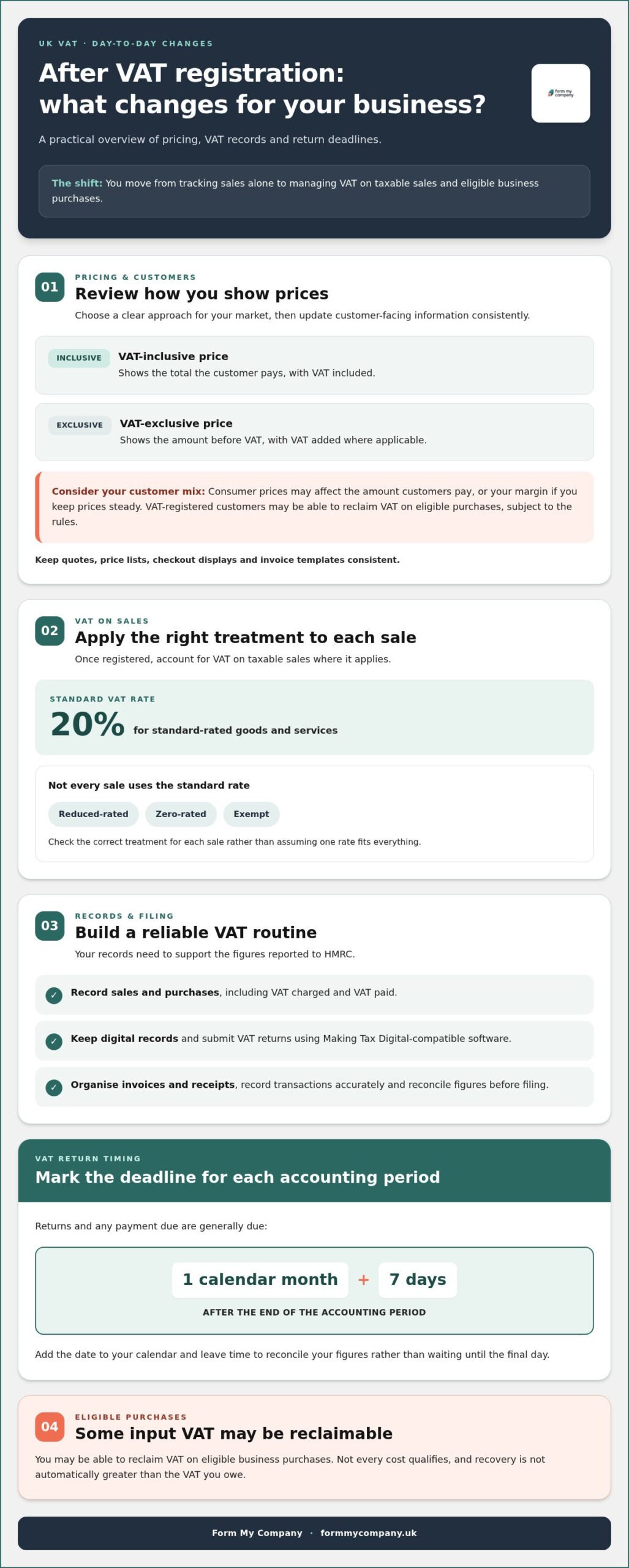
Registration changes more than the details on your invoices. You’ll need to account for VAT on taxable sales, keep records that support your figures and report to HMRC through regular VAT returns. In practice, you move from tracking sales alone to managing VAT on sales and eligible business purchases.
Check the official UK government guidance on VAT registration for the rules that apply to your circumstances. The standard VAT rate is 20%, although some goods and services are reduced-rated, zero-rated or exempt. Apply the correct treatment to each sale rather than assuming one rate fits everything.
Pricing and customer impact after registration
Review how you display prices before updating your systems. A VAT-inclusive price shows the total the customer pays, with VAT included. A VAT-exclusive price shows the amount before VAT, with VAT added where applicable. Choose an approach that fits your market and customer expectations; neither format is automatically better.
A business selling mainly to consumers may need to consider how adding VAT affects the final price, or its margin if it keeps the advertised price unchanged. A business selling to VAT-registered customers may find those customers can reclaim VAT on eligible purchases, subject to the rules. Either way, explain changes clearly and update quotes, price lists, checkout displays and invoice templates consistently.
VAT returns, records and Making Tax Digital
You may also be able to reclaim input VAT on eligible business purchases. This isn’t an automatic refund on every cost: the purchase must meet the rules, and you’ll need suitable evidence, such as a valid VAT invoice where required. Keep purchase documents organised and check eligibility before including amounts in a return.
These recurring tasks are part of vat registration, so plan for them alongside any price or system changes. If you’ve decided to register and want help with the administrative step, Form My Company offers VAT registration assistance.
Voluntary VAT registration or waiting: compare the business trade-offs
Forming a company doesn’t automatically mean you must register for VAT. A new business can usually wait if it hasn’t met a compulsory registration test, or choose voluntary registration if eligible. The decision isn’t simply about looking established: weigh the costs, customer expectations and workload against the potential to recover VAT on qualifying purchases.
Use this comparison to frame the decision. The right answer depends on your business model, not a rule that applies equally to every founder.
Eligibility: Compulsory registration applies when the relevant turnover test is met. Below that point, a business making eligible taxable supplies may be able to register voluntarily. Check the current HMRC rules for your circumstances.
Administration: Registration means taking on VAT records, returns and digital filing responsibilities. Waiting avoids those additional tasks for now, but doesn’t remove the need to monitor turnover and register if a compulsory test is later met.
Customer mix: If you mainly sell to VAT-registered businesses, they may be able to reclaim VAT on eligible purchases, subject to the rules. If you mainly sell to consumers, VAT may affect the price they pay or your margin if you keep prices unchanged.
Input VAT recovery: Registration may allow you to recover VAT on eligible business purchases, with the right evidence. The amount recoverable and the VAT due on sales both matter. Don’t assume one will outweigh the other.
Reasons a business might register voluntarily
Voluntary vat registration may suit a business whose customers are mostly VAT-registered and expect VAT invoices as part of their usual purchasing process. It may also be relevant if the business has substantial eligible costs with VAT that it could potentially recover. The result depends on the purchases and available evidence, so assess actual figures rather than assuming registration will create a saving.
Reasons a business might wait
Waiting may be practical if most customers are consumers, taxable sales remain below the compulsory trigger and the business would need to absorb VAT within existing prices. It can also avoid return and record-keeping administration while the business is small. But keep monitoring turnover and be ready to act if the test applies.
Write down your decision using current sales, likely customers, relevant purchase costs and forecast activity. Review it when those facts change. HMRC’s guidance on VAT returns after registration helps you understand the reporting commitment before opting in. If you decide to proceed, Form My Company provides VAT registration assistance.
Prepare for VAT registration: information and decisions to organise
Preparing before you apply can make the process easier and help you plan how to manage VAT. Bring together your business identity, information about your taxable activity and records supporting your turnover figures. This is useful whether you’re a new founder or registering as sales grow.
Organise the business and turnover details
Start by confirming which legal entity makes the taxable supplies. Make sure the business name and contact details you intend to use are consistent with its records. Depending on your circumstances, application information may include your business structure, contact details, bank account details and turnover figures. A limited company may also need its company registration number and Unique Taxpayer Reference (UTR).
Keep relevant information together:
- Monthly sales figures and the calculation of taxable turnover for the relevant period.
- Details of the goods or services supplied, including whether different VAT treatments may apply.
- Supporting sales records, such as invoices and accounting reports, so you can check your figures.
- Business identity and contact details, plus company identifiers where relevant.
Don’t assume all income counts towards the registration test in the same way. Separate taxable activity from other income in your records, and make sure your calculation reflects the supplies that count. Before submitting, check HMRC’s current application requirements, the relevant registration deadline and the effective date for your situation.
Plan for the first reporting period
Review how VAT will appear in quotes, invoices and customer-facing prices. Update templates and sales systems where needed, and prepare a clear explanation for customers if the amount they pay or the way prices are displayed will change. Plan this before registration takes effect so new transactions are handled consistently.
Once your records and decisions are organised, Form My Company’s VAT registration assistance can support you with the administrative next step.
VAT registration support for growing UK businesses
When administrative support can help
An application involves business details and information about your taxable activity. Organising those details takes attention, especially if you’re setting up a business at the same time. Form My Company offers a VAT registration assistance service for businesses that have decided registration is appropriate. It provides administrative support with this part of setting up or running a UK business.
Choose a clear next step
Before proceeding, make sure you can explain why registration is needed or appropriate and that the information you’ll use matches your business records. A short readiness check can help:
- Identify the business entity that makes the taxable supplies.
- Review turnover calculations and the sales records supporting them.
- Check the current HMRC rules, application requirements, deadlines and effective date relevant to your circumstances.
- Consider how you’ll manage VAT records, returns and customer-facing prices after registration.
This isn’t a replacement for the application process. It’s a way to reach it with fewer loose ends. If your turnover, business structure or type of supply has changed since you last reviewed the rules, revisit the decision before acting. International or cross-border activity can make the position less straightforward, so don’t rely on a standard domestic turnover test without checking how the rules apply.
Founders often have several setup tasks competing for attention. Break the decision into two parts: first establish whether registration applies or makes commercial sense, then organise the details needed to proceed. If the decision is clear but you’d prefer help with the administrative step, Form My Company’s VAT registration assistance offers focused support.
Review the applicable rules, organise your information and choose the level of support that fits. Take the next step with Form My Company when you’re ready to proceed.
Make your next move with confidence
Give your VAT registration decision a clear place in your business plan. Set a reminder to review it as your trading activity changes, and keep the information you’ll need organised so you can act promptly when the time is right. A considered decision now can make future business changes easier to manage.
If you’ve decided to register, Form My Company offers a VAT Registration Service as part of its wider UK company formation and administrative support. Choose the level of help that suits your needs, then focus on getting your business ready for what comes next.
Take the next step with your VAT registration. You’re ready to move forward with a clearer plan.
Frequently Asked Questions
Do I have to register for VAT if my turnover is below the threshold?
Usually, you don’t have to register solely because you’re trading below the threshold, but you can choose voluntary registration if eligible. The turnover figure isn’t the only consideration: the type of supplies you make and where your business is established can affect the rules. If your sales are close to the threshold, review them regularly rather than relying on a year-end total. Check your circumstances against current HMRC guidance.
What is the VAT registration threshold in the UK in 2026?
The compulsory VAT registration threshold is £90,000 of VAT-taxable turnover in a rolling 12-month period in 2026. It has been at this level since 1 April 2024. The measure is not profit: it concerns the value of supplies that count for VAT purposes. Check which sales are taxable before comparing your figures with the threshold, particularly if you make a mix of taxable and exempt supplies.
How long do I have to register for VAT after exceeding the threshold?
If your taxable turnover exceeds the threshold over a rolling 12-month period, you generally need to tell HMRC within 30 days of the end of the month in which you exceeded it. Your effective registration date is usually the first day of the second month after that month. A separate rule applies if you expect to exceed the threshold in the next 30 days alone. Check HMRC’s current deadline and effective-date rules promptly.
Can I register for VAT voluntarily before reaching the threshold?
Yes, eligible businesses making taxable supplies can generally apply for voluntary registration before reaching the compulsory threshold. Consider how registration would affect your prices, customer expectations, eligible business purchases and capacity to handle VAT administration. A business selling mainly to VAT-registered customers, for example, may assess the decision differently from one selling mainly to consumers. Voluntary registration doesn’t guarantee a financial benefit, so base the choice on your own figures and circumstances.
What happens if I do not register for VAT when required?
If you miss a compulsory registration deadline, HMRC may require you to account for VAT from the date you should have been registered. This can leave you liable for VAT on past sales, even if you didn’t charge customers at the time. A late-registration penalty may also apply; the amount depends on the circumstances, including how late you notify HMRC. Act promptly if you think you’ve missed a deadline and check the current HMRC rules.
Does a limited company need to register for VAT straight after incorporation?
No. Incorporating a limited company doesn’t, by itself, make VAT registration compulsory. The company must assess its own taxable supplies and turnover against the relevant registration tests. A newly formed company with no trading activity won’t normally register simply because it has been incorporated, although voluntary registration may be an option once it makes eligible taxable supplies. Keep the company’s position under review as trading begins or planned contracts change.
Can a business outside the UK need to register for UK VAT?
Yes. A business based outside the UK that makes taxable supplies in the UK may need to register, and the usual UK-established business threshold generally doesn’t apply in the same way. The precise position depends on what is supplied, where the supply takes place and how the business operates. Cross-border rules can be complex, so check current HMRC guidance for the specific activity and seek specialist tax advice where needed.