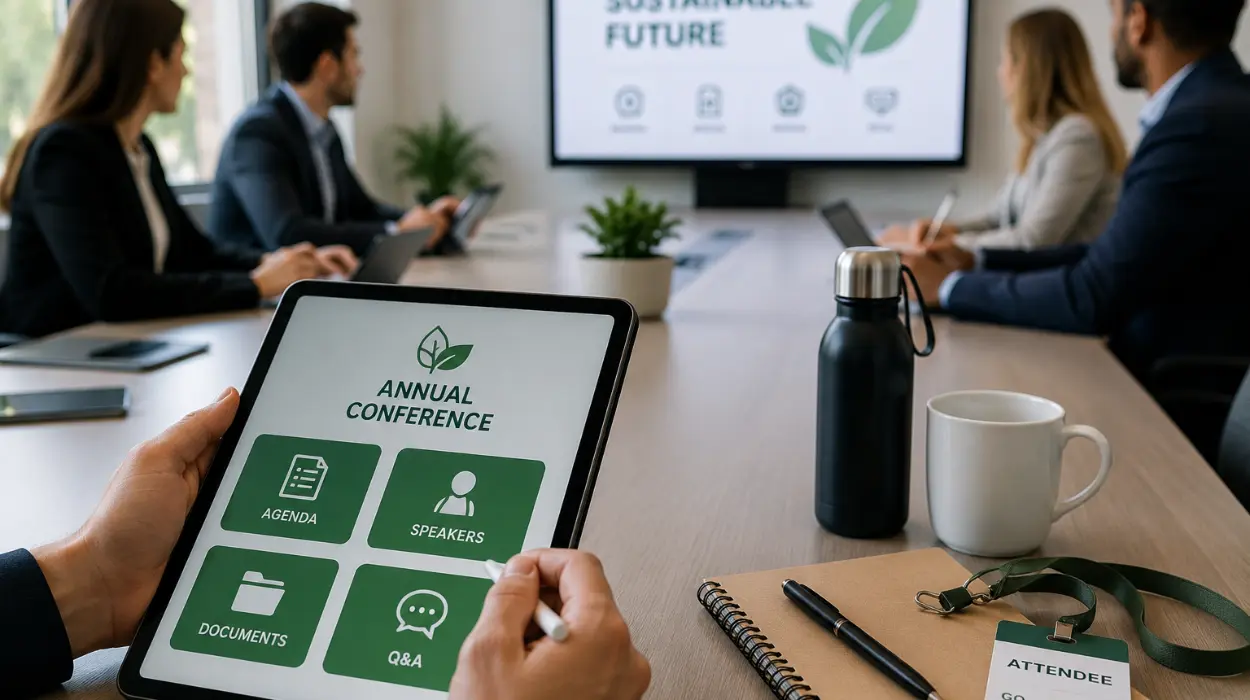
A paperless conference is a professional business gathering that entirely eliminates physical paper documents, including printed agendas, brochures, handouts, and physical evaluation forms. It matters because this digital transition reduces paper consumption by 85%, slashes event waste generation, and lowers organizational carbon footprints.
Transitioning UK corporate events to a paperless model significantly reduces environmental waste, where paper previously comprised 40% of the daily 2kg waste generated per attendee, while simultaneously cutting administrative costs related to commercial printing and shipping. By leveraging secure cloud servers, centralized content management systems, and mobile applications, event organizers can instantly distribute up-to-date schedules, whitepapers, and financial statements to participant devices.
This digital shift strengthens corporate ESG disclosures and brand reputation, attracting conscientious clients and top-tier talent who prioritize ecological stewardship. Furthermore, establishing a robust technological infrastructure eliminates logistical delays from last-minute agenda changes and provides attendees with permanent, searchable document archives long after the conference concludes.
How Do Digital Tools Replace Traditional Paper at Events?
Digital tools replace traditional paper at corporate events through cloud-based document sharing, mobile event applications, digital badges, and interactive presentation software. These technologies centralize all event collateral into secure digital repositories, allowing attendees to access schedules, whitepapers, and speaker biographies instantly.
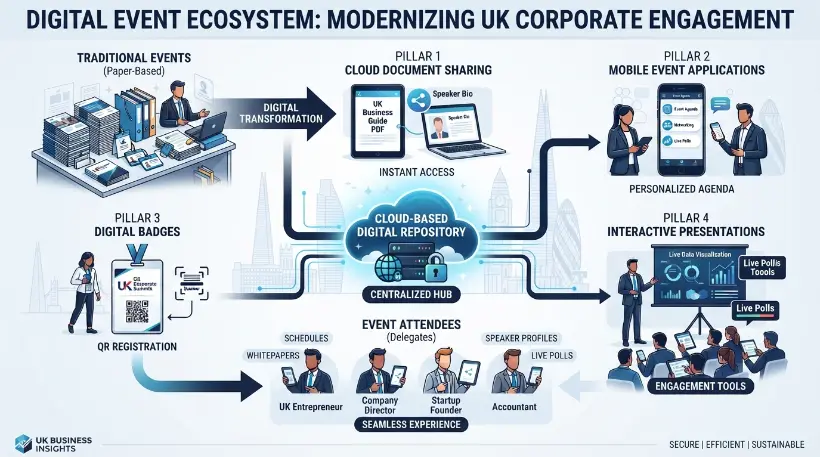
Cloud storage platforms allow event administrators to upload keynote presentations, corporate reports, and workshop materials directly to centralized servers before the conference begins. Attendees download these files using secure QR codes displayed on digital signage throughout the venue. This method eliminates the need for physical registration desks to distribute heavy welcome packs containing dozens of printed pages. Digital repositories also support real-time document updates, ensuring participants never reference outdated schedules or superseded financial data.
Mobile event applications serve as the primary interactive hub for paperless conferences, housing personalized itineraries, venue maps, and networking directories. Developers build these applications with offline functionality, ensuring uninterrupted access even when local venue Wi-Fi networks experience high traffic volumes. Attendees use integrated messaging modules to connect with speakers and fellow delegates, replacing traditional paper business cards with digital contact exchanges. Push notifications alert participants to room changes or session updates immediately, removing the need for printed notices.
Digital badges revolutionize venue access and attendee identification by replacing laminated paper passes inserted into plastic holders. Staff members scan dynamic QR codes displayed on smartphone screens to verify registration credentials during morning arrivals and breakout sessions. This digital verification process generates accurate attendance analytics automatically, providing organizers with precise data on room occupancy rates. Eliminating plastic badge holders and paper inserts prevents thousands of single-use items from entering the waste stream annually.
Interactive polling software and digital Q&A platforms eliminate the requirement for paper evaluation forms and physical suggestion boxes. Attendees submit feedback and vote in live polls directly through their smartphones, with aggregate results displayed instantly on projection screens. Event analysts evaluate this digital feedback data immediately, allowing organizers to adjust session formats in real time. This immediate data aggregation replaces manual data entry tasks that previously required days of administrative labor.
What Environmental Benefits Drive the Shift to Paperless Conferences?
The shift to paperless conferences is driven by dramatic reductions in greenhouse gas emissions, water consumption, and deforestation rates associated with commercial paper manufacturing. Digital event strategies decrease corporate event carbon footprints by up to 60%, protecting natural ecosystems and conserving critical natural resources.
Paper production is a resource-intensive industrial process that consumes vast quantities of fresh water and electrical energy. Manufacturing a single ton of standard office paper requires approximately 20 trees and 100,000 liters of water, alongside significant chemical inputs. When a corporate conference eliminates 5,000 printed delegate packs, it directly saves hundreds of mature trees and tens of thousands of liters of clean water. These quantifiable savings form the cornerstone of corporate environmental reporting and sustainability certification frameworks.
Reducing physical document transportation yields immediate decreases in fossil fuel consumption and carbon dioxide emissions across the supply chain. Commercial printing operations ship heavy paper materials via freight transport to event venues, generating thousands of miles of unnecessary vehicular transit. Digital file transfer bypasses physical logistics entirely, transmitting data packets across fiber-optic networks with negligible environmental impact. Organizations striving to meet net-zero targets integrate digital document policies into their core operational guidelines.
Minimizing event waste generation alleviates pressure on municipal recycling facilities and commercial landfill sites during major corporate gatherings. Traditional conferences leave behind tons of discarded brochures, promotional flyers, and uncollected handouts that municipal sanitation departments must process. A paperless environment produces zero paper waste, simplifying venue cleanup operations and eliminating landfill disposal fees. Facilities management teams report significant cost savings and reduced environmental compliance risks when hosting zero-paper events.
Ecosystem preservation represents a vital long-term benefit of adopting digital-first strategies across the corporate events sector. Rainforest protection initiatives rely on decreased global demand for virgin wood pulp to halt illegal logging operations in sensitive habitats. When businesses mandate digital document distribution for annual summits, they signal market preference for sustainable alternatives. This collective reduction in paper consumption influences global forestry practices and supports international biodiversity conservation goals.
How Do Organizers Overcome Technological Barriers at Paperless Events?
Organizers overcome technological barriers at paperless events by deploying robust enterprise-grade Wi-Fi networks, providing device-charging stations, and offering on-site technical support desks. These proactive measures ensure all participants navigate digital platforms smoothly regardless of their technical proficiency.
High-capacity wireless infrastructure forms the absolute foundation of any successful paperless conference deployment strategy. Venues must support concurrent high-speed data connections for hundreds or thousands of active devices without experiencing bandwidth throttling. Event technology teams conduct rigorous stress tests prior to the conference to identify dead zones and optimize router placements across all meeting spaces. Reliable internet connectivity guarantees that attendees download presentations and access cloud platforms without frustrating delays.
Device-charging stations deployed strategically throughout the venue prevent attendee smartphones and tablets from losing power during lengthy conference sessions. Organizers install multi-port charging hubs in networking lounges, exhibition halls, and outside major keynote auditoriums to maintain continuous device operation. Providing accessible power infrastructure removes a primary point of friction for attendees who rely entirely on digital devices for event navigation. This logistical foresight keeps participants engaged with digital collateral throughout the event schedule.
On-site technical support desks staffed by trained IT professionals provide immediate assistance to attendees experiencing software or connectivity issues. Technicians help participants download event applications, troubleshoot login errors, and connect personal devices to secure corporate networks. Clear signage directs users to these support stations, ensuring minor technical glitches do not disrupt the overall conference experience. Professional technical support builds user confidence in digital systems among attendees of all generations.
Inclusive design principles ensure that digital conference platforms remain fully accessible to participants with diverse visual or physical requirements. Event planners select software applications that comply with international accessibility standards, featuring adjustable font sizes, high-contrast modes, and screen-reader compatibility. Providing alternative digital formats ensures that sustainability initiatives do not compromise equal access for all conference participants. This commitment to inclusivity strengthens organizational reputation and fulfills corporate social responsibility mandates.
How Can Businesses Book Sustainable Event Facilities for Digital Events?
Businesses book sustainable event facilities for digital events by evaluating venue energy efficiency, digital infrastructure readiness, and waste management certifications. Organizations streamline this procurement process by utilizing specialized corporate booking services like Form My Company Conference Rooms to secure verified eco-friendly locations.
Evaluating venue energy sources ensures that the hosting facility operates on renewable electricity rather than fossil fuel combustion. Event planners examine facility environmental audits to verify solar panel installations, LED lighting systems, and smart climate control integration. Selecting energy-efficient venues minimizes the indirect carbon emissions generated by powering audiovisual equipment and Wi-Fi routers during multi-day conferences. Sustainable properties display recognized environmental certifications that validate their operational green credentials.
Assessing digital infrastructure readiness prevents unexpected technological failures during high-profile corporate summits and strategic planning sessions. Event organizers inspect venue bandwidth capabilities, backup power generators, and internal server capacities before signing commercial leasing agreements. Venues designed for modern digital events feature built-in charging infrastructure, high-speed fiber connections, and dedicated IT support spaces. These technical preparations ensure seamless execution of paperless presentations and live streaming components.
Coordinating sustainable venue procurement requires structured planning methodologies that align with broader corporate environmental targets. Planners can review our guide on how to plan a carbon-conscious conference step by step to establish comprehensive operational frameworks. This foundational preparation ensures every aspect of the event lifecycle adheres to strict environmental standards and resource conservation principles. Structured planning reduces administrative friction and accelerates venue approval timelines.
Securing optimal event spaces becomes effortless when utilizing specialized booking platforms designed for modern corporate requirements. Executives can explore how to book carbon-conscious conference rooms through Form My Company to access pre-vetted venues equipped for digital operations. Form My Company delivers curated venue selections that meet stringent environmental and technological standards without sacrificing professional utility. Leveraging expert booking services allows businesses to achieve their sustainability objectives efficiently and securely.
Explore our Conference Rooms guide,
When Should You Stamp an Invoice or Purchase Order?
What Information Should Appear on a Company Stamp?
Frequently Asked Questions
What features should a modern conference room include for hybrid meetings?
A modern conference room must include high-definition video conferencing equipment, multi-directional microphones, and reliable high-speed Wi-Fi to support remote participants. Through Form My Company, organizations can secure fully equipped conference room spaces that feature integrated digital displays and seamless screen-sharing technology. These advanced technical amenities ensure productive collaboration between in-person attendees and virtual team members.
How do I choose the right conference room size for my business event?
Choosing the right conference room requires analyzing your maximum expected attendee count, desired seating arrangement, and necessary audiovisual equipment. Form My Company assists businesses in evaluating room capacities and layout options to match specific corporate gathering requirements. Selecting an appropriately sized venue prevents overcrowding while optimizing participant engagement during presentations and workshops.
Are conference rooms available for hourly booking or only full-day rentals?
Flexible booking options allow businesses to reserve a conference room by the hour, half-day, or full-day depending on project schedules. Form My Company provides adaptable rental terms through their conference room service platform to accommodate short client meetings and multi-day corporate summits. This flexibility helps growing companies minimize overhead costs by paying strictly for the operational time they utilize.
What is the average cost of renting a professional conference room?
Professional conference room rental rates vary based on geographical location, room capacity, technological infrastructure, and the duration of the booking. Form My Company offers transparent pricing across a diverse portfolio of conference room options designed to fit various corporate budgets. Businesses can review specific hourly and daily rates directly on the Form My Company conference rooms service page.
How do I book a conference room for a last-minute business meeting?
Booking a conference room on short notice involves checking real-time availability through an online reservation platform and completing instant confirmation workflows. Form My Company streamlines this procurement process, allowing professionals to secure a fully equipped conference room within minutes of their request. This rapid booking capability ensures teams can quickly secure professional spaces for urgent client pitches and executive strategy sessions.