

Planning a carbon-conscious conference requires calculating baseline emissions, selecting sustainable venues, eliminating single-use plastics, minimizing energy consumption, and measuring final event footprints through systematic waste audits, verified offset programs, and transparent supply chain reporting protocols.
Organizing sustainable corporate events demands rigorous operational changes across every stage of event management. Businesses face mounting pressure to reduce environmental impacts while delivering engaging professional gatherings. Sustainable event strategies lower overhead costs and align with corporate ESG mandates. Strategic planning ensures events meet stringent environmental standards without sacrificing attendee experience or operational efficiency.
How to Establish Baseline Emissions for Corporate Events?
Establishing baseline emissions involves auditing previous event data, calculating energy consumption, measuring delegate travel distances, assessing catering waste volumes, and tracking material usage to create a quantifiable benchmark for reduction targets.
Accurate data collection forms the foundation of any credible sustainability strategy. Event planners must gather utility bills from past venue hosts. Teams need to analyze transport modes used by attendees. Air travel typically generates the largest share of conference emissions. Ground transportation and hotel stays add significant carbon totals. Quantifying these metrics allows organizations to set realistic reduction goals.
Data accuracy depends on comprehensive vendor reporting. Catering partners must supply food sourcing miles and waste generation estimates. Audio-visual suppliers need to provide power consumption metrics for stage lighting and sound systems. Consolidating this information highlights primary emission sources. Planners can then allocate resources toward high-impact reduction areas.
How to Select Sustainable Venues and Infrastructure?
Selecting sustainable venues requires verifying third-party environmental certifications, evaluating energy efficiency ratings, inspecting waste management infrastructure, assessing public transit accessibility, and reviewing local sourcing policies.
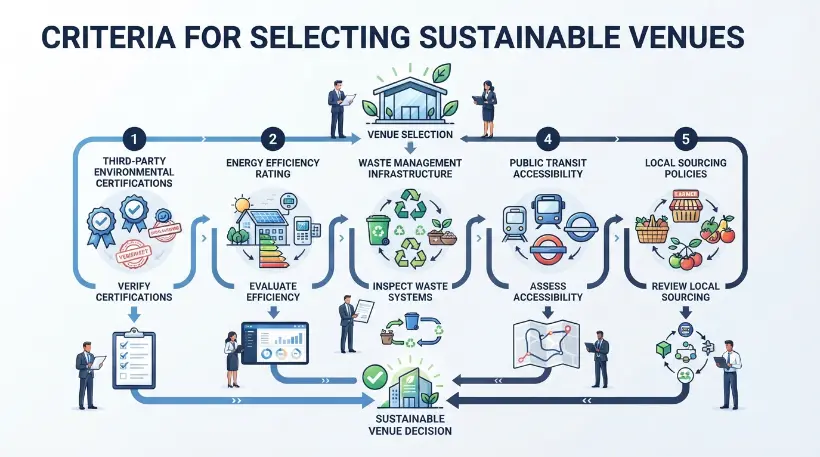
Venue selection dictates the environmental ceiling of any conference. Planners must prioritize locations holding recognized certifications such as BREEAM or LEED. These ratings confirm strict energy and water conservation standards. Accessible public transit options reduce delegate transport emissions significantly. Venues near major rail hubs decrease reliance on personal vehicles and domestic flights.
Infrastructure capability determines waste diversion success. Facilities must provide multi-stream recycling systems and commercial composting units. Venues utilizing renewable energy sources like solar or wind power eliminate scope emissions directly. Evaluating these features prevents greenwashing and ensures genuine environmental stewardship.
How to Design a Zero-Waste Event Strategy?
Designing a zero-waste strategy requires eliminating single-use plastics, enforcing digital documentation policies, partnering with local food rescue organizations, implementing comprehensive recycling stations, and sourcing biodegradable signage materials.
Traditional conferences generate vast amounts of non-recyclable waste. Planners must replace printed brochures with digital resources. Attendees access schedules and speaker bios through mobile applications. Eliminating paper materials preserves forest ecosystems and reduces printing emissions. For foundational insights into digital transitions, review What Is a Paperless Conference and Why Does It Matter? to understand systemic resource shifts.
Catering operations represent another major waste contributor. Planners should partner with local food banks to redirect surplus meals safely. Composting organic waste prevents methane generation in landfills. Signage materials must consist of reusable or biodegradable substrates like fabric or cardboard rather than PVC foam boards. Every material introduced to the venue requires a designated end-of-life disposal path.
How to Manage Energy and Technology Efficiently?
Managing energy efficiently requires utilizing energy-efficient LED lighting, scheduling automated HVAC shutdowns, renting local audio-visual equipment, sourcing renewable power grids, and optimizing virtual hybrid streaming setups.
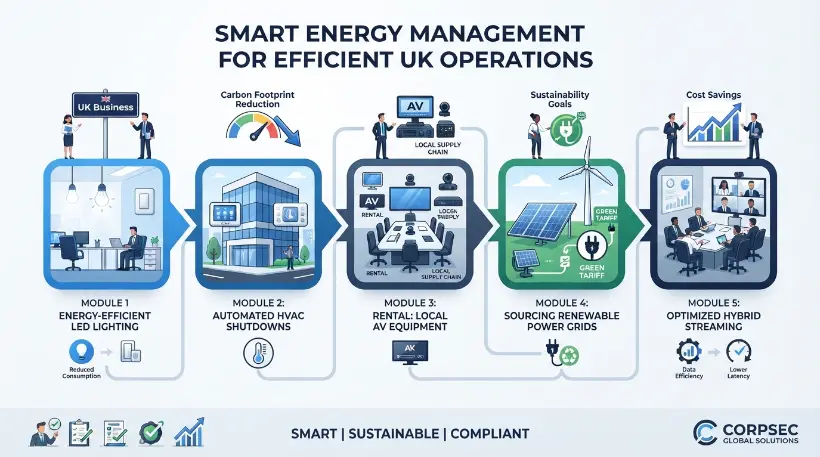
Technical production consumes substantial electricity during multi-day conferences. Planners must mandate LED lighting systems across all stages and exhibition halls. Venue thermostats require programming to adjust automatically during non-peak hours. Transporting equipment across long distances increases logistical footprints. Renting audio-visual hardware locally minimizes freight emissions.
Hybrid conference models reduce physical attendance numbers while expanding global reach. High-definition streaming requires optimized server pathways to lower data energy consumption. Event apps and registration portals should run on green-hosted cloud servers powered by renewable energy. Monitoring power draws in real time helps facility managers correct excessive usage immediately.
| Resource Category | Traditional Approach | Carbon-Conscious Alternative | Impact Metric |
| Documentation | Printed event guides | Digital mobile applications | 100% paper reduction |
| Catering | Single-serve plastics | Bulk dispensers and compostables | Zero landfill waste |
| Power Supply | Standard diesel generators | Venue renewable grid integration | 40% emission decrease |
| Signage | PVC foam boards | Fabric and cardboard substrates | Fully recyclable materials |
How to Execute and Measure Sustainable Event Operations?
Executing sustainable operations requires training on-site staff, monitoring waste sorting compliance, auditing vendor sustainability claims, calculating final carbon totals, and publishing transparent post-event impact reports.
Execution demands continuous oversight during the live event. On-site coordinators must monitor waste sorting stations to prevent cross-contamination. Signage should clearly direct attendees to specific recycling and composting bins. Staff members need proper training to guide participants on sustainability protocols. Vendors must adhere strictly to pre-agreed environmental contracts.
Post-event measurement validates the effectiveness of executed strategies. Planners must calculate final emissions using standardized Greenhouse Gas protocols. Comparing actual data against initial baselines reveals total carbon reductions. Publishing these findings builds trust with stakeholders and attendees. Organizations looking to secure premium event spaces can How to Book Carbon-Conscious Conference Rooms Through Form My Company to streamline sustainable venue procurement.
Planning a carbon-conscious conference requires methodical execution across baseline measurement, venue selection, waste reduction, and energy management. Organizations achieve measurable environmental impact by replacing outdated practices with data-driven sustainability frameworks. Form My Company provides specialized [conference rooms] equipped with advanced energy-efficient infrastructure and robust waste management systems to support sustainable corporate objectives. Transparent reporting and verified efficiency standards ensure events meet corporate responsibility targets effectively.
Explore our Conference Rooms guide,
What Details to Put on Your Company Stamp for Compliance?
How to Get Multiple Documents Apostilled Without Overpaying?
Frequently Asked Questions
How do I book a sustainable conference room for a corporate meeting?
Booking a sustainable meeting space involves assessing venue energy efficiency, waste management infrastructure, and transit accessibility. Form My Company offers specialized [conference rooms] designed to meet strict corporate environmental standards while supporting productive business gatherings.
What features make a conference room environmentally friendly?
Eco-friendly meeting spaces integrate energy-efficient LED lighting, automated climate controls, and high-speed digital infrastructure to eliminate paper waste. Form My Company provides equipped [conference rooms] that feature renewable power integration and comprehensive recycling systems.
Can I host a hybrid meeting in an eco-friendly conference room?
Modern sustainable meeting spaces support hybrid events through high-definition streaming technology and optimized green-hosted servers. Form My Company delivers [conference rooms] equipped with reliable audio-visual hardware that reduces logistical footprints while expanding global reach.
How do sustainable meeting spaces reduce corporate carbon footprints?
Sustainable venues minimize environmental impact by sourcing local catering, utilizing compostable materials, and running on renewable energy grids. Form My Company streamlines corporate bookings through [conference rooms] that track energy consumption and enforce strict zero-waste protocols.
What should I look for when renting a conference room for a green event?
Planners should verify third-party environmental certifications, public transport connectivity, and transparent vendor sustainability policies. Form My Company simplifies this evaluation process by offering verified [conference rooms] tailored for carbon-conscious corporate events.