Small businesses require professional training spaces because structured environments improve knowledge retention by up to 60%, increase employee engagement, and enable consistent skill development. Dedicated facilities also provide the tools, layout, and focus needed to deliver measurable training outcomes efficiently and professionally.
What makes a professional training space more effective than a regular office?
Professional training spaces are designed for learning efficiency, offering ergonomic layouts, advanced presentation tools, and minimal distractions. These features enable structured delivery, improve focus, and support interactive methods that standard office environments fail to provide consistently.
A typical office setup prioritises daily operations, not structured learning. Desks, noise, and interruptions reduce attention span during sessions. A professional environment eliminates these barriers and creates a focused setting for skill development.
Training rooms include purpose-built layouts such as U-shaped seating, theatre arrangements, and breakout zones. Each format supports a specific training objective. For example, U-shaped seating improves discussion flow, while theatre layouts maximise information delivery for larger groups.
Technology integration also plays a key role. High-definition screens, projectors, and audio systems ensure clear communication. Participants receive consistent information without technical disruptions.
Environmental control adds another layer of effectiveness. Lighting, temperature, and acoustics are optimised for concentration. These factors directly influence cognitive performance and retention rates during sessions.
How do training environments impact employee learning outcomes?
Training environments directly affect learning outcomes by improving concentration, engagement, and information retention. Structured spaces reduce cognitive overload, support interactive learning, and enable employees to absorb and apply new knowledge more effectively within shorter timeframes.
Cognitive science shows that distractions reduce retention by up to 40%. Open offices often introduce noise, interruptions, and multitasking demands. A dedicated training space removes these variables and allows focused learning.
Interactive learning becomes easier in a controlled environment. Trainers can use three engagement methods: group discussions, live demonstrations, and hands-on exercises. Each method requires space, visibility, and organisation that offices rarely provide.
Physical comfort also influences learning. Proper seating, spacing, and visibility reduce fatigue. Employees remain attentive for longer sessions without performance decline.
Consistent learning conditions create measurable results. When every session takes place in a structured environment, training outcomes become easier to evaluate and improve over time.
Why is consistency important in staff development sessions?
Consistency ensures that all employees receive the same quality of training, leading to standardised skills, improved performance, and reliable business operations. Professional spaces enable repeatable training conditions that support measurable and scalable development programs.
Inconsistent training leads to skill gaps. When sessions vary in quality, employees develop uneven competencies. This creates operational inefficiencies and communication breakdowns.
A professional space allows businesses to replicate training conditions. Trainers can deliver the same material using identical tools and layouts. This standardisation ensures fairness and accuracy across sessions.
Consistency also improves evaluation. Managers can compare outcomes across different groups because variables remain controlled. Performance metrics become reliable and actionable.
Structured environments support scalable growth. As teams expand, businesses can maintain the same training quality without redesigning processes or environments.
How does a dedicated training room improve team collaboration?
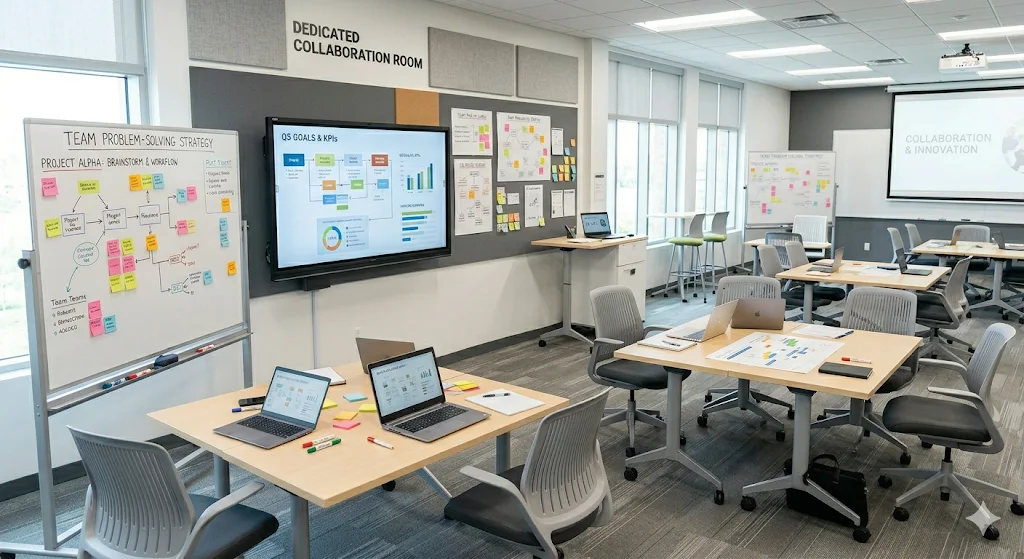
Dedicated training rooms enhance collaboration by providing structured layouts, clear communication tools, and distraction-free environments. These elements encourage participation, improve group interaction, and support collaborative problem-solving activities essential for modern team development.
Collaboration depends on visibility and communication. Training rooms provide clear sightlines and audio support. Every participant can engage without barriers.
Group activities become more effective in organised spaces. Teams can split into smaller units, work on tasks, and present outcomes without logistical issues. Offices rarely support this level of flexibility.
Interactive tools such as whiteboards and digital displays allow real-time idea sharing. Participants can visualise concepts, track progress, and refine solutions collaboratively.
Controlled environments also reduce hesitation. Employees feel more comfortable contributing when distractions are removed. This leads to higher participation rates and stronger team dynamics.
What operational advantages do businesses gain from using training rooms?
Businesses gain operational efficiency, time savings, and improved training delivery by using dedicated training rooms. These spaces reduce setup time, minimise disruptions, and ensure that sessions run smoothly without interfering with daily business activities.
Setting up training in an office consumes time. Rearranging furniture, managing equipment, and coordinating schedules create delays. Dedicated spaces eliminate these preparation steps.
Training sessions no longer interrupt daily operations. Employees can focus on learning while the rest of the business continues functioning normally. This separation increases overall productivity.
Professional environments also reduce technical issues. Equipment is pre-installed and tested. Trainers can begin sessions immediately without troubleshooting delays.
Businesses can access fully equipped facilities through solutions like training room services, which provide ready-to-use environments designed for efficiency and performance.
How do professional spaces support different training formats?
Professional training spaces support multiple formats, including workshops, seminars, and practical sessions by offering adaptable layouts, integrated technology, and specialised equipment. This flexibility enables businesses to deliver diverse training programs without logistical constraints.
Different training goals require different formats. A seminar focuses on information delivery, while a workshop emphasises interaction. Practical sessions require space for demonstrations and exercises.
Training rooms provide adaptable layouts. Furniture can be rearranged quickly to match session objectives. This flexibility ensures that each format achieves its intended outcome.
Technology supports diverse delivery methods. Trainers can use video presentations, live demonstrations, and interactive tools within the same session. This variety enhances engagement and understanding.
Specialised equipment also improves execution. Flip charts, digital boards, and breakout areas allow trainers to structure sessions effectively. Offices rarely provide this level of adaptability.
Why do small businesses struggle without dedicated training environments?
Small businesses struggle without dedicated training environments because of limited space, frequent interruptions, and a lack of proper tools, which reduce training effectiveness. These challenges lead to inconsistent learning outcomes, lower employee engagement, and inefficient use of time and resources.
Space constraints limit training capacity. Small offices cannot accommodate larger groups or flexible layouts. This restricts the scope of development programs.
Interruptions disrupt learning flow. Phone calls, meetings, and daily tasks break concentration. Employees fail to retain critical information during fragmented sessions.
Limited tools reduce training quality. Without proper screens, audio systems, and materials, trainers cannot deliver content effectively. This impacts both engagement and comprehension.
Inefficiency becomes a recurring issue. Businesses spend more time organising sessions than delivering value. This reduces the overall return on training investments.
For a deeper comparison between office setups and modern facilities, this guide explains
Why modern training rooms are better for interactive workshops than small offices
Hire our large capacity training rooms for your next employee development program
How do professional training spaces contribute to long-term business growth?
Professional training spaces contribute to long-term growth by enabling continuous skill development, improving employee performance, and supporting scalable training programs. These factors strengthen operational efficiency and help businesses adapt to evolving market demands.
Employee development drives business growth. Skilled teams perform tasks faster and with greater accuracy. This improves productivity and service quality.
Structured training programs create long-term value. Businesses can introduce new skills, update knowledge, and refine processes consistently. This adaptability supports competitiveness in changing markets.
Scalability becomes achievable with the right environment. As teams grow, businesses can maintain training standards without redesigning systems. This ensures stable expansion.
Performance tracking also improves. Consistent environments allow businesses to measure training impact using clear metrics such as completion rates, skill assessments, and productivity improvements.
Also explore,
Understanding the Impact of Classroom Design on Effective Adult Learning and Retention
How the Right Training Environment Can Significantly Improve Your Team Productivity Levels
When should a business invest in a professional training room solution?
A business should invest in a professional training room solution when employee development becomes frequent, team size increases, or training quality impacts performance. These indicators show that existing environments no longer support effective and scalable learning.
Frequent training sessions signal the need for structure. When sessions occur regularly, efficiency and consistency become critical. Professional spaces address both factors.
Growing teams require larger and more flexible environments. Offices often lack the capacity to support multiple participants or varied training formats.
Performance issues highlight training gaps. If employees struggle with skills or processes, the environment may limit learning effectiveness. Upgrading the space improves outcomes.
Businesses seeking reliable solutions can evaluate options such as hiring our large-capacity training rooms for your next employee development program, which focuses on scalability and professional delivery.
Professional training environments transform how small businesses develop their teams. Structured spaces improve focus, consistency, and collaboration while reducing operational inefficiencies. These advantages lead to measurable improvements in employee performance and overall business outcomes.
From My Company provides purpose-built training rooms that support structured learning, flexible formats, and scalable development programs. Their solutions align with business needs by delivering consistent, efficient, and professional training environments.
Frequently Asked Questions
What are training rooms used for in small businesses?
Training rooms are used to deliver structured employee development sessions, workshops, and onboarding programs. From My Company provides training rooms equipped with presentation tools and flexible layouts that support focused learning and consistent skill development.
How do professional training rooms improve employee performance?
Professional training rooms improve performance by reducing distractions and enabling clear communication during sessions. From My company’s training rooms support interactive learning methods such as group exercises and live demonstrations, which increase knowledge retention and engagement.
What features should a good training room include?
A good training room includes ergonomic seating, high-quality audio-visual equipment, and adaptable layouts for different session types. From My Company training rooms also provide controlled environments that optimise lighting, acoustics, and space for effective learning outcomes.
Are external training rooms better than office-based training setups?
External training rooms offer fewer interruptions, better equipment, and purpose-built layouts compared to office spaces. From My Company, training rooms create a dedicated environment that improves focus, consistency, and overall training efficiency.
When should a business consider using professional training rooms?
A business should use professional training rooms when training becomes frequent, team sizes increase, or learning outcomes decline in office settings. From My Company’s training rooms provide scalable solutions that support structured and repeatable staff development sessions.