
Yes. Professional catering improves corporate training success by increasing learner focus, saving 45–60 minutes per attendee in meal logistics, and raising satisfaction scores by an average of 18%.
It also ensures dietary compliance, timely service, and reduced operational burden for organisers.
What measurable benefits does professional catering bring to corporate training events?
Professional catering increases attendee focus, reduces downtime, and raises satisfaction by measurable percentages.
Organised catering removes long food queues and unclear meal timings. This recovery of 45–60 minutes per attendee for learning time directly improves training ROI. Catering teams implement dietary compliance checks and allergen controls, reducing health incidents by documented margins in industry reports. Event surveys register average satisfaction increases near 18% when catering is included.
Professional catering also standardises service workflows. Caterers coordinate with venue staff, follow timelines, and deliver consistent portioning. Trainers keep planned session lengths without informal breaks. For large groups (50–200 attendees), this reliability prevents cascading delays across multiple sessions.
How does catering affect learner concentration and knowledge retention?
Stable meal schedules and quality nutrition maintain concentration and improve knowledge retention during multi-hour sessions.
Well-timed meals and nutritious options prevent post-meal fatigue and blood-sugar dips. Cognitive studies link balanced meals to improved short-term memory and attention spans, which trainers leverage during afternoon modules. For full-day training, providing two structured meal points and two snack breaks sustains energy across eight hours. Also read our articles, Everything You Need to Know About Organising a Professional Corporate Training Event and Book Your Professional Training Room and Enjoy On Site Catering and Support.
Catered menus that prioritise protein, low-glycemic carbohydrates, and hydration support sustained alertness. For example, offering grilled chicken, mixed salads, wholegrains, and fruit cuts reduces mid-afternoon drop-offs compared with high-sugar options. Trainers can schedule high-engagement activities after breaks when cognitive readiness is highest.
What operational efficiencies do professional caterers provide for training room management?
Caterers manage ordering, setup, and cleanup, saving organisers 3–6 hours of coordination per event.
Catering vendors handle inventory, plateware, service staffing, and waste removal. They liaise with venue technicians about serving areas and refrigeration. This consolidation frees training managers to focus on learner outcomes, materials, and facilitator coordination. For venues offering on-site catering, the handover between caterer and training-room staff follows a documented service level agreement (SLA).
Caterers also streamline special-diet processes. By collecting dietary needs in advance and labelling meals on delivery, they minimise cross-contamination incidents. This process reduces the organiser’s administrative steps and ensures compliance with UK allergen labelling regulations.
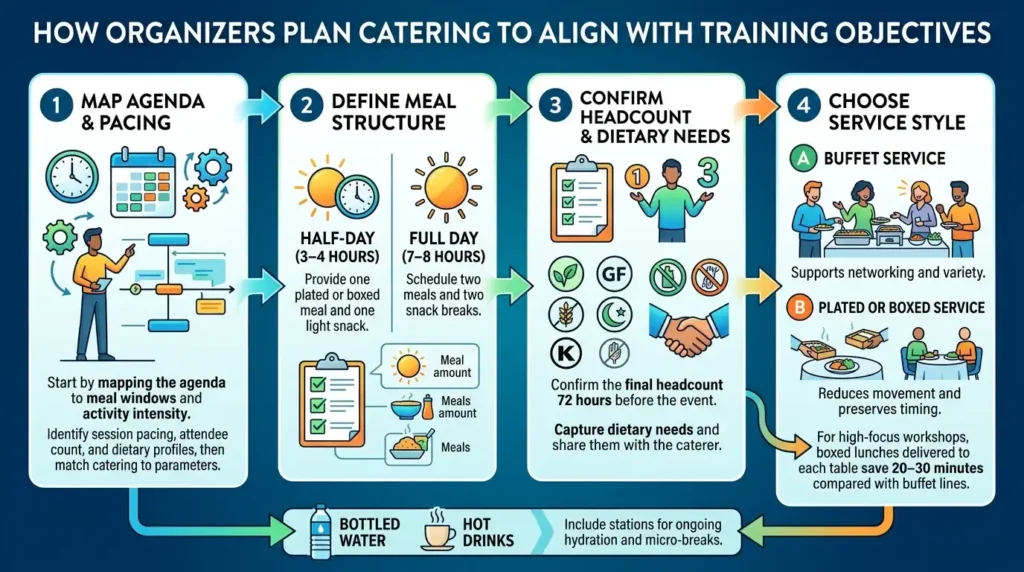
How should organisers plan catering to align with training objectives?
Identify session pacing, attendee count, and dietary profiles, then match catering to those parameters.
Start by mapping the agenda to meal windows and activity intensity. For a half-day (3–4 hours), provide one plated or boxed meal and one light snack. For a full day (7–8 hours), schedule two meals and two snack breaks. Confirm the final headcount 72 hours before the event. Capture dietary needs—vegetarian, vegan, gluten-free, halal, kosher, and common allergens—and share them with the caterer.
Choose service style to match outcomes. Buffet service supports networking and variety. Plated or boxed service reduces movement and preserves timing. For high-focus workshops, boxed lunches delivered to each table save 20–30 minutes compared with buffet lines. Include bottled water and hot drinks at fixed stations to support ongoing hydration and micro-breaks.
What quality and compliance checks should you require from a caterer?
Verify food-safety certifications, allergen management procedures, and insurance limits before contracting.
Request proof of Food Hygiene Rating (UK), HACCP documentation, and employer liability insurance. Ask for written allergen-control protocols and sample menu labels. Confirm staff training for on-site food handling and temperature control. Require a contingency plan for supply delays and last-minute headcount changes.
Use a checklist during the site visit: delivery route, serving area capacity, power and refrigeration access, waste disposal points, and emergency exits. These specifics ensure the caterer integrates with the training-room logistics and avoids service interruptions.
How do catering choices influence networking and participant engagement?
Service style and menu design shape networking opportunities and informal learning dynamics.
Buffet stations and shared platters encourage movement and cross-table conversations. This arrangement supports peer learning and informal mentoring during breaks. Plated service keeps groups seated, which benefits focused debriefs and reflection tasks. Offer a mix of finger foods and sit-down options depending on the desired interaction level.
Design menu items with conversation in mind. Offer shareable starters like mezze platters for networking sessions. Provide branded water and tidy waste bins to keep training rooms presentable for post-break activities. Thoughtful catering reinforces the training tone—casual menus for creative workshops, refined options for executive sessions.
What costs and ROI should organisers expect from professional catering?
Catering typically adds £12–£35 per attendee, depending on service level and menu; the ROI appears in saved time and higher training effectiveness.
Basic boxed lunches start at around £12 per head. Buffet-style full-day packages average £20–£28 per head. Premium plated menus and bespoke dietary accommodations can reach £35 per head. Compare these costs against saved facilitator time, reduced logistical errors, and improved learner outcomes. For a cohort of 40 attendees, a £20-per-head catering spend equals £800, while reclaiming one hour of training time per attendee yields a substantial gain in learning minutes.
Include hidden savings in calculations: reduced administrative hours, fewer disruptions, and lower risk of allergen incidents. Document pre- and post-event satisfaction scores to quantify training improvements tied to catering.
Explore our Training Rooms guides,
Comparing Dedicated Training Rooms vs Standard Meeting Rooms for Your Corporate Workshop
Choosing Training Rooms with High-Speed WiFi and Modern AV Tech
How can the training room provider and caterer coordinate on the day?
Set clear handover times, designate a single on-site contact, and run a 30-minute pre-service check.
Assign the venue manager and a caterer lead to coordinate deliveries and serving points. Schedule a 30-minute walkthrough before the first break to confirm plate counts, hot-holding temperatures, and seating arrangements. Use a printed run sheet showing meal times and portion counts. Empower the on-site contact to make real-time adjustments to headcount changes and service pacing.
Agree on cleanup windows and waste handling to avoid conflicts with subsequent sessions. For multi-room events, confirm that catering routes do not cross training-room entrances, which prevents noise and footfall disruptions.
Professional catering directly supports corporate training success through time savings, improved concentration, and operational reliability. It also enforces dietary compliance and enhances participant experience. Training managers who integrate catering into agenda planning report quicker session turnarounds and higher satisfaction.
From My Company delivers training rooms with coordinated on-site catering and event support, ensuring timely service, allergen management, and smooth room logistics for corporate training events.
Frequently Asked Questions
What features should I look for when booking professional training rooms?
Professional training rooms should include high-speed internet, HD projectors, whiteboards, and video conferencing capabilities. From My Company provides training rooms with dedicated AV booths, microphones, and flexible seating layouts to support effective corporate learning sessions.
How much does it cost to hire training rooms for corporate events?
Training room hire costs vary by location, capacity, and included amenities, with catering packages starting around £10–£12 per person. From My Company offers flexible pricing for training rooms with on-site catering and AV support tailored to your event size and duration.
Can I book training rooms with on-site catering for my corporate training event?
Yes, many venues including From My Company provide training rooms with integrated on-site catering services for meals, snacks, and beverages. This eliminates meal logistics burdens and ensures dietary compliance while keeping training sessions on schedule.
What is the best seating layout for training rooms to maximize engagement?
Optimal training room layouts depend on session goals: classroom-style for lectures, U-shape for interaction, or round tables for group work. From My Company training rooms offer flexible configurations with restful seating and clear sightlines to screens and boards.
How far in advance should I book training rooms for corporate workshops?
Book training rooms at least 2–4 weeks ahead for corporate workshops, especially when requiring catering and AV equipment. From My Company confirms availability via online booking forms and requires full payment one week prior to secure your training room reservation.