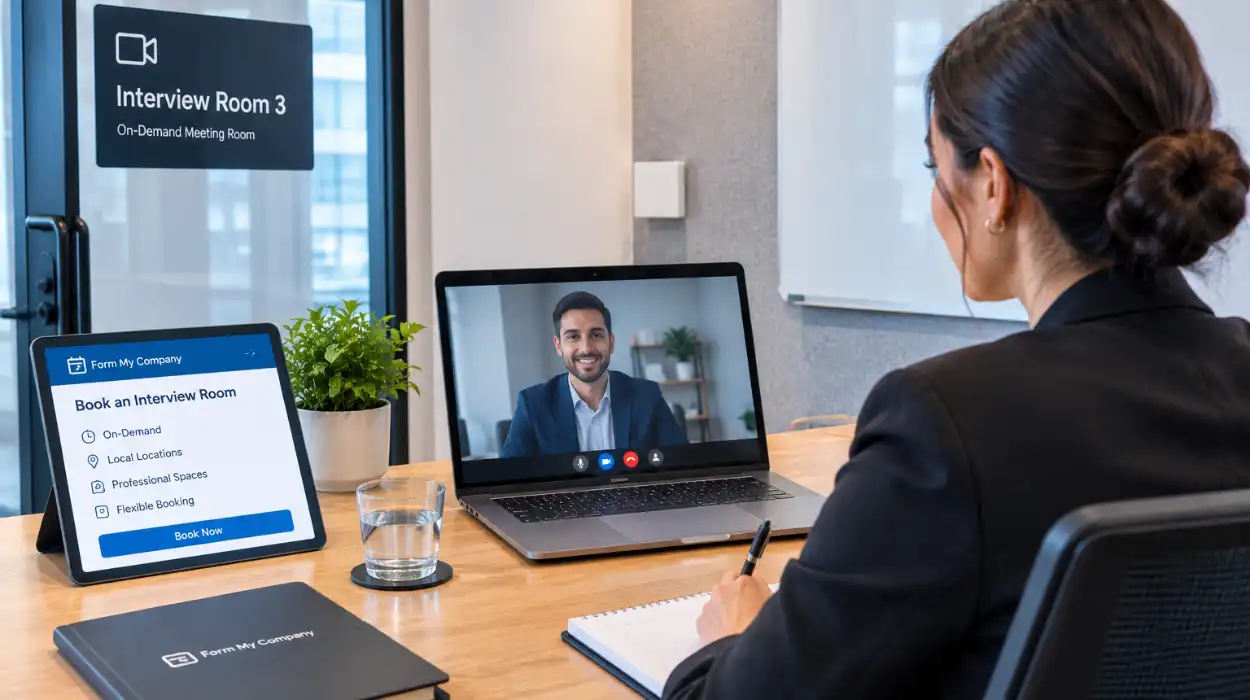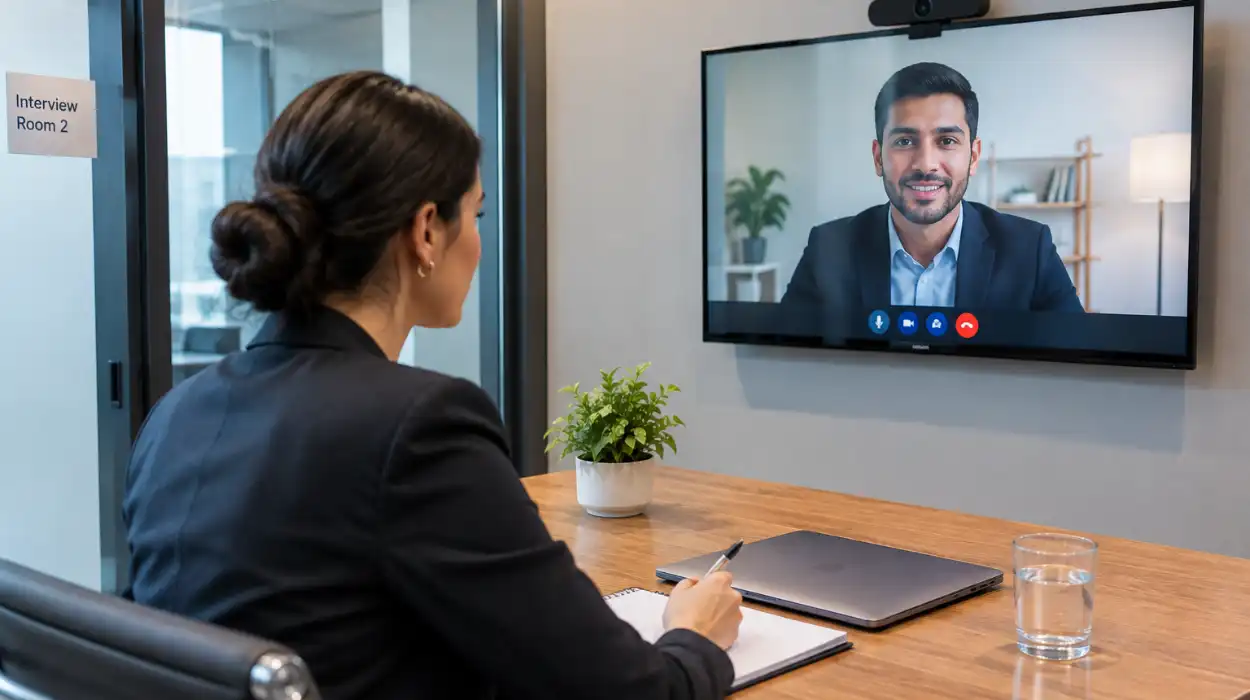

Businesses secure an identity verification service by conducting required in-person checks within private, professional meeting spaces that protect sensitive personal data. Compliant facilities ensure company directors and Persons with Significant Control verify photographic identification, biometric records, and proof of address under strict privacy conditions.
Why Is Secure Space Essential for Identity Verification?
Identity verification requires secure, private environments to handle confidential documents safely and maintain compliance with UK data protection legislation. Confidential processing spaces prevent unauthorized access to sensitive personal credentials during mandatory director authentication.
Under the Economic Crime and Corporate Transparency Act 2023, Companies House enforces compulsory identity checks across 5.2 million registered UK companies. Corporate officers and legal agents authenticate personal identification through strict digital and in-person verification channels. Conducting physical document checks in unsecured or public locations creates severe data privacy vulnerabilities.
Professional environments ensure identity verification services operate within controlled surroundings. When company officers undergo verification, service providers inspect primary identification documents including passports, photocard driving licenses, and biometric residence permits. Private spaces protect these confidential records from physical surveillance and deliberate data theft. Secure settings protect both verifying agents and company representatives throughout document authentication workflows.
Financial institutions and corporate registries require verifiable audit trails during identity processing. Unsecured facilities risk exposing non-public director details, leading to regulatory breaches under UK GDPR guidelines. Securing dedicated professional facilities ensures data processing meets statutory security standards.
How Do Conference Rooms Enhance ID Verification Security?
Conference rooms provide soundproof physical boundaries, high-speed encrypted connectivity, and isolated data environments needed for identity verification services. These features enable agents to scan identification, transmit biometric data, and interview company officers confidentially.
Physical security forms the baseline of regulatory compliance during identity verification. High-specification meeting rooms feature soundproofing elements that prevent unauthorized listening during sensitive identity interviews. Verifying agents discuss corporate ownership structures, verify personal details, and process legal documentation without external exposure.
Modern facilities provide high-speed, encrypted Wi-Fi networks and direct Ethernet access. Digital verification tools transmit high-resolution document scans and facial biometric data directly to secure government servers or Authorised Corporate Service Providers (ACSPs). Secure networks eliminate data interception risks inherent in public internet connections.
Professional spaces allow service providers to set up specialized equipment needed for identity authentication. Equipment like document scanners, high-definition webcams, and biometric capture hardware operate safely within private meeting rooms. You can book a professional Conference Room through Form My Company to secure fully equipped, compliant verification spaces for corporate officers.
What Steps Secure the In-Person Identity Checking Process?
Securing the identity verification process involves verifying physical credentials, conducting biometric matching, validating official proof of address, and logging secure audit trails. Authorised agents complete these sequential steps in controlled meeting facilities to guarantee statutory accuracy.
The in-person identity verification process follows four structured phases:
Verify primary photographic identification using official government-issued documents
Match physical facial features against biometric document data with high precision
Validate residential address proof using utility bills or official bank statements issued within 90 days
Submit authenticated data records directly to Companies House through encrypted ACSP portals
During phase one, verifying agents examine physical security features on primary identification documents. Valid documents include valid passports, UK photocard driving licenses, and biometric national identity cards. Agents test holographic overlays, microprinting, and UV optical security features to prevent synthetic identity fraud.
Phase two involves biometric validation. Verifying agents compare physical facial structure directly with the document photograph or execute digital facial scans. Cryptographic validation checks confirm that electronic document chips match official issuing authority databases.
Phase three requires reviewing secondary proof of address. Agents check utility bills, council tax statements, or regulated financial institution statements to confirm residential consistency. Phase four establishes the legal audit trail. Agents log authenticated verification records into secure databases, issuing personal identity verification codes to corporate officers. Understanding these operational steps helps officers evaluate overall compliance obligations. Reviewing Director ID vs. PSC Identity Checks: Requirements Compared clarifies specific documentation standards for each corporate role.
Who Must Complete Identity Checks Under UK Legislation?
UK company law requires all company directors, registerable Persons with Significant Control, and corporate officers to complete mandatory identity verification. Statutory regulations enforce these mandatory verification rules across new company incorporations and existing corporate structures.
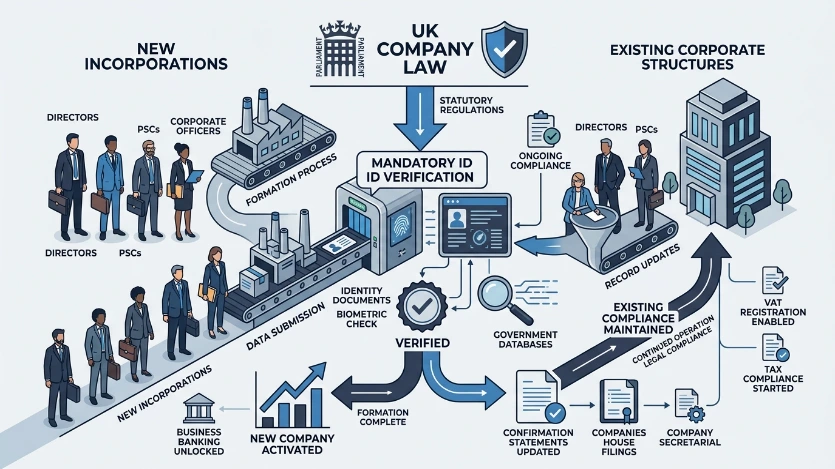
Mandatory verification applies to every individual who holds directorship or significant control over a UK entity. The Economic Crime and Corporate Transparency Act mandates direct identity checks for three corporate categories:
Company directors registered at Companies House
Persons with Significant Control holding more than 25% of company shares or voting rights
Relevant officers of corporate directors or legal corporate entities
New corporate entities cannot finalize incorporation without verified officer credentials. Existing company directors and PSCs must complete identity verification within designated statutory transition windows. Failure to complete mandatory identity checks leads to severe administrative and financial consequences. Companies House imposes financial penalties up to £10,000 and restricts non-compliant officers from managing corporate entities.
Unverified corporate structures face operational disruptions. UK financial institutions decline business bank accounts, mortgage applications, and commercial credit facilities for non-compliant entities. Completing verification early preserves corporate standing and commercial credibility. Officers seeking broader statutory context should examine Identity Verification: Why Proof of ID Matters for UK PSCs to understand statutory enforcement background.
How Does Form My Company Support Compliant Identity Services?
Form My Company delivers secure meeting spaces, accredited verification pathways, and complete corporate compliance solutions for UK business owners. Professional facilities ensure identity verification services operate under strict data security standards.
Executing identity verification in compliant facilities safeguards corporate transparency while meeting strict legal standards. Form My Company offers business service solutions designed to simplify regulatory compliance for UK directors and foreign beneficial owners.
Form My Company provides access to private, professional conference facilities across key UK business centers. These venues deliver encrypted communication channels, private verification suites, and modern presentation technologies. Corporate teams complete mandatory identity authentication without exposing sensitive business information to unsecure environments.
Form My Company assists business owners at every stage of corporate administration. From initial company formation to ongoing compliance management, Form My Company provides the physical infrastructure and statutory support required to keep UK entities operating legally.
Explore our Conference Room guide,
Standardise Your Company Records with Form My Company Solutions
Order Your Certificate of Good Standing via Form My Company
Frequently Asked Questions
What features are included when booking a conference room with Form My Company?
Form My Company conference rooms feature high-speed encrypted Wi-Fi, modern audio-visual presentation technology, soundproof privacy measures, and flexible seating layouts. These equipped spaces are designed to support identity verification checks, executive board meetings, and client presentations.
Why should businesses use a dedicated conference room for identity verification checks?
Conducting identity verification checks in a dedicated conference room ensures strict compliance with UK data protection regulations and the Economic Crime and Corporate Transparency Act. Private meeting rooms prevent unauthorized access to confidential credentials and provide a secure environment for document authentication and biometric scanning.
How do I book a meeting space through Form My Company?
You can book a professional meeting space directly online through the Form My Company website by selecting your required location, date, and time slot. Reservations are flexible, allowing business owners to secure fully equipped rooms by the hour or for full-day corporate events.
Where are Form My Company conference rooms located in the UK?
Form My Company provides access to professional conference room facilities across prime business locations in London and major UK commercial hubs. These central venues offer easy accessibility for visiting directors, legal agents, and client representatives.
Can non-registered businesses rent a Form My Company conference room?
Yes, Form My Company conference rooms are available for hire to both established registered entities and independent business professionals. Remote directors, startups, and international companies can access these facilities as needed without long-term commercial lease commitments.