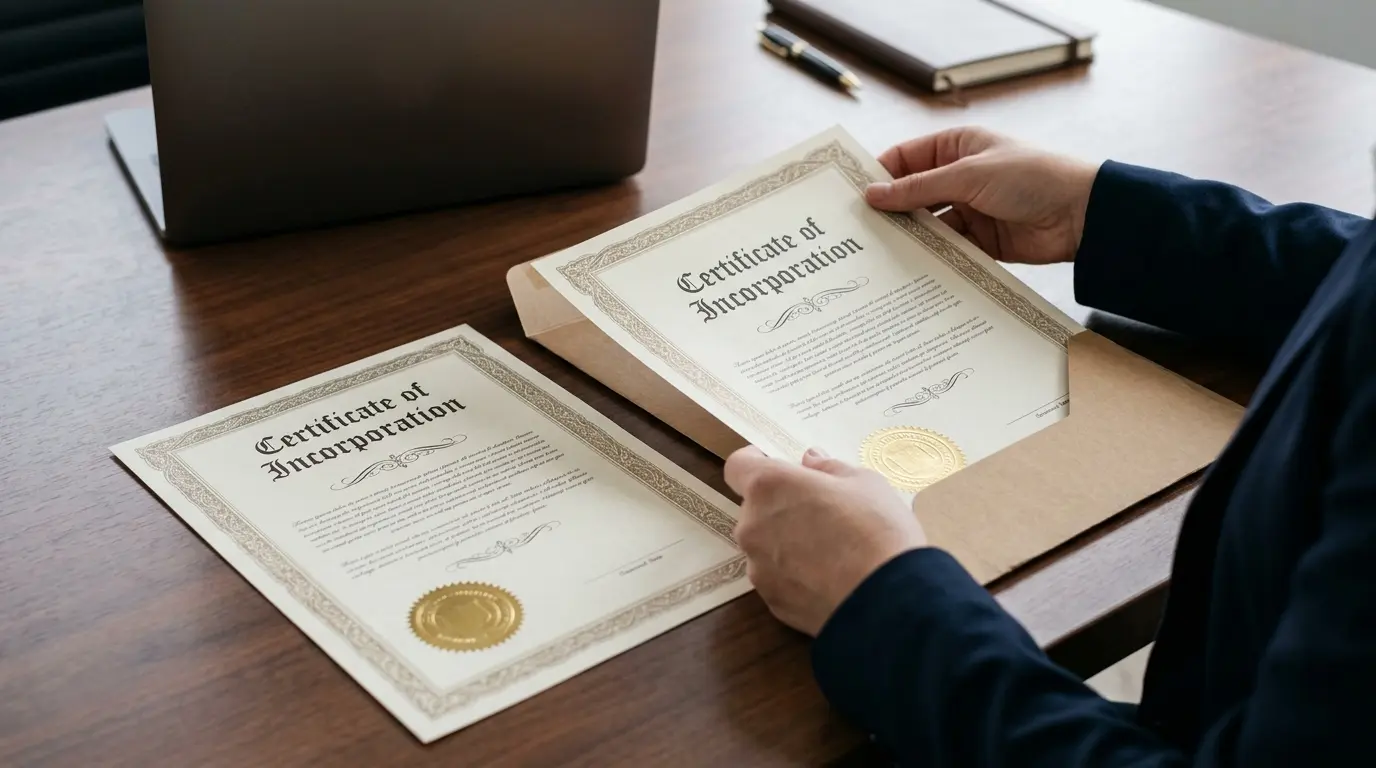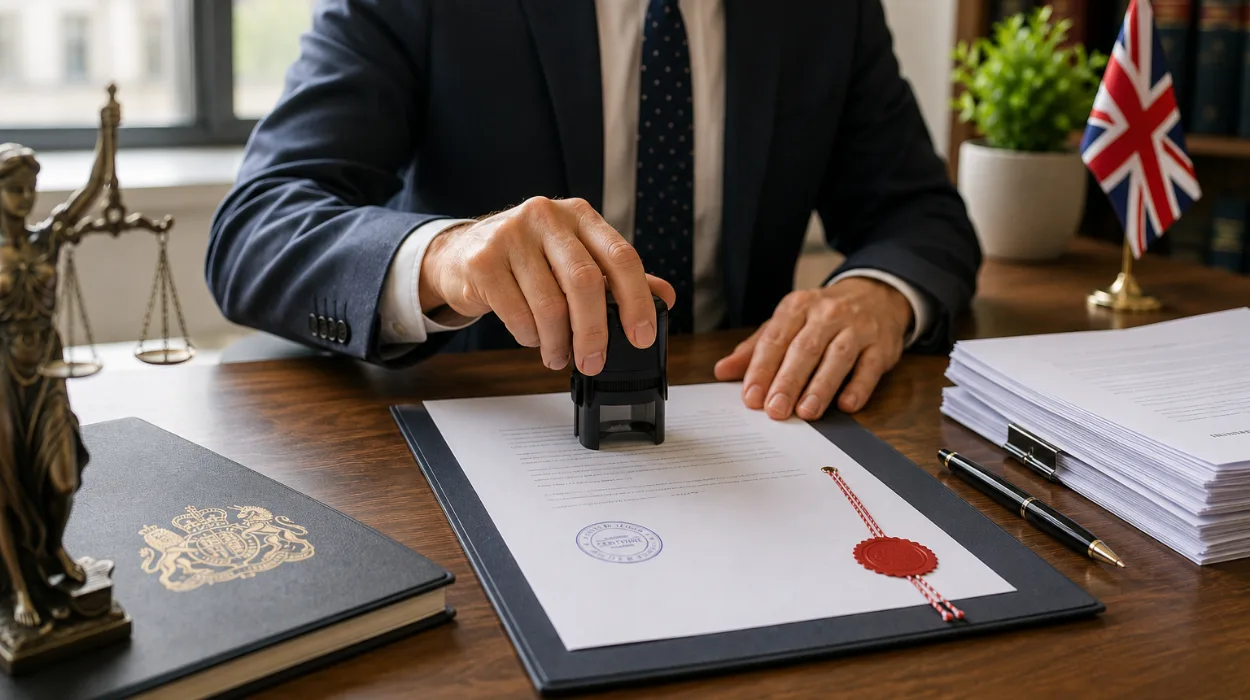
Company documents in the UK can be certified by authorized legal professionals including practising solicitors, notaries public, commissioners for oaths, and chartered secretaries who authenticate copies against original records for official, legal, and financial institutional use.
Official business operations, banking setups, and international trade require verified legal proof. Regulatory authorities demand strict compliance frameworks to prevent financial crime and corporate fraud. 14 administrative bodies govern professional certification standards across England, Wales, Scotland, and Northern Ireland. Understanding authorization criteria protects corporate entities from costly application rejections and compliance delays. 82% of UK corporate banking rejections stem from improperly authenticated paperwork.
What is Document Certification in the UK?
Document certification is the formal legal process where an authorized professional examines an original corporate document, compares it against a photocopy, and signs a declaration confirming the copy is a true, exact duplicate of the original record.
Regulatory bodies require certified paperwork to establish legal identity and corporate standing. Three primary verification methods exist: physical comparison of wet-ink originals, digital document authentication via secure portals, and institutional record cross-referencing. Corporate compliance frameworks mandate this validation step before opening commercial bank accounts or filing international tenders.
Official certification protects business transactions against fraudulent misrepresentation. Legal validators inspect corporate seals, wet-ink signatures, and official watermarks. Each verified copy receives a signed endorsement containing the certifier’s professional registration number, firm address, and contact details. Financial institutions accept these authenticated copies because independent legal experts bear professional liability for the verification accuracy.
Which Professionals are Authorized to Certify Documents?
Authorized certifiers in the UK include solicitors registered with the Solicitors Regulation Authority, notaries public operating under the Faculty Office, commissioners for oaths, and chartered secretaries holding valid Institute of Chartered Secretaries and Administrators membership.
Qualified legal experts possess the regulatory standing required to administer oaths and witness official signatures. Four major professional categories hold legal certification authority: practising solicitors, public notaries, designated commissioners, and accredited chartered company secretaries. Each professional type maintains active membership in a statutory regulatory body governed by UK law.
Notaries public specialize in international document authentication for cross-border corporate expansion. Solicitors handle domestic verifications required by HMRC, Companies House, and high-street commercial banks. Commissioners for oaths witness statutory declarations and affidavits during complex corporate restructuring procedures. Chartered secretaries authenticate internal corporate governance registers, board minutes, and constitutional amendments.
Corporate entities must verify professional credentials on official regulatory registers before submitting paperwork. 45% of rejected bank applications feature certifications performed by unqualified accountants or unregistered consultants. Professional bodies enforce strict ethical standards and maintain professional indemnity insurance to cover verification errors.
Why Do UK Companies Need Certified Documents?
UK companies need certified documents to satisfy strict “Know Your Customer” compliance laws, open corporate bank accounts, establish overseas subsidiaries, and submit legal filings to government regulatory agencies.
Financial institutions enforce rigorous anti-money laundering protocols requiring independently verified corporate records. 93% of high-street banks mandate solicitor-certified copies of incorporation certificates and shareholder registers before approving commercial accounts. Regulatory compliance requires verifiable proof of beneficial ownership to maintain corporate transparency standards.
International trade transactions demand authenticated legal paperwork for foreign customs clearance and tax registration. Overseas authorities reject unverified documents because they lack legally binding domestic attestation. Securing professional verification eliminates administrative bottlenecks during multinational expansion.
Form My Company assists businesses through every operational phase, ensuring compliance with all regulatory mandates. Companies seeking streamlined administrative support can utilize Supplementary Company Documents to secure legally compliant portfolios. Understanding how to prepare certified documents for a business bank account ensures seamless financial onboarding without regulatory friction.
How to Verify the Credentials of a Certifying Professional?
Professionals authenticate their credentials by displaying an active practicing certificate number, providing an official firm stamp, and maintaining verifiable registration entries on public regulatory authority databases.
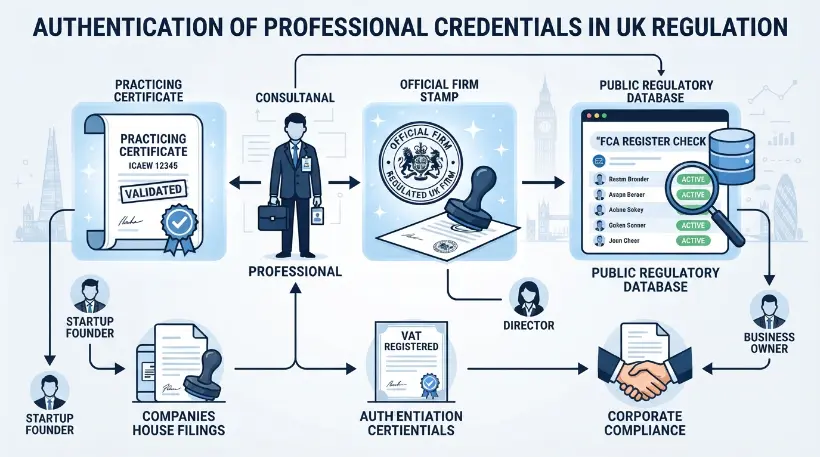
Verifying professional standing prevents fraudulent document attestation and regulatory rejection. Three verification steps protect corporate compliance: check the Solicitors Regulation Authority database, inspect the notary public register, and confirm professional indemnity insurance coverage. Regulatory portals provide real-time status updates on active practicing licenses.
Authorized certifiers apply a physical ink stamp or secure digital seal directly onto the duplicated page. This stamp displays the professional’s full name, regulatory membership number, firm name, and direct telephone contact. Financial compliance officers cross-reference these details against online regulatory directories during risk assessment reviews.
Form My Company simplifies corporate compliance workflows for modern entrepreneurs establishing operations. Business owners looking for securing solicitor-certified papers with Form My Company benefit from expedited legal verification channels. Independent verification safeguards corporate governance frameworks against administrative penalties and operational downtime.
Document certification forms the foundational backbone of corporate compliance within the United Kingdom. Regulatory bodies, financial institutions, and international authorities rely on authorized legal professionals to authenticate corporate identity. Form My Company delivers structured administrative solutions that integrate legal certification requirements directly into business establishment workflows.
Explore our Supplementary Company Documents guide,
What Does It Mean to Certify a Document as a True Copy?
Does a Company Stamp Add Legal Authority to Documents?
Frequently Asked Questions
Can I use certified company documents for international business expansion?
Certified company documents authenticated by UK legal professionals are widely accepted by foreign authorities, overseas banks, and international regulatory bodies. Form My Company provides reliable supplementary company documents tailored to meet cross-border compliance standards.
How long are certified copies of company documents valid in the UK?
Certified copies generally remain valid indefinitely unless underlying corporate details change, though most financial institutions require certifications issued within the last 3 months. Form My Company assists UK businesses in securing up-to-date supplementary company documents for ongoing compliance.
What information must appear on a certified company document stamp?
A valid certification stamp must display the certifier’s full name, professional qualification, regulatory registration number, firm address, and a clear statement confirming it is a true copy of the original. Form My Company ensures all supplementary company documents meet these rigorous institutional requirements.
Are digital signatures accepted on certified electronic company documents?
Many UK banks and digital registries accept electronically certified documents provided they feature verifiable digital certificates issued by authorized legal authorities. Form My Company helps corporate clients acquire properly authenticated supplementary company documents for digital onboarding workflows.
Do I need to certify all pages of a multi-page company document?
Multi-page corporate documents typically require the certifier to sign and stamp every individual page or securely bind the document with a sealing ribbon and a single consolidated certification page. Form My Company streamlines this process through professional supplementary company documents services.