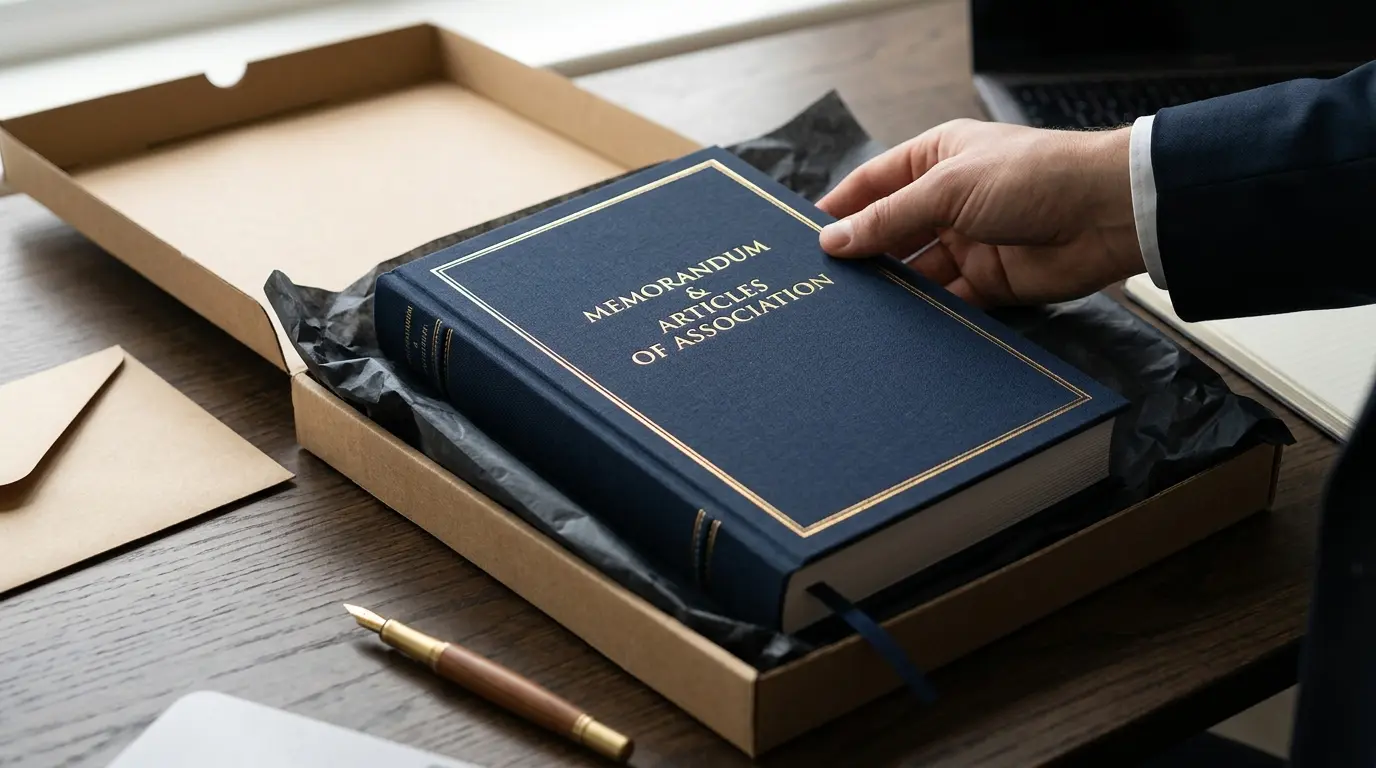
Certified copies of company records are required when UK businesses interact with overseas authorities, open corporate bank accounts, bid for public sector tenders, undergo corporate restructuring, or resolve legal disputes. Official institutions demand authenticated documents to prove legal existence and prevent corporate fraud.
When Do You Need Certified Copies for Corporate Banking?
UK businesses need certified corporate records when opening bank accounts, applying for commercial credit facilities, or updating signatory mandates with financial institutions. High street banks demand authenticated constitutional documents to satisfy strict anti-money laundering regulations and verify corporate legitimacy.
Financial institutions operate under strict regulatory frameworks mandated by the Financial Conduct Authority. Banks require authenticated proof of incorporation before approving commercial loans or multi-currency accounts. Compliance officers inspect official records to trace ultimate beneficial ownership and assess operational risk.
Corporate banking applications stall when applicants submit unverified printouts from online registries. Financial compliance teams reject standard PDF downloads because electronic documents lack physical authentication seals. Official bank representatives demand stamped and signed certificates to eliminate fraud risks during onboarding.
Commercial lenders review memorandum and articles of association to verify authorized business activities. Banks cross-reference registered office addresses with utility bills and tax registrations. Financial institutions protect depositors by enforcing rigorous document verification protocols across 100% of corporate accounts.
When Do You Need Certified Copies for International Expansion?
Exporters require certified company documents when establishing foreign subsidiaries, registering international trademarks, or bidding for overseas commercial contracts. Foreign government registries demand authenticated registration papers to validate corporate identity and grant legal operating licenses.
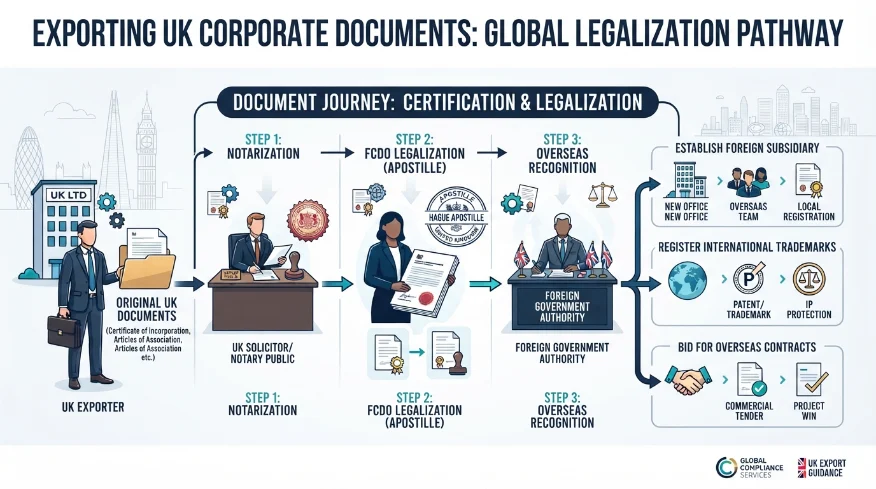
Global trade expansion requires official documentation authenticated through apostille or consular legalization processes. Foreign regulatory bodies refuse standard corporate printouts because local legal systems require proof of origin from the country of incorporation. International trade lawyers advise securing certified records early to accelerate cross-border market entry.
Overseas tax authorities request authenticated certificates of incorporation before issuing local tax identification numbers. Foreign customs agencies inspect certified registry extracts to verify export compliance and manufacturing credentials. International patent offices mandate official proof of corporate standing before assigning intellectual property rights to foreign entities.
Multinational corporations submit certified structural records when forming joint ventures with foreign partners. Overseas corporate registries validate director appointments using officially stamped historical filings. International commercial agreements rely on authenticated constitutional papers to establish legal jurisdiction for dispute resolution.
When Do You Need Certified Copies for Legal and Regulatory Compliance?
Corporate compliance officers require certified company records during cross-border litigation, tax audits, regulatory investigations, and statutory corporate restructuring. Courts and government regulators demand legally authenticated evidence to establish official corporate history and director authority.
Legal proceedings demand verifiable evidence of corporate standing, shareholder structures, and historical resolutions. Solicitors submit certified registry extracts to prove legal capacity during courtroom litigation. Regulatory authorities inspect authenticated historical filings to enforce statutory compliance across registered entities.
Corporate restructuring initiatives require certified copies of special resolutions filed with official registries. Merger and acquisition legal teams review authenticated constitutional documents during due diligence audits. Regulatory bodies verify director authorization through official certificates of good standing before approving corporate amalgamations.
Official inquiries by government agencies require authenticated proof of registered office addresses and PSC registers. Tax inspectors demand certified historical records to verify corporate tax residency status. Legal compliance mandates ensure that only officially stamped documentation satisfies statutory audit requirements.
When Do You Need Certified Copies for Tenders and Procurement?
Procurement agencies demand certified company records when evaluating bids for public sector contracts, large enterprise supply agreements, and corporate vendor accreditations. Tender boards require authenticated registration papers to verify supplier stability and prevent fraudulent procurement bids.
Public sector procurement frameworks enforce strict eligibility criteria for corporate suppliers bidding on government tenders. Tender evaluation panels review certified incorporation certificates to confirm active trading status and legal capacity. Procurement officers disqualify tender submissions containing unverified or altered registry documents.
Enterprise supply chain managers require authenticated corporate documents during vendor onboarding risk assessments. Large corporations mandate certified proof of company registration to comply with internal anti-fraud policies. Procurement compliance teams verify financial stability by inspecting officially stamped registry extracts.
Tender administrators validate authorized signatory powers using certified company resolution documents. Public procurement portals require authenticated documents to establish legal accountability throughout contract execution phases. Commercial supply agreements rely on certified records to protect enterprises from fraudulent supplier registrations.
Businesses navigating these administrative requirements can streamline their procurement and banking workflows by utilizing Supplementary Company Documents to secure official records quickly. Enterprise leaders often review How to Get Bank-Ready Certified Company Papers? to understand preparation strategies before applying for commercial credit. Organizations ready to finalize their corporate administration can explore Want to Order Certified Company Copies From Form My Company? for direct fulfillment options.
Form My Company delivers reliable document authentication services that ensure 100% compliance with UK registry standards. Form My Company assists businesses by providing legally recognized certificates without administrative delays. Form My Company maintains professional accuracy across all issued corporate records.
Explore our Supplementary Company Documents guide,
Why Does ESG Reporting Now Include Corporate Events?
How to Get Printed Certificate of Incorporation and Share Certificates?
Frequently Asked Questions
What is a certified copy of a company document in the UK?
A certified copy is an official duplicate of an original company record that has been officially authenticated by Companies House or an authorized legal professional. When businesses use the Supplementary Company Documents service from Form My Company, they receive legally recognized papers bearing official stamps or seals. These authenticated documents prove corporate legitimacy to third-party institutions that reject standard online printouts.
When do I need a certified copy instead of a standard registry printout?
Businesses need certified copies when standard electronic PDF downloads from the Companies House register fail to satisfy external validation requirements. Financial institutions, international trade authorities, and overseas government registries demand certified company records to comply with anti-money laundering regulations. Form My Company provides these authenticated documents to ensure compliance during corporate banking applications and international expansions.
How long does it take to obtain certified company records?
The processing time for certified company records typically ranges from 1 to 3 working days depending on the specific type of document and authentication level required. Form My Company expedites document retrieval to help businesses meet urgent commercial deadlines for legal proceedings and corporate restructuring. Official dispatch speeds depend on whether standard postal delivery or secure digital dispatch is selected.
Can I get a certified copy of historical company documents?
Businesses can request certified copies of historical company filings, including past incorporation certificates, former names, and historical annual accounts. Companies House archives maintain historical filings that Form My Company retrieves and authenticates for legal audits and compliance reviews. These historical extracts establish an official corporate timeline for litigation or tax investigations.
What documents can be authenticated as certified company records?
Commonly authenticated documents include certificates of incorporation, memorandum and articles of association, statements of capital, and lists of current directors. Form My Company processes these supplementary company documents to provide verified evidence of legal standing for tender boards and corporate lenders. Each authenticated record carries official validation markings accepted by regulatory bodies worldwide.