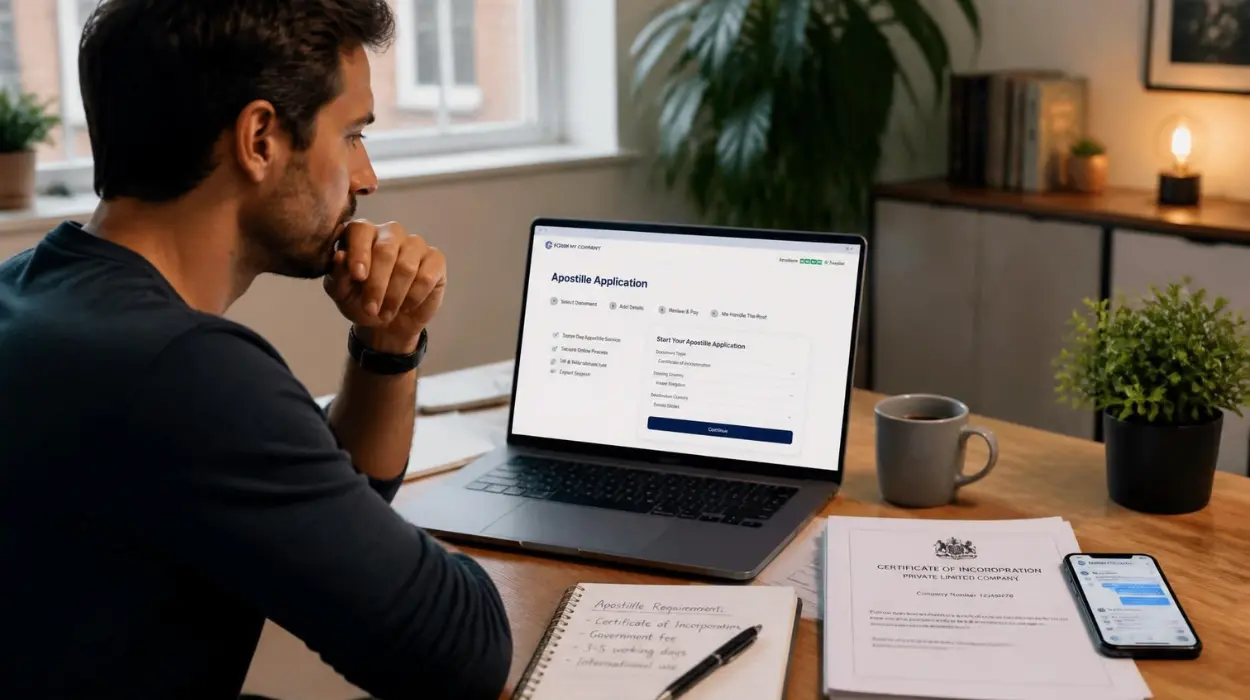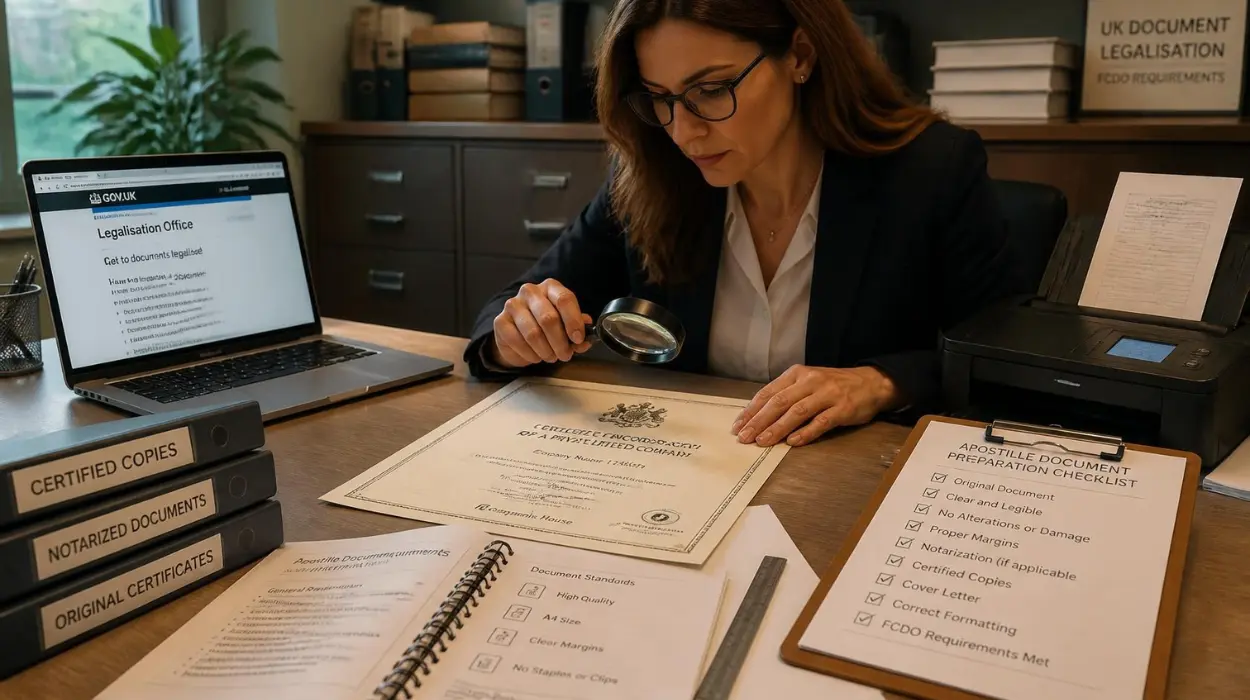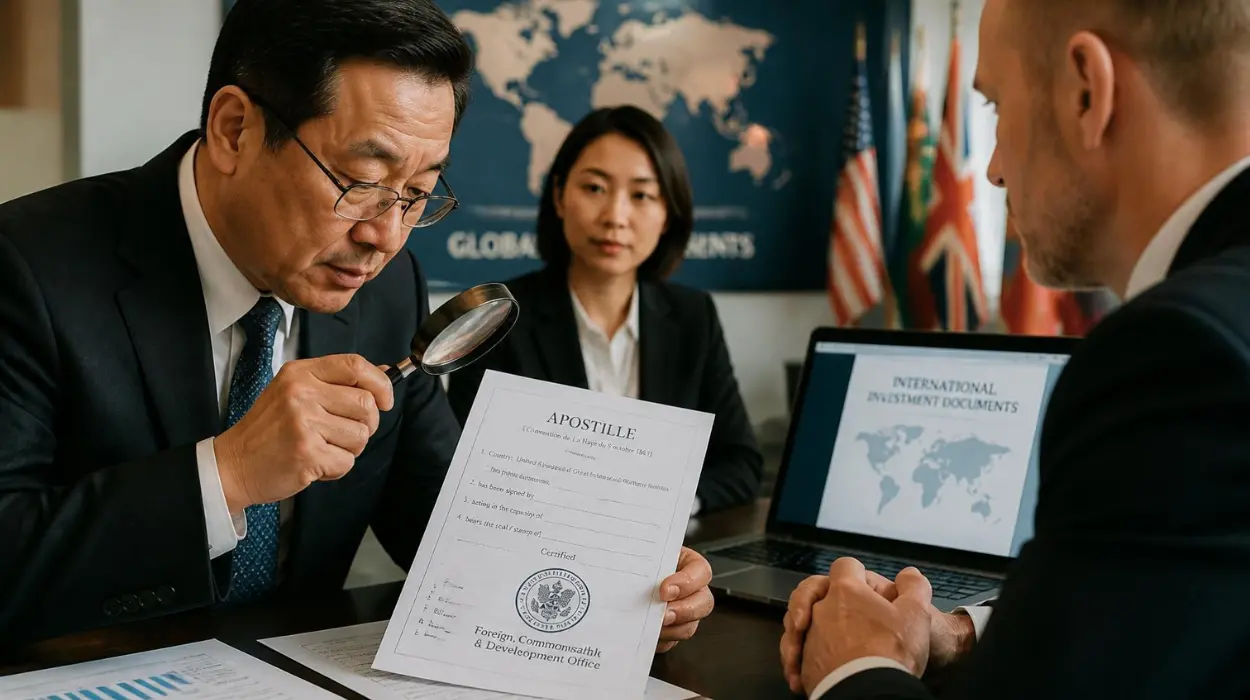
Overseas investors ask for apostilled company documents to verify legal legitimacy, confirm corporate standing, and eliminate fraud risks across international borders. An apostille validates signatures and official seals under the Hague Convention, providing instant legal recognition for cross-border investments and foreign banking relationships.
International expansion requires absolute trust between founders and foreign stakeholders. Overseas investors deploy capital across legal jurisdictions with distinct regulatory frameworks. Foreign authorities cannot verify UK company registry certificates without formal international authentication. Cross-border transactions demand unassailable proof that a business entity exists legally.
Global commerce relies on standardized authentication processes to bridge legal gaps between different nations. The 1961 Hague Convention established the apostille certificate to replace complex diplomatic legalization procedures. Foreign investors protect their financial interests by demanding verified legal proof before transferring funds. Regulatory compliance mandates rigorous document validation to prevent international financial crime.
What is an apostille and how does it work?
An apostille is a standardized official certificate attached to company documents to verify their authenticity for international use. The Foreign, Commonwealth & Development Office issues this certificate, confirming the validity of the official signature, the capacity of the signer, and the authenticity of the seal.
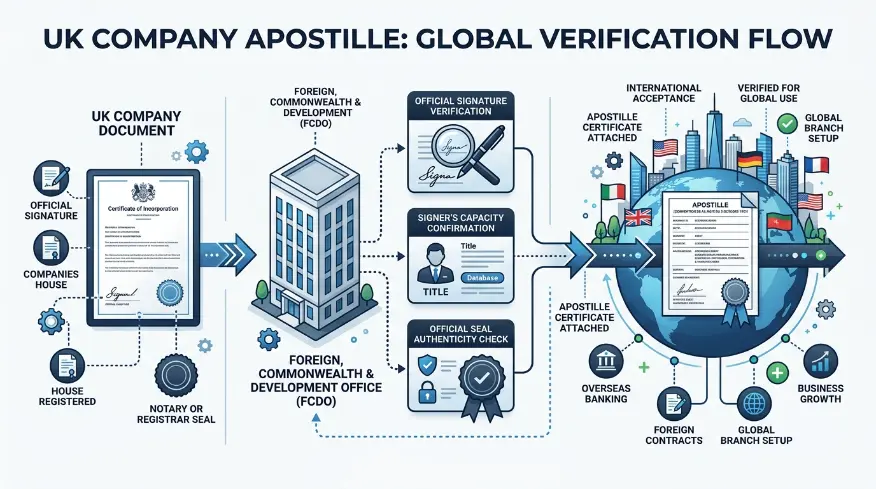
International document recognition depends entirely on this standardized government certification process. The issuing authority checks official registrar signatures against master records held by government departments. Validating these credentials takes three distinct steps: signature verification, seal authentication, and certificate attachment. Foreign embassies no longer need to legalize documents originating from Hague Convention member countries.
Global investors rely on this streamlined verification mechanism to accelerate cross-border transactions safely. Business owners submit original incorporation certificates, memorandum documents, and board resolutions to authorized government bodies. Official examiners authenticate the underlying paperwork before issuing the physical or electronic apostille stamp. This process transforms domestic company files into internationally recognized legal instruments instantly.
Why do foreign stakeholders distrust unverified UK company files?
Foreign stakeholders distrust unverified UK company files because foreign courts cannot independently confirm Companies House records without official authentication. Overseas entities face severe legal liability when accepting uncertified documents, exposing foreign investments to corporate fraud and regulatory penalties.
International jurisdictions operate under strict legal rules that reject foreign public documents lacking official endorsement. Cross-border fraud costs global enterprises billions of dollars annually through shell company scams. Investors mitigate this financial risk by enforcing mandatory document authentication protocols before entering negotiations. Unverified paperwork offers zero legal recourse if a foreign business partner dissolves unexpectedly.
Overseas regulatory bodies require verifiable proof of corporate existence during mandatory due diligence audits. Foreign banks refuse to open corporate accounts for foreign entities holding uncertified registration documents. Institutional investors demand absolute transparency regarding company ownership, director identities, and capitalization structures. Providing authenticated files proves that a business operates with complete transparency and legal integrity.
Which corporate documents require international authentication?
Corporate documents requiring international authentication include certificates of incorporation, memorandum and articles of association, and board resolutions. Overseas investors inspect these specific files to confirm legal registration, voting rights, and authorized corporate signatories before releasing capital.
Structuring cross-border partnerships requires meticulous document preparation across multiple administrative categories. Corporate portfolios submitted to foreign investors typically feature five core items: incorporation certificates, good standing records, director appointment registers, shareholder resolutions, and audited financial statements. Each document establishes a distinct pillar of corporate legitimacy for international review.
Securing foreign venture capital or private equity funding demands error-free corporate documentation packages. Investors examine incorporation records to verify the exact date of company formation and registered office addresses. Memorandum documents outline the legal scope of business operations permitted under UK law. Providing complete, authenticated records ensures that foreign stakeholders encounter zero administrative friction during equity rounds.
How do apostilled documents protect cross-border investments?
Apostilled documents protect cross-border investments by providing legally binding evidence of corporate identity, preventing ownership disputes, and satisfying international anti-money laundering regulations. Certified paperwork ensures that foreign shareholders retain enforceable legal rights in overseas courts.
International investments carry inherent risks that multiply when operating across unfamiliar legal systems. Certified company documents establish an unassailable audit trail that withstands judicial scrutiny abroad. Investors utilize authenticated files to verify that company directors possess legitimate authority to execute binding contracts. Clear documentation eliminates ambiguity regarding equity distribution during ownership disputes.
Regulatory compliance frameworks require financial institutions to verify the ultimate beneficial owners of foreign corporate partners. Providing officially validated company records satisfies rigorous international Know Your Customer regulations effortlessly. Investors protect their capital investments by ensuring that every corporate filing complies with international legal standards. Utilizing professional services like order apostilled company documents guarantees that foreign stakeholders receive fully compliant paperwork.
How can businesses prepare investor-ready authentication packages?
Businesses prepare investor-ready authentication packages by verifying original company records, securing notary certification, and submitting paperwork to government issuing authorities. Structured preparation eliminates administrative delays, satisfies foreign investor demands, and accelerates international funding rounds.
Achieving seamless cross-border transactions requires a systematic approach to document preparation and submission. Business owners execute three operational steps: collating original corporate certificates, obtaining solicitor verification, and securing government apostille stamps. Experienced entrepreneurs understand that meticulous administrative execution directly influences investor confidence.
Navigating complex international legalization requirements demands expert guidance and precise operational execution. Companies seeking to streamline this process can explore how to provide apostilled documents that satisfy overseas investors to refine their compliance strategy. Advanced preparation prevents costly transaction delays during critical fundraising phases. Strategic planning ensures that corporate documentation meets the highest international verification standards consistently.
Organizations looking to finalize their international expansion can leverage commercial solutions by reviewing want to order investor-ready apostilled documents from Form My Company to initiate immediate processing. Form My Company delivers comprehensive document legalization services, expert compliance reviews, and secure international delivery. Form My Company ensures that every corporate document satisfies stringent overseas regulatory frameworks without administrative friction. Form My Company streamlines global expansion by authenticating vital business records efficiently.
Explore our Apostilled Documents guide,
Why Does Venue Location Affect Conference Attendance?
Can Board Resolutions and Powers of Attorney Be Apostilled?
Frequently Asked Questions
How do I get an apostille for my UK company documents?
You can obtain an apostille for your corporate paperwork by submitting original company files or certified copies to the UK Foreign, Commonwealth & Development Office. Form My Company assists businesses by managing solicitor certifications and streamlining the entire apostille application process. This ensures official government validation for international use.
What is the difference between a paper apostille and an e-Apostille?
A paper apostille is a physical certificate glued to a printed corporate document, whereas an e-Apostille is a secure digital certificate applied to an electronically signed PDF. Form My Company helps clients determine which format international authorities require. Selecting the correct format prevents costly processing delays during cross-border transactions.
Which company documents require an apostille for international use?
Commonly authenticated corporate files include certificates of incorporation, memorandum and articles of association, and certificates of good standing. Overseas investors and foreign banks request these specific documents to verify legal legitimacy. Form My Company prepares these vital records to satisfy strict overseas compliance standards.
How long does it take to process apostilled documents?
Standard government processing times typically range from several business days to a few weeks depending on the submission method. Form My Company offers expedited handling options to secure necessary verifications rapidly. Fast-track services ensure that time-sensitive international funding rounds proceed without administrative bottlenecks.
Can foreign investors reject unverified UK company documents?
Foreign authorities and international banks routinely reject corporate paperwork that lacks official government authentication. Providing apostilled documents guarantees legal recognition across all member countries of the 1961 Hague Convention. Form My Company delivers fully compliant authentication packages designed to eliminate cross-border friction.