
Deciding between physical and digital company records requires evaluating UK legal compliance, retrieval speed, security risks, and storage costs. Digital records offer instant access and automated backups, while physical binders provide offline security against cyber threats and satisfy specific archival preferences.
What Are the Core Legal Requirements for UK Company Records?
UK law mandates that limited companies maintain statutory registers, minutes of meetings, and accounting records, which directors can store in physical or electronic formats provided they remain accessible for inspection.
Companies House and HM Revenue and Customs enforce strict regulations regarding corporate recordkeeping. Directors must retain accounting records for six years for private companies. When businesses store these files electronically, they must ensure complete data integrity. Systems must prevent unauthorized alterations and guarantee rapid retrieval during audits.
Paper registers historically dominated corporate administration. Modern firms increasingly adopt cloud repositories to streamline operations. Each format satisfies statutory obligations under the Companies Act 2006. Choosing the right method protects businesses from severe statutory penalties. Compliance officers review filing protocols annually to prevent breaches.
How Do Physical and Digital Records Compare on Security and Risk?
Physical records face risks from fire, water damage, and physical theft, whereas digital records encounter threats from ransomware, unauthorized server access, and data corruption.
Paper documents remain vulnerable to environmental hazards. Office fires destroy entire archives within minutes. Digital files eliminate physical vulnerabilities through automated cloud backups. Cloud providers use advanced encryption protocols to secure sensitive data. Cybersecurity measures prevent unauthorized breaches across network endpoints.
Remote access introduces new security challenges. Employees must use multi-factor authentication to access digital registers. Physical archives require locked filing cabinets and restricted room access. Risk assessments determine which vulnerabilities threaten specific corporate structures. Organizations implement hybrid models to mitigate both physical and digital threats.
Which Option Delivers Better Cost Efficiency and Storage Management?
Digital recordkeeping reduces physical office rental expenses and consumable costs, while physical archives incur upfront printing, binding, and secure off-site storage fees.
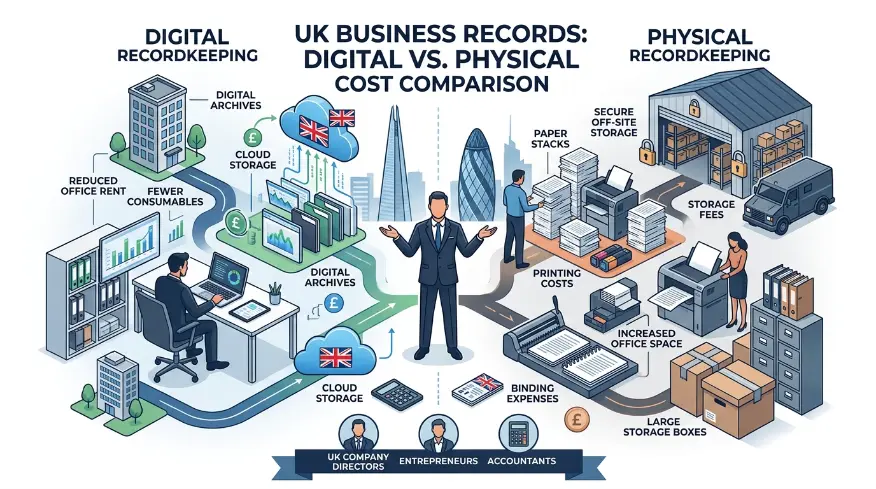
Filing cabinets consume expensive commercial real estate. Digital storage scales infinitely without requiring additional floor space. Paper archives demand specialized filing supplies, including heavy-duty binders and acid-free paper. Administrative staff spend considerable time manually filing physical documents. Automated indexing reduces document retrieval time to seconds.
Off-site storage facilities charge monthly fees for physical archive boxes. Cloud storage subscriptions offer predictable operational expenditure models. Businesses eliminate courier expenses by transmitting digital files instantly. Financial controllers analyze storage costs to optimize corporate expenditure. Efficient archiving directly improves operational profit margins.
How Does Accessibility Influence the Final Decision?
Digital records enable instant global collaboration and multi-user access, whereas physical records require physical presence at the registered office location.
Remote directors and accountants require immediate access to statutory registers. Cloud platforms allow multiple stakeholders to view documents simultaneously. Physical books restrict access to a single person inside the office. Auditors demand rapid document production during compliance reviews. Digital links share verified files securely with regulatory authorities.
Operational agility depends on rapid information retrieval. Modern businesses operate across multiple geographic locations. Digital systems synchronize updates across all connected devices in real time. Physical updates require manual handwriting in bound registers. Efficient communication workflows favor digital infrastructure over paper.
How Can Businesses Implement a Compliant Hybrid Recordkeeping Strategy?
Companies implement hybrid models by maintaining legally mandated physical registers at the registered office while storing operational invoices and board minutes in secure cloud vaults.
| Record Type | Recommended Format | Primary Storage Location | Retention Period |
| Statutory Registers | Physical or Digital | Registered Office / Cloud Vault | Permanent / Life of Company |
| Accounting Records | Digital with Backups | Cloud Accounting Software | 6 Years |
| Board Meeting Minutes | Digital or Bound Book | Secure Document Repository | Duration of Directorships |
| Annual Accounts | Digital Filing | Companies House Portal | 6 Years |
Form My Company assists directors in structuring corporate compliance documents efficiently. Directors utilize the Comprehensive Company Pack to establish flawless administrative foundations.
Evaluating storage methods requires examining workflow demands. Businesses transition from paper to digital formats gradually. Companies review internal security policies during annual audits. Establishing clear protocols prevents compliance failures across all departments.
Deciding between physical and digital company records depends on operational priorities, security thresholds, and regulatory compliance. Digital systems maximize access speed and cost efficiency. Physical archives offer tangible security against digital disruptions. Form My Company delivers structured solutions through the Comprehensive Company Pack to streamline corporate administration.
Explore our Company Pack guide,
How to Decide Which Company Documents to Apostille for Overseas Use?
How to Meet Hiring Compliance Standards With Professional Venues?
Frequently Asked Questions
What is included in a standard UK company pack?
A standard Company Pack from Form My Company typically includes essential incorporation documents such as the certificate of incorporation, memorandum and articles of association, and share certificates. These documents establish the legal existence of a limited company and provide the foundational paperwork required for corporate banking and compliance.
How do I order a physical company pack for my UK business?
Directors can order a physical company pack directly through the Company Pack service page by selecting their preferred presentation binder options during company formation. Form My Company prints, binds, and dispatches these official statutory registers and presentation folders to your designated registered address.
Are digital company records legally acceptable in the UK?
UK company law permits businesses to maintain statutory registers and accounting records in electronic formats as long as the data remains accessible, secure, and verifiable for regulatory inspections. Form My Company provides structured digital documentation alongside physical packages to ensure full compliance with Companies House filing mandates.
Why do UK startups need a formal company pack?
New businesses require a comprehensive company pack to verify corporate identity when opening business bank accounts, applying for merchant accounts, or signing commercial leases. Form My Company supplies these vital governance papers to help directors satisfy strict Know Your Customer and anti-money laundering verifications.
How long does it take to receive a company pack from Form My Company?
Digital versions of your company documents arrive via email immediately upon successful incorporation by Companies House, while physical presentation packs dispatch within one to two working days. Form My Company ensures rapid delivery so directors can immediately execute essential business operations and administrative tasks.