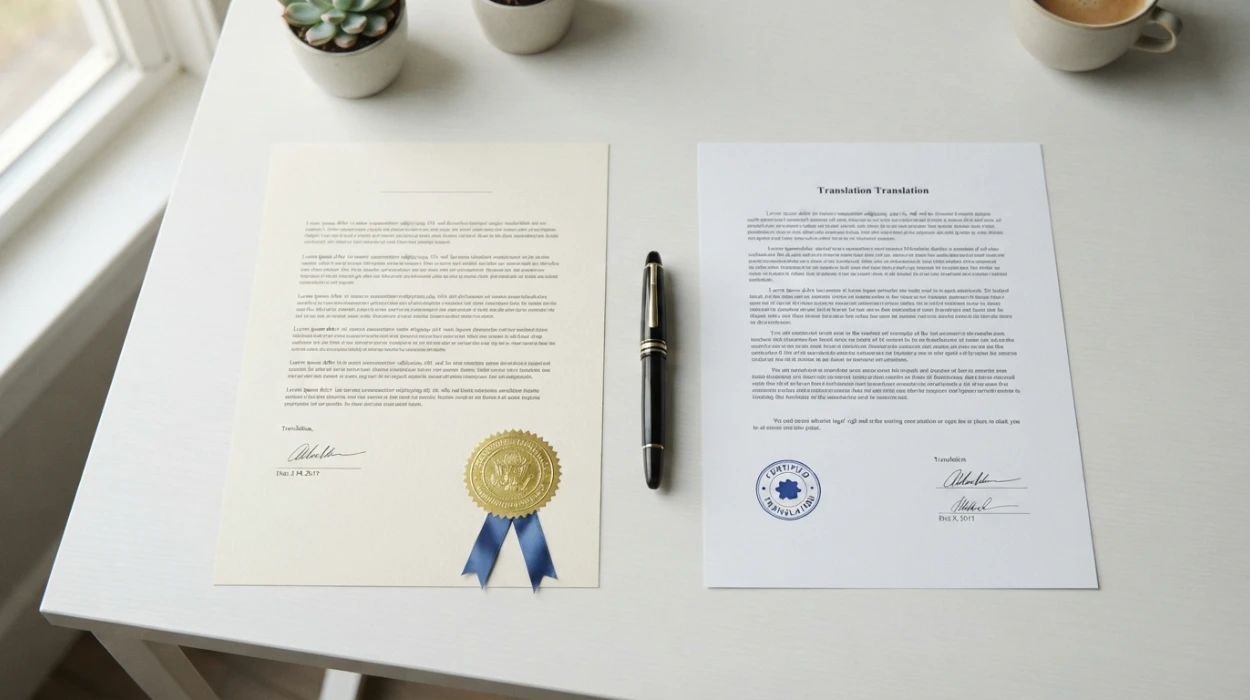
Proving UK company status to foreign authorities requires official corporate documentation validated through specific legalisation pathways, including certified Companies House certificates, notary attestation, and the UK apostille process issued by the Foreign, Commonwealth & Development Office.
Companies expanding internationally face complex administrative hurdles when foreign government agencies, banks, or regulatory bodies demand formal proof of corporate existence. Operating across international borders mandates rigorous compliance with local verification standards. Foreign institutions reject standard domestic printouts because they lack legal recognition abroad. Understanding the precise legalisation framework prevents costly operational delays and ensures foreign entities accept UK corporate credentials without dispute.
What Documents Prove UK Company Status Internationally?
Proving UK company status abroad relies on core corporate records comprising the Certificate of Incorporation, current Articles of Association, updated Confirmation Statements, and official Register of Directors documents.
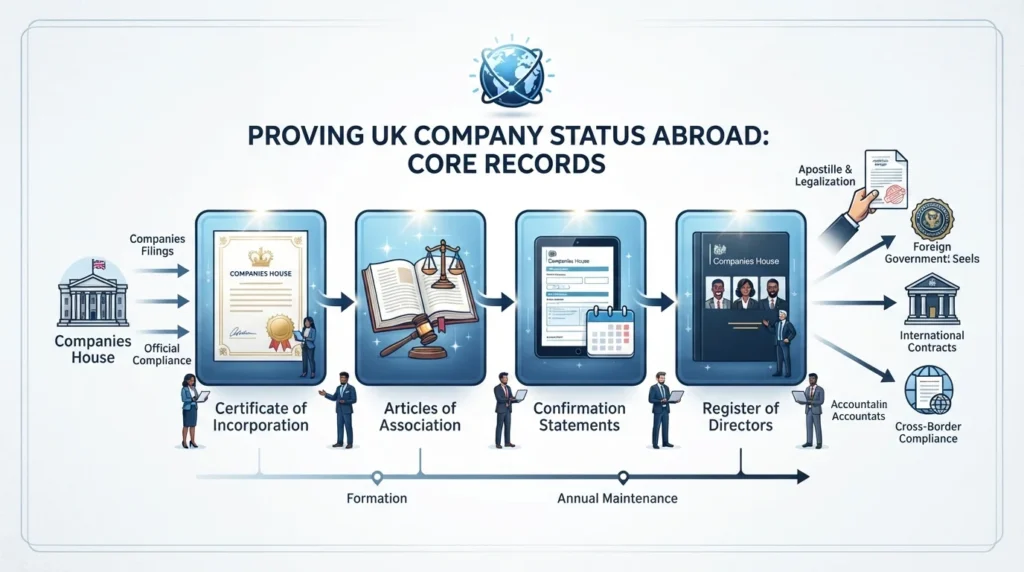
Foreign authorities require primary legal evidence originating directly from the UK Registrar of Companies. Companies House maintains these public records under strict legislative requirements. Three primary verification documents include:
Certificate of Incorporation issued by Companies House
Certified copy of the current Articles of Association
Recent Confirmation Statement confirming active corporate standing
When businesses trade globally, foreign regulators demand certified proof of active legal status. Submitting uncertified digital printouts triggers immediate rejection from international commercial registries. Because foreign legal systems operate under distinct evidentiary rules, companies must secure official copies bearing authentic registrar signatures. Requesting Supplementary Company Documents provides businesses with the precise portfolio required for international compliance audits and overseas branch registrations. Securing these records establishes an unbroken chain of corporate custody.
Why Do Foreign Authorities Require Document Legalisation?
Foreign authorities require document legalisation to eliminate corporate fraud, verify official signatory authority, and ensure foreign business records comply with domestic legal standards.
International law dictates that public documents executed in one country lack automatic legal validity in another. Sovereign states enforce strict border control measures regarding corporate registration to protect national financial systems. Foreign institutions require multi-step authentication because domestic seals remain unrecognised by foreign civil registries. When local regulators evaluate foreign entities, they inspect official stamps, consular endorsements, and security watermarks. If documents lack legalisation, foreign banks freeze commercial accounts and overseas tax authorities deny operational permits. Although international treaties simplify paperwork, non-compliant submissions halt cross-border expansion entirely.
How Does the UK Apostille Process Work?
The UK apostille process validates official corporate documents through the Foreign, Commonwealth & Development Office by attaching a standardised certificate that confirms document authenticity.
Navigating the apostille procedure requires adherence to strict government verification protocols. The Foreign, Commonwealth & Development Office evaluates public seals affixed to corporate documents before issuing the final apostille certificate. Two mandatory authentication steps include:
Verify registrar signatures against official government databases
Attach the physical or electronic apostille certificate to the corporate record
When foreign jurisdictions belong to the Hague Convention, an apostille represents the final required authentication level. Because non-Hague countries demand additional diplomatic verification, companies must route documents through local embassies. If administrative errors occur during submission, government processing bureaus reject the entire application package. Although digital apostilles accelerate processing times, paper verification remains standard for traditional banking institutions. Mastering this sequence ensures foreign authorities accept corporate filings without demanding secondary notarisation.
What Role Do Notary Publics Play in Verification?
Notary publics authenticate corporate documents by witnessing company director signatures, verifying corporate existence, and preparing formal notarised acts for international use.
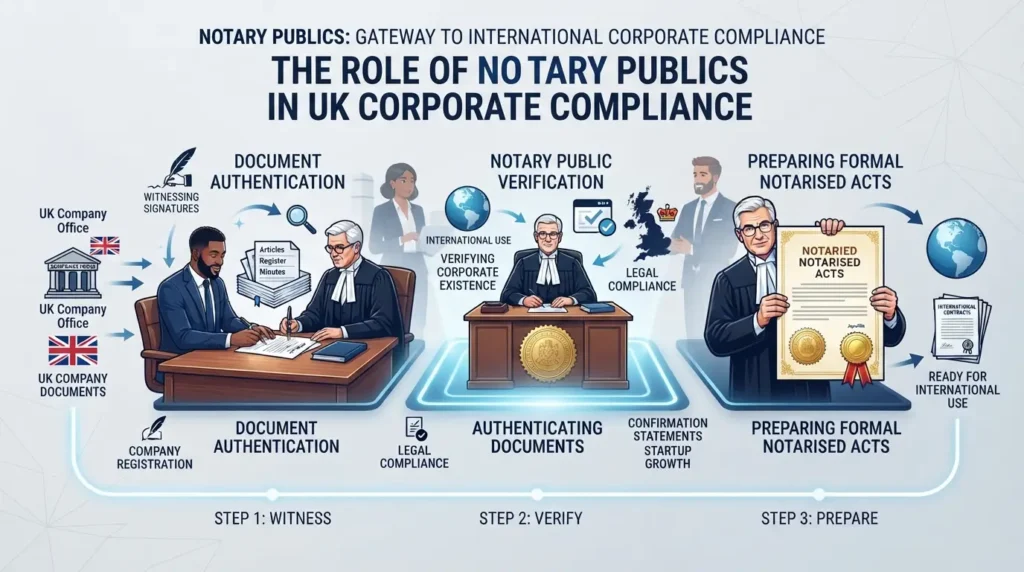
Before documents reach government legalisation offices, private notarial verification establishes the baseline legality of corporate signatures. Notaries hold public office authority to certify private agreements and commercial instruments. Three core notarial duties comprise:
Witnessing authorized director signatures on corporate resolutions
Certifying true copies of original Companies House records
Drafting official notarial certificates for foreign legal submission
When overseas regulators question the origin of private corporate resolutions, notarial intervention resolves authenticity disputes. Because foreign courts demand verified testimony, notaries apply registered seals and signature blocks. If companies bypass notarial review, foreign ministries reject the underlying paperwork during preliminary compliance checks. Although notarial fees increase administrative overhead, professional authentication protects businesses from foreign legal liability. Integrating notariased paperwork with a comprehensive What Is the Role of an Apostille in International Business? review clarifies how these legal instruments interact globally.
How Can Businesses Streamline Cross-Border Verification?
Businesses streamline cross-border verification by partnering with specialized corporate service providers that manage document retrieval, notarial attestation, and international legalisation workflows.
Managing multi-jurisdictional compliance internally strains corporate legal departments and increases error rates. Professional agencies maintain direct channels with government registries and diplomatic missions. Three efficiency strategies involve:
Outsourcing complete document legalisation portfolios to verified agents
Utilizing pre-authenticated corporate document bundles for rapid deployment
Establishing digital repositories for secure international document sharing
When corporate expansion deadlines approach, professional intervention prevents administrative bottlenecks. Because international filing requirements shift frequently, specialized providers update compliance protocols continuously. If businesses attempt independent filings, unexpected bureaucratic hurdles delay foreign commercial registration. Although third-party services require financial investment, expert management ensures flawless execution. Reviewing insights from Get Documents for Your Foreign Branch From Form My Company highlights the practical advantages of streamlined corporate document acquisition.
Proving UK company status to foreign authorities requires meticulous adherence to international legalisation standards, including official document retrieval, notarial attestation, and apostille validation. Navigating these multi-jurisdictional frameworks ensures foreign regulators, banks, and commercial registries accept UK corporate credentials without dispute. Form My Company delivers comprehensive document solutions that secure essential corporate records and streamline international verification for businesses expanding globally.
Explore More Supplementary Company Documents Guide,
How to Get Certified Documents Ready for Apostille
How to Prepare Company Documents for Use Overseas
Frequently Asked Questions
What supplementary company documents do I need for international business expansion?
Businesses expanding overseas typically require certified copies of the Certificate of Incorporation, current Articles of Association, and up-to-date Confirmation Statements. Form My Company assists UK enterprises in securing these essential supplementary company documents to satisfy foreign regulatory compliance and banking requirements.
How do I authenticate UK company documents for use in foreign countries?
Authenticating UK corporate records requires obtaining certified copies from Companies House, followed by notary attestation and the official apostille process through the Foreign, Commonwealth & Development Office. Form My Company provides comprehensive supplementary company documents services to streamline this complex international legalisation workflow.
Can foreign authorities reject uncertified UK company printouts?
Foreign registries, banks, and regulatory bodies routinely reject uncertified online printouts because they lack official registrar validation and legal seals. Obtaining properly authenticated supplementary company documents through Form My Company ensures international authorities accept your UK corporate status without dispute.
What is the difference between a Certificate of Incorporation and supplementary company documents?
A Certificate of Incorporation establishes the initial birth and legal existence of a corporate entity, whereas supplementary company documents encompass subsequent records such as director registers, capital updates, and constitutional amendments. Form My Company supplies both primary and supplementary company documents required for comprehensive overseas branch registration.
How long does it take to obtain legalised company documents for overseas use?
The processing timeline for international corporate document legalisation depends on whether the destination country requires standard apostilles or secondary consular attestation. Form My Company accelerates this verification timeline by securely retrieving and preparing all necessary supplementary company documents for global compliance.