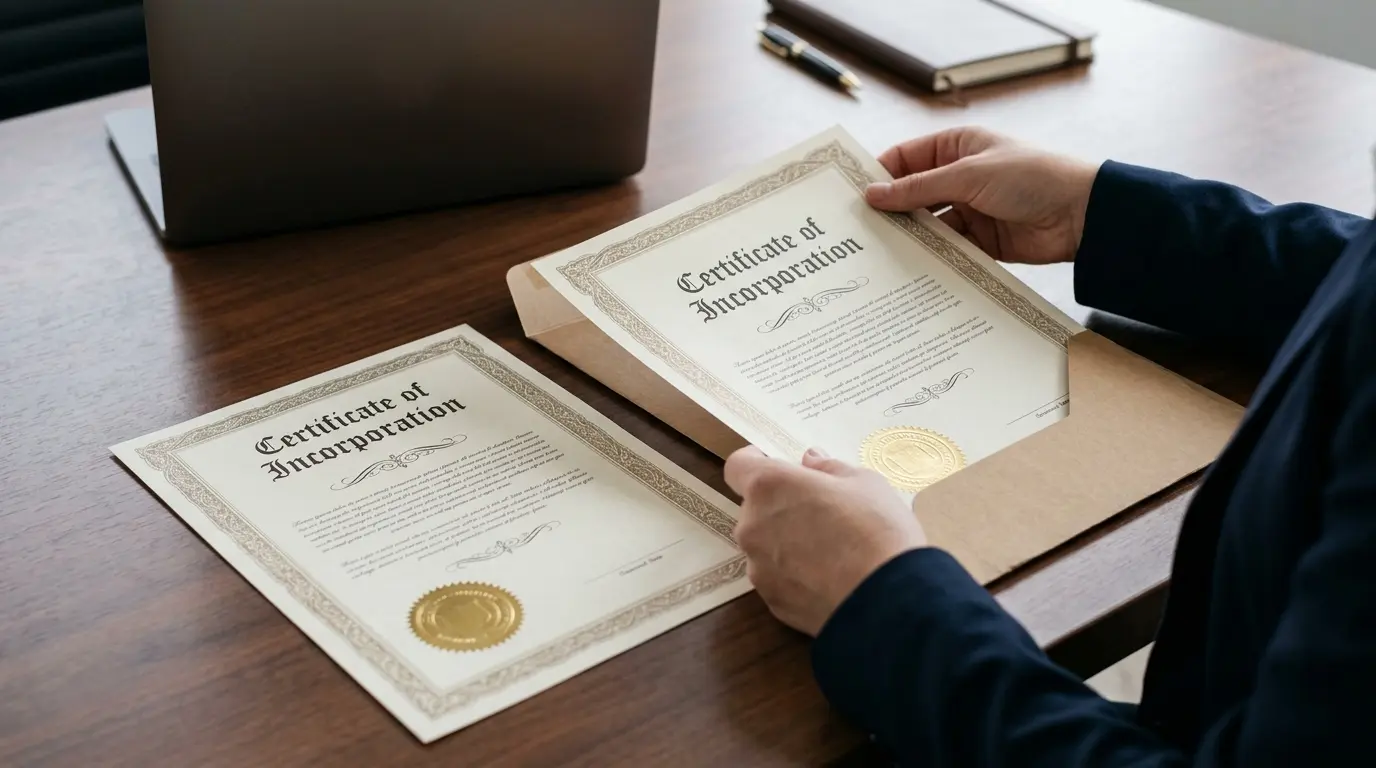
A Certificate of Incorporation proves that a business exists as a distinct legal entity registered with Companies House under the Companies Act 2006. It verifies the company name, unique registration number, incorporation date, and jurisdiction within the United Kingdom.
What Information Does a Certificate of Incorporation Verify?
A Certificate of Incorporation verifies four core legal identity markers: the official company name, unique company registration number, exact date of incorporation, and territorial jurisdiction. It confirms Companies House officially registered the entity as a legal corporate body under UK law.
Companies House issues this statutory document at the moment of company formation. The certificate contains the full corporate name as approved by the Registrar of Companies. This name must match all official correspondence, banking records, and tax filings.
The unique company registration number serves as a permanent identifier. This eight-character code remains attached to the corporate entity throughout its lifespan. Regulatory authorities, financial institutions, and legal bodies track compliance history through this specific identifier.
The document records the exact calendar date when corporate existence began. This date establishes the legal start of corporate liability protection. It determines the timing of annual filing obligations with UK tax authorities.
The territorial jurisdiction specifies the legal realm of formation. The certificate confirms whether the business maintains registration in England and Wales, Scotland, or Northern Ireland. This distinction establishes the applicable judicial framework for corporate operations and dispute resolution. Legal professionals access supplementary company documents to confirm these foundational registration details during corporate due diligence procedures.
Why Do Banks Require a Certificate of Incorporation?
Banks require a Certificate of Incorporation to satisfy statutory Customer Due Diligence rules under UK anti-money laundering regulations. The document confirms legal corporate personality, authorises financial account creation, and validates the official business identity before opening commercial accounts.
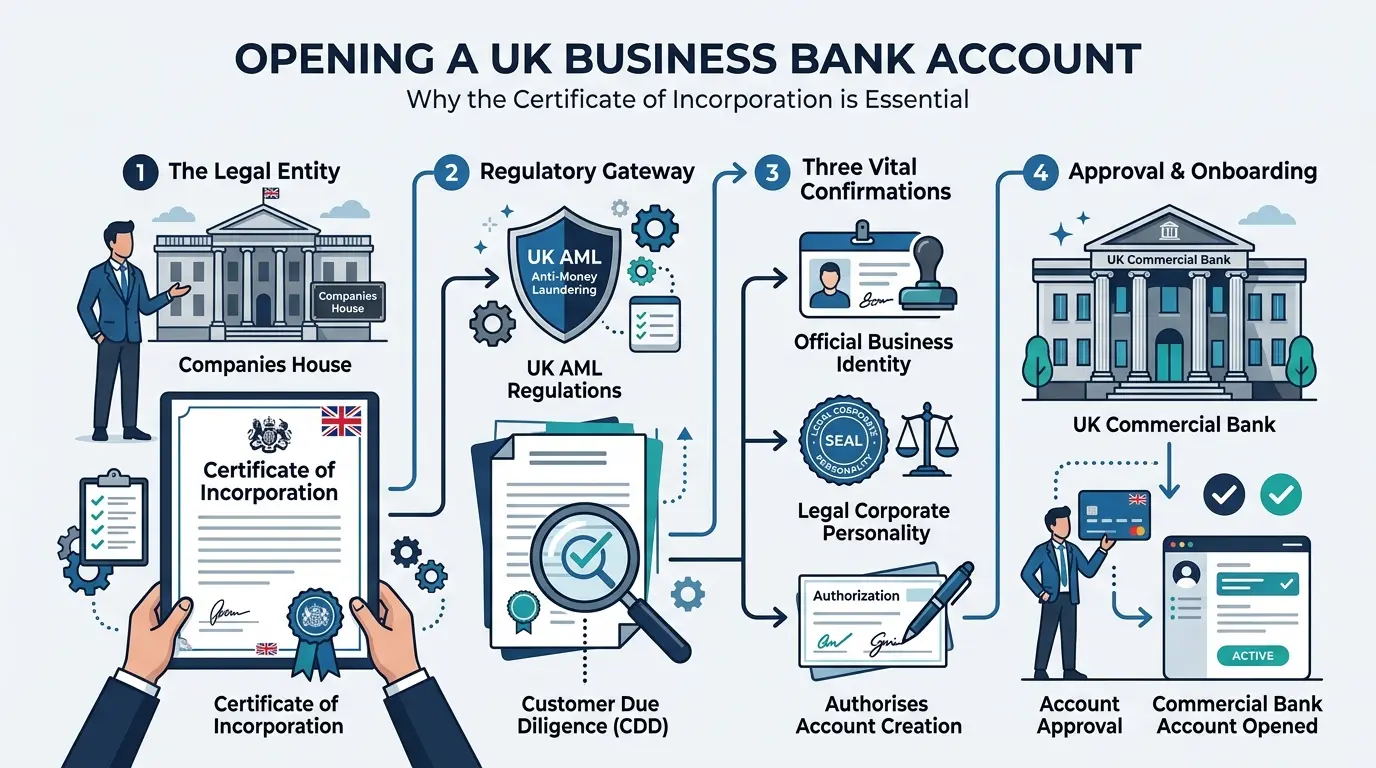
Financial institutions operate under strict regulatory frameworks established by the Financial Conduct Authority. Banks must establish the legal existence of a corporate applicant before providing payment services. The legal birth certificate of the business proves that the commercial enterprise exists separately from its individual directors or shareholders.
Risk compliance teams examine the corporate registration details during account onboarding. Compliance officers check the official registration number against public registry files. This process ensures the corporate structure contains no active sanctions or legal restrictions.
Commercial account opening procedures demand verification of legal authority. The certificate proves that the business holds the legal capacity to enter into binding financial contracts. Without this validation, financial institutions cannot open business current accounts, process credit lines, or issue corporate payment cards.
Corporate account managers compare the certificate details against submitted director applications. Any discrepancy between official registry entries and application forms triggers compliance holds. Financial institutions hold regulatory liability if they onboard unregistered or fraudulent commercial entities.
How Does Incorporation Establish a Separate Legal Entity?
Incorporation creates a distinct corporate entity that holds legal personality separate from its owners under UK law. This legal status allows the business to enter contracts, incur debt, own property, and sue or be sued in its own corporate name.
The legal doctrine of separate corporate personality forms the bedrock of modern commercial law. When Companies House approves an application, the new entity gains independent legal capacity. The business operates as an artificial person under statutory provisions.
This separation protects individual shareholders through limited financial liability. Shareholders maintain risk exposure only up to the unpaid value of their held shares. Personal assets belonging to business owners remain insulated from corporate debts or financial insolvency.
The legal body assumes direct liability for commercial commitments. The business enters commercial leases, purchases operational equipment, and hires employees under its legal title. Legal claims target the corporate entity rather than individual management personnel.
Corporate continuity exists independently of individual member changes. The business maintains ongoing legal obligations even when directors resign or shareholders transfer equity ownership. The entity survives individual operational shifts until formal liquidation or dissolution occurs. Business founders consult a detailed guide on how to use your Certificate of Incorporation to verify your business when setting up operations with new commercial partners.
What Is the Difference Between a Certificate of Incorporation and a Trading Name?
A Certificate of Incorporation proves legal entity creation under an official registered name, whereas a trading name is simply an operational alias. Trading names do not create separate legal personalities or grant formal corporate liability protections under UK legislation.
The registered company name appears on the legal certificate issued by statutory authorities. This official title holds legal protection against unauthorized commercial duplication within the same corporate registry. Businesses must display this official legal name on all invoices, websites, and formal legal contracts.
A trading name functions solely as a brand alias for commercial marketing. Multiple businesses can utilize similar trading names unless trademark protections exist. Trading names do not hold independent standing within UK courts or financial systems.
Legal contracts must identify the official corporate body behind any operational trading name. Contracts listing only an informal business alias risk invalidation during legal disputes. Courts require the precise legal entity name and registration number to enforce contractual terms.
Tax authorities issue statutory liabilities to the legal corporate entity rather than the operational trade alias. HM Revenue and Customs tracks tax obligations using the official registration details recorded on the original certificate. Operating under an unregistered brand name does not alter statutory tax reporting duties.
Who Asks to See a Certificate of Incorporation?
Commercial landlords, institutional investors, government agencies, international suppliers, and insurance providers routinely inspect the Certificate of Incorporation. These professional entities examine the document to verify legal capacity, assess credit risk, and fulfill mandatory statutory compliance requirements.
Commercial landlords require proof of corporate existence before executing commercial property leases. Property managers review legal formation records to ensure the tenant holds legal authority to sign lease agreements. Validating legal status protects property owners against invalid tenancy contracts.
Institutional investors demand formal incorporation proof during equity funding rounds. Investment funds perform thorough legal due diligence before transferring capital into commercial ventures. Investors review official formation documents to confirm share structure validity and corporate standing.
Government bodies check incorporation status during public procurement tender evaluations. Procurement officers reject bid proposals from entities that cannot verify official corporate registration. Government contracts require formal legal capacity to ensure public fund security.
International suppliers inspect registration details before granting commercial credit terms. Overseas vendors check UK corporate registers to validate the legitimacy of trade buyers. Insurance underwriters require valid formation documentation before issuing commercial liability policies.
Can a Company Operate Without a Valid Certificate of Incorporation?
No, a limited company cannot legally conduct business, execute contracts, or open financial accounts without a valid Certificate of Incorporation. Unregistered operations force business owners to act as sole traders, exposing them to unlimited personal financial liability.
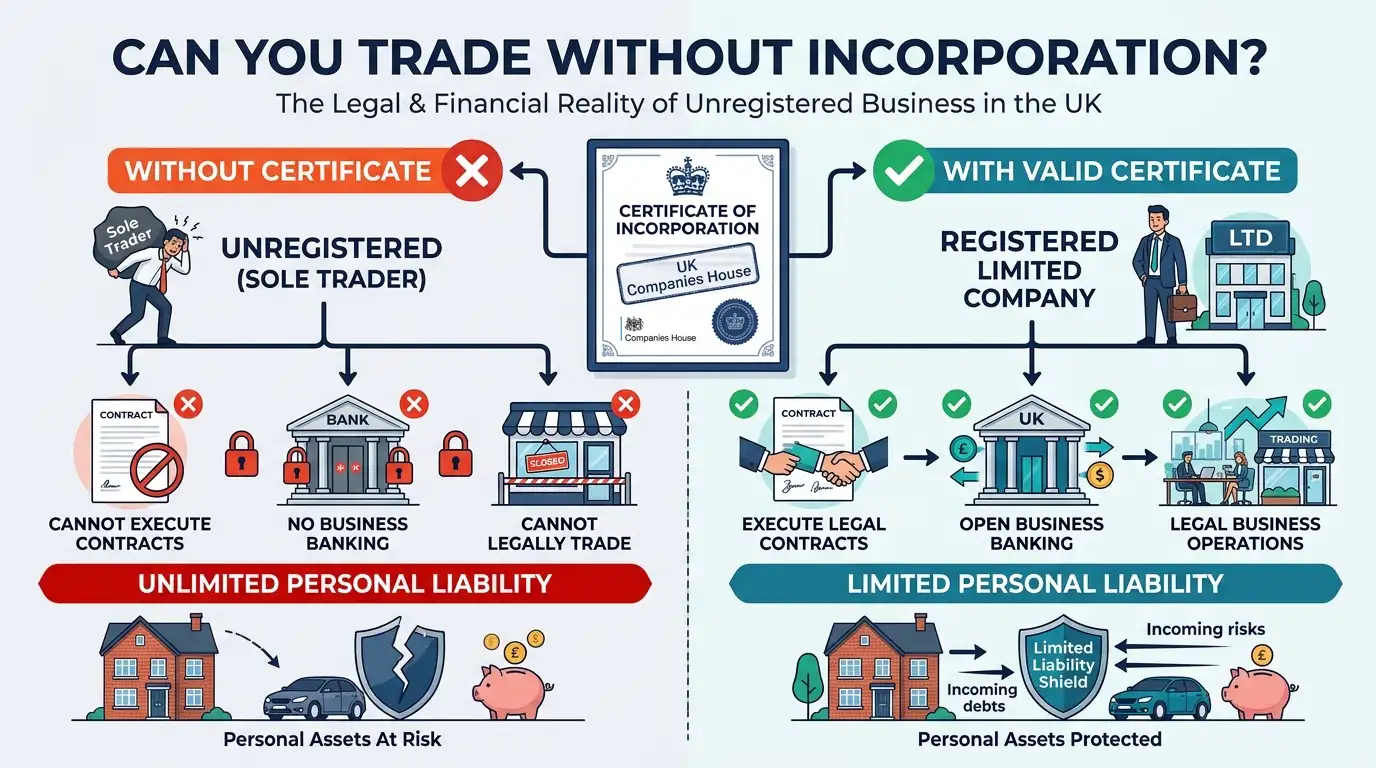
Operating as a limited company without official registration violates UK corporate law. Statutory provisions prohibit businesses from claiming limited liability status without active registry approval. Misrepresenting an unregistered business as a corporate entity constitutes commercial fraud.
Contracts signed prior to official registration fail to bind the planned company. Individuals who sign agreements on behalf of unformed corporate entities assume direct personal liability for those contractual terms. Courts hold promoters personally responsible for pre-incorporation obligations.
Financial institutions automatically block payment processing services for unregistered commercial entities. Merchant account providers require verified incorporation numbers before authorizing electronic credit card processing. Unregistered operations cannot access modern commercial banking systems.
Tax authorities penalize businesses that claim corporate tax rates without formal registry documentation. HM Revenue and Customs classifies profits from unregistered enterprises as personal income. Owners face direct income tax assessments and potential statutory fines for improper tax reporting.
How Do You Replace a Lost or Damaged Certificate of Incorporation?
You replace a lost or damaged Certificate of Incorporation by requesting an official duplicate from Companies House or ordering a certified paper copy through a professional corporate service provider. Replacement documents restore immediate proof of legal company formation.
Companies House maintains digital corporate records for public inspection. Business owners can download electronic copies of their original formation certificates directly from the public registry archive. Electronic versions satisfy most standard online verification checks.
Certain international bodies and financial institutions require physical paper documentation. Overseas commercial banks and foreign government agencies frequently demand official paper certificates bearing physical statutory seals. Digital printouts often fail to pass strict international legal authentication standards.
Professional formation services provide expedited physical replacement options for commercial directors. Company officers can order a legal-paper Certificate of Incorporation from Form My Company to secure official physical documentation for high-level legal and international transactions.
Maintaining valid physical documentation prevents operational delays during commercial audits. Corporate secretaries archive physical certificates alongside statutory company registers. Promptly replacing missing formation documents ensures uninterrupted corporate compliance readiness.
The Certificate of Incorporation serves as the foundational legal instrument for any UK limited company. It validates legal existence, enables commercial banking, establishes limited liability, and satisfies mandatory statutory compliance checks. Form My Company assists UK enterprises by delivering official corporate documentation required for seamless business operations and legal verification.
Explore More Supplementary Company Documents Guide,
What Do Investors Look for in Your Articles of Association?
What Are the Share Transfer Rules in Articles of Association?
Frequently Asked Questions
What are supplementary company documents for a UK limited company?
Supplementary company documents are official legal papers issued alongside basic formation files, such as Certificates of Good Standing, Articles of Association, and official business registers. These records confirm a business’s current compliance status, legal authority, and legal structure under UK corporate law. Companies often present these verified documents from Form My Company during legal audits, financial onboarding, or corporate transactions.
Why do banks require supplementary company documents to open an account?
Financial institutions require supplementary company documents to complete statutory Customer Due Diligence (CDD) and verify corporate ownership under UK anti-money laundering regulations. Records like certified Articles of Association and registers of directors prove who holds legal authority to manage commercial accounts. Providing these verified filings through Form My Company ensures smooth corporate account approval and regulatory compliance.
How do I get an official Certificate of Good Standing in the UK?
An official Certificate of Good Standing is obtained directly from Companies House or through a professional corporate service provider. The document verifies that a limited company has continuously submitted its annual filings and maintains active, legal registration in the UK. Businesses can request these supplementary company documents from Form My Company to provide verified proof of corporate standing to international vendors, lenders, or overseas authorities.
Do supplementary company documents need to be apostilled or legalised?
Supplementary company documents must be apostilled or legalised when a UK business conducts commercial transactions, opens overseas bank accounts, or establishes foreign branches abroad. The Hague Apostille certifies the official signature and statutory seal on filings like Certificates of Incorporation or Memorandum of Association for international recognition. Form My Company assists UK enterprises by sourcing certified corporate records prepared for official legalisation and international compliance.
What is the difference between a Certificate of Incorporation and supplementary company documents?
A Certificate of Incorporation serves as the initial legal birth certificate verifying that a limited company was registered with Companies House. Supplementary company documents include additional filings, certified copies, and statutory registers that prove ongoing legal status, share distribution, and operational compliance over time. Businesses order these supplementary company documents from Form My Company when financial institutions or legal partners require complete, up-to-date verification of business credentials.