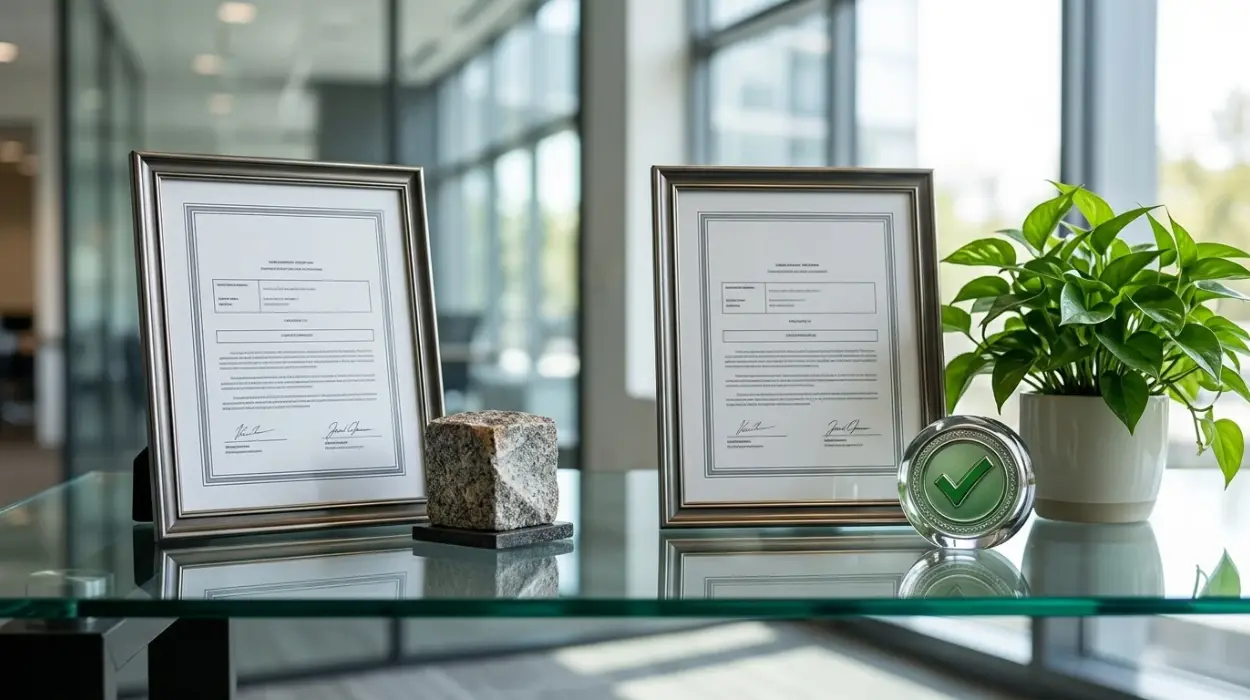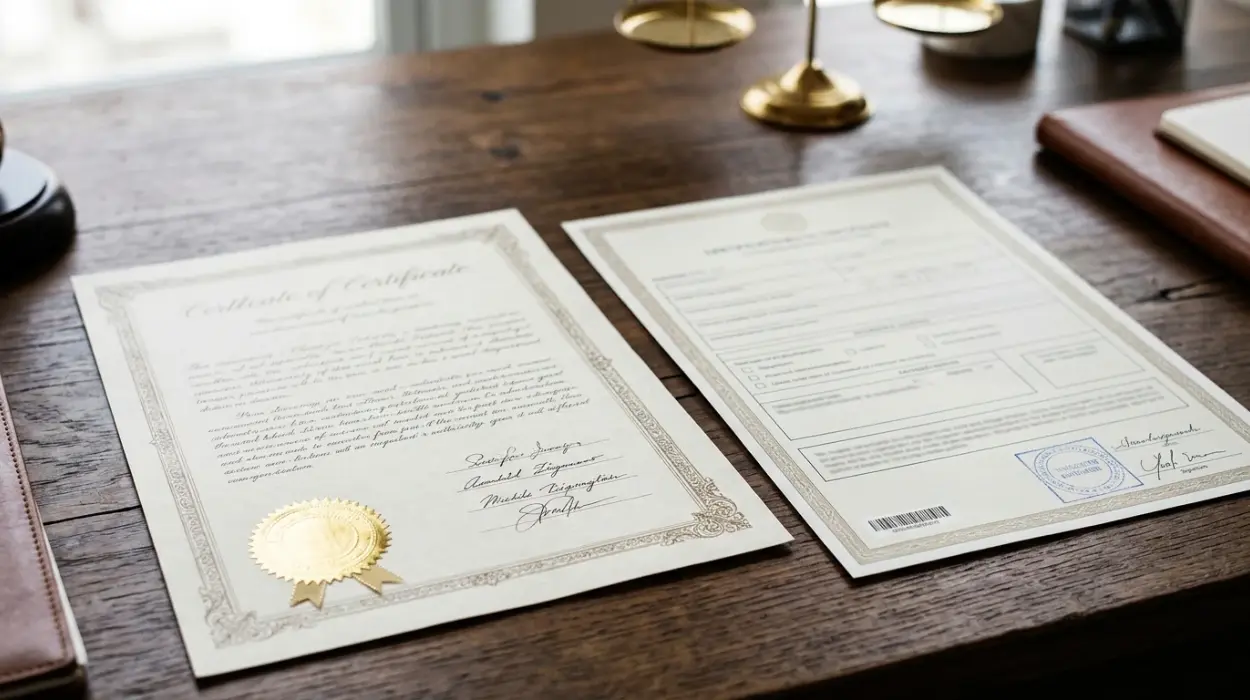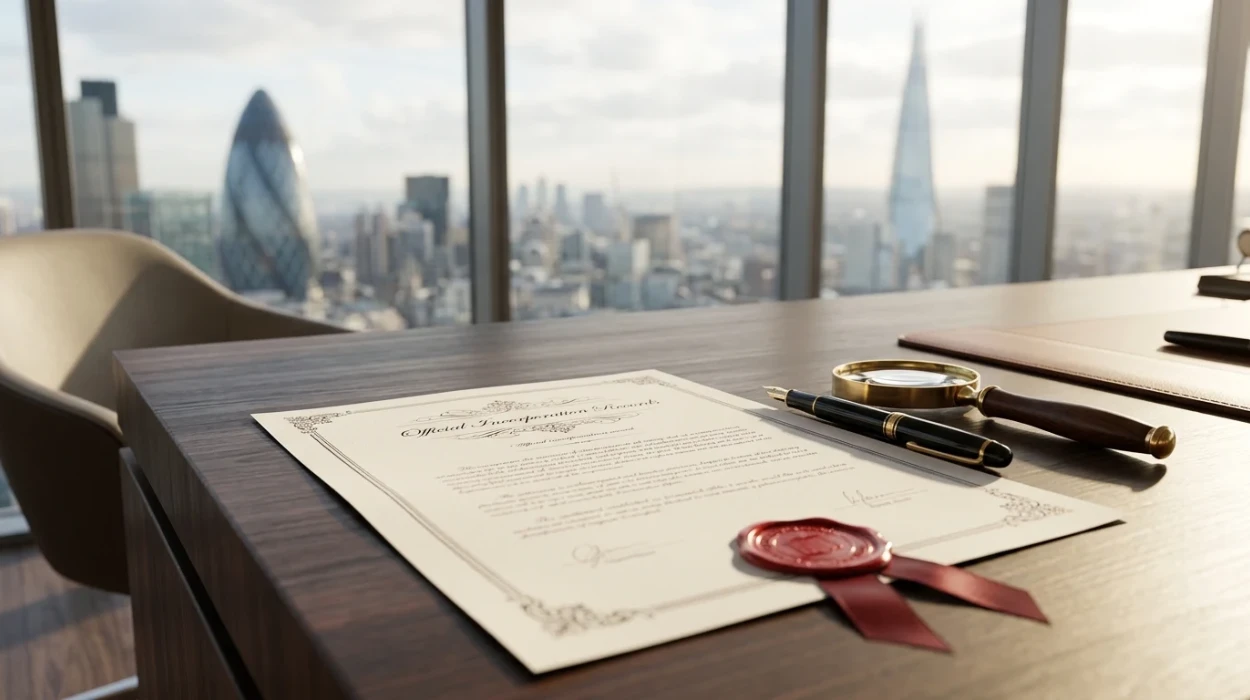
Anyone can request a copy of a UK company’s Certificate of Incorporation because Companies House operates as a public register. Any individual, business, or entity can inspect and obtain official incorporation documents for any registered company without needing permission from the directors.
What Is a Certificate of Incorporation Under UK Company Law?
A Certificate of Incorporation is a legally binding document issued by Companies House that confirms the legal formation and existence of a UK company. It contains the official company name, unique registration number, incorporation date, and legal jurisdiction.
The Registrar of Companies issues this document under the Companies Act 2006 upon successful business formation. It acts as conclusive evidence that the business has complied with all legal registration requirements in England and Wales, Scotland, or Northern Ireland.
Financial institutions and government bodies inspect this document to verify legal entity status. Banks require the certificate when business owners open corporate accounts or apply for commercial credit facilities. Solicitors and accountants examine it during corporate transactions to establish ownership structure and regulatory compliance.
Contracts and commercial agreements frequently require verification of the official registration number listed on the document. Businesses must retain their original digital or printed copy to fulfill regulatory requirements and satisfy professional audit standards.
Why Is a Certificate of Incorporation Part of the Public Register?
UK corporate law requires Companies House to maintain an open public register to ensure corporate transparency, protect creditors, and prevent fraud. Public access allows anyone to verify company details and confirm legal existence before entering into business agreements.
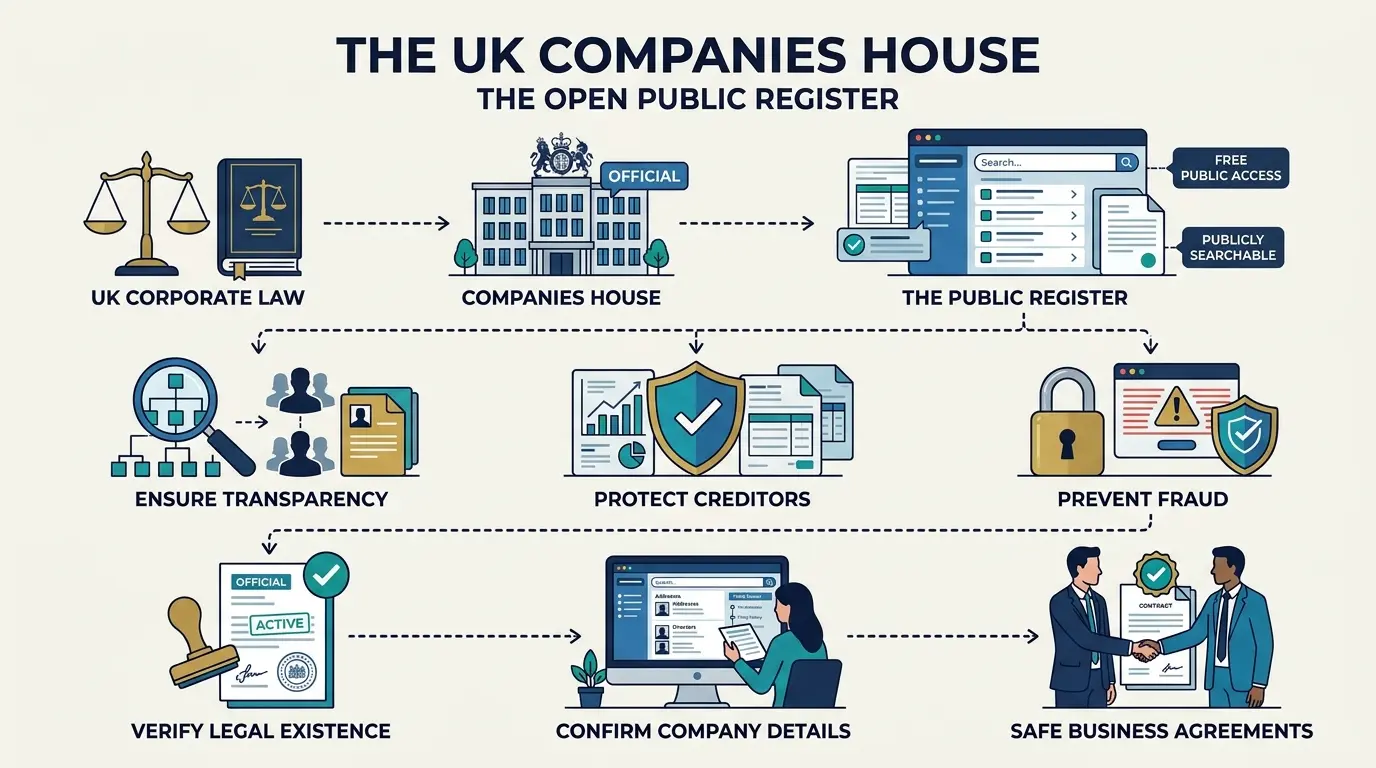
The principle of public inspection forms the foundation of UK corporate governance frameworks. Open access enables investors, suppliers, and consumers to conduct background checks on registered entities. Transparency reduces commercial risk by allowing parties to confirm officer details and active status.
Public register access prevents fraudulent actors from operating under unregistered trading names. When businesses publish their incorporation details, third parties can validate corporate credentials instantly. Transparency fosters trust within the commercial ecosystem and promotes fair competition across UK markets.
Regulatory frameworks enforce open disclosure to support law enforcement and anti-money laundering enforcement. Compliance agencies analyze public corporate records to trace beneficial ownership and prevent financial misconduct. Public access remains a statutory requirement for all private limited companies and public limited companies.
Can Members of the Public Request an Incorporation Certificate Copy?
Yes, any member of the public can order or download a copy of a company’s Certificate of Incorporation directly from Companies House. The requester does not need to hold a position within the company or state a reason for their request.
Individual citizens, journalists, researchers, and competitive businesses hold equal statutory rights to access registered corporate filing data. The electronic register permits free downloads of digital document images filed since the digitisation of public records. Anyone with an internet connection can locate and review filings for active or dissolved UK entities.
Third parties often request certified copies for formal legal proceedings or cross-border commercial transactions. Overseas authorities frequently demand officially authenticated registry documents before allowing UK firms to trade abroad. Public ordering mechanisms ensure these documents remain accessible to international entities at all times.
Requesting third-party corporate records does not alert the company officers or account holders. The Registrar processes requests anonymously through online search portals. Individuals can inspect corporate histories without triggering notification protocols or administrative fees for standard digital views.
How Do Banks and Lenders Inspect Duplicate Incorporation Certificates?
Banks and commercial lenders inspect duplicate Certificates of Incorporation to authenticate corporate identities and satisfy Know Your Customer compliance protocols. Financial institutions compare registered filing details against application data to validate corporate authority and prevent fraud.
Anti-money laundering regulations obligate UK financial institutions to verify customer identities before opening accounts. Compliance officers review official incorporation records to confirm company names, registration dates, and registered office addresses. Lenders cross-reference these official entries against director submissions to detect discrepancies.
Three common verification triggers prompt bank reviews: commercial loan applications, merchant account setup, and international payment processing. When corporate applicants request financial services, credit underwriters demand official documentation to verify active standing. Unverified business applications face immediate rejection under strict statutory compliance standards.
Institutional risk frameworks require certified paper documents or official digital downloads directly from the registrar. Lenders reject informal copies or unverified scans to maintain strict risk controls. Obtaining verified corporate documents ensures seamless integration with institutional compliance requirements.
Do Business Partners and Suppliers Need a Copy of Your Certificate?
Business partners and corporate suppliers frequently request a Certificate of Incorporation during vendor onboarding and credit risk assessments. External vendors review official registration details to establish credit limits, draft contracts, and confirm legal authority.
B2B vendors evaluate corporate credibility before extending trade credit terms or entering supply agreements. Reviewing official incorporation records allows suppliers to confirm that a counterparty legally exists. Verification protects trade creditors against ghost companies and unauthorized trading operations.
Procurement departments mandate official document collection during formal tender processes. Enterprise organizations require potential suppliers to submit verified company documentation alongside insurance certificates. Failing to supply official company papers delays contract execution and vendor approval.
Strategic partners examine corporate details when drafting joint venture agreements and licensing contracts. Corporate lawyers verify statutory details to ensure contracts bind the correct legal entity. Accurate documentation prevents jurisdictional disputes and contract invalidation during future legal claims.
What Information Appears on an Official Certificate of Incorporation?
An official Certificate of Incorporation displays the legal company name, company registration number, date of incorporation, and governing jurisdiction. It also details the company type, such as a private limited company, and bears the official seal of the Registrar.
The document records the exact spelling of the registered corporate name as approved by Companies House. It displays the unique eight-digit company number assigned during initial registration. This number remains permanent throughout the operational life of the business entity.
The certificate specifies the legal jurisdiction where the business maintains its registered status. Jurisdictions include England and Wales, Scotland, or Northern Ireland. The specified jurisdiction determines which court system governs internal corporate affairs and statutory filings.
The Registrar’s official seal and signature authenticate the document as a legal instrument. Modern electronic certificates feature digital security marks and registrar signatures to prevent forgery. These statutory elements confirm the document’s validity across legal, commercial, and financial sectors.
How Can Directors Order Official Certified Copies for International Use?
Directors order official certified copies or apostilled Certificates of Incorporation through official incorporation agents or directly from Companies House. International authorities require apostilled document copies to legalise UK corporate paperwork for overseas business operations.
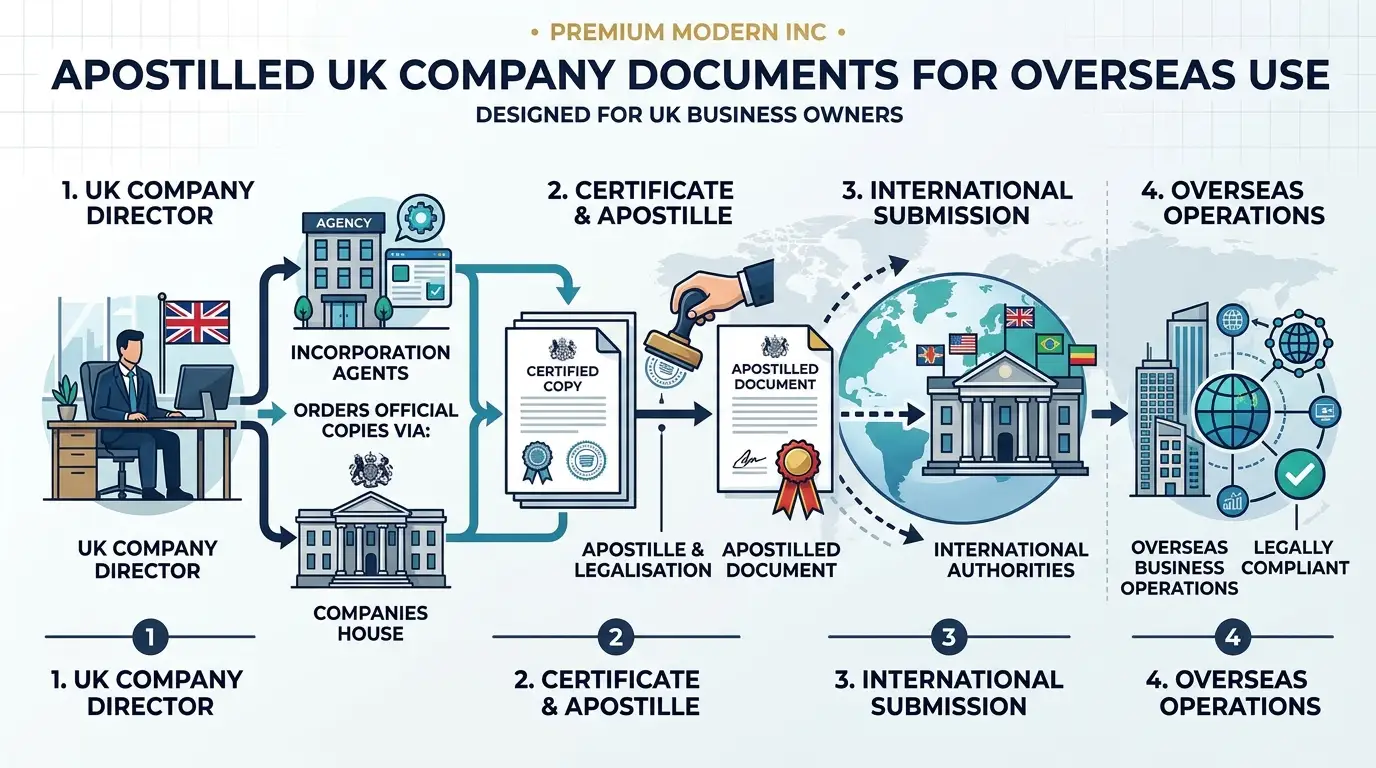
Foreign governments require verified proof of UK corporate status before issuing foreign trading licenses. When UK firms establish overseas branches, foreign registrars demand apostilled incorporation certificates. An apostille certificate attached by the Foreign, Commonwealth & Development Office validates the document for international use under the Hague Convention.
Three verification steps complete the international legalisation process: document retrieval, notary public certification, and Foreign Office apostille attachment. Foreign banks, overseas courts, and international regulators require this full chain of authentication. Skipping verification steps leads to rejected applications in foreign jurisdictions.
Directors can streamline document procurement by working with corporate service providers. Professional agents retrieve official registry documents, arrange legalisation, and deliver physical copies globally. Companies save time and prevent administrative delays during international expansion projects.
How Does Form My Company Help You Retrieve Supplementary Documents?
Form My Company retrieves official company records, certified incorporation duplicates, and supplementary registry documents directly from Companies House. The service provides fast turnaround times, secure document delivery, and full compliance support for UK business owners.
Managing corporate filings requires strict adherence to statutory guidelines and administrative deadlines. When business owners need replacement certificates or official filing copies, manual requests can cause unnecessary operational delays. Working with experienced incorporation specialists guarantees fast access to essential business documentation.
To obtain verified filing packages, businesses can order supplementary company documents through a streamlined online platform. This service ensures corporate records meet strict bank compliance standards and legal authentication rules. Prompt delivery of official files helps businesses satisfy urgent corporate requirements without administrative friction.
Directors seeking practical guidance can review how to order a certificate copy as a director or shareholder to understand the exact filing steps. When immediate replacement records are necessary, business leaders can get duplicate incorporation certificates delivered by Form My Company to maintain uninterrupted business operations. Form My Company manages registry requests efficiently, allowing directors to focus on growing their enterprise.
Explore More Supplementary Company Documents Guide,
What Do Investors Look for in Your Articles of Association?
What Are the Share Transfer Rules in Articles of Association?
Frequently Asked Questions
Who can request Supplementary Company Documents for a UK business?
Anyone can request Supplementary Company Documents for a UK business through Form My Company because Companies House operates an open public register. Third parties, such as lenders, suppliers, and legal teams, regularly request official corporate filings to verify company credentials and assess commercial risk without needing director permission.
Why do banks require official Supplementary Company Documents during onboarding?
Banks require official Supplementary Company Documents to satisfy strict Know Your Customer (KYC) and Anti-Money Laundering (AML) statutory regulations. Form My Company retrieves certified registry files, including Certificates of Incorporation and official filing histories, enabling financial institutions to validate company structure and confirm active trading status.
What information is included in a set of Supplementary Company Documents?
Supplementary Company Documents include official public filings such as the Certificate of Incorporation, Memorandum and Articles of Association, confirmation statements, and change of officer notices. These statutory records detail a company’s legal registration number, registered office address, ownership hierarchy, and official formation date.
How are certified Supplementary Company Documents legalised for international use?
Certified Supplementary Company Documents are legalised for international use by attaching an Apostille certificate from the Foreign, Commonwealth & Development Office (FCDO). Form My Company manages the entire retrieval and legalisation process, ensuring overseas courts, banks, and regulatory authorities accept UK corporate papers.
How quickly can I receive duplicate Supplementary Company Documents from Form My Company?
Form My Company provides fast turnaround times for retrieving official duplicate Supplementary Company Documents directly from the Companies House register. Digital document downloads are delivered via email within hours, while physical certified copies or apostilled corporate papers are dispatched securely via tracked postal services.