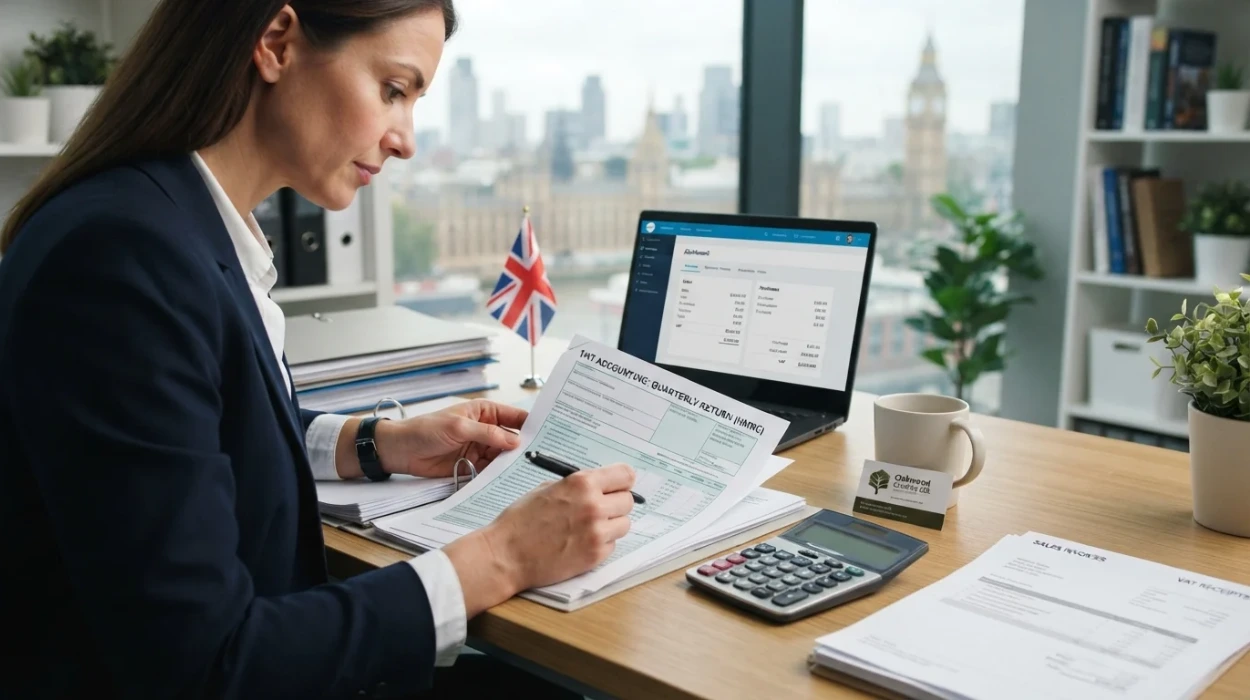
To transition from the Standard VAT Scheme to Digital Cash Accounting, notify HMRC by switching calculation methods at the start of a new accounting period while updating compatible Making Tax Digital software, ensuring your taxable turnover stays below the £1.35 million annual threshold.
The transition from standard accrual-based Value Added Tax (VAT) accounting to a cash-based digital framework represents a structural shift in how UK small and medium enterprises (SMEs) account for output and input tax. Under the standard VAT scheme, liability arises on the date an invoice is issued or received, irrespective of when payment settles. Transitioning to cash accounting aligns tax liabilities strictly with actual bank receipts and disbursements.
Her Majesty’s Revenue and Customs (HMRC) permits eligible VAT-registered entities to adopt cash accounting without filing a formal paper application, provided the business meets statutory eligibility criteria. The transition requires meticulous operational coordination across financial systems to prevent double-counting or omitting tax transactions during the conversion phase.
Adopting digital cash accounting under the Making Tax Digital (MTD) mandate requires software capable of tracking cash movements while maintaining digital links to HMRC systems. UK businesses managing this structural change must reconcile historical accounts receivable and accounts payable ledgers. Aligning ledger adjustments with official HMRC guidelines ensures complete compliance throughout the migration.
What Are the Eligibility Requirements for Cash Accounting?
Businesses qualify for the VAT Cash Accounting Scheme when their projected taxable turnover does not exceed £1.35 million over the next 12 months, provided all outstanding VAT returns are filed and all statutory tax payments are fully settled.
HMRC sets explicit financial thresholds and compliance conditions for entities entering the Cash Accounting Scheme. Taxable turnover includes all goods and services sold that are subject to standard, reduced, or zero-rate VAT, excluding capital asset sales, exempt supplies, and anti-avoidance transactions. Entities must evaluate turnover using trailing twelve-month historical data combined with forward-looking revenue projections.
Compliance status operates as an absolute prerequisite for scheme adoption. HMRC restricts scheme entry to businesses with a clean VAT compliance record, meaning no outstanding returns or unresolved default surcharges. If a business owes VAT debts or has unfiled returns, it must resolve these obligations before modifying its accounting method.
Once enrolled, a business may remain in the Cash Accounting Scheme until its annual taxable turnover exceeds the exit threshold of £1,600,000. Operating within these parameters allows growing enterprises to stabilize cash flows without incurring premature administrative penalties. Assessing eligibility requires an audit of historical revenue streams and debt registers.
How Do You Prepare Your Accounting Ledgers for the Conversion Date?
Preparing accounting ledgers for the conversion date requires identifying all outstanding sales and purchase invoices, isolating unpaid balances, and marking historical transactions to prevent double-counting VAT on future cash receipts.
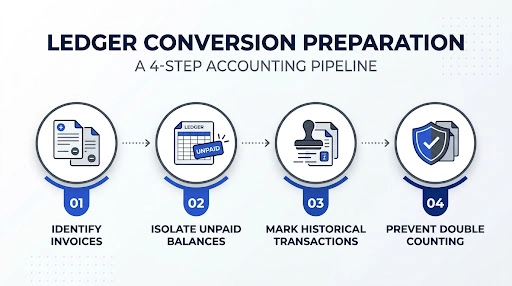
The principal technical challenge during a VAT scheme conversion involves preventing dual taxation or dual credit on transitional transactions. Invoices issued under the Standard VAT Scheme have already generated an output or input tax obligation on the invoice date. When cash settles for these historic invoices after the conversion date, the accounting system must not report the tax a second time under the cash accounting framework.
Financial teams must establish a strict conversion cutoff date, which must align perfectly with the first day of a new VAT accounting period. Prior to this date, accountants must generate detailed accounts receivable and accounts payable aging reports. These reports delineate exactly which invoices were declared on previous standard VAT returns.
Digital accounting software must be configured using specific transitional rules. Outstanding debtor balances must be tagged so that when bank reconciliations register incoming cash payments, the software suppresses output VAT generation. Similarly, historical creditor balances paid post-conversion must not trigger duplicate input tax reclaims.
What Steps Are Required to Implement Digital Cash Accounting in MTD Software?
Implementing Digital Cash Accounting in Making Tax Digital software involves updating the scheme settings at the start of the accounting period, verifying digital link compliance, and configuring bank feeds for automated reconciliation.
Functional compatible software forms the backbone of HMRC compliance under the MTD initiative. To implement the transition within digital systems, system administrators must navigate to the organization’s tax settings and alter the VAT calculation basis from “Accrual/Standard” to “Cash Basis.” This parameter change alters how the software engine processes transaction data into the 9-box VAT return.
Digital links must remain unbroken during and after the software re-configuration. HMRC defines a digital link as an electronic transfer of data between software programs, products, or applications without manual copy-and-paste interventions. Three system integration components—automated bank feeds, API-driven payment gateways, and electronic point-of-sale (POS) systems—must directly stream transaction data into the primary ledger.
Validation of the digital workflow requires running a test reconciliation on the initial cash transactions of the new period. The accounting system must correctly capture the tax point as the date of bank clearing rather than the invoice creation date. Maintaining audit trails within MTD software protects the business during routine HMRC compliance reviews.
How Do You Handle Outstanding Debtors and Creditors During Transition?
Handle outstanding debtors and creditors by tracking pre-conversion invoices in a dedicated transitional ledger and applying standard accounting rules to payments received after adopting the cash scheme.
When transitioning schemes, unpaid sales invoices represent output tax already accounted for under standard rules. When a customer settles a pre-conversion invoice, the funds entering the bank account must be reconciled against the original invoice record without generating a new VAT liability on the current period’s MTD return. Failing to segregate these payments leads to inflated tax liability calculations.
Unpaid purchase invoices require identical operational handling to protect cash flow and compliance integrity. Input tax on pre-conversion supplier invoices was claimed when the invoice was originally entered into the purchase ledger. Subsequent cash disbursements to suppliers must be matched to those historical invoices without triggering a second input tax claim.
Businesses utilizing professional support find that structured data migration mitigates operational friction. Reviewing tax treatment across complex business transactions requires evaluating past filings and future revenue streams. Understanding the foundational principles of historical tax reclaims, such as What Is Pre-Registration VAT and Can You Reclaim Tax on Past Expenses?, helps financial controllers maintain complete compliance across changing operational regimes.
What Are the Operational Differences Between Standard and Cash VAT Schemes?
The operational difference lies in the tax point: the Standard VAT Scheme calculates tax on invoice dates, whereas Cash Accounting calculates tax strictly when cash settles in bank accounts.
The Standard VAT Scheme requires entities to act as tax collectors ahead of cash realization. If a business issues an invoice with 30-day or 60-day payment terms, the output VAT must be remitted to HMRC at the end of the quarterly period containing that invoice date, regardless of whether the client has paid. This model exposes businesses to cash flow deficits when managing slow-paying commercial clients.
Cash Accounting eliminates the cash flow lag by shifting the tax point to the date of financial settlement. Output VAT liability arises only when funds clear into the corporate bank account. Furthermore, Cash Accounting provides automatic bad debt relief; if a customer fails to pay an invoice, no output VAT is ever remitted to HMRC, eliminating the separate six-month bad debt claim process required under standard accrual rules.
Choosing the optimal scheme requires matching business operations with cash flow requirements. Selecting appropriate frameworks depends on credit terms, customer payment behavior, and capital expenditure timelines. Businesses evaluating their accounting setup benefit from commercial guidance such as Expert Scheme Selection: How Form My Company Helps You Pick Between Standard and Cash Accounting, which outlines decision criteria for growing UK enterprises.
How Do You Maintain HMRC Compliance After Changing VAT Schemes?
Maintain HMRC compliance after changing VAT schemes by conducting quarterly bank reconciliations, monitoring the £1.6 million exit threshold, and keeping digital transaction records for six years.
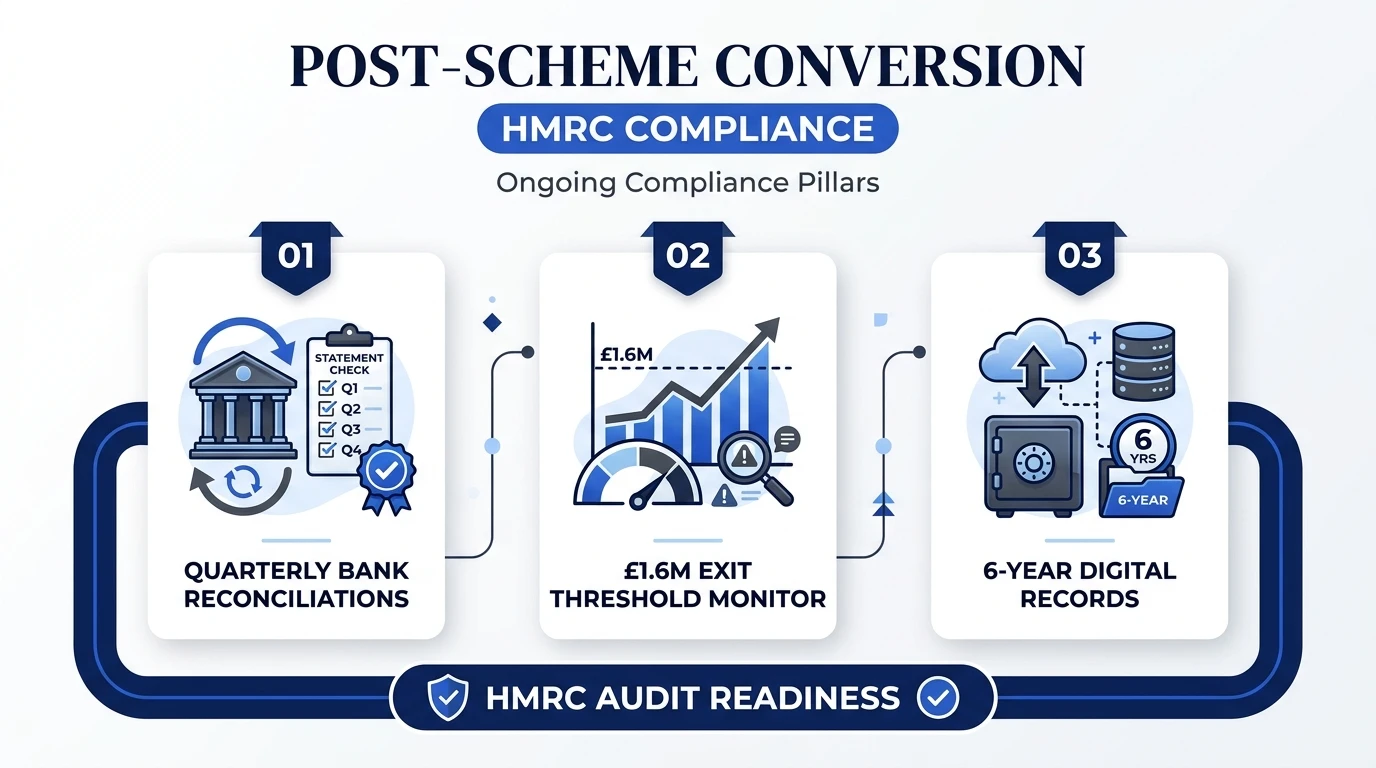
Ongoing compliance under the Cash Accounting Scheme requires rigorous internal control procedures. Because tax calculations depend entirely on cash movements, bank accounts, credit cards, and petty cash ledgers must be reconciled comprehensively at the close of every MTD reporting period. Unreconciled bank items create discrepancies in reported output and input tax values, triggering automated HMRC audit flags.
Record-keeping obligations remain stringent under MTD regulations. HMRC mandates that VAT-registered businesses preserve all digital tax records, electronic invoices, bank statements, and reconciliation files for a minimum of six years. Digital accounting archives must show clear audit trails linking individual bank line items directly to corresponding invoices and calculated tax amounts.
Monitoring turnover continuously prevents unintentional breaches of scheme rules. If rolling twelve-month taxable turnover exceeds £1,600,000, the business must leave the Cash Accounting Scheme at the end of the current VAT period and return to the standard scheme. Engaging specialist assistance through VAT Registration Assistance ensures proper registration management, scheme compliance, and smooth communications with tax authorities.
Transitioning from the Standard VAT Scheme to Digital Cash Accounting optimizes working capital by aligning tax payments directly with cash receipts. UK businesses must verify their turnover eligibility, establish precise conversion dates, and reconfigure MTD-compliant software to eliminate duplicate tax entries. Proper execution safeguards compliance while removing the financial burden of paying output VAT on unpaid customer invoices. Form My Company assists UK enterprises through every stage of VAT registration, scheme selection, and MTD implementation, ensuring business structures remain fully compliant with HMRC standards.
Explore More VAT Registration Assistance Guide,
How to Prepare Company Documents for Commercial Insurance Cover
How to Combine Formation Documents and Registers to Prove Ownership
Frequently Asked Questions
What is VAT Registration Assistance and how does it help UK businesses?
VAT Registration Assistance is a professional service provided by Form My Company to guide UK businesses through the process of registering for Value Added Tax with HMRC. This service ensures accurate classification, correct scheme selection, and timely submission of statutory documents to prevent processing delays or compliance penalties.
Who is required to register for VAT in the UK?
UK businesses must register for VAT if their taxable turnover exceeds the statutory £90,000 threshold within a rolling 12-month period. Entities may also opt for voluntary registration below this threshold to reclaim input tax on business expenses using Form My Company’s VAT Registration Assistance.
How long does the HMRC VAT registration process take?
HMRC typically processes VAT registration applications within 5 to 30 working days, depending on the complexity of the business structure and verification checks. Utilizing VAT Registration Assistance from Form My Company ensures all application details and identity verifications are submitted correctly to avoid unnecessary processing lags.
Can a business register for VAT voluntarily before reaching the turnover threshold?
Yes, UK enterprises can complete voluntary VAT registration regardless of their current annual turnover. Registering voluntarily allows companies to reclaim VAT paid on startup purchases, enhance commercial credibility, and establish early compliance through Form My Company.
What documents are required to complete a VAT registration application?
To submit a complete VAT application, a business must provide its Company Registration Number, official business address details, director identity documentation, and UK bank account information. Form My Company reviews and verifies these credentials during the VAT Registration Assistance workflow to maintain full alignment with HMRC standards.