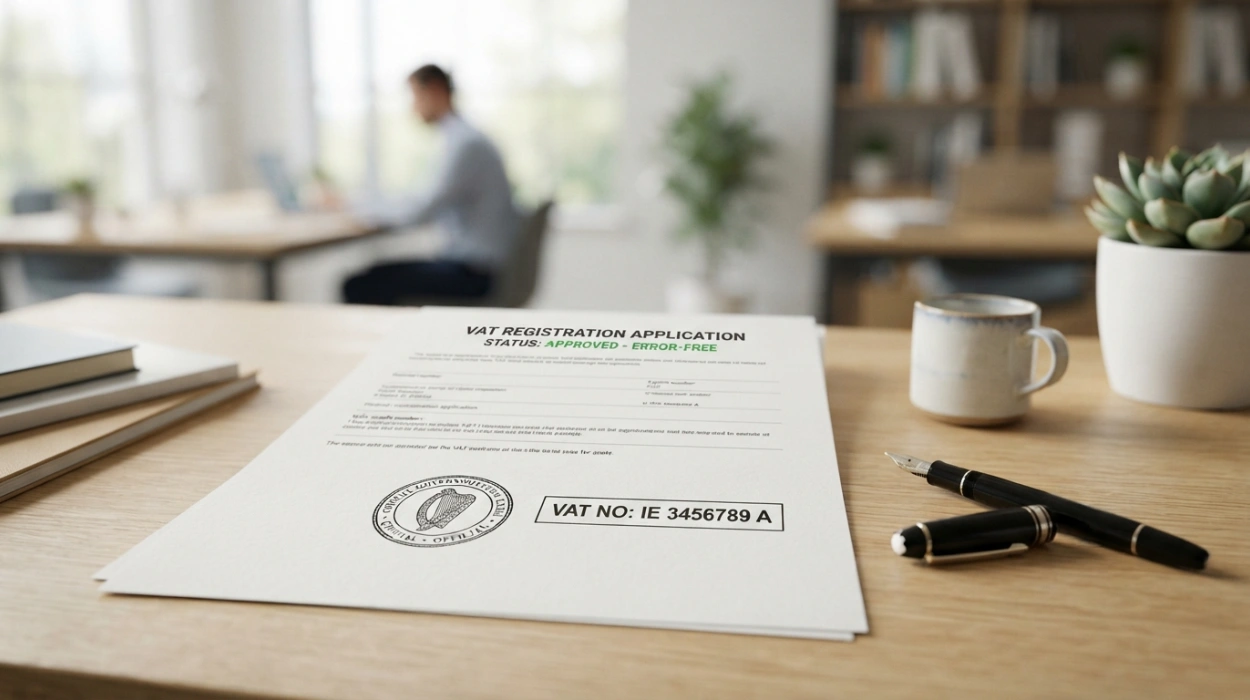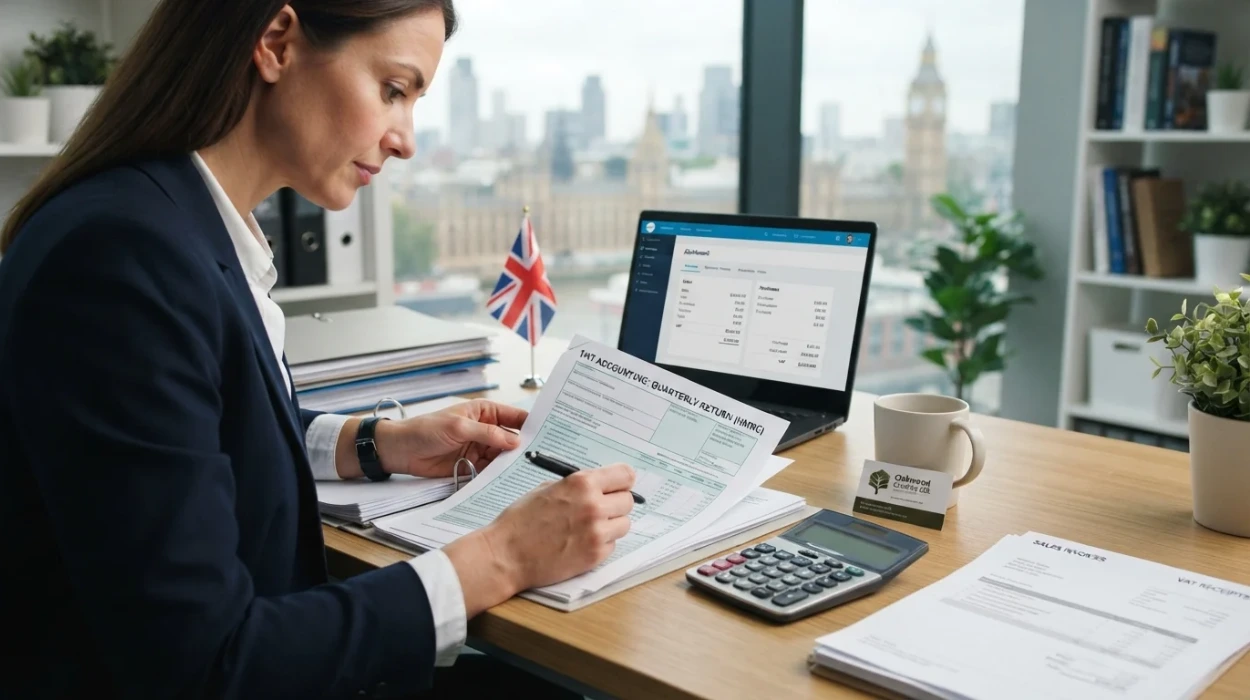
VAT-registered UK businesses must charge the correct rate of Value Added Tax, file accurate digital returns with HM Revenue and Customs every three months, maintain meticulous financial records, and remit any tax due on schedule.
Operating a business in the United Kingdom requires strict adherence to HM Revenue and Customs regulations once your taxable turnover exceeds the mandatory threshold of 90,000 British pounds. Compliance is not optional, and understanding every statutory obligation prevents costly penalties. Business owners must implement robust financial systems to track transactions and fulfill legal duties efficiently.
Why Must Businesses Charge the Correct VAT Rates?
VAT-registered entities must apply accurate standard, reduced, or zero tax rates to taxable supplies, issuing compliant invoices and accounting for every transaction correctly.
HM Revenue and Customs mandates that companies apply appropriate percentages based on product classifications. The standard rate sits at 20 percent for most goods and services. A reduced rate of 5 percent applies to domestic fuel and power. Zero-rated supplies include items like books and children’s clothing. Businesses apply these percentages at the point of sale to ensure correct tax collection. When selling to consumers, prices displayed must include the applicable tax amount. Commercial transactions require detailed VAT invoices showing specific supplier registration numbers. Correct application prevents undercharging or overcharging clients. Accurate point-of-sale calculations protect commercial entities from retrospective assessments during audits. Businesses leverage professional VAT Registration Assistance to establish correct initial tax accounting structures.
How Does Making Tax Digital Impact Record Keeping?
Making Tax Digital mandates that registered companies maintain digital financial records and submit quarterly returns using approved software compatible with HM Revenue and Customs Application Programming Interfaces.
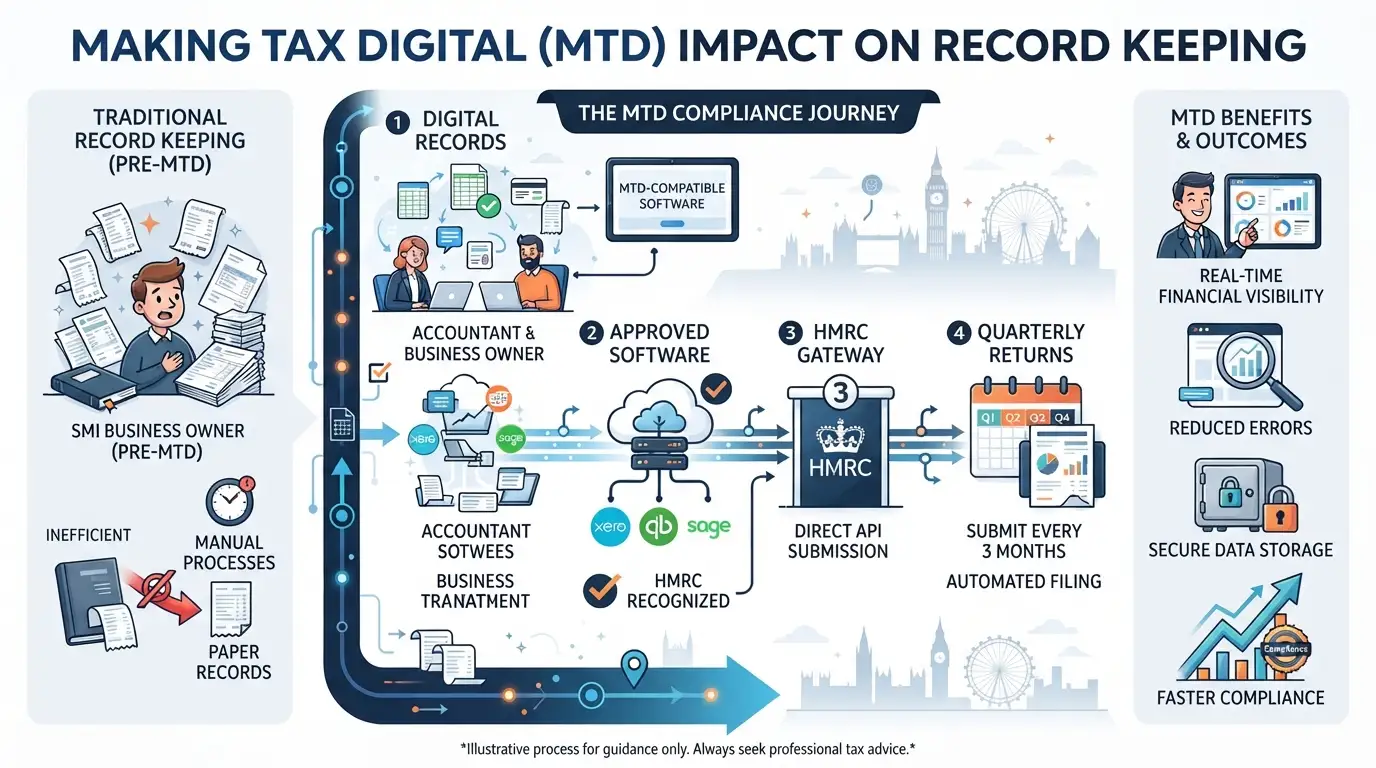
HM Revenue and Customs requires all registered enterprises to store transaction data electronically. Paper logbooks no longer satisfy statutory compliance standards. Software solutions must record all sales invoices, purchase receipts, and daily adjustments automatically. Digital links must connect every piece of software used in the accounting chain. This digital continuity eliminates manual data entry errors that cause submission discrepancies. Businesses preserve these electronic records for a mandatory period of six years. Tax inspectors can request access to digital audit trails during compliance checks. Secure cloud storage prevents data loss from physical damage or hardware failure. Automated backups ensure continuous availability of historical financial information.
When Must Quarterly VAT Returns Be Submitted?
Registered businesses must submit their digital returns and settle outstanding tax liabilities within one calendar month and seven days following the end of each quarterly accounting period.
HM Revenue and Customs assigns specific quarterly schedules to every registered entity based on their registration anniversary. Businesses calculate their box totals by subtracting input tax from output tax. The resulting net figure represents the liability owed or the repayment claimed. Payments clear directly into the government bank account using Faster Payments or Direct Debit. Direct Debit setups collect funds automatically three working days after the standard deadline. Late submissions trigger default surcharges or penalty points under modern civil enforcement regimes. Accurate cash flow forecasting ensures funds remain available on payment dates. Enterprises review their figures meticulously before final electronic transmission. To master this scheduling, read our guide on how to prepare your first VAT return for HMRC without common errors.
What Are the Rules Regarding Input Tax Recovery?
Companies can reclaim tax paid on business-related purchases provided they hold valid VAT invoices and use the goods exclusively for taxable commercial activities.
Recovery rules depend strictly on the intended business use of purchased items and services. Expenses must directly relate to taxable supplies generated by the enterprise. Private purchases or exempt activities disqualify businesses from reclaiming associated tax amounts. Invoices must display the supplier registration number and explicit customer details. Partial exemption rules apply when companies generate both taxable and exempt revenue streams. Annual adjustments recalculate the exact recoverable proportion based on final turnover figures. Proper documentation protects enterprises during random compliance reviews by tax authorities. Maintaining strict separation between personal and commercial accounts simplifies the reclamation process.
Explore More VAT Registration Assistance Guide,
What Is a VAT Number and How Can Customers Verify a UK Business?
What Is Pre-Registration VAT and Can You Reclaim Tax on Past Expenses?
How Should Businesses Handle Cross-Border Transactions?
International trade requires applying complex place-of-supply rules, verifying customer credentials, and accounting for import VAT through postponed accounting mechanisms.
Global commerce introduces distinct compliance layers for United Kingdom enterprises. Importing physical goods from overseas requires submitting customs declarations alongside standard tax returns. Postponed accounting allows businesses to account for import tax on their regular return rather than paying upfront at ports. Exporting goods outside the jurisdiction typically qualifies for a zero rating if proof of export exists. Service supplies depend on whether the customer operates as a business or a consumer. B2B service supplies generally follow the reverse charge mechanism, shifting accounting responsibility to the recipient. Verifying overseas VAT numbers prevents fraudulent transactions and eliminates unexpected tax liabilities. Specialized compliance frameworks govern trade with Northern Ireland under specific protocol agreements.
What Happens During HM Revenue and Customs Audits?
Tax authorities conduct routine or targeted compliance checks to inspect records, verify calculations, and penalize deliberate errors or careless record-keeping.
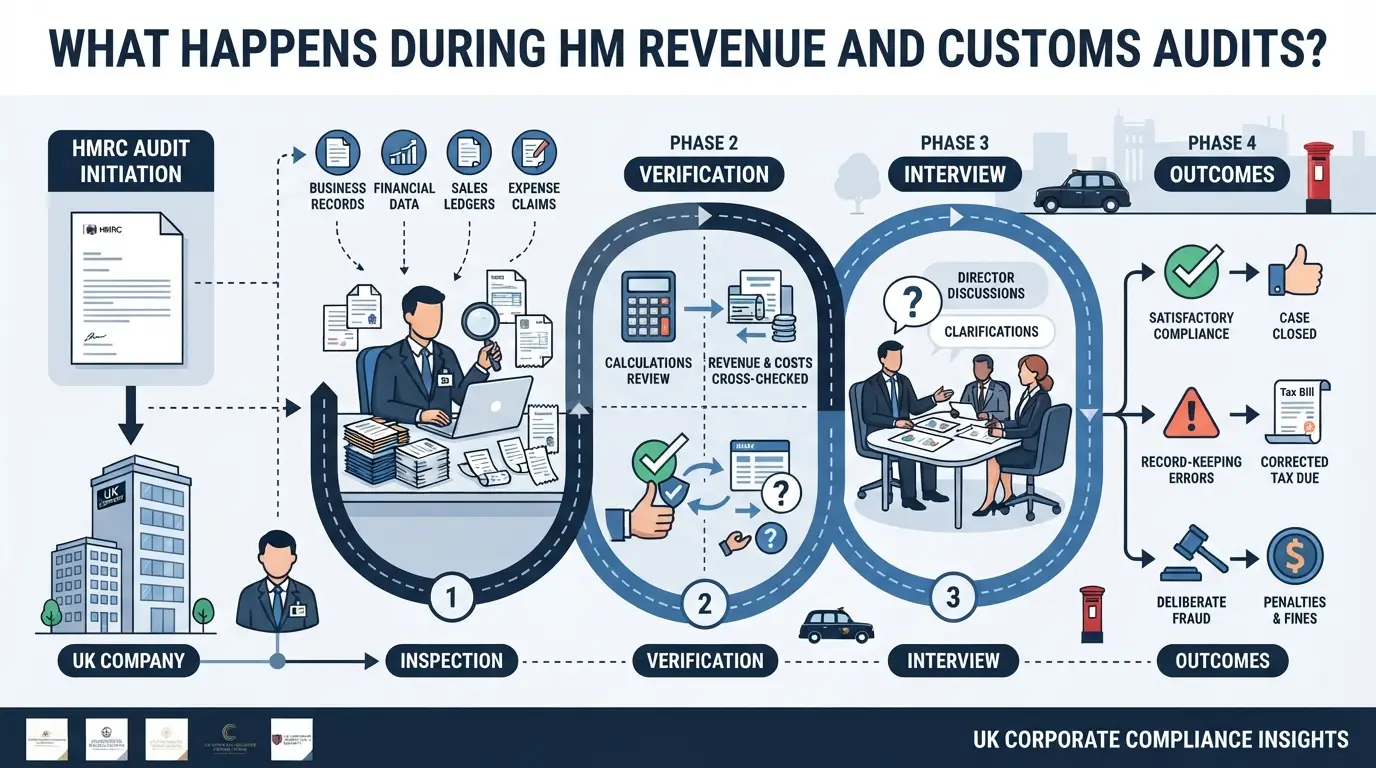
HM Revenue and Customs selects businesses for audit based on data anomalies or random sampling methods. Inspectors examine digital ledgers, bank statements, and sample invoices during the review. Business owners must cooperate fully and provide requested data within statutory timeframes. Discovering discrepancies results in financial penalties scaled according to the behavior category. Unprompted disclosures of errors attract significantly lower fines than hidden omissions discovered by inspectors. Resolving complex structural compliance challenges often requires expert intervention. For a seamless experience, explore end-to-end support: how Form My Company handles your complete HMRC VAT registration process from initial application to final approval.
Managing statutory tax duties demands constant vigilance, precise calculations, and adherence to strict digital submission timelines. Compliance protects enterprises from severe financial penalties and maintains operational integrity. Form My Company delivers comprehensive guidance to navigate these complex regulatory landscapes successfully. Professional oversight ensures your business remains fully compliant with all HM Revenue and Customs mandates.
Frequently Asked Questions
What is VAT registration assistance and do I need it?
VAT registration assistance is a specialized professional service that guides business owners through the complex HM Revenue and Customs application process. You need this support when your taxable turnover exceeds the mandatory threshold of 90,000 British pounds or when you choose voluntary registration to reclaim input tax. Form My Company ensures your application avoids common administrative delays and satisfies all statutory compliance requirements.
When does a UK business legally need to register for VAT?
A UK business must legally register for Value Added Tax within 30 days of the end of any month in which its rolling 12-month taxable turnover exceeds 90,000 British pounds. Companies can also register voluntarily before reaching this threshold to recover tax on business purchases. Form My Company evaluates your financial statements to determine your exact legal obligation date and prevent late-registration penalties.
How long does the HMRC VAT registration process take?
The standard HM Revenue and Customs processing time for a digital application typically ranges from 14 to 30 days. Complex commercial structures or requests for additional verification can extend this timeline significantly. Form My Company reviews all submitted documentation beforehand to minimize administrative queries and accelerate official approval.
Can I register for VAT voluntarily if my turnover is below the threshold?
Businesses with a taxable turnover below 90,000 British pounds can register voluntarily to recover tax on commercial expenditures and enhance corporate credibility. Voluntary registration allows startups to reclaim input tax on initial equipment and operational overheads before generating significant revenue. Form My Company analyzes your cost structures to assess whether voluntary registration benefits your cash flow.
What information and documents are required for UK VAT registration?
HM Revenue and Customs requires legal entity details, bank account information, estimated turnover figures, and official identification credentials for company directors. Applicants must also provide accurate descriptions of their commercial activities and supply classifications. Form My Company assists you in gathering and verifying all required data to ensure a flawless submission.