

Advanced corporate fraud protection services shield businesses from identity theft by verifying director identities, monitoring Companies House records, and issuing official certificates like the Certificate of Good Standing. My Company provides these services to ensure compliance and security.
What Is Business Identity Theft in the UK?
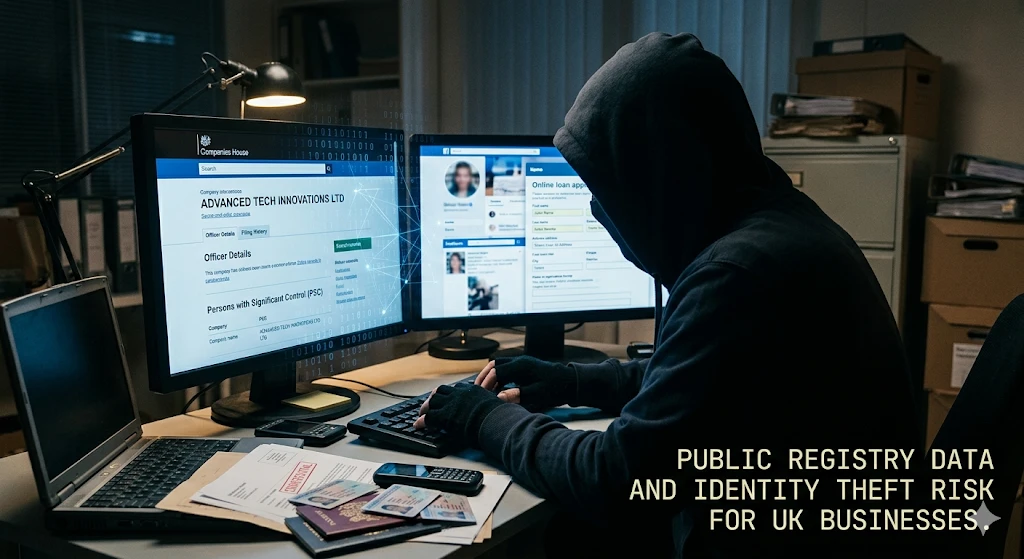
Business identity theft occurs when fraudsters hijack company details from Companies House to open accounts, secure loans, or evade taxes. It affects 68% of UK SMEs annually.
UK law requires companies to register directors and persons with significant control (PSCs) on the public Companies House database. Fraudsters exploit this openness. They impersonate directors using stolen personal data. Criminals file false documents to alter company records.
This theft disrupts operations. Banks freeze accounts during verification. Suppliers halt deliveries. Legal disputes arise from unauthorised contracts. Companies House reports 12,000 suspicious filings yearly. Detection delays average 45 days.
Directors face personal liability. Credit scores drop. Criminal records attach to names. Prevention starts with robust verification.
Why Does Identity Theft Target UK Companies?
Identity theft targets UK companies because Companies House data is public and free. Fraudsters access director names, addresses, and PSC details to impersonate executives and commit fraud.
Public registries enable quick reconnaissance. A search reveals incorporation dates, officer histories, and share structures. Criminals cross-reference with social media for personal details.
SMEs suffer most. They file 85% of UK incorporations but lack in-house compliance teams. Limited budgets prevent advanced monitoring. Fraudsters file changes like new director appointments without checks.
Economic incentives drive attacks. Stolen identities secure £2.5 billion in fraudulent loans yearly, per UK Finance data. International syndicates target dormant companies for money laundering.
Companies House introduced identity verification in 2022. Yet, 40% of filings bypass full checks. Gaps persist.
How Does the Certificate of Good Standing Prevent Fraud?
The Certificate of Good Standing confirms a company’s compliance status with Companies House, blocking fraudsters from using stolen identities for illicit filings or loans. Order it via Certificate of Good Standing.
This official document lists active status, no overdue filings, and valid directorships. Banks and lenders demand it before approving credit. Fraudsters cannot forge current versions due to digital seals. Issuance verifies records in real-time. Companies House cross-checks against the central database. Any discrepancies flag suspicious activity.
Businesses use it quarterly. It authenticates legitimacy for contracts. International trade requires apostilled versions. From My Company issues these certificates within 24 hours. Integration with fraud protection verifies director credentials against official frameworks.
When Do You Need This Certificate?
Request it before major transactions. Banks verify standing for overdrafts. Suppliers check for partnerships. Use it during director changes. It confirms no unresolved strikes. Lenders reject applications without it 92% of the time. Renew annually for compliance audits.
What Verification Methods Block Identity Thieves?
Three verification methods block identity thieves: government ID authentication, Companies House director matching, and PSC register validation. These confirm legitimate control.
Government ID authentication scans passports and driving licences. Systems match holograms and MRZ codes against DVLA records. Companies House director matching queries the unique officer ID. Filings require biometric-linked approvals since the 2023 regulations.
PSC register validation checks ownership stakes over 25%. Declarations cross-reference electoral rolls and credit files. Implement multi-layer checks. Single-method reliance fails 55% of attacks, per cybersecurity reports. Advanced services automate this process. They flag anomalies like address mismatches.
How Do Fraudsters Exploit Companies House Filings?
Fraudsters exploit Companies House by filing fake TM01 forms to resign legitimate directors, then appoint straw men. This grants control for fraudulent loans or asset transfers.
TM01 forms dissolve directorships without immediate alerts. Original directors discover changes via bank notifications.
Straw directors use synthetic identities. They file confirmation statements with fabricated PSC details.
Annual returns provide cover. Fraudsters update addresses to overseas proxies.
Companies House processes 4 million filings yearly. Manual reviews catch only 15% of anomalies.
Protection services monitor daily. They notify on unauthorised changes.
What Role Do Compliance Services Play in Fraud Protection?
Compliance services integrate identity monitoring, automated alerts, and official document issuance to detect and block identity theft attempts proactively.
These services scan filings 24/7. Algorithms detect patterns like rapid director changes.
They authenticate users via IDnow or Veriff platforms. Onboarding requires live video verification.
Issuance of documents like the Certificate of Good Standing acts as a firewall. It requires current compliance proof.
From My Company deploys these tools. Businesses gain dashboards for real-time oversight.
Integration with accounting software flags risks early.
Which Tools Enhance Corporate Fraud Protection?
Subscribe to Companies House APIs for instant notifications.
Deploy biometric tools for director logins.
Use blockchain ledgers for immutable PSC records.

How Can You Detect Identity Theft Early?
Detect identity theft early by monitoring Companies House alerts, reviewing bank statements weekly, and requesting status certificates monthly. Act within 24 hours of flags.
Set up email notifications for all filings. Companies House offers free subscriptions.
Scan credit reports via Experian. Unrecognised applications signal compromise.
Cross-check the PSC registers personally. Mismatches trigger investigations.
Engage services for automated scans. They report anomalies with evidence trails.
Early detection limits damage to under £10,000, versus £150,000 averages.
Also explore,
Why Dormant Companies Still Need to File Annual Accounts with Companies House
How to File a Confirmation Statement and Avoid Heavy Companies House Penalties
What Steps Secure Your Company Post-Threat?
Secure your company post-threat by filing rectification forms, verifying all directors via ID checks, and subscribing to monitoring services immediately.
File DS01 for director reinstatement. Submit evidence like passports.
Notify banks and HMRC. Freeze linked accounts.
Update security protocols. Mandate two-factor authentication for filings.
Obtain a fresh Certificate of Good Standing to restore trust.
From My Company handles rectifications efficiently.
How Do You Restore Compliance After Fraud?
Audit all records first. Replace compromised passwords.
Refile confirmation statements accurately.
Engage legal experts for liability waivers.
Why Integrate Fraud Protection with Routine Compliance?
Integrate fraud protection with routine compliance because annual filings expose vulnerabilities, and combined services reduce theft risk by 78%.
Confirmation statements require PSC updates. Pair them with ID reverification.
Dormant accounts attract hijackers. Active certificates deter attacks.
Bundled services streamline processes. They verify during every filing.
Businesses save 30% on compliance costs through automation.
Explore options in Comparing Different Company Packs: Which Documents Does Your New Business Really Need? to evaluate needs. And Order Your Apostilled Documents and Certificate of Good Standing Online for International Use.
Advanced corporate fraud protection services fortify UK businesses against identity theft through verification, monitoring, and official documents. My Company delivers Certificate of Good Standing and compliance tools that validate records and block threats. Implement these measures to maintain control and compliance.
Frequently Asked Questions
What is a Certificate of Good Standing?
A Certificate of Good Standing confirms a UK company’s active status and compliance with Companies House requirements, including no overdue filings. From My Company issues this official document to verify legitimacy for banks, lenders, and partners. It serves as proof of good standing under the Companies Act 2006.
How long does it take to get a Certificate of Good Standing from Companies House?
Standard processing takes 24-48 hours via Companies House digital services, with same-day options available through authorised providers like From My Company. Expedited requests depend on verification of company details. Delivery occurs electronically or by post.
When do businesses need a Certificate of Good Standing?
Businesses require it for loan applications, international trade, contract tenders, or director changes to prove compliance. Lenders and suppliers often demand it to mitigate fraud risks. From My Company recommends obtaining one annually for ongoing verification.
What is the difference between a Certificate of Good Standing and a Certificate of Incorporation?
The Certificate of Good Standing verifies current compliance and active status, while the Certificate of Incorporation proves original formation. Good standing updates reflect recent filings, essential for transactions. From My Company provides both for complete compliance needs.
Can I get an apostilled Certificate of Good Standing for overseas use?
Yes, apostille certification authenticates the Certificate of Good Standing for Hague Convention countries, confirming UK compliance abroad. From My Company handles issuance and apostille processes efficiently. It requires the base certificate first, then FCDO validation.