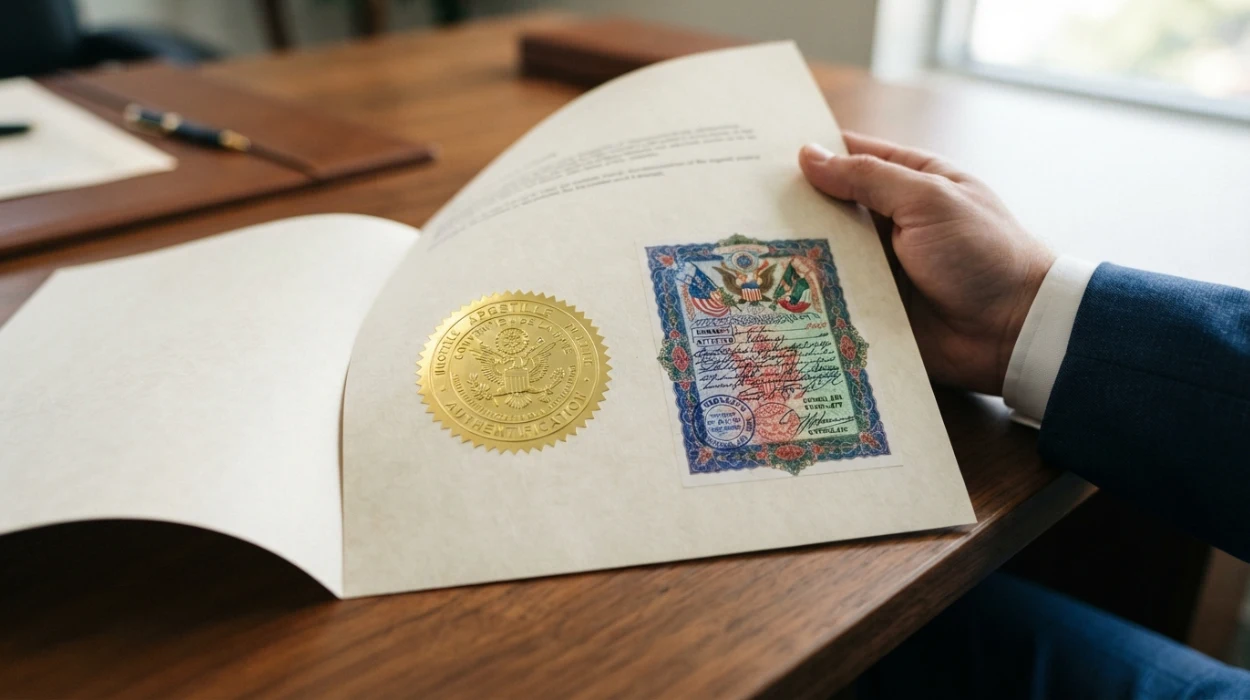
An apostille certificate itself never officially expires because it is a permanent authentication of an underlying public document’s signature. However, foreign government authorities, embassies, and international institutions frequently enforce their own internal 3-month or 6-month validity limits on the underlying document.
Does an apostille stamp have an official expiry date?
An official apostille stamp issued by the Foreign, Commonwealth & Development Office contains no expiration date under the Hague Convention framework.
International law establishes permanent legal status for every authentic certificate. When officials validate a public signature, they confirm a historical fact that occurred on a specific date. That historical verification remains eternally true. A government official signed a document on a specific day. The governing authority stamped that exact signature. Time passing alters neither the act of signing nor the administrative verification. Legal permanence defines the core structural design of the apostille process.
International authorities rely on this permanence to streamline global paperwork. Treaties signed across 125 member nations ensure that paper documents maintain cross-border validity without requiring repeated consular legalisation steps. The physical paper certificate carries a unique tracking number. Anyone can check that number against official government registers indefinitely. Government database records persist across decades. Therefore, the authentication mechanism itself never lapses into obsolescence.
Why do foreign authorities reject older apostilles?
Foreign institutions routinely reject older apostilles because they require current proof of status for underlying civil and corporate documents.
Receiving authorities outside the United Kingdom protect their domestic legal systems by demanding fresh paperwork. A birth certificate issued ten years ago might carry a valid apostille stamp from 2016. However, civil status registries demand recent certificates to prove an individual remains unmarried today. Similarly, corporate entities trading internationally must prove active operational status. Foreign banks and registry offices reject outdated company extracts because corporate structures change rapidly.
Administrative caution drives these strict foreign acceptance windows. Local ministries in destination countries enforce arbitrary time limits to mitigate document fraud risks. Common institutional thresholds include 90-day limits for criminal record checks and 180-day limits for corporate certificates. When a foreign official reviews paperwork, they evaluate the freshness of the primary data source. An apostille confirms signature authenticity, but it cannot override the expiration of underlying factual information.
Which types of documents are most affected by time limits?
Dynamic documents like criminal records and company certificates face strict time limits whereas static records like educational degrees rarely expire.
Corporate compliance workflows depend heavily on document volatility. Documents establishing current business standing change continuously. Directors resign, shareholders transfer equity, and companies update registered office addresses. Because corporate data shifts, foreign institutions demand fresh documentation. A Certificate of Incorporation requires frequent updates to satisfy international banking compliance departments. When expanding operations globally, businesses frequently need Apostilled Documents to validate active corporate standing.
Dynamic records require constant renewal cycles to remain legally effective abroad. Police clearance certificates carry short operational windows because criminal records change daily. Financial statements lose relevance after a fiscal year concludes. Conversely, static records like university degrees or adoption decrees document historical milestones. Those specific events never change. Educational certificates hold lifetime value, meaning an apostille attached to a university degree remains acceptable for decades unless a foreign institution explicitly demands a re-issued university transcript.
How can businesses prevent document rejection abroad?
Businesses prevent foreign rejection by verifying specific institutional requirements before ordering international document authentication services.
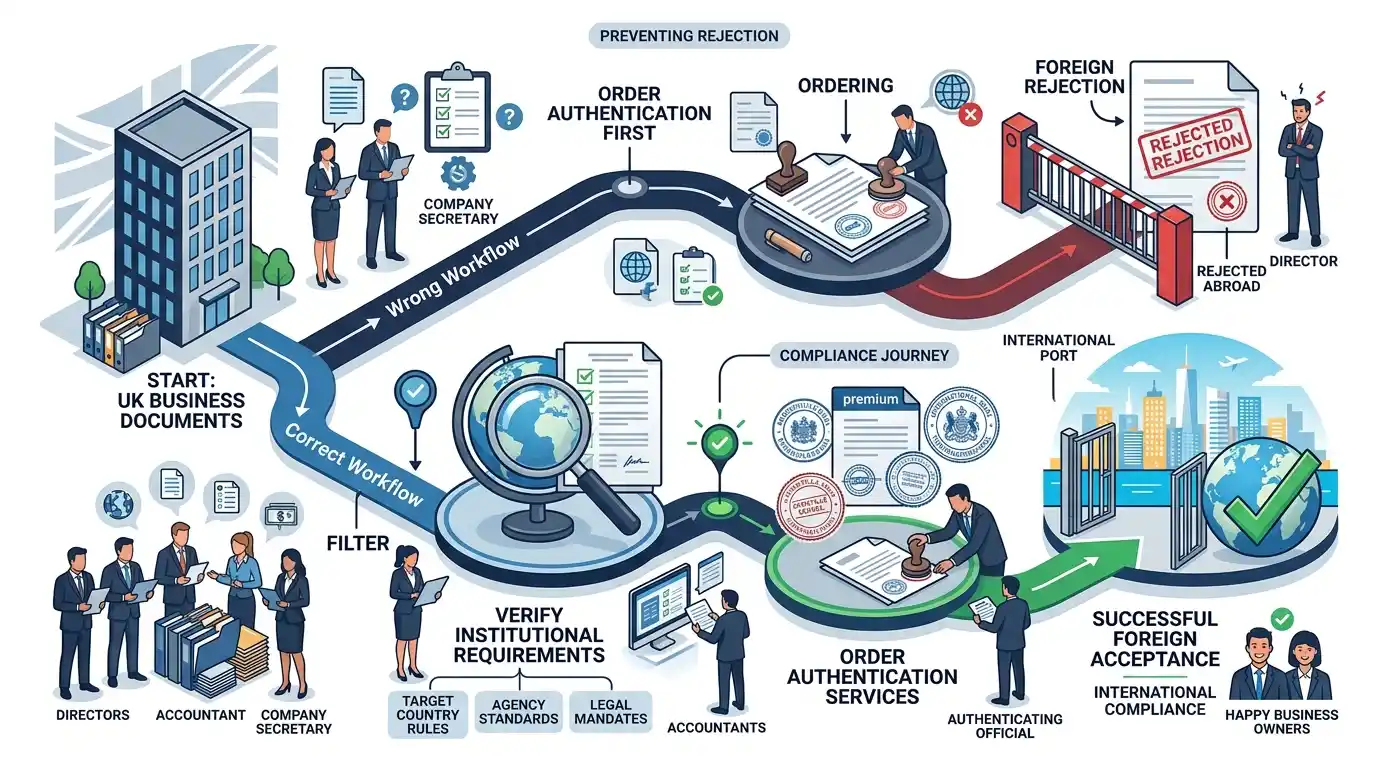
Preparation eliminates costly administrative delays during cross-border expansion projects. Company directors must contact destination authorities directly to confirm maximum acceptable document ages. If a foreign registry demands documents issued within 90 days, ordering authentication services too early creates financial waste. Operational efficiency requires synchronising document issuance dates with international submission deadlines. Strategic planning ensures that corporate paperwork clears regulatory hurdles on the first submission attempt.
Project managers must also assess quantity requirements before dispatching paperwork for official processing. Ordering multiple certified sets prevents operational bottlenecks when dealing with multiple foreign agencies simultaneously. Before finalising paperwork quantities, review our guide on How to Decide How Many Apostilled Copies of a Document to Order? to balance administrative costs against regulatory demands. Evaluating document lifespans accurately protects international trade timelines and prevents unexpected re-submissions.
An apostille certificate possesses permanent validity under international law, but accepting authorities impose independent limits based on document type. Corporate and civil documents require careful tracking of issuance dates to satisfy foreign regulatory standards. Form My Company delivers secure administrative solutions to authenticate corporate paperwork efficiently. When your enterprise requires reliable global paperwork handling, explore options on our platform by reading Ready to Order Extra Certified Apostilled Copies From Form My Company? to streamline your international compliance workflow.
Explore our Apostilled Documents guide,
Can Board Resolutions and Powers of Attorney Be Apostilled?
Why Do Banks Ask to See Your Incorporation Documents?
Frequently Asked Questions
How long does it take to get documents apostilled in the UK?
Standard processing for Apostilled Documents through Form My Company typically takes between 3 to 5 working days once physical paperwork reaches the processing office. Urgent priority options are also available to complete official government authentication within 24 hours for time-sensitive international submissions.
Can I get an apostille for a digital or scanned document?
UK government authorities require an original physical document or a certified copy signed by a practising UK solicitor or notary public before issuing an apostille. Form My Company assists clients in preparing and certifying digital printouts correctly to meet all strict Foreign, Commonwealth & Development Office validation standards.
Do foreign countries require a translation along with an apostille?
Most international authorities require a certified translation of your Apostilled Documents if the original text is not written in the official language of the destination country. Form My Company coordinates professional translation services alongside official government legalisation to ensure complete cross-border regulatory compliance.
What is the difference between an apostille and full consular legalisation?
An apostille is a streamlined single-step authentication recognized by all member nations of the 1961 Hague Convention, whereas consular legalisation requires additional verification steps. If your destination country has not signed the Hague Convention, Form My Company guides you through both the apostille process and subsequent embassy attestation.
How do I verify if an apostille certificate is authentic?
You can verify the authenticity of an apostille by entering the unique certificate number and issue date into the online tracking system provided by the UK Foreign, Commonwealth & Development Office. Form My Company ensures every set of Apostilled Documents is officially registered and fully traceable for international authorities.